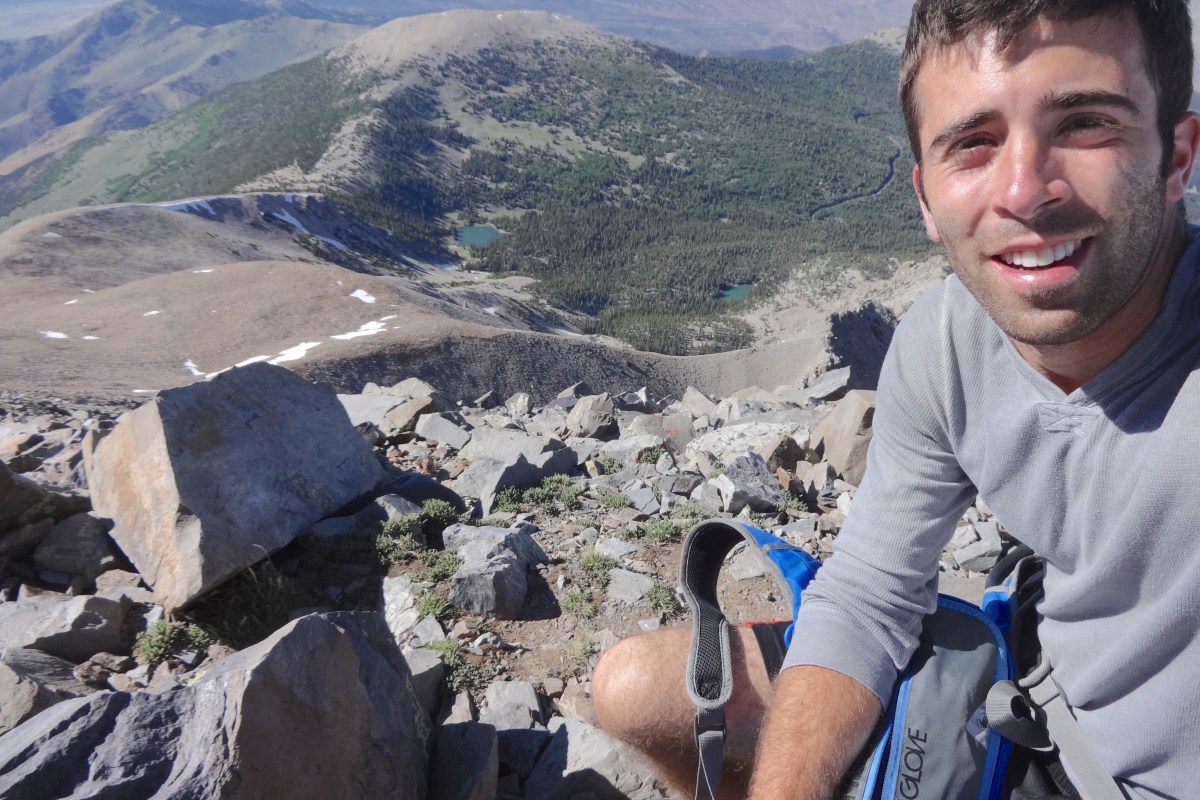
I looked up at the mountain. I don’t know about this, I thought. I had never summited something quite like this before. This was Wheeler Peak in Great Basin National Park, at 13,065 feet. It was bold and bald, nothing grew on its mountain top.
The guys in the Rock the Park show, which I had become so accustomed to watching, didn’t make it to the top. They turned around in their Great Basin episode, but they had tried it in the winter, in the snow. I had the summer advantedge.
 I stood there in a prairie along the mountain side, among bunchgrass and black sage, looking up at the mountain peek. The view looked like Wheeler Peak, and the adjoining peaks, used to all be connected at a higher point, all composing one grand mountain, but over time that higher summit crumbled to pieces and formed the rock glacier. Nevertheless, Wheeler Peak stands very tall. It’s Nevada’s highest peak. Although just summiting the beast alone seemed impossible, one of my questions was, do I have time? I was not getting an early start. It was well into the afternoon.
I had started the day sitting at the Mather Overlook, which is just a pull out from the main park road. I drove down there early and had a peaceful morning, reading some of my book about the history of the National Park Service while fittingly sitting there next to a plaque in honor of Stephen Mather, the first director of the National Park Service. I then proceeded back down to the lower lands of the park, where I cleaned out my car at a dump station. I was waiting for my scheduled tour of Lehman Caves.
“What’s your favorite national park,” the park ranger asked each member of the group before our tour.
“Death Valley,” I shared, without hesitation.
“Alrighty,” she said, as she would say after completing, or beginning, every sentence. She also had an accent that was very indistinguishable. It’s a shame I remember more about the rangers speach patterns than the actual Lehman Caves. But the tour was very pleasant. I enjoyed it.
After the tour, I ate a sandwich in the cafe right next to the Lehman Caves Visitor Center. A little stand alone placard in the middle of my table, read “Ask a park ranger about ghost towns of Nevada.” I most certainly will, I thought, considering I would be traveling all across the state on Highway 50, and ghost towns fascinate me.
After lunch I drove back up to the higher reaches of the park and eventually found myself geared up, looking at the towering Wheeler Peak and trying to decide if I should hike it. I tried to imagine where the trail might lead and tried to visualize it before me on the landscape. It looked like it made its way through the sparse forest of pinyon and juniper with granite out crops and prairie, until it reached the spine of an exposed ridge which gradually climbed until it hit a secondary base of the mountain, where a steep incline would begin around the back of the mountain. The total elevation gain would be 3,000 feet, not terrible, yet significant, especially since nearly all of it was completely exposed.
Welp, I’m here. I concluded it was time to give it a try. I figured the worst thing that could happen is that I’d had to turn around and come back, or be blown of the mountain by extreme winds. Actually the latter, I could have never imagined.
On my way through the prairie I spotted a group of wild turkey and some deer. On the other side of the prairie, growth became sparse, except for a tree every once in a while, jutting up from shambles of granite.
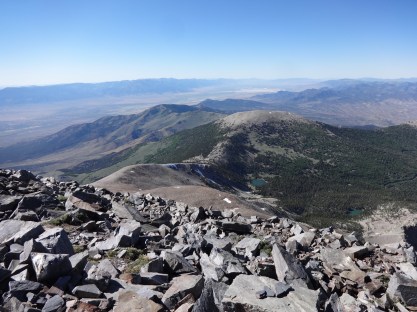 Eventually there was nothing left except me on the slanted fields of rock crumble. The trail evolved into switchbacks, and since the landscape was so uniform, it was difficult at times to know exactly where the trail was supposed to be.
I reached a point where I could look down to my left and see Teresa and Stella lake as miniature little puddles below. To my right, I looked out on the desert expanse of Nevada. Directly behind me I saw the spine ridge and the forest I had traversed, and in front of me there was just more rock leading up to the peak
Then it hit me, the realization of just how high up I was. It was disorienting. I’d never had such a clear 360 degree view at such an elevation. Also the way the landscape was not strictly in terms of vertical or horizontal orientation, but mountain ridges and landscapes were at odd diagonals, crooked, yet beautiful, made me feel uneasy. I began to feel a bit dizzy, and my heart began to beat a little extra fast, on top of what was already needed for this strenuous hike.
Just a little further up the mountain, and the wind was gusting. It made the loose fitting parts of my hoodie flap against me violently. It blew into my ears so forcefully that it hurt. I pulled my hood over my head and held it tight, pinching it at the bottom so it wouldn’t blow off. It wasn’t enough to protect my ears. I had to turn my head sideways to evade the harsh gusts, and then I had to get low. When I stood tall, I felt my knees switching between wobbling and clenching, trying to maintain stance.
There was sincere fear that the wind would blow me off the mountain, that I could go flapping in the wind, tossed around and dropped somewhere out in the desert below. It didn’t help, that throughout the course of the year I had been having repeated nightmares involving the wind. In each one I’d be walking across the Brooklyn Bridge in New York, and the wind would be so powerful it would always blow something valuable out of my hands and then the wind would wisp me off the bridge and I’d fall down into the cold water of the Hudson. No fun. It all stems back from one December on the Brooklyn Bridge when the wind did try to steal a backpack right off my back. As it had been ripped off me into the air I held on by one strap and was able to pull it back down. That event left a scarring impression on me.
But here on Wheeler Peak, this wasn’t just imagined. The wind was extreme and I could feel it trying to move my body. So, I proceeded up the mountain in a somewhat pitiful manner, reminding myself of Gollum from Lord of the Rings crawling over rocks never quite standing up fully.
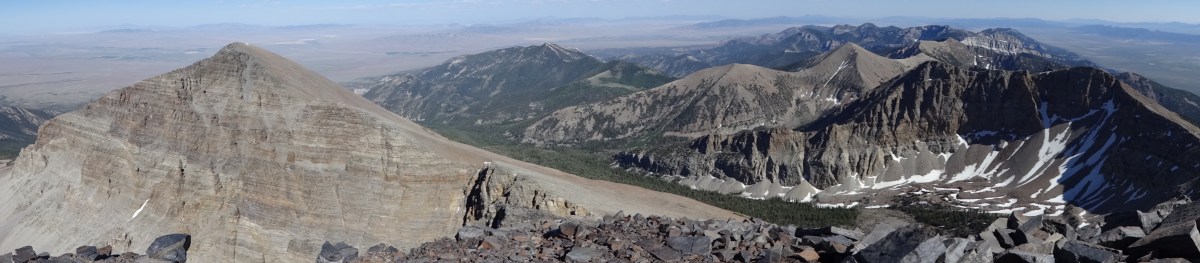 When I reached the top, the wind had dissipated greatly. I was stunned by the view. Hundreds of miles of Nevada was visible in all directions. Here I could truly see just how mountainous Nevada was, with mountains all over in near and far reaches, with sharp points, and slanted slopes, snow caps, and hidden forests, and valleys of desert between them all, covering great expanses. Just across from Wheeler peak was another peak that rose on a mountain which looked like it had been sliced by a knife with such a shark direct cut down to its base.
The sky up here was a very profound blue. It seemed as if I was elevated into a different atmosphere. When I looked out in the distance I could see a layer of lighter slightly murkier sky below, and I could see clouds in some far reaches that were well below where I was standing. As silly as it may sound, it felt like space was just a stone’s throw away.
Up here, there were two little topless shelters made of rocks, stacked on top each other, from the landscape. I imagined they were for people to camp in. I went inside, and wanted to rest a minute, and look out the structure door into the world below, but I didn’t trust these structures to hold up, especially if more wind was to come. I didn’t want rock collapsing on me. In one of these structures there was a mailbox stuck in the rocks, in it was a notebook- a log for people to record their accomplishments. Many people had filled it with Bible verses, I supposed they were inspired spiritually by such a view and height as this.
It’s spiritually affirming to reach a mountain top. It puts all of existence into focus. When you look down and ahead on the far reaches, you realize just how small your problems really are. And when you accomplish the task of reaching a mountain top, it reveals to you in a spiritual sense that you can get out of your canyons, traverse the desert, and reach the mountain top.
I also think mountain tops are places of hope and a taste of eternity- a place of beauty where we can look back on our lives, complete, and see what we have endured and how we fit into a bigger picture. You see, many of us, on our journey’s from the canyons and deserts of life into the mountains, find places of peace that God has hidden and given to us on the journey, like the little pristine forest hidden in the Great Basin National Park. But the mountaintop itself, the peek, is something that I believe can’t be reached in this life. The mountaintop is the pinnacle and completion of existence, a place of utter fulfillment, which we reach only when our time in this world is up and our souls have been accounted for. It’s the completion. It is the destination. And all of life’s journey in this world is preparing and leading us to it.
So in this life, when we physically reach these mountaintops, they are appealing and satisfying to the soul. They inspire us, because they are a taste of an eternity and completion that we all naturally long for.
They also reflect the beauty of God and remind us that there is far more to existence than what we cling so tightly to in the world below
Read the next entry, “Welcome to America’s Loneliest Highway,” here: https://joshthehodge.wordpress.com/2018/04/02/welcome-to-americas-loneliest-highway/
Read the previous entry, “The Greatness of Great Basin,” here: https://joshthehodge.wordpress.com/2018/03/22/the-hidden-greatness-of-great-basin/
Facebook: http://facebook.com/joshua.hodge
Instagram: http://www.instagram.com/joshthehodge/
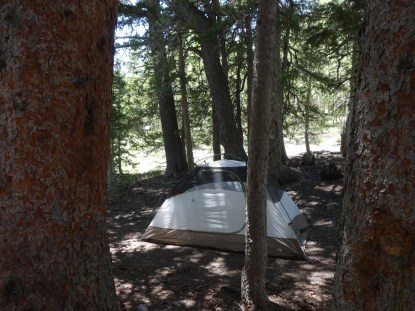 This little forest gave me a feeling of privacy and security, despite the dead squirrel in there, just a few feet from where I pitched my tent. Flies buzzed around it. I made a mental note to make sure to avoid it. The last thing I wanted to do was to clean fresh juicy squirrel guts from my hiking boots or feel them ooze onto the sides of my flip flops. It hadn’t crossed my mind that the real concern should be the carcass attracting other animals.
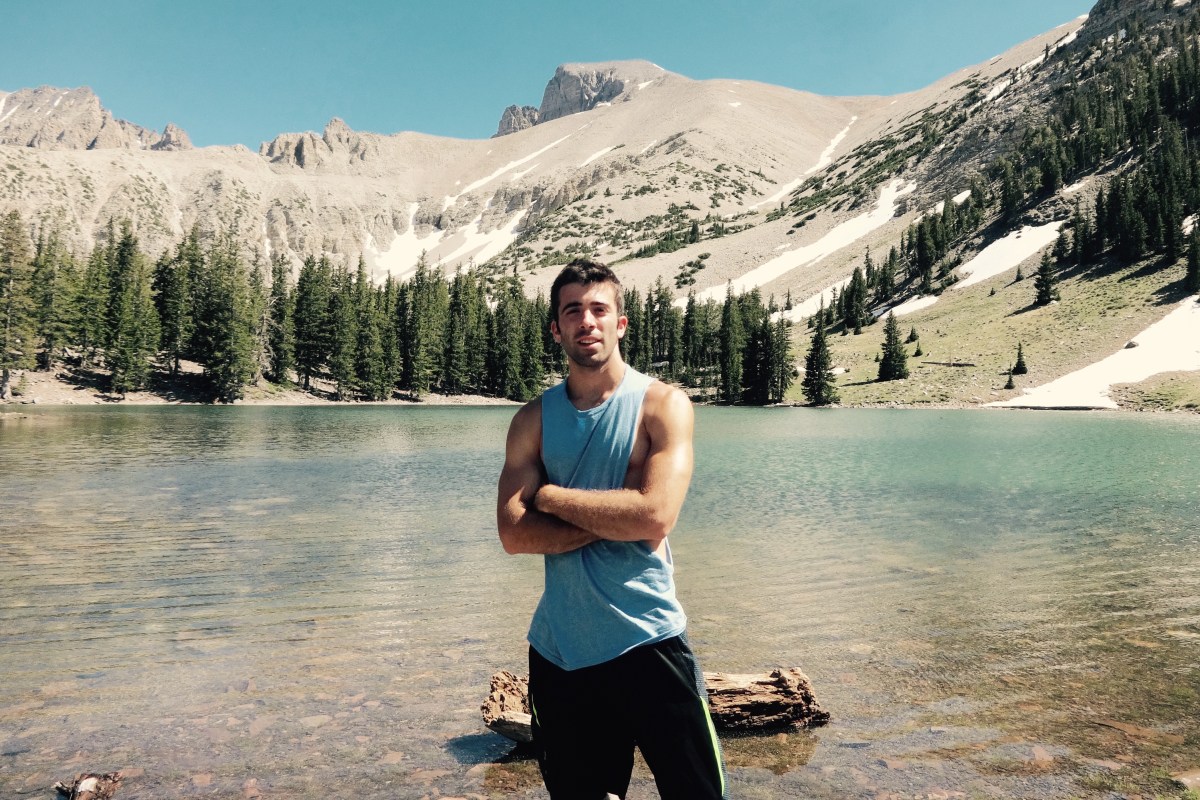
 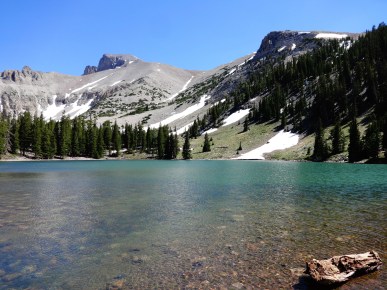 This lake before me was not very big. It was small. I could easily swim from one side to the other. It seemed more like a pool. That combined with the fact that the pine trees weren’t terribly tall, the rocks around had fallen in relatively small fragments, and the only wildlife I had observed were chipmunks playfully running around, gave this place a sort of miniature feel. This sensation was appealing. It made the place welcoming, homey, manageable. It was like I had come upon a secret, exclusive, pocket-sized Montana.
  It seemed as if the forest of the park was only possible because of Wheeler Peak. Here at the base of this giant rock feature was the collection of its ice melt, the fruit of its shade. It created conditions for this pristine forest. It was another paradise hidden in the high reaches of a mountain.
  I sat down on my sleeping bag, in my tent, tucked in between the pines, and I was at perfect blissful ease. I brought into my tent with me my water bottle and my book on the West. I took a sip of my water and laid down. The sleeping bag felt soft, silky, and warm, as it slid under my skin of my arms and brushed against my heels. Beneath it was the comfort of my air mattress filled full. I stretched my legs out and I could almost hear them giving off a sigh of relief. My head sunk heavily into my pillow. I looked up through the top of my tent into the limbs of the pine trees. Just beyond them was the rich blue sky and a few clouds lingering. I could gaze at this view for hours, I thought.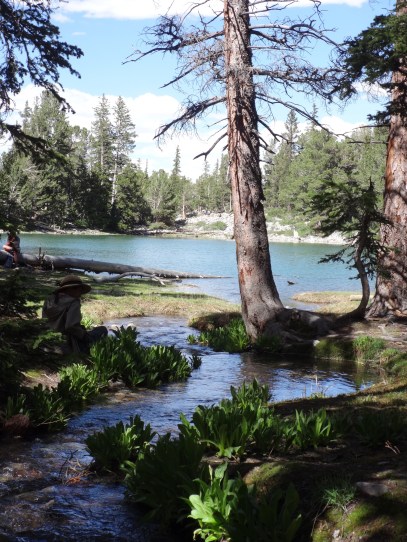
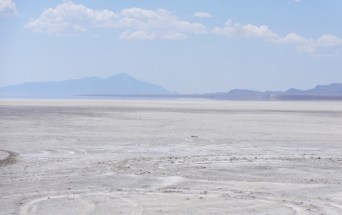 There was no way for me to gage the distance of the expanse before me, for there were no objects to give perspective. There was nothing but a grand mirage of water. It appeared that the desert housed a great lake, but the image disappeared at certain angles and the illusion waved in the heat. I knew it was desert trickery.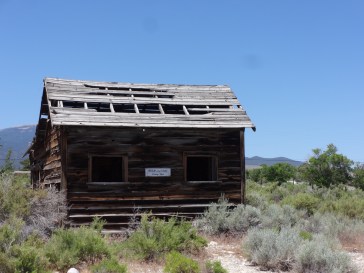

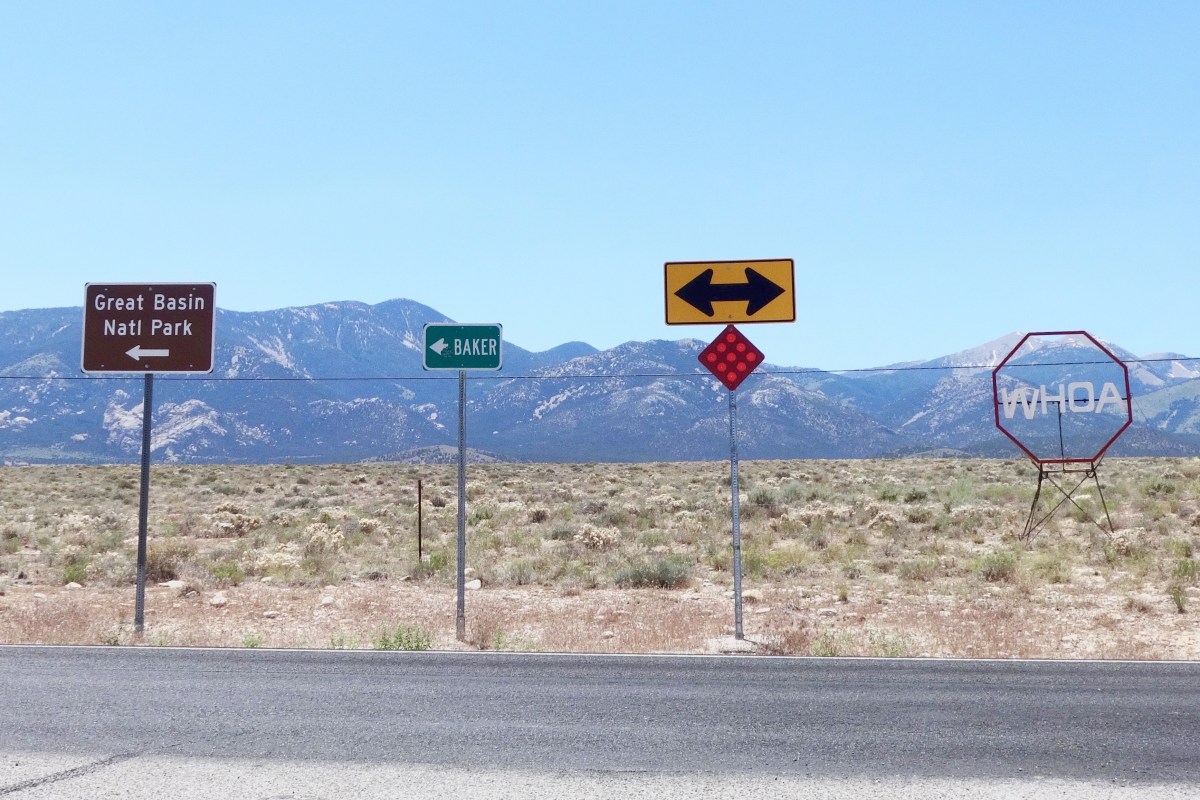
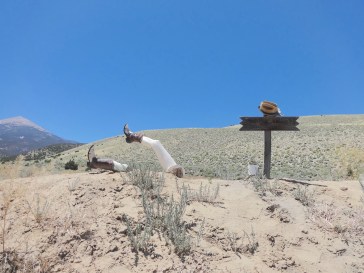 This is not just an observation based on Baker. Elsewhere in Nevada I’ve seen some interesting sites. Once I stopped at a gas station, and in the men’s room, I relieved myself into a cascading urinal fountain adored with rocks and greenery, where people had thrown pennies in, as if making a wish. Also outside of Death Valley, on the Nevada side, in the abandoned city of Rhyolite I’d seen the figures of the last supper recreated as lifesize ghost statues. Nevada is just full of surprises. I mean, in Baker you don’t get a stop sign, you get a “WHOA!” sign. They just have to be different.
 When I come across these rough looking trailers isolated in the desert, it’s not something I look down on or fear. I don’t think these people are hostile, or unrelatable by any means. Some may be living in poverty, and life may not be ideal, but for many, this is just how they live in Nevada. Many people have moved to Nevada and have chosen to live here in this way. It’s so far isolated from the rest of the country that sometimes these lots of land don’t have access to the full array of utilities, and there’s no one around to build a house hundreds of miles out in the desert. So, the only option is to resort to a trailer.
 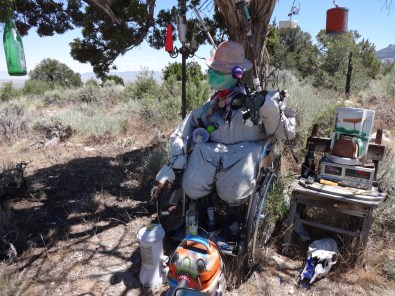 Another thing worth mentioning in my observations about rural Nevada is the fascination with the supernatural and extraterrestrial. The supernatural fascination, I think, is tied back to all the ghost towns they have. These ghost towns have held so much life and so many stories, and then they were suddenly abandoned after the silver rush, but stories live on, or are speculated. And so in these places that have been abandoned there are allusions of the past that are almost seeable and believable, just like the mirage of water in the desert. It’s as if the beating heart of Nevada is a ghost itself, but a ghost really wouldn’t have a beating heart, would it? That’s just a piece of Nevada irony for you.


 We all had contributed to finding firewood and kindling, but Paul won the prize for this. There was a pattern. He’d disappear. We would carry on conversation, and, after a while, he would return with arms full of wood and kindling. At one point I remember we all laughed. Paul had found an enormous piece of tree trunk and was carrying it to camp over his head, seemingly effortlessly, like an experienced woodsman. He had a grin on his face seeping from his sense of personal accomplishment, I would assume. The question on all our minds was where did he find that, and how did he resolve to lift it?
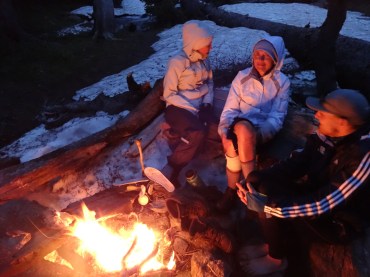 After we were by the fire for many hours, the conversation died down, and I decided to open a round of Would You Rather, something I learned from my younger brother, Timothy. You go around in a circle taking turns, posing ridiculous questions like “Would you rather jump out of an airplane or plummet down Yosemite Falls?”
 That morning we didn’t stay long in the basin. We were all cold and hungry. As the others were slowly waking up and putting themselves together, I walked around camp, admiring the expanse of the basin waking up. It was beautiful. The sun was golden and caused everything that was wet and frozen to shimmer in its light. Paul and Ines also walked around and sat together on a fallen tree trunk, looking out into the basin. No one said anything. I suppose we were all taking in the awe of our surroundings and trying to thaw out. I walked out from the shade to feel the slightest bit of warmth falling from the sun. It wasn’t much, but I’d take it.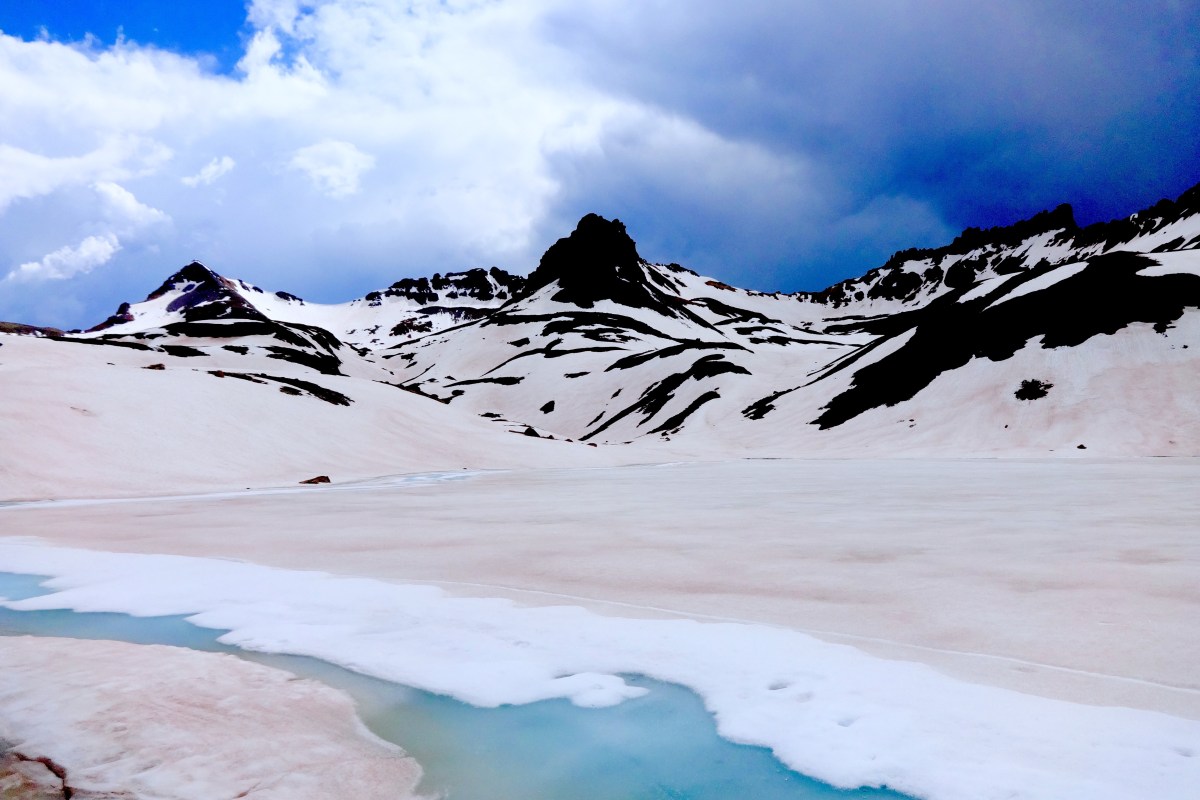

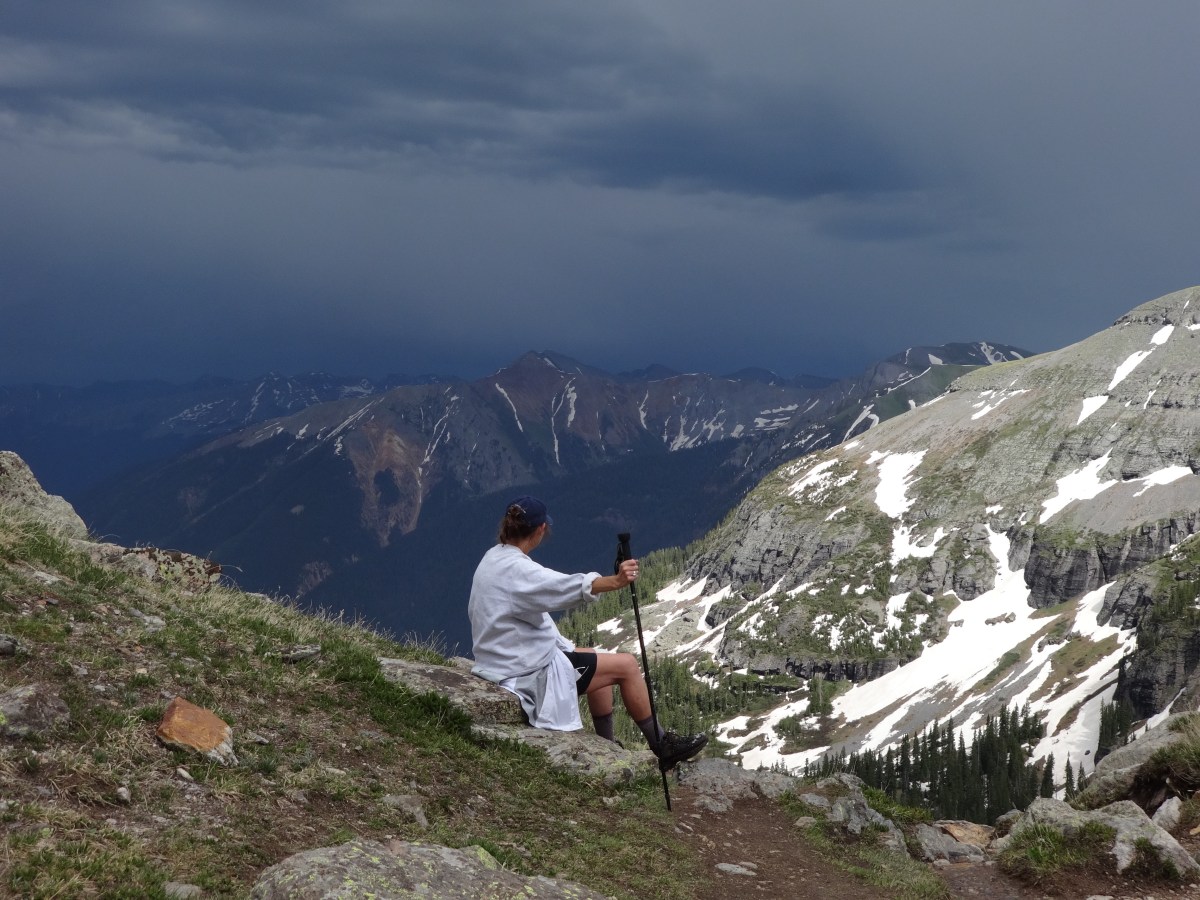
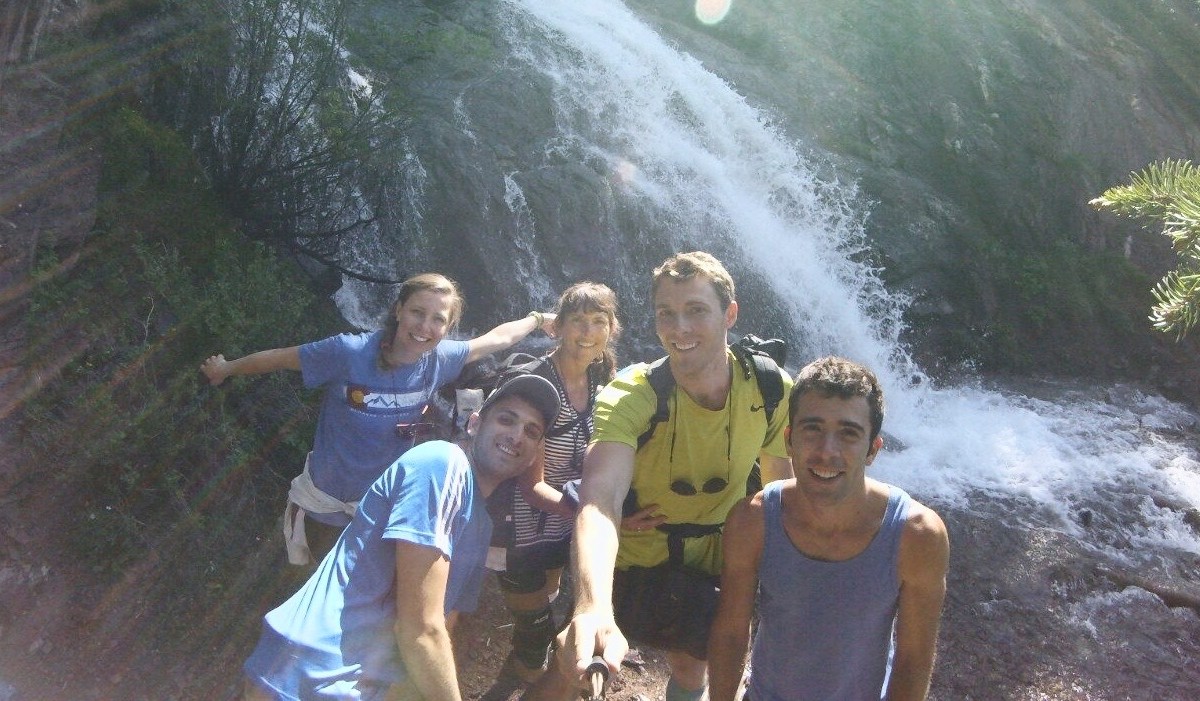
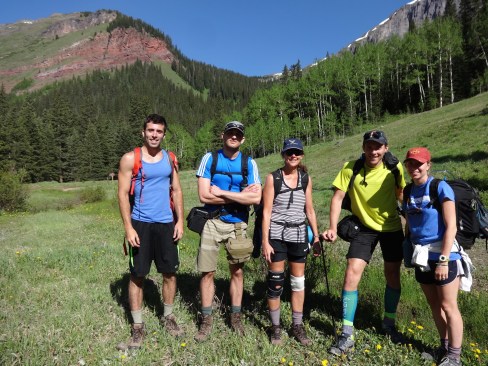
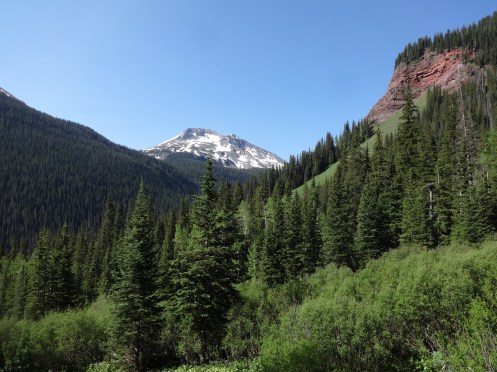
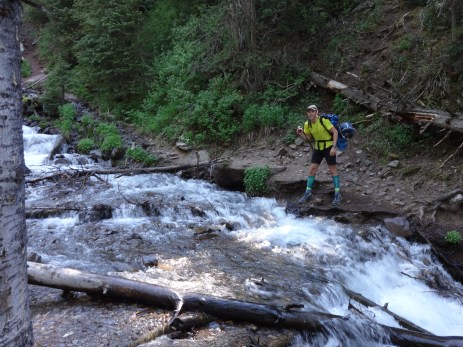


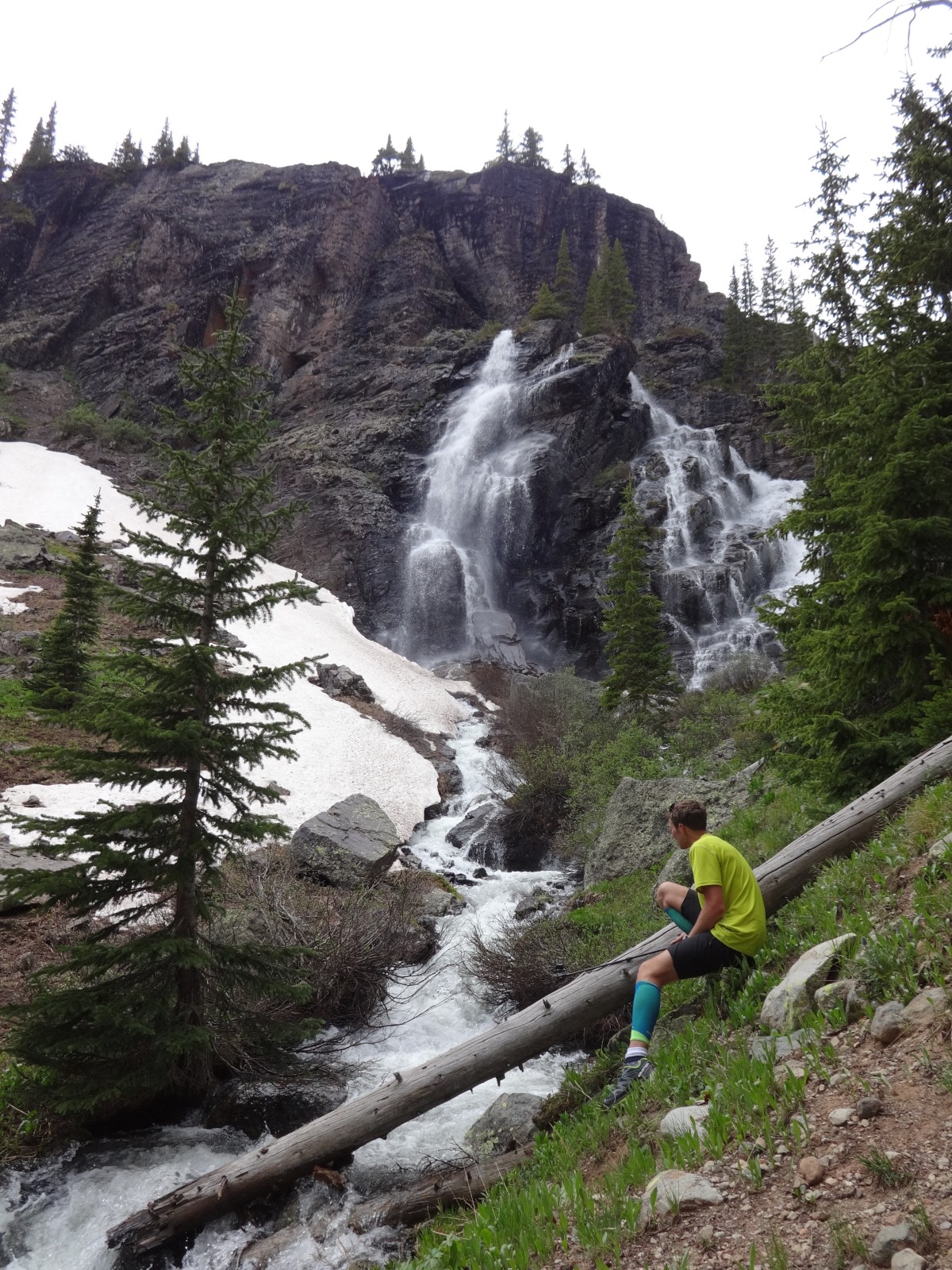
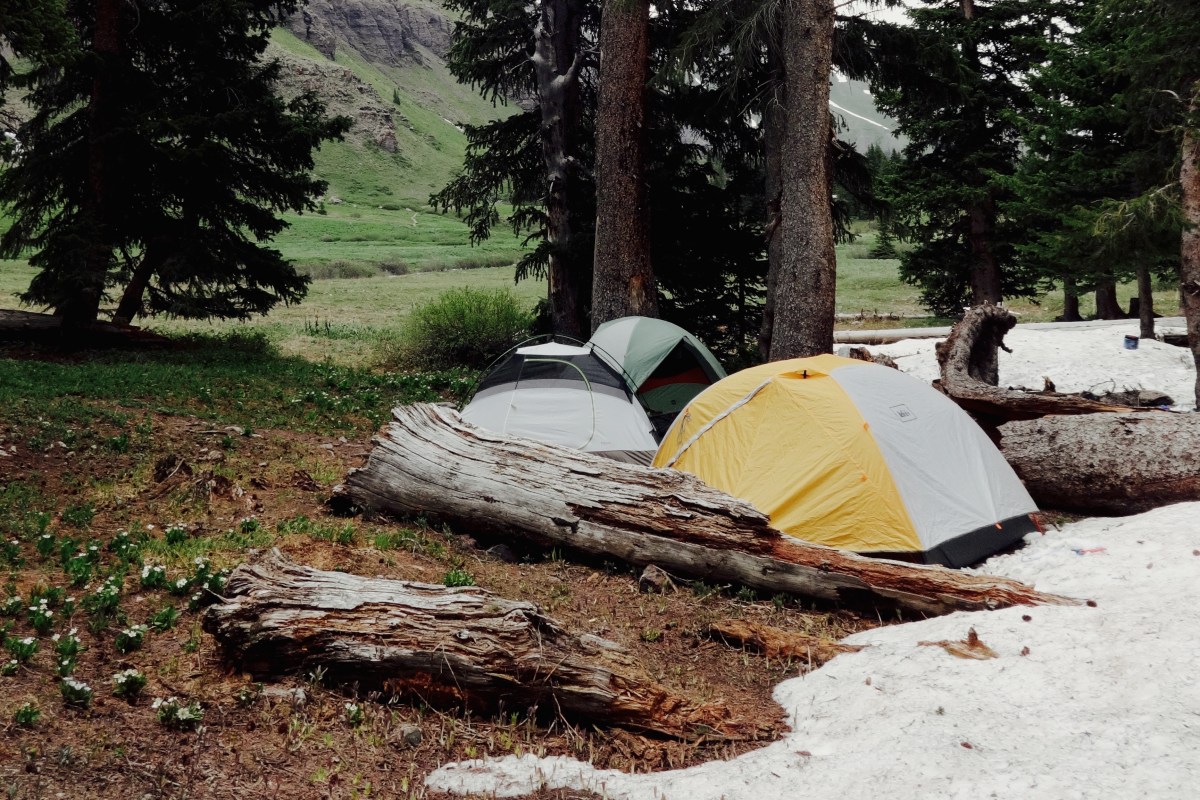
 Despite being out in the wild, I felt sheltered twofold. First, we were down in a basin with the sloping walls around us, placing us in our own little world. Secondly, we were in the fold of the small patch of forest with a strong sense of camp establishment. We had our little tent village, or the bedrooms as I liked to call them. Next to that was a mound of snow, were were had refrigeration- our natural kitchen. I had taken out my water bottles and stuck them in the snow. Next to that, was a collection of stumps, fallen tree parts, and rock oddities, creating an area to sit down and have a fire- the natural living room, the common area. All of this was hidden and sheltered by the cover of the pines. Never before had nature seemed so accommodating. It was as if it was saying,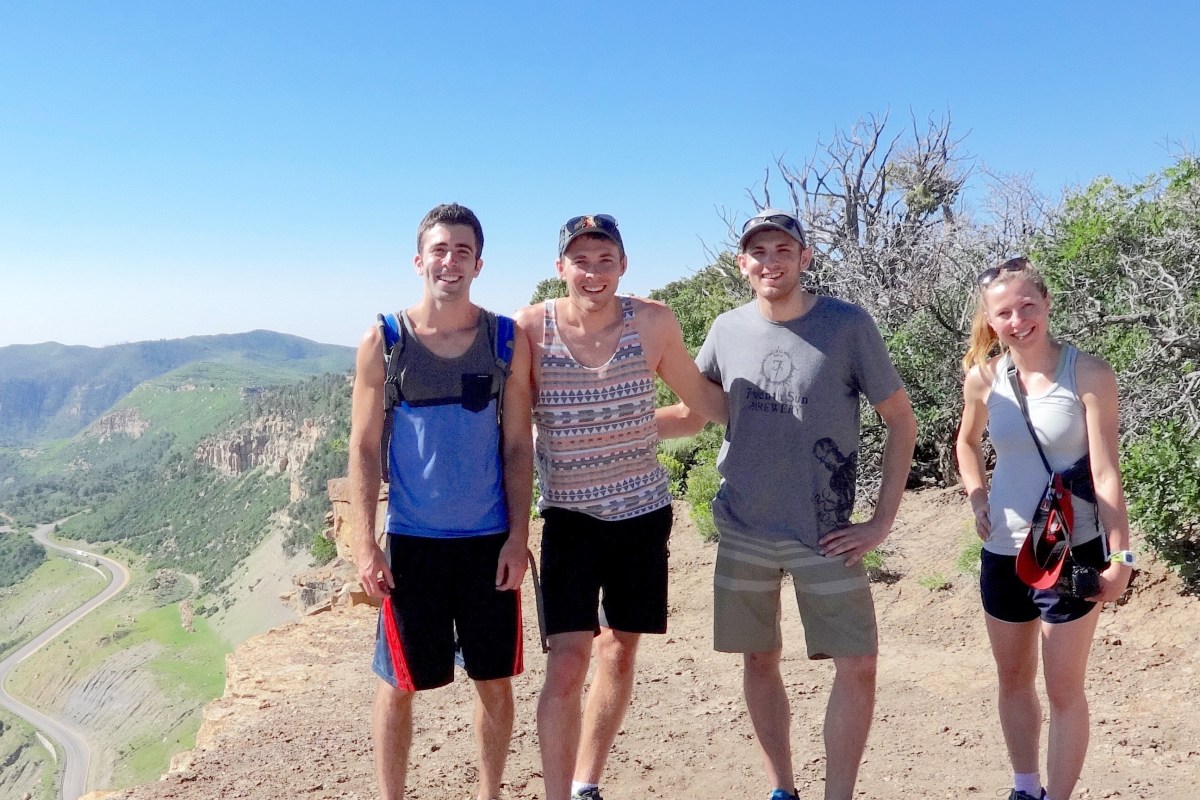
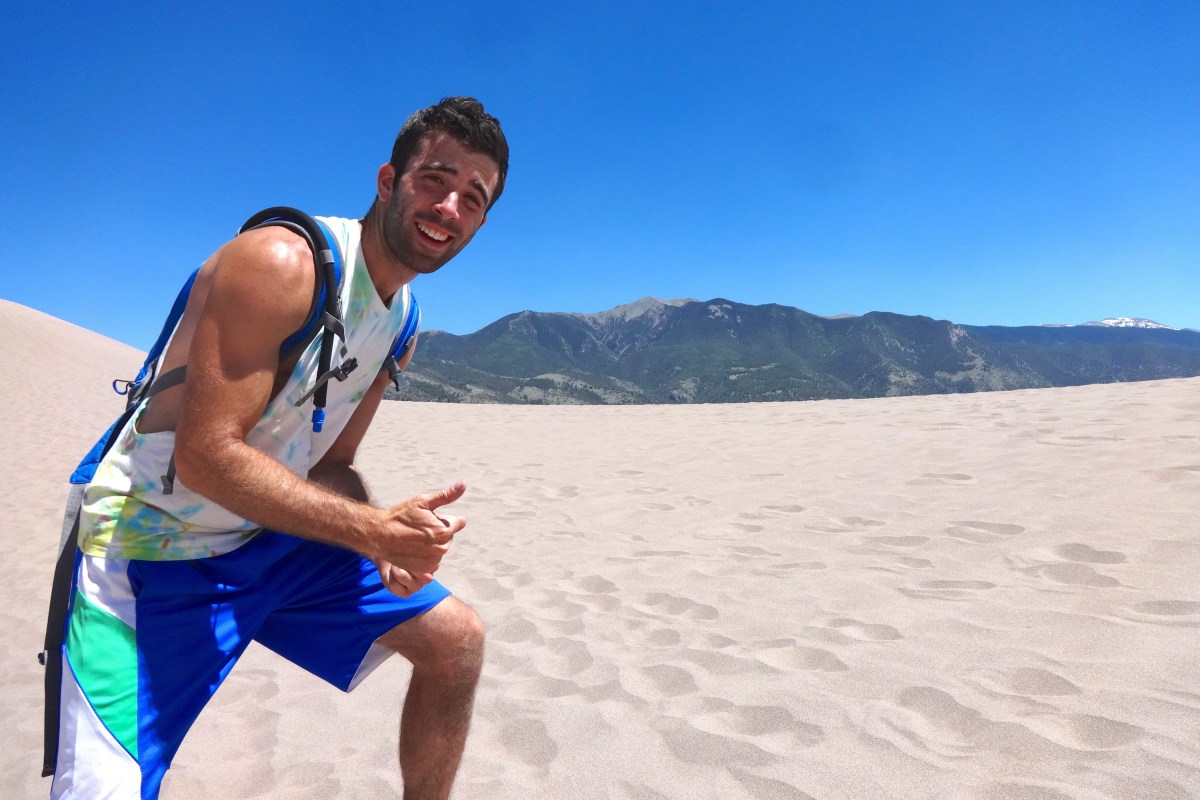
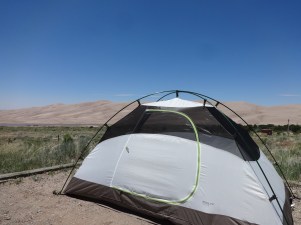
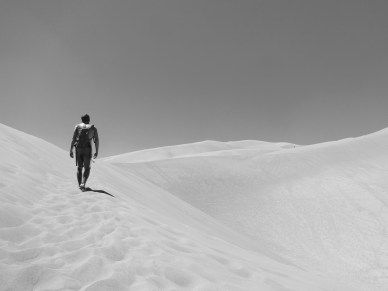 I could see there were more mighty dunes in the distance, which were temping to pursue. But at the moment, my feet felt like they were on fire. Wearing socks was not a bright idea. Hot sand found its way into the socks over and over again, and was burning my feet. The hot sand mixed with coarse friction had also burned and ripped a giant hole in one of my socks. It appeared as if part of the sock had disintegrated. I was about a mile and a half in, but my feet couldn’t endure anymore hiking, so I turned around. I wasn’t disappointed the least bit. I felt like I got a true Great Sand Dunes experience, greater than the rest of the tourists who gave up much sooner than me.




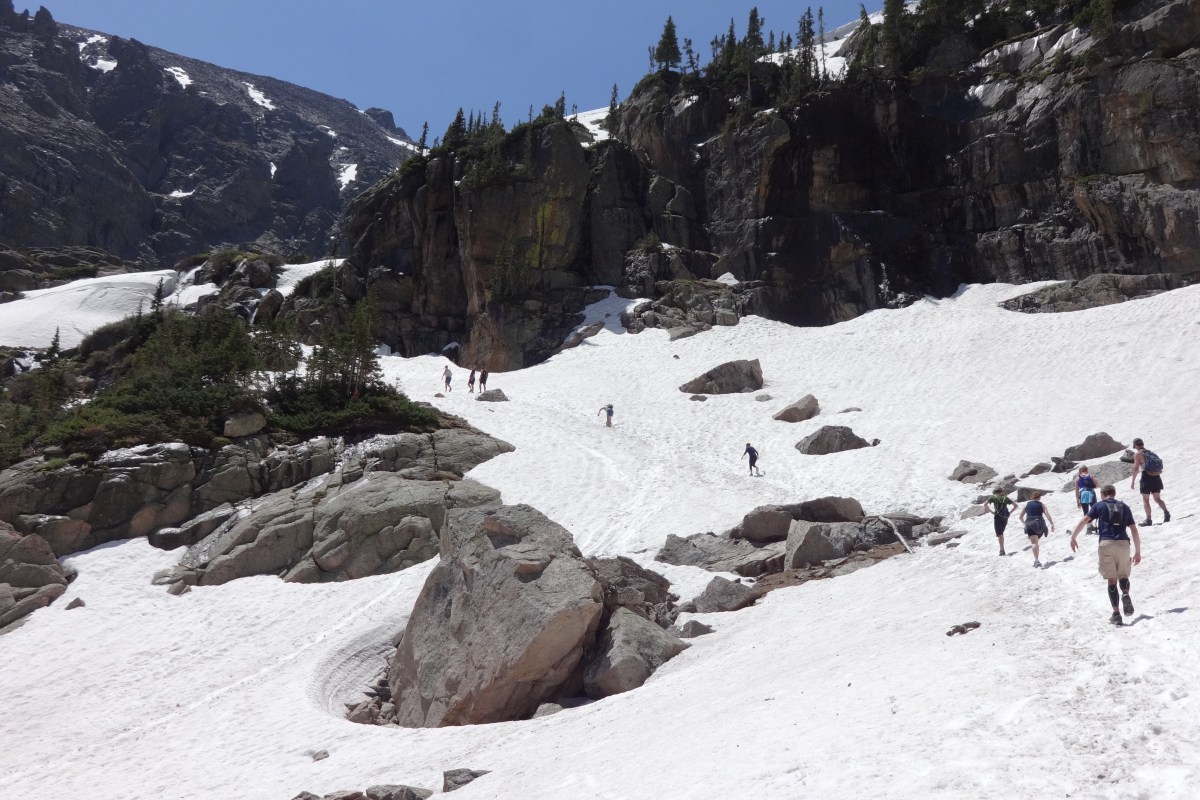

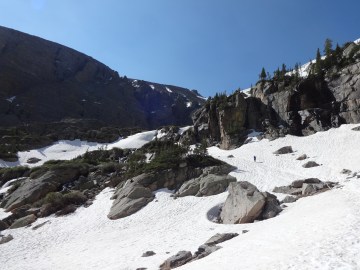 wall- to the other, a jungle of rocks and Timberline Falls. The way up had to be between the two. The ground became steeper, and the snow, harder and icier. The only hint of a path was the footprints of others solidified in the snowmelt. The path curved around between the rock wall and the waterfall. The incline caused me to hunch over, leveraging my weight and using my hands on the ground for balance. I wasn’t just following footprints. I was carefully placing my feet into small icy steps created by the trod of those who came before.

 Josh Hodge blog