Monoliths and Stars: Wonders of the Mojave

I thought I had seen it all, that there was no type of landscape which I had not become accustomed to throughout my travels. It was quite a disheartening feeling to consider, what could possibly be left? The good news, though, is that I had not been completely spoiled; that I was far from it. Only ignorance had pervaded my thoughts, for I stood before something entirely new- a landscape previously uncataloged in my mind- a monolithic wonder in the Mojave National Preserve. The very thought in my mind was, Wow, I couldn’t have imagined something like this.

This moment was near the end of my day. I had started about 295 miles away in Phoenix, Arizona, where the first night of my trip had been spent at the house of my cousin Matthew and his wife Robin. By the time I traveled across the remainder of Arizona and into California to the Mojave National Preserve, it was late evening. My plan had been to visit the Kelso Dunes and hike a short three miles to a mountain peak, but this would have to wait until the following day.

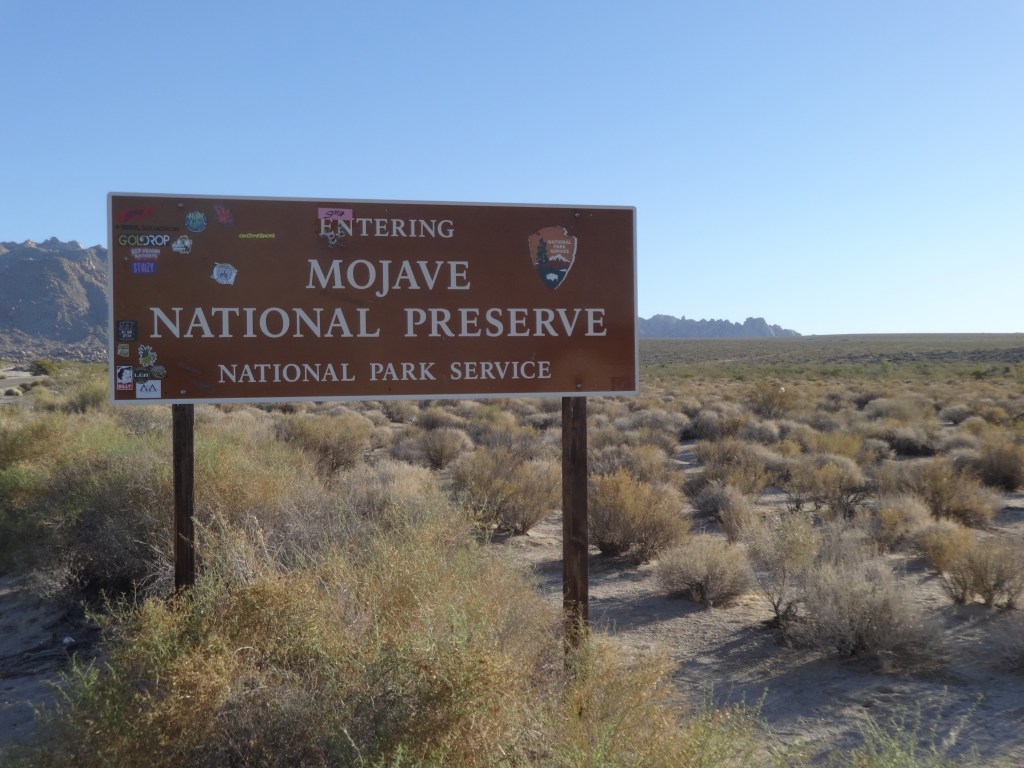
Although sandwiched between interstate 40 and Interstate 15, and a mere sixty miles from Las Vegas, this park has yet preserved its remote feel. When I turned to enter the park, I was greeted with the official National Park Service sign. Visitors had tatted up the corners of the sign with stickers and a few bullet holes punctured the middle, telling me that this area was not as well supervised as some of the other parks. I entered from the south on my way to the Hole-In-The-Wall campground. It was first come- first serve, and I wasn’t concerned about finding a site, for I read that visitation was low in the summer. The Mojave desert is just not a place most people want to be in the summer with the sweltering temperatures, but my only concern was the drive, for a number of roads in the park were marked unpaved, including the one to this campground. Before I hit the dusty sand roads, I was cruising along the pavement among grand stretches of desert. Dry shrubs nearly covered the terrain, and every once in a while a cactus, yucca, or Joshua tree would stick up. Around me I saw crumbly mountains and mesas in the distance. I hadn’t expected the expanse of this area to be so enormous. 
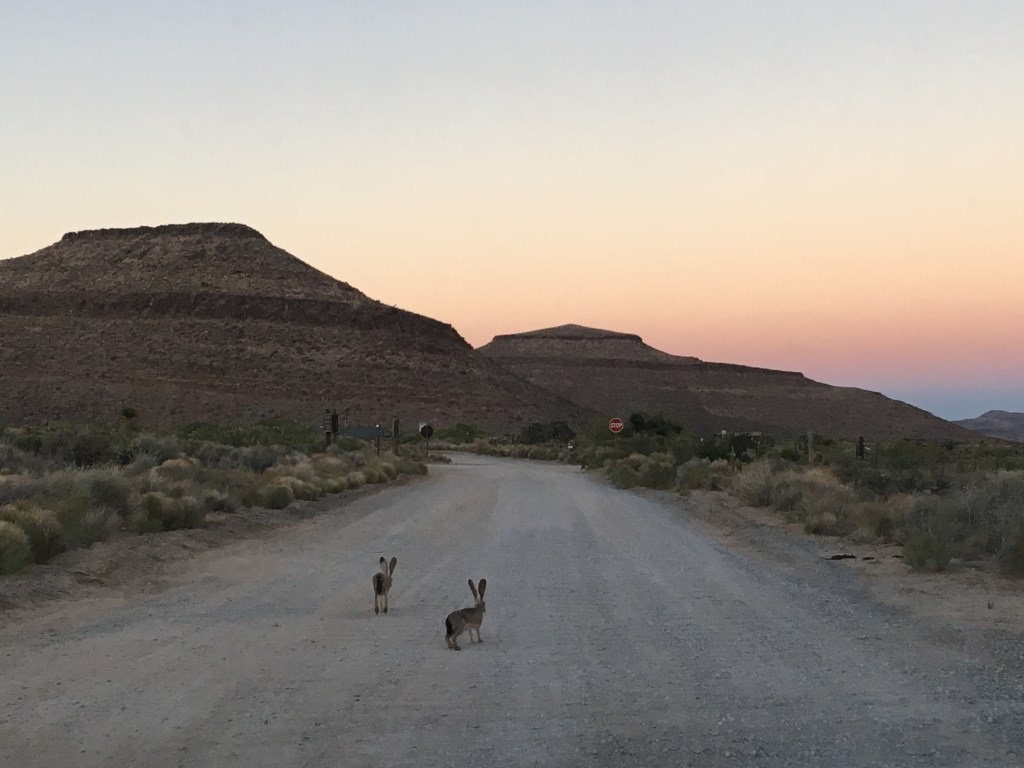
When I reached the bumpy dirt road, before me crawled an animal I had never seen before. Its fur was dark, and its appearance was prominent. Although nor particularly large in the grand scheme of things, it was larger than anything I was expecting to see. I got out my cell phone and texted my friend Zack in Kentucky, who would be joining me on the adventure in a few days. “I just saw a wolverine,” I typed. I was wrong, so embarrassingly wrong. I did not know. Wolverines do not live in the American Southwest. They are mammals of the far North. We can file this next to the instance on my first adventure, when I thought I saw a wolf, but it was really just a coyote. What I had just experienced was my first sighting of a badger. When I neared the campground I witnessed a pair of black tailed jack rabbits situated in the middle of the drive, jumping further down the road and then off into the shrubbery as I neared .
Finding a campsite was not hard. I was alone, except for one other occupied site. I quickly pitched my tent at a site far from the others, on the opposite side of the campground. I was distracted at times by a nosy little desert cottontail, whom I pursued to capture a photo of, and who surprisingly let me get closer than I expected. Back to work, I got my tent set up swiftly, as I was planning to get at least one hike in before the day’s end. Once I had everything set up, I drove over to the Hole-In-The-Wall visitor center. It was an old Western style wooden ranch building with a wrap-around porch. There was a clear place for a sign to identify the ranch, but it had been removed, and the flag pole out front was also bare- a sure sign that this was definitely off season. It would have been the perfect time for a tumbleweed to tumble on by or a vulture cry to sound off in the distance, for I was very much alone and very much in the desert. I checked around the perimeter of the abandoned visitor center for any maps or trail guides, but nothing. I was on my own.

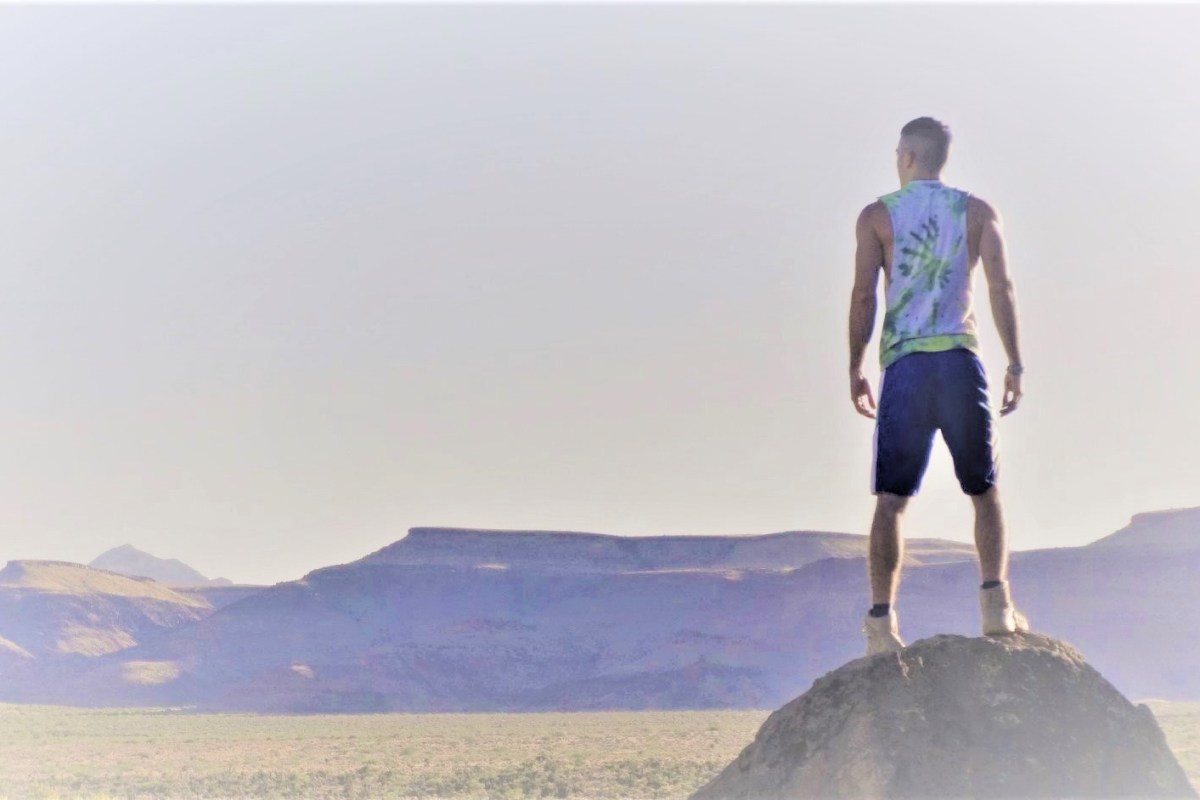
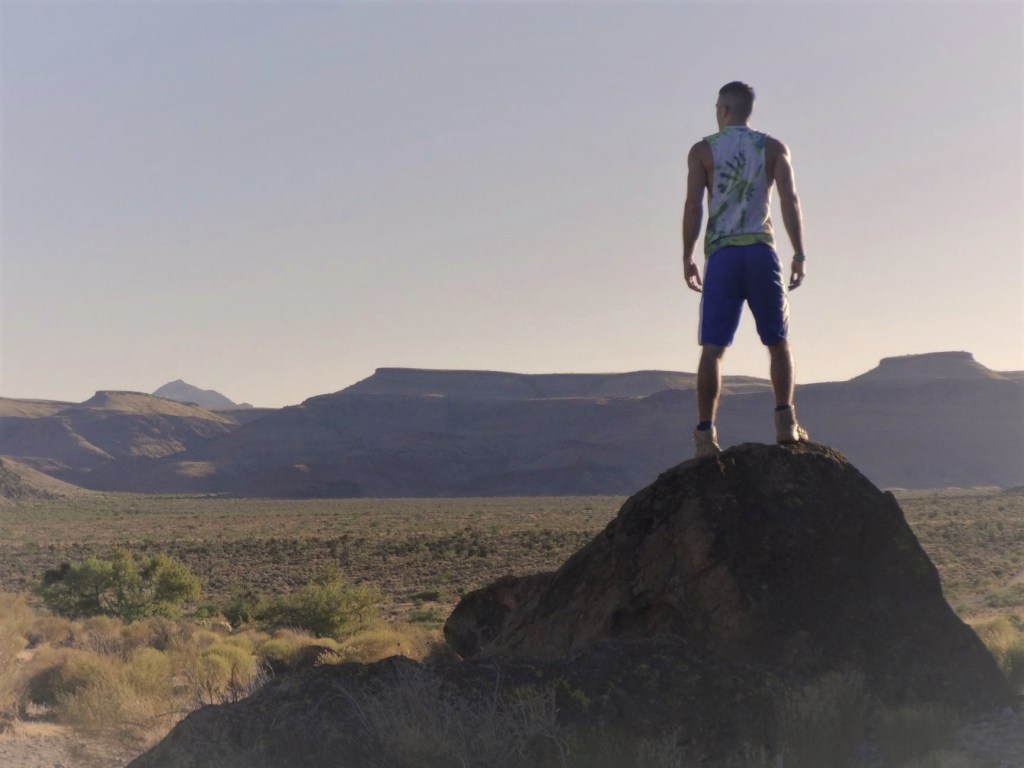
However, I found my trail head next to the visitor center. I then geared up. First off, I was certain to have water in my camelbak backpack. I brought a light hoodie, expecting that soon the temperature may drop, and I brought my headlamp, for I knew sunset was not far away. I made sure I had my car key securely in my backpack. I was not going to face the panic of last summer when I locked my key in the car at Chiricahua. To help avoid repeating that situation, I bought a short lanyard keychain at a gas station earlier in the day. Then, all ready to go, I hit the trail. It began with a stroll among the shrubbery and quiet meandering around some teddy bear cholla cacti. Then the path slithered between some boulders, and up to some rocks adorned with native American petroglyphs. At this point, the sun was just resting above the horizon, casting dark long shadows behind every protrusion in the desert, but laying gold upon anything its light touched. The path then led around some big rocks to a picturesque Southwest view. There were two large mesas, one laying in front of the other and the top of a mountain peeking up behind them. The air was warm and incredibly still. All around me was silence. I climbed up a rock, not taller than myself, and stood upon it, gazing out into the distant stretches of evening desert. I closed my eyes and quietly reveled in the moment, in my being, in the presence of God, in my arrival to a new adventure. I felt as if I had come back to an old friend. The desert: I know you. We have been separated for a while, by time and space. So much has happened. So much has changed, but yet you are the same, quiet and reserved, a library of adventures past, calling me to be grateful of the years gone by. The desert knows years gone by. It has been through them. The desert is well weathered by the ages, but yet calm and knows its place. 

As I pondered the desert, I thought about how in the desert, you don’t have to be up high, or in any particular overlook, to look out among the immensity of the land. In the desert there are no tall trees nor overgrowth hindering your view. Here it’s all laid open. One stands above and can see the great immensity of the land. And the desert here, in the Mojave, is not a barren plain, but it does have features: mesas, rocks, and distant mountains. The view just stretches on seemingly forever. It derives a similar feeling of a mountain top experience, when your life is sort of put into perspective, as you observe the immensity of that which is around you and are surrendered to a humbling comfort. Your problems seem diminished and are put in their place. 

The warmth of the desert also has a comforting feel to me, especially in the evening, when the sun isn’t harsh, but a dry warmth still blankets and comforts you. If the sun were to set, if I were to be lost for the night. I would be fine. The desert may cool some, but won’t freeze. The air is still. Bugs are absent. Any perils of the night are gone. Yes, some may find the desert to be harsh and univiting in the day, but in the night I find it very welcoming and suitable for the lone traveler. 

When I jumped down from the rock I was observing from, I turned around to a giant monolith in the desert: a massive rock feature just protruding solo and drastically from the desert floor. The trail wound around into a wide slot canyon that was somewhat narrow but then opened up in the middle of the monolith to a canyon wonder. Here I paused. Wow I could have never imagined something like this. I was taken away by the uniqueness of the scene. This was a new terrain, a new landscape I hadn’t experienced before. Here giant groupings of hoodoo-esque spires huddled together, right up against each other. They were together, yet individual, like you could pull or peel them apart. They stood as if flaunting their curvatures. And all of them were missing circular chunks, as if shot by enormous canyons, mimicking swiss cheese, or as if they had sunken eyes looking out at me. I had never seen any rock formations quite like this. It was unexpected. The desert just outside this canyon was not drastically different than what I’d seen before, but this short walk into the slot canyon displayed a whole hidden world, so unique. It was so nearly enclosed too, like it’s own hidden fortress. I paused and just looked around in amazement. It completely wiped away from me the thought that nothing I could see would be terribly new. This affirmed there was much more to see, and things can, and would, exceed what I could imagine.
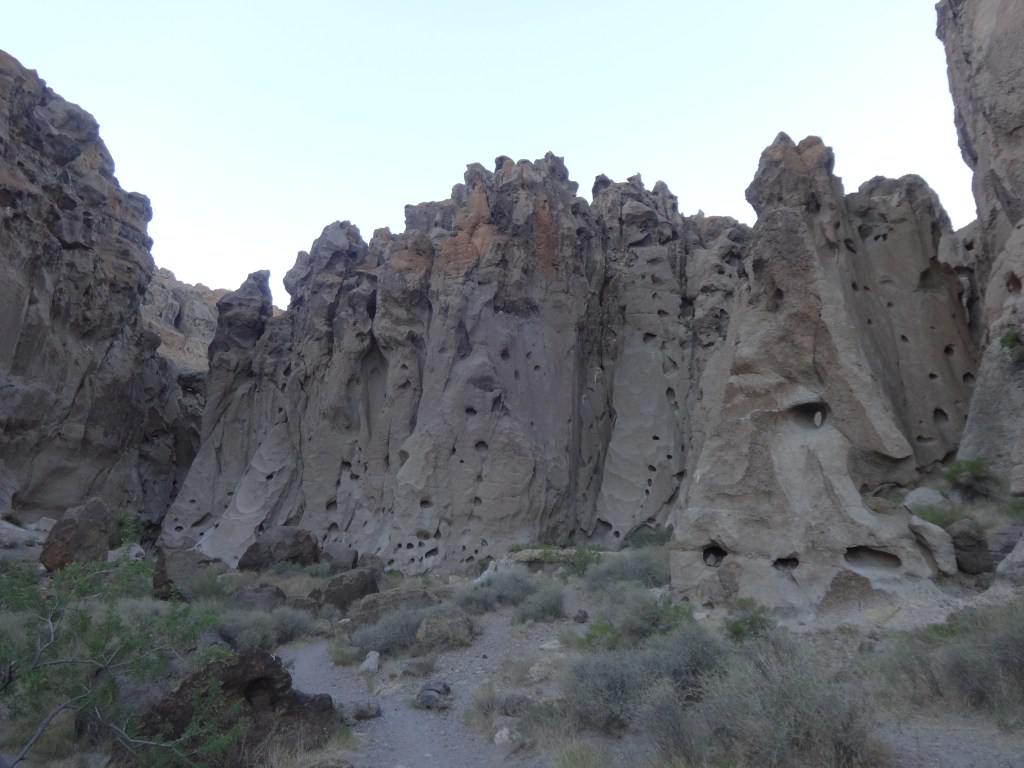
This was only the first of two surprises on this short hike. The canyon grew narrower with each step until there was no canyon left at all, and it seemed I had been walled in, but upon observation I found a passageway of sorts. There were cracks in the jumbles of rock, just enough space to fit a body through, and they were steep, ony presenting a passage that went vertical. Affixed to the sides of the rocks were a series of steel rings. This was called the Rings Trail and I had read about it, but seeing it, I was well surprised. The rings portioned looked more challenging and more extensive than what I had imagined. This would be fun. Like a puzzle to solve. I had to figure out where to establish footing on the rock wall, and which rings to grab onto, as to establish grip which was conducive to a trip upward. The passage grew narrower, then curved. I was really immersed in this rock world all around me and the task at hand. 

I appreciate a trail that presents a challenge, a unique skill, or problem solving. There is one trail back home in the Big South Fork that requires one to rapel him or herself down a boulder’s face. In the Rocky Mountains I’ve hiked up a waterfall. Even a mere swinging bridge can add some fun and variety. This Rings Trail presented something new, and it was definitely one of a kind. 

When I finished making my way through the narrow rock passageways, I found the rock terrain to open up. I found myself not completely out of the canyon, for walls still surrounded me, but I was well above the portion I had just traversed. Now I was at an established viewpoint where I could look back down in the rock world beneath me. Up around me I noticed the curvatures of the rocks. They were not jagged nor harsh points, but rather the rocks seemed to flow and lump, as though melting chocolate. The rocks were plain gray although lumped into the mix were orange colored rocks as well. If I was handed five stars, I would rate this trail 5 out of 5. “Unique” is the most justifiable term to use to describe it. 

When I made it back to my campsite, a mere maybe quarter mile away, the sun was setting. I was walking around the campground, tracing its perimeters, trying to see if there were any trailheads from the campground. I had the intention of going on a nighttime hike. I would rest in my tent, and, when it got much darker and the stars came out, I would go for a night hike by flashlight. 

When I did get to resting in my tent, I was out. I slept long and deeply. At one point I did wake up, as a different aspect of nature was calling. Inside my tent it was very dark, as I reached for the side of the tent to unzip my way out. When I pulled the flap of my tent backward, I unwrapped the most beautiful night sky. Millions of stars decorated a huge desert sky. The milky way ran prominently and astonishingly through the middle of the expanse above. I was amazed. This was all visible with simply my glasses on, which I don’t see very well with. Right here, right now, in the middle of the night, well…after answering nature’s call, I put on my contacts so I could really see and take in the beauty above me. 

Looking out upon the desert alone is enough to make one feel small and shift one’s life into perspective. But take on top the desert the profundity and awesomeness of the night sky, and then one is really put into place. One of my favorite song writers, Matthew Parker, in his song Shadowlands writes “The moon and stars are the only light to tell us that we’re lost in the endless darkness of night.” This moment illustrated this perfectly. Observing the stars in such a glorious display in a remote area, does initially evoke a feeling of lostness. The universe becomes so immense. You seem so small. What you witness is so immense that you feel but nothing, lost in the great immensity of what is. But Matthew Parker, as well as myself, know that we don’t remain lost. What’s most reassuring and comforting is that, amidst feeling lost in the great order of things that exist in the universe, we are found! We have been sought out, we are accounted for, by the great Almighty God and Creator of the immensity before us.

It is no wonder early peoples and cultures, whether it be Native Americans or any group of people across the sea on this earth, spent such a great amount of time pondering the sky and trying to derive meaning from it. It is just so astounding when it is untouched by the light of civilization. It is no wonder early people and societies were so spiritual. I would find it a challenge to the human psyche to observe such wonder and not believe in a spiritual realm or a creator. Can you imagine living out in the desert and this being your view every night, or living out on the Great Plains and this being a constant entertainment for the mind? Think of the men out at sea, nothing but the ocean and these great heavens above you. 

Sadly, most of human society has lost reverence for the night sky. If you live in a city, you can’t see its wonders at all. It becomes easy to be consumed by you, yourself, and your own immediate surroundings. You fault the opportunity to put yourself into perspective. And you lack the beauty which calls you back to the Creator. Even those who live rurally may miss out on the powerful impact of the full night sky. Instead, people find themselves inside in front of their television sets, seeking entertainment, when really the night sky is the more noble form of entertainment, for it engages not only the senses, but the mind, and the spirit. 

But you know people are afraid of the dark. I don’t say this because of what we playfully think: of monsters, and bears, and things that go bump in the night. No, people are scared primarily of their own thoughts, the condition of their own souls, and the night sky is a reminder of the greatness and eternity we are all a part of. 

Get outside! Don’t be scared of the dark. Face your thoughts, face the eternity before you, and find your place in the order of things. 

This was night one of my camping road trip. Tomorrow I’d explore more of the Mojave National Preserve and return to my favorite National Park-  Death Valley!

Read my previous entry here: All My Friends: Reflections from the Desert

Check out my book Still, Calm, and Quiet, here: https://www.amazon.com/dp/B093RMBNCP
All My Friends: Reflections from the Desert

I had this dream; in it I was at a summer camp. I found myself in my assigned cabin full of bunks. I never went to summer camp as a child, so this was something new. I got out of my bunk bed and looked in a mirror. I was definitely myself- that’s good, but I looked different, younger. I had been gifted back some years in life.

I left the cabin and went to the dining hall. Somehow, I knew everyone would be there. It was time for dinner. I walked over the well-worn path between the various cabins and buildings here in the wooded camp. When I arrived at the dining hall, I found it to be very much like a school cafeteria, except of a more rustic nature, in tune with its natural surroundings. As I scanned the hall, considering which table I might sit down at, I noticed something strikingly surreal and exciting. The characters from my first novel and series of short stories were there: Dan, Linzy, and Sarah!

At this point I realized I was in a dream, and thus I was excited I would get to personally meet the characters I had invented, materialized in this dream. They came over to me with looks of accusation and immediately they made their concerns known.

Linzy, the red headed, usually bubbly, outspoken teenager, pointed her finger at me, “Why didn’t you finish our story?” Her friends spilled out their similar concerns. I knew what she was referring to. My first novel, Wild Christmas, ends rather suddenly. Some readers have said that the book should have had a more well-rounded conclusion. The trio of high school friends were in the midst of assisting Santa in completing his Christmas Eve present run, but the reader is never brought to see the completion of that.

I did not know how to respond to Linzy’s concern. It is true I wrote her story, and it was intentional that I ended the story that way. I had nothing else to say in the matter. I had entertained a sequel for a while, but never pursued it in writing.

As I looked away from the trio to collect my thoughts, I noticed another familiar character. His name was Mark, a lifeguard from a series of comic strips I wrote and drew when I was much younger. In his story, extraterrestrials invade his beach and throw the touristy beach town into chaos. Mark’s lifeguarding duties greatly expand as he has to save the townspeople from not only high tide but the destructive aliens. The problem was I never finished that story. I left the townspeople dangling in chaos and danger and Mark in utter distress. When my eyes made contact with Mark’s, I could tell he was upset with me. He came over.

“How could you leave me, abandoned with the alien invasion?” he both accused and questioned.

“I don’t kn—” Before I could finish my sentence, I was silenced as I was struck with the realization that this dining hall was filled with characters of unfinished stories I had written over many years. There they all were, just as I had described them in writing. I looked out and I knew the backstories of everyone here. These were all my friends, but they were all upset with me, coming over with complaints of how I didn’t finish their stories.

Most profoundly of all, I noticed one of my most developed and personally explored characters, Dakota from my novel, Dakota Broken. He sat alone at a table. I took my tray of food and sat next to him. His head hung low, his black hair drooping down, nearly covering his eyes. With no introduction or acknowledgement, he simply asked, “What happened?” In the novel, Dakota was taken away from his abusive parents and was about to be adopted by a new family, but the novel doesn’t take us to meet the new family. “I was ripped from my parents and was going to be adopted? What are they like? Do I ever get to meet them? Will I ever overcome my insecurities?

I was left speechless. Then characters from all over the cafeteria began to crowd around me in angry accusation. I’ve left many a story unfinished and others have conclusions that may not answer all the questions the reader has. I’ve wanted the reader to speculate and think and have just said, “like in life, we never have all the answers.”

This definitely did not sit well with all my characters crowding around me. I couldn’t distinguish one accusation from another. Too much was coming at me that it all blended into chaos.

Over the commotion I defended myself, “Listen, I don’t write your stories anymore. You live your own lives.”

“But you’re the author,” one voice broke out above the others.

And I awoke.

What a peculiar dream, I thought. It must mean something. I sat with this dream for a while, and as I was driving my way through the desert on my way to Mojave National Preserve, I thought deeply about it. The words, “But you’re the author,” really stuck out to me. Here lay the deepest meaning. Before we unpack that statement, let’s peer into some fundamental beliefs I have about life.

I believe we are gifted life by God. Life is not a happenstance or an independent state. Life is dependent on God. He is the author and giver of it. A component of life is free will, which is also a gift from God. This is the ability to make our own choices and not be controlled. Thus, as humans, we make good and bad choices. The ability to make choices, to have freewill, is in essence to have the pen in hand to author the story of your own life. You can write for yourself misery by poor choices. You can write for yourself a tale of adventure through travel. You can pursue romance or enterprise, family, or solitude. Modern philosophy teaches that society is the author of your life; that society holds the pen and determines the projection of your life; that as an individual you have no choice but to be the outcome of societal factors. To think otherwise is to be the spoiled product of privilege. Society sure has influence, but society is not the author. YOU are the author! You have been given life and handed a pen by the almighty God. You are writing YOUR story.

Christians, and people of faith, strive to have God guide that pen, just as a young child learning to write, we desire God to help move the pen and show us the way. Thus God intervenes and guides our pen, becoming a coauthor and authority in our lives. As humans, we are made in the image of God, and a part of that image is having that ability to be able to have influence and write into the stories of others as well. Life is a book, or story, being written, and we intentionally, or not, write in the stories of everyone we come in contact with. Think about it. When you compliment or insult someone, you are grabbing the pen and writing or scribbling into the story of another. Your words have an impact on the lives of others. When you are generous with your resources, time, and wisdom, you are writing influence upon the life of another. When you teach people, insult people, hurt people, fight people, love people, care for people, you are writing into the story of another person. You are a coauthor of many stories.

So when the characters in my dream cried out, “But you are the author,” what a challenging reminder that is. You hold a pen, and you can open the story of another at any time and write into his or her story. What will that look like? Will you write in encouragement, experience, wisdom, love? 

Reflect upon your life. If you are a parent, think about the influence you have had on writing the life story of your children’s lives. If you are a teacher, in its many forms, your influence is so broad and expansive. If you have been a good friend, a loyal companion, a good listener, an encourager, you may never know until eternity, the extent to which you have helped author the stories of others. On the contrary, have you been a complainer? Selfish? One who seeks power, or a seeker of revenger? Have you stepped on, trampled on the lives of others in authoring your own story? Have you intentionally scribbled into the story of another, creating the ugliest of pages in his or her life?

This is quite challenging, and although as beneficial as it may be to look backward and reflect, think about each day as it comes. You begin each day with a pen in hand- there are books all around you- you have been given the power to write into their lives.

One day when I was out jogging, thinking about such matters, Dolly Parton’s song, Dear God, came to mind. I had been listening to it in the car. Crying out to God, she sings, “The freewill you have given we have made a mockery of.” That really stuck with me. I was thinking of all the selfish and immoral choices made with our freewill, and I was thinking about how free will is not simply gifted out of love, but it has been gifted out of love with purpose, which is the part often overlooked. We are not to simply be thankful for our free will, but we are to use it as well for intended purposes. To live a life pleasing to God by serving others and writing into their lives goodness, hope, and love.

At this point you may be wondering, what has happened? Let’s talk more about National Parks and the great outdoors. Why has Joshua become so preachy? Maybe before I cared too much about what others thought of my writing. I wanted it to appeal to a broad audience. I have always been very introspective in my writing, relating matters to faith, but this time it may seem just a little bit more in your face. I don’t apologize. There are things we need to talk about.

I have debated and struggled over sharing this adventure, not over matters of faith and inspiration, but in another regard. This adventure, which I am just beginning to share, very much involves other people and not just the introspection which is mine. There are some moments here when I could have authored good things into others’ lives, but rather I surrendered those opportunities to neglect. I have thought, Do I only want to share those good moments of inspiration and leave out that which bears shame? Do I do so out of courtesy to others? I’ve concluded, no; that nothing grows without rain, healing does not come without pain, and learning does not come without failure. So, in my typical fashion, I lay it all out before you, so that you can learn from my life that’s lived. It is intentional that I follow the noun, “life” with the past participle “lived,” for a life that’s not lived does not have hardship. To truly live your life, you must face the hardships and let the hardships produce beauty.

I know that when my life is said and done, and my own sun sets. I don’t want my sunset to be dull and boring, or covered up by the clouds. A life that’s lived is the one that also produces color. I want what I’ve stood for, what I’ve accomplished, what I’ve lived, to be bright and vibrant- an orange on fire, a luminous pink, a deep reflective blue. May these be the Colors of My Sunset and may they touch upon the lives of others.

Check out my book Still, Calm, and Quiet, here: https://www.amazon.com/dp/B093RMBNCP

The Booming Sands of the Mojave

With each elongated step of sliding down the enormous sand dune, a reverberating booming sound escaped the sands from beneath me. This was remarkable! I had never met such a phenomenon before. I felt as though I was the one instigating such a feat, thus giving me feelings of a supernatural essence.

I was at Mojave National Preserve in southern California. This preserve was the first noted point of interest on my fourth great National Park adventure. The park features the largest Joshua tree forest in the world, canyons, mesas, volcanos, abandoned homesteads, military outposts, and “singing sand dunes.” During the entirety of my visit to the Kelso Dunes section of the park,  I was the only one there. It was early morning, and the desert sun was just starting to become quite fiery. I was excited to take on the sand dunes. As I looked out upon them, I determined, then and there, I had to make it to the top of the tallest dune. Learning from my mistakes in the past, and after having burnt my feet at the Great Sand Dunes National Park in Colorado, I made sure my footwear was solid. I filled up a water bottle, threw a Clif Bar in my backpack, lathered up and worked in my sunscreen, and took off running into the dunes. 

My fourth great National Park adventure was really starting to take off! I had embarked on such trips the past three summers, in which I’d camp and travel from National Park to National Park for the large majority of my summer break hiking and exploring the great outdoors. This trip, although starting in the Southwest, would eventually take me far up into the Northwest, an area I had yet to explore. This was my second day in the Mojave National Preserve, but the first one waking up in it. Already the park had impressed me. My expectations for it were quite low. I had been to other parks in the Mojave Desert before, such as Death Valley and Joshua Tree, how different could this be? And it was a “preserve,” such a title to me suggested less opportunity for recreation. However, I was surprised. This place was by far underrated in the National Park Service and filled with many hidden gems. I was in the midst of discovering one of said gems in this moment: the Kelso Dunes. They gave justice to the term sand dunes. But perhaps would be more justified by a term “sand mountains.” Enormous mounds of sand rose above the rest of the desert. On the lower sides of the dunes, desert grasses poked up sparsely from the wind combed sand and Mojave fringe-toed lizards scurried about. The creatures were quite nervous and incredibly fast, but stealthily, as if sneaking up upon my prey, I was able to approach one to capture a quite satisfying photograph. I also had to capture photos of myself in such an area. The shock value of such a contrasting landscape, from that which I was accustomed to in Kentucky, was striking upon me.


As I looked at that enormous sand dune in the distance, the one I resolved to climb to the top of, doubt began to creep in. It was hard to gauge exactly how tall the sand dune was. I wanted to be done in an hour or two, for although as exciting as this was, I also had other places to see and other things to do. Looking at the dune, I could not determine if this would fit nicely into my plans or would require a full day expedition, and if it was the latter, I was not prepared and rather ill-equipped. But I determined to press forward. If it proved too much I could always turn around. Then, not only was I considering the time factor, but I started to wonder if it was physically possible, for the rising of the sand looked quite steep. Would I be able to pull myself up that? There was no designated trail. This was a free for all, and quite obviously no one had been out here this morning, and perhaps not for a while, for the traces of any feet in the sand had been well swept away by the wind. The place looked untouched. It was just me and the desert. Graciously enough, this peak in the sand dune expanse, did not present any false summits, however dips and dives in the sandscape did surprise. 

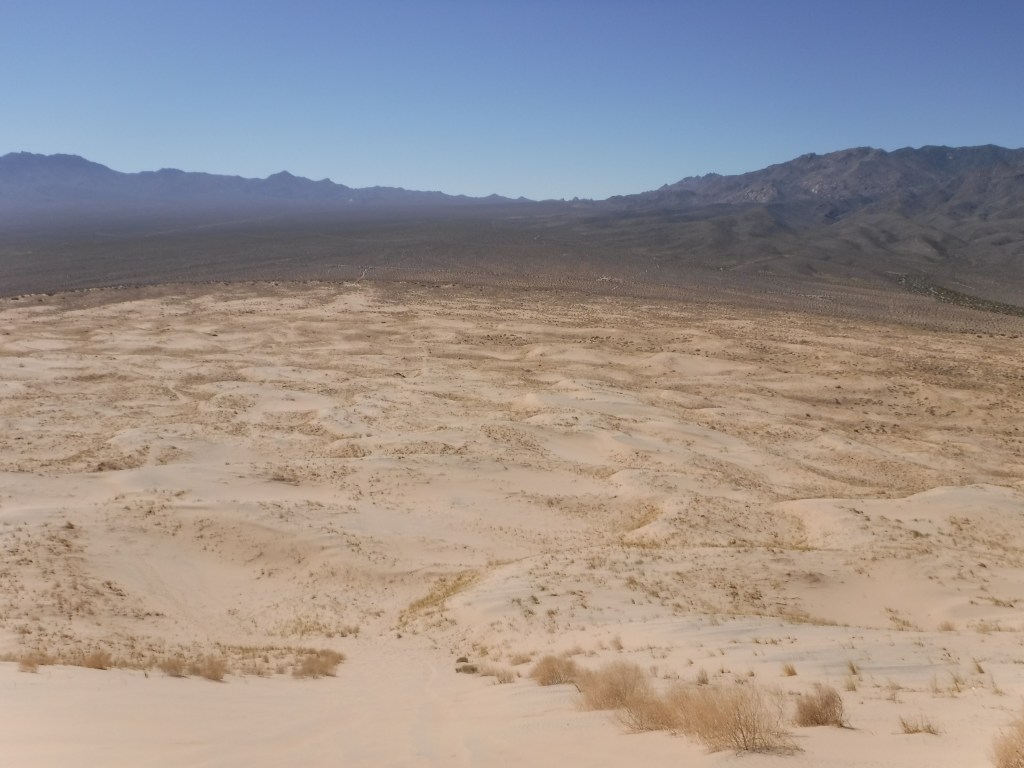
I didn’t try to dig my feet in the sand, but as I started to ascend the steepest stretch, my feet naturally sunk into the sand, and pressed further in as I tried to establish footing to push myself upwards. I paused to look around. The landscape was just so enormous. To my one side was the wall of sand, but out below me to the right spread, so immensely, the Mojave desert. The light-colored sand expanse spilled for just a mile or so into the desert, before the long stretches of valley filled with cactus and shrub took over, with the bright morning sun casting shadows, which not noticeable individually, but collectively, gave a dark brown hue to the landscape. Then as the mountains in the distance, bordering the immense valley, rose up, the higher they climbed, the bluer the tone they assumed, until, at their darkest summits, a crescendo of the breaking sky burst in a glorious white only to quickly transition to a spotless blue that covered the rest of the desert sky. 

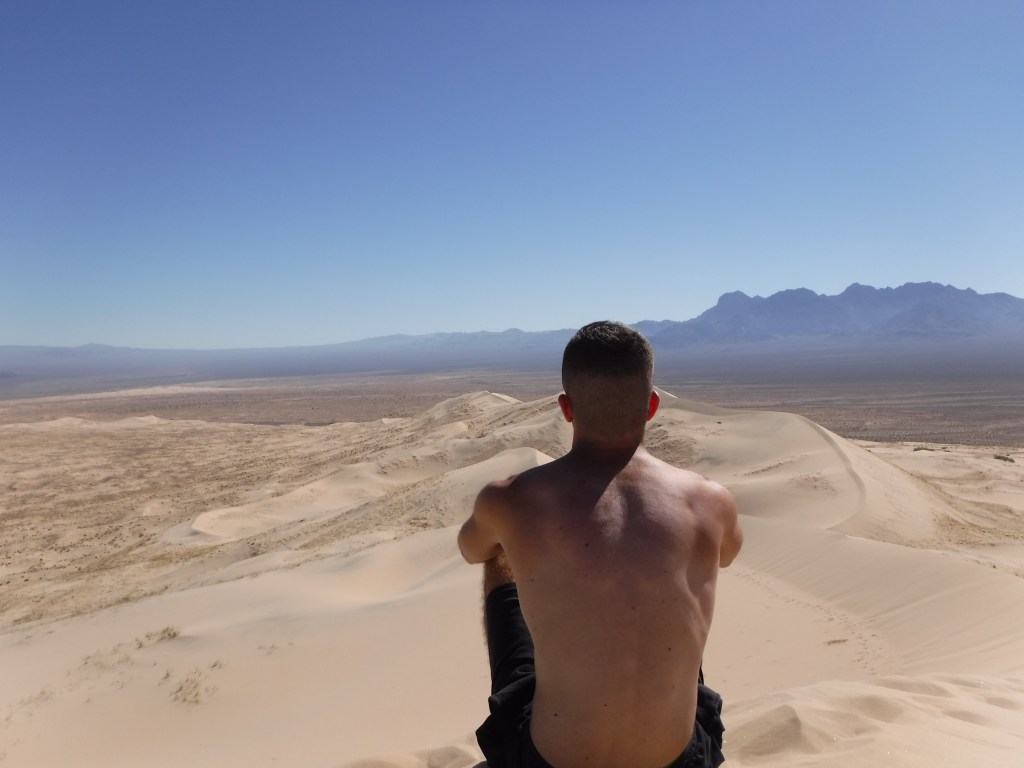
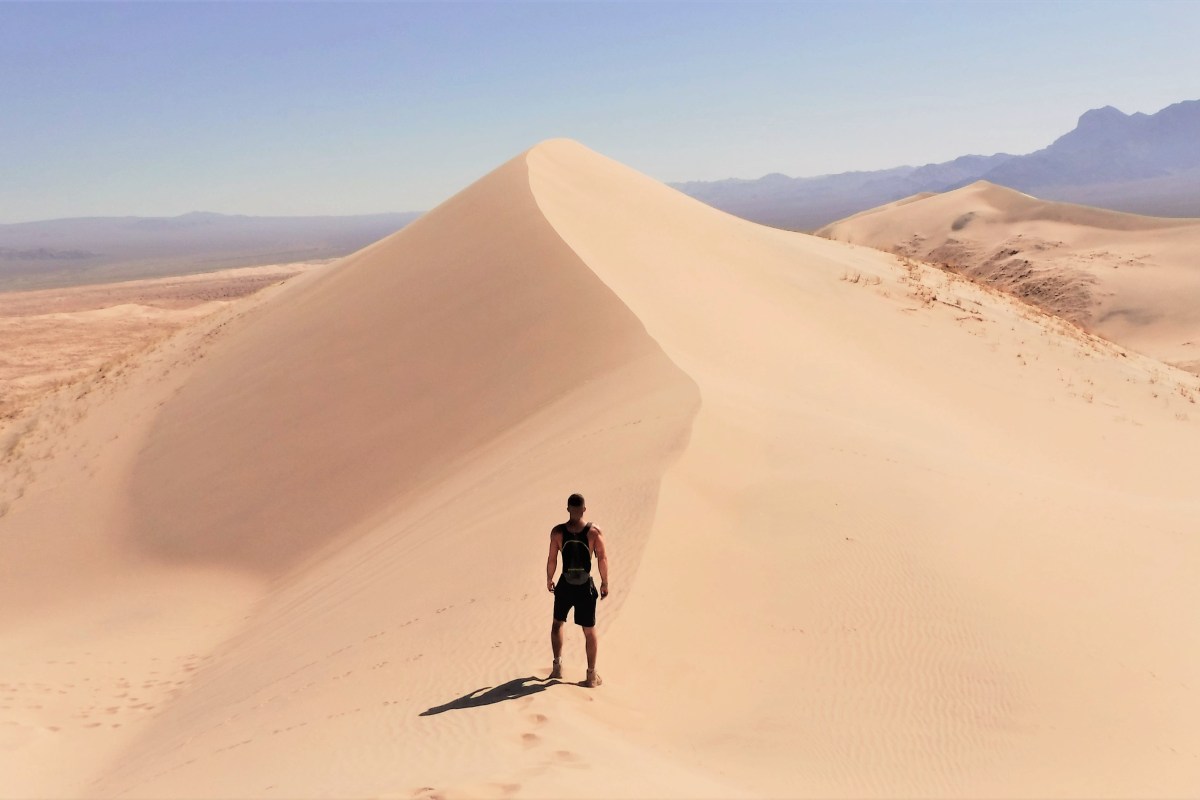
I continued on, elated, feeling as though I had really arrived upon adventure’s doorstep. Then, I reached the top, standing bold and accomplished, I looked over the other side of the dune and saw the same immensity of desert and mountain mimicked. Here at the pointed spine of the sand dune, on the Eastern side, the sand was finely combed into delicate rivets by the wind. On the Western slope the sand had been blown into one smooth, harmonious sheet of sand. The spine snaked up to a higher pinnacle. I crushed the delicate spine as I trampled my way to this final viewpoint. And there I stood in awe. I could assume, a great number of people, especially back East, couldn’t even imagine such a robust desert landscape existed in our country. I felt I was in such an exotic place, a place from fiction, and that I was the Prince of Persia.

I sat down, drank some water, ate my Clif bar, and sucked on a few electrolyte dummies. I reveled in the comforting and consuming sun. I took off my boots and sunk my feet into the soft sand. Here, from this pedestal, I looked down upon the Earth. It was one of those mountain-top experiences that puts life into perspective. The immensity of the view before me, and the diminutive nature of everything from such heights, put life into perspective. The canvas is much bigger than the small concerns we often get caught up in below.  

When I was done taking it all in, I began my descent, and the gravity of the Earth pulled me downward, and thus a single step slid well into the sloping sand before me, carrying me quite a distance. It was nothing more than a controlled falling glide into the sand, but it gave quite the superhuman sensation- a similar sensation one might get walking upon those conveyor belt  automated walkways at the airport. One stride takes you much farther than humanly possible alone, as the very ground beneath you moves in conjunction. Thus I was descending nothing short of a mountain in mere easily countable strides. The effort was minimal, so I held my head up and looked out upon the other more solid mountains parallel and at times below me. I felt as though I was descending upon the Earth in majestic style. And to top it all off, the sand beneath me boomed! That’s right, the sand beneath me sensationally responded to each of my steps! There’s a scientific explanation behind this. It has to do with the warm layers of sand meeting the cold layers beneath and sound waves getting trapped within the layers, but to me, I imagined as if it was I causing the sound, or as if the earth was shuddering to each of my steps, as if I was Zeus or some Greek god descending from the sky upon Olympus.

As supernatural musings took hold of my thoughts, I began to think of Heaven. How will man interact with the landscapes there? Will such enormous, satisfying, efficient strides be more commonplace? Distance and strenuity have a hold of man’s interaction with wild landscapes, but what if there they will be more easily traversed and enjoyed? 

I had a dream, just months prior, that I was in Heaven. I recently had read a book by David Murray titled the “Happy Christian: Ten Ways to Be a Joyful Believer in a Gloomy World.”  In it the author talks about how work is not a result of sin, but how work as we know it on Earth has been corrupted by sin. The author discusses how Adam and Eve, before the fall of man, worked in the Garden attending to it and naming the animals. They were designed, in part, for work. Eve was even created to help with said work. Thus work existed before sin, and so the author proposes that work will also exist in Heaven; that we will all have our own duties, but it will be joyous and fulfilling. I think this portion of the book was responsible for my dream, for in my dream I was at work in Heaven. I was a harvester, or scavenger, in the forests and jungles of Heaven. We went collecting exotic Heavenly fruits to bring back to the people in the Kingdom. And it was thrilling! Our feet were always bare, but they were never worn nor scratched. We would jump from mountain peak to mountain peak. We’d race through all the undergrowth of the forest, unscathed. We’d fall with the waterfalls in excitement to take us from one place to another. We were a team, such great comradery, and we were harmonious with the land. Toil was not there. The land never caused us harm. The way we interacted with it served our purpose. There was no strenuity, danger, or fatigue, such things were absent. Nature had no temperament. It agreed with us. Maybe we even had authority over it. 

It was just a dream, fun to entertain, but at the end of the day, a creation of my imagination. But here on the sand dunes in Mojave National Preserve, I felt a fragment of what I felt in that dream. The desert had no hold on me. I had power over it. It gave a shuttering boom with every step, and I could traverse it with ease. Thus I became flooded with the thoughts and awe of eternity.

I didn’t know it then, but I know it now, eternity would become a major theme of the summer. I would end up facing questions about life, death, and eternity here after. This would become a heavy but blessed summer. As I descended those sand dunes, along with the weight of gravity came the weightier questions of life: What is my purpose here in life? How do I relate to others in the time I’m given? Would I leave a legacy when I’m gone? Does that even matter? As the sand spilled down the dune, so these questions tumbled down upon me. The timing was orchestrated and perfect, although it wouldn’t be easy. I had traversed the Canyonlands, learned to be Still, Calm, and Quiet, and now it was time to face the prospect of Sunset. 

Check out my book Still, Calm, and Quiet, here: https://www.amazon.com/dp/B093RMBNCP

Generosity of the Heart

Sometimes we stress and busy ourselves trying to gather together the most fitting gifts for our loved ones at Christmas. When we search to find the best material object to convey our thoughtfulness and find ourselves at a standstill, remember that truly the greatest gift you can give at Christmas is love! This may seem trite, but it is something that has been brought to my attention twice in recent times. I began to ponder what giving love looks like. It may take different forms for different people, for love can be expressed in many ways. As for me, I perceive spending time with someone and giving him or her your full attention to be a solid gift of love.  

With that said, I do not wish to undermine the love that can be found in the act of giving physical gifts. This too can be an expression of love, but sometimes when the heart is not involved, it becomes meaningless generosity and just a ritualistic obligation. If love is to be the gift conveyed, then there must be what I have come to call “Generosity of the Heart.” 

If one is to have Generosity of the Heart, his or her heart must be willing and open to be shared. As a part of this, one must be willing to share his or her thoughts, feelings, and emotions. In addition, one must share that which they are passionate about in life. It takes a good bit of vulnerability, which may be uncomfortable for some, but it is the conscious effort which constitutes love. Love is not passive. It is an action. These aforementioned actions focus on self-sharing, but there also is the necessary component to actively participate in and engage with the life of another. One must be willing to participate in the joy of others, to celebrate with them, to help them carry their burdens, listen intently and actively, and regularly lift them up in prayer. Only then can Generosity of the Heart be active and pure love be displayed. 

For myself, it is often easy to share that which I am passionate about, and often I want my emotions to be known. I may be quick to share myself, oftentimes in word, but I know this is not the case for many people. Many people keep their true selves well-guarded and even go so far as to put up a facade of a person they wish to be. If you learn to recognize people who share their hearts genuinely, you have found quality people, friends whom will endure. Their sincerity is a constant which translates into loyalty of character. 

Some people may not employ Generosity of the Heart and will not share of themselves openly, because they have been damaged. Their hearts have been broken, and they have repaired them just enough so as to not fall apart. They are fragile, and they fear someone shattering that which has already been weakened and is barely holding up. 

I, whom in the past has been so quick to share my heart, have in recent times grown a bit more hesitant and cold. I’ve turned to the Scripture and have been confronted with Proverbs 4:23, “Guard your heart, for it is the wellspring of life.” I chastise myself for being so eager to employ Generosity of the Heart. Maybe I should have not been so willing and eager to let people in my life. This causes a contradiction and raises the question, how can I be generous with my heart yet also guard it? Are these two things supposed to coexist? Can they? 

“Generosity of the Heart” is a term I have coined and defined. Is it Biblical or simply my own thoughts? Here, we turn to the Scripture and I find it clear that God wants us to be vulnerable with others. He tells us to bear one another’s burdens (Galatians 6:2), to celebrate with one another (Romans 12:15), to resolve our conflicts (Matthew 18:15), and to be honest (Ephesians 4:25). Thus, I find the vulnerability which constitutes the Generosity of the Heart to be indeed Biblical.

So, if a heart is supposed to be generous, yet guarded, this leads me to believe that perhaps for myself, and many others, our outlook and approach to love has been greatly flawed. We often love people because of who they are, for we enjoy their character, we have shared delights, and their presence enhances our quality of life. Other times we love ultimately out of selfish motives to not feel lonely, to foster reciprocal feelings of worthiness, for emotional need or material sustenance. But the real motive to love people should simply be because God loves them. Period. We should not love to fulfill our own agenda, but should love to support others.

If we adjust our view of love in such measures, and actively open ourselves up, employing Generosity of the Heart, then we should also bring forth measures to guard our hearts, but not just any measures, rather just measures. This does not mean contradicting vulnerability by setting up walls and excluding others from our lives, instead our guard comes through prayer and devotion to God. It is keeping Him foremost and at the center, while our hearts lay bare. We are to be fortified by a strength other than our own, not by another person but by God. Also we don’t let our hearts pursue that which is immoral. We achieve this by the strength and counsel of God. By employing these tactics we find that at the end of the day, guarding our hearts is much less about our actions and much more about God’s. 

If we love people to support them and because God loves people, and not for our selfish motives or our emotional needs, then we find ourselves much more able to forgive when a loved one hurts us. We are reminded that under God we are all equal, and, in that, equally undeserving but endowed with his same love despite our shortcomings. We can then begin to coach our own selves, saying “If God can love them, then so should I.” But as humans, we can find it extremely hard or impossible to love the extravagantly unlikeable. However,  the impossible becomes possible as God endows us with his Holy Spirit which strengthens and counsels us to love the unlovable. We love with the love that God has given us – not our own. 

All of this takes us further into an exploration of love and raises the question, what are the characteristics of God’s love? It is profound and vast and surpases human understanding, but we find a description of it in first Corinthians 13:

 “Love is patient,

  love is kind. 

  It does not envy, 

  it does not boast,

  it is not proud.

  It does not dishonor others, 

  it is not self-seeking, 

  it is not easily angered,

  it keeps no record of wrongs.

  Love does not delight in evil but rejoices with the truth. 

  It always protects, 

  always trusts, 

  always hopes, 

  always perseveres.

  Love never fails.” 

The guarded heart in worldly standards is in direct contrast to this. A worldy guarded heart would keep a record of wrongs, as to avoid being wronged and hurt again. It would not always trust, as it would use more discretion. This would all seem wise, but God uses the seemingly foolish things of this world to shame the wise (1 Corinthians 1:27). Biblically speaking, to give trust is one of the acts of love, and if your heart is fortified and guarded by God, you can’t be shaken. 

Some might argue, if you love with so-called “God’s love” isn’t that insincere, as it is not truly from your heart? Well, we are asked by Jesus to deny ourselves (Matthew 16:24) and be filled with the Holy Spirit (Romans 8:9). As our hearts become aligned with His, we are able to both make selfless sacrifice and find joy at the same time in this type of love. It is the truest, most pure, transformative love, for it is direct from the source. God is the source of true love.  

Unfortunately, many people settle, or are so deceived, into counterfeit love. It is unfulfilling, creates conflict and heartache, and ends in distress. Counterfeit love always weighs the give and take. It focuses primarily on feelings, not on sacrifice. It relies heavily on the physical and while ignoring spiritual. It is motivated by emotion and winning favor, and it constantly seeks validation and fulfillment. 

This is all ill-thinking, for God should be the source of your well-being. He should be the sole source of your fulfillment, and his validation should be the only one that truly matters. We must throw out counterfeit love and tear down our worldly guards. We need to open ourselves up to Generosity of the Heart. May it be our prayer that loving people with God’s love be at the forefront of our minds. And we must take to heart and memory that “We love because He first loved us.” -1 John 4:19.

As you are reading this, you may be nodding your head in agreement, yet are not exactly sure how to put this into practice. Or maybe you are confused by the lofty rhetoric. Let’s put it into practical tasks. To employ Generosity of the Heart, here are some guidelines to get started: 

  • Seek opportunities to celebrate with one another.
  • Take the time to truly listen.
  • When you start to feel resentment or just frustration, pause, and remember that God loves that person.
  • Be willing to open up and share your feelings with others. 
  • Participate in someone else’s favorite activity or show interest in his or her passions.
  • Regularly pray for individuals’ spiritual growth.
  • Spend time in prayer, in the Bible, and in God’s presence daily, to fortify your own heart. 

…And Remember, the greatest gift you can give at Christmas and in the upcoming new year is love which comes through Generosity of the Heart.

If you enjoyed reading this, check out my book “Still, Calm, and Quiet

How Dolly Parton and Dollywood Changed My View of Santa Claus

Setting the Stage

Dollywood’s Smoky Mountain Christmas event that takes place every winter is unparalleled to any other Christmas production. The park is trimmed with Christmas lights all over the place, heart-warming tales are brought to life in great musical productions and the smell of warm cinnamon bread from the grist mill is caught in the cool mountain air. These are just a few of the highlights. Along with all these things celebrating the season, Dolly Parton, and her theme park, have even had the ability to change my view of Santa Claus.

It was a few Christmas seasons ago that I decided to check out this place called Dollywood and see what it was all about. I was impressed, mesmerized by the sights and sounds and thrilled that such a place was a mere weekend trip away from my home in Kentucky. 

Dolly and Kenny’s I Believe in Santa Claus

Unsure of where to begin, nearly racing around the park in excitement, taking in all I could, I eventually boarded the Dollywood Express- a real steam locomotive, chugging around the park. As it climbed up one of the foothills of the Smokies, a song was piped into the train, “I Believe in Santa Clause,” by Dolly Parton and Kenny Rogers. I was relatively new to Dolly Parton and hadn’t heard this song before. It was from Dolly and Kenny’s 1984 Christmas album, “Once Upon a Christmas.” Among its lyrics are a string of positive sayings, including:

“I believe when someone hurts us we should forgive and forget” 

“I believe in family, in country and in smiles” 

“I believe in saying what you mean and meaning what you say” ‘

“I believe a better attitude can make a better way”

“I believe love should prevail at any cost”

“I believe I am so therefore I should do all that I can

To be a better piece in the puzzle of God’s plan.”

Along with all these statements, repeated in the main chorus, is added “And I believe in Santa Claus.” I was attentive to the song. It was catchy and festive, but I wasn’t quite sure what to make of the lyrics. Were they simply sugar coated and frosted feel good words for the holidays, or did they have more meaning? And if they did hold meaning, how exactly would Santa Claus equate to love prevailing at any cost and forgiving and forgetting. The Santa Claus we know of gives gifts to children on Christmas and has a naughty and nice list, but Dolly has associated him with much more. As a Christian, I honor the fun and cultural tradition of Santa Claus, but I don’t oversaturate my Christmas with this character, when to me Christmas has a much deeper meaning in Christ’s birth. Is there a way to reconcile Santa Claus with my religious belief of Christmas? 

Now it is true, whom we consider Santa Claus is a historic figure. Only his story and attributes have been fictionalized greatly over time. What we do know is that the original Saint Nicholas, from whom we have derived the modern Santa Claus, was a third century Christian bishop in Asia Minor known for his good will and secret gift giving, but think about who he has become today. Who is Santa Claus to you?

Twas the Night Before Christmas

In Dollywood, there is a stage production every Christmas season called “Twas the Night Before Christmas.” It’s largely about Santa Claus, not the historic saint, but the jolly man of today. The mother in the stage production says, “Santa Claus is generosity personified.” She sings, “You find him anywhere you find unselfish love,” and “If there is kindness in this world, there is a Santa Claus.” This is when the Christmas light came on in my mind. 

Believing in Santa Claus, as Dolly has put in her songs, is not simply believing in the magical man in the red suit. It is believing in a spirit of kindness, of giving and goodness. Dolly expounded further on this concept by explaining her song, “I Believe in Santa Claus,” in the audiobook version of “Songteller: My Life in Lyrics.” The man we know as Santa Claus is the personification of those good things Dolly sings about. Santa Claus is all the good will of Christmas wrapped up and materialized as a person, from God Reaching down with the greatest gift of all in a manger, to the hope that brings and the love that it displays. He also personifies the excitement in our hearts this time of year, the joy in our celebrations and the love and generosity which has been shown to us, which we extend to others. Santa Claus is the spirit of all of this. He’s all of it wrapped up in a character, or at least that’s what Dolly and her theme park have convinced me.

Be More Santa Claus

It’s easy in the gloom of winter to become pessimistic and let coldness creep in our hearts, but pause, do you see Santa Claus? Look for him in the acts of kindness this season. You’ll find him in the selfless acts of love, in kindness between strangers, and the care of a neighbor. Be encouraged as you seek out the good around you this Christmas, but also be reminded not to just look for and recognize the good things around you, but remember to encompass that spirit in your own life. The Christmas season is a great time to bring generosity and kindness to the forefront, and bring light to others in the dark of winter. It could be time for us all to be just a little more Santa Claus. 

Insider Tips

– You can catch Santa Claus in person at work in his cabin in the Smokies at Dollywood during Dollywood’s Smoky Mountain Christmas event.

– Seeing the “Twas the Night Before Christmas” stage production is well worth your time and a great way to celebrate the spirit of Christmas. 

– Take a train ride on the Dollywood Express. Plan to get there ahead of time to secure a spot and enjoy the Christmas lights from the train. 

– A Dollywood season pass can make a great Christmas gift. 

Listen to Dolly and Kenny’s “I Believe In Santa Claus”

Everything to Know About Joshua Hodge’s New National Park Book

My new book is here! What is it about and why should you read it? I want to address this questions and more, so you really know what’s up with this book and why I’m so excited. 

What is this book about?

This book chronicles a month-long adventure of camping and hiking in the U.S. National Parks in the summer of 2017. It features humorous and adventurous accounts, and descriptions, of the natural world, and it explores the inspiration gleaned from such experiences. It also explores the question of, what should be our response to natural beauty and the craftsmanship of God? It is not only an account of the physical adventure, and the things learned along the way, but also a look into my mind and the thoughts I have as a solo adventurer.  

Why did you write this book?

Back in 2016, after another summer of adventure and being so inspired by my experiences,  I started blogging. I realized I had a lot I wanted to share from my past adventure. As a writer, I used to write more fiction, but I realized my real life adventures provide all the engagement and entertainment one seeks in a good story. I came to find an audience online that appreciated and was inspired by my writing. I also had things I learned that I really thought others could benefit from, and not only that, but I wanted to inspire people to get out and come to realizations on their own. I decided to refine and compile what I had written, as well as include additional pieces, to create my book, Canyonlands: My adventures in the National Parks and the beautiful wild. I knew from the very start this would not be a stand-alone work. Still Calm, and Quiet: More Adventures in the National parks and the beautiful wild is the second installment in this series. 

Should I read Canyonlands: My adventures in the National parks and the beautiful wild first?

I would love it if you read Canyonlands, but you don’t have to read it to enjoy Still, Calm, and Quiet. In its intro and opening chapters, Canyonlands gives a little bit more background and provides more of the logistical details of my travels.

Who published this book?

I am my own independent publisher and own all rights to my work. I design and format my publications. By meeting publishing standards, I am able to work with Amazon for printing and distribution. 

How long did it take to write this book?

I began writing this book in 2019, before Canyonlands was published. It has taken me about three years. I had some journal entries and writings written during the 2017 travels that were incorporated into chapters of the book. 

What makes this book unique?

This is very much a variety book. In addition to my adventurous accounts and exposé of inspiration, this book includes two biographical works, a fictional piece, a couple poems, over 100 black and white photos, and dozens of vintage illustrations. It has some great stories of me passing out, encountering a mountain lion, getting caught in a lightning storm, having my camp attacked by squirrels, being stuck in a buffalo jam, getting lost on a mountain, and much more! 

Where can I buy this book?

Currently this book is only available on Amazon and is eligible for regular and Prime 2 day shipping. In a few months it should be available from walmart.com and other online retailers. Buy here: https://www.amazon.com/dp/B093RMBNCP

Is this book the same collection of stories found on your blog?

Some of the stories are the same as the ones found on my blog, but they have been refined, reedited, and augmented. A number of them are not and are only found in the context of this book. As one of my blog readers, you will find this new and fresh.

What are the parks featured in this book?

Chiricahua National Monument (AZ)

Fort Davis State Park (TX)

Big Bend National Park (TX)

Rio Grande National Scenic River (TX)

Chamizal National Memorial (TX)

White Sands National Park (NM)

Guadalupe Mountains National Park (TX)

Carlsbad Caverns National Park (NM)

Dinosaur National Monument (UT/CO)

Grand Teton National Park (WY)

Yellowstone National Park (WY/MT)

Bruneau Dunes State Park (ID)

Craters of the Moon National Monument (ID)

Wild Horse State Recreation Area (NV)

Rye Patch State Recreation Area (NV)

Lassen Volcanic National Park (CA)

Shasta State Historic Site (CA)

Whiskeytown National Recreation Area (CA)

John Muir National Historic Site (CA)

Is this book content appropriate for all readers?

Yes

What other books have you written?

Wild Christmas (2006)

Dakota Broken (2015)

Among Blue Smoke and Bluegrass (2018) 

Canyonlands: My adventures in the National Parks and the beautiful wild (2019)

Señor Hodge’s Casa de Mascotas (2020)

Theodore Roosevelt for the Holidays: Christmas and Thanksgiving with the Bull Moose (2020)

Buy Still Calm and Quiet here: https://www.amazon.com/dp/B093RMBNCP

www.joshhodge.com

Seeking Silence in God’s Presence

Consider these three commands: Be still. Be calm. Be quiet. Do they have merit and meaning in our spiritual lives? These directives were put on my heart so poignantly, that I wanted to explore them further and test them against scripture to unpack their meaning and find if they had merit. 

“Be still, and know that I am God. I will be exalted among the nations. I will be exalted in the earth” – Psalm 46:10. This is the verse that first comes to mind when I consider the instructions, “Be still. Be calm. Be quiet.” But what does this instruction “be still,” really entail? It has to be more than an instruction to stop physically moving. I think we often interpret it to be a verse of comfort, a phrase to cast out fear, but as I look into it, it’s really more about honor and worship. It’s about submitting to God. The Hebrew term is “raphah,” which is translated as “cast down,” “drop,” “weaken,” even “to fail.”  We see it translated as “to fail” in Deuteronomy 31:6  “Be strong and of good courage, fear not, nor be afraid; for the Lord thy God goes with thee, he will not fail (raphah) thee nor forsake thee.” So with “raphan” meaning “to fail,” how can it be that God is calling us to fail? I believe it is a call of surrender, to heel to His will, to lay our own will down before Him. It is to recognize His awesomeness, humble oneself and “fail” and “fall,” if you will, before Him. It is knowing that He is God. He is exalted. It is not about you. Take whatever plans you have and selfish motives and lay them before the Lord, for He is good. 

Everything that churns in your mind or that concerns you, belongs to Him and His lordship. 1 Peter 5:7 says, “Cast all your cares on Him, for He cares for you.” But also Psalm 46:10 when it says “be still,” can apply to your whole being, not just your will. It can be a complete whole-being surrender, knowing that you are man and He is God. He in in charge. This command may seen harsh and demanding. Well, I think it is. There is the authority of the almighty God in these words. He is deserving and justified in his command. 

Although these words may be direct, authoritative, and could even be seen as a raising of the voice, we are also instructed to “be calm.” God is love. Love casts out fear. In Exodus 14:14 Moses instructed the Israelites: “The Lord Himself will fight for you, just stay calm.” or in other translations, “hold your peace.” This was commanded when the Israelites were being chased down by the Egyptians and approaching the Red Sea, a seemingly impassable barrier. Can you imagine the stress? If the Israelites were supposed to be calm and “hold peace” while cornered by the Egyptians at the Red Sea, how much more can we be calm in the situations of our lives?

 More than any other command in the Bible we are told to “hold our peace” or not worry. In the NIV translation we are instructed to “not be afraid” seventy times, and in the KJV “fear not” is commanded over 500 times. Could God be any more clear, “be calm”.

In the gospels we read of the disciples on a boat with Jesus, afraid of the storm stirring. We read of Jesus sleeping but then getting up when the disciples expressed distress. He rebuked the wind and said to the waves, “Peace, be still!” Then the wind died down and it was completely “calm.” He said to his disciples, “Why are you so afraid? Do you still have no faith?” 

When the angel Gabriel appeared to both Mary and Joseph he instructed them not to be afraid. One reason could be that the heavenly being was so different to behold that it struck up fear, but also it is our human nature to fear. How many different fears can we label with a “phobia”? How often is our stress rooted in fear? There is a reason we are instructed so many times to calm our fear in the Bible. To live in this fear is our default human setting, but whether acute or chronic fear, God is here to deliver us from it, and He commands us to “heel” and “be still.” The battle belongs to him. Our fear has no merit. It has no credit in the presence of God. 

To behold this type of peace, as commanded, is to know you are complete, you lack nothing. The origins of the word peace is the Hebrew word ”shalom,” literally translated to “completeness.” How often is our lack of peace caused by a notion that we are not equipped or complete? Our stresses are caused by lack of finances, inability to change circumstances, fear that we will not have what we need, that things will not turn out the way we imagine, that we are not enough. Heal, before Him. “Be still,” “Be calm,” for you are complete in Him. Fear is but frivolity. If we could only truly adopt that would we be so better off. 

“Be quiet” I think is quite synonymous with the others. It reinforces and compliments them, but also it has its own subtle notions. In James 1:10 we read “Know this, my beloved brothers: let every person be quick to hear, slow to speak, slow to anger.” This is often taken in an interpersonal regard, but what if we apply it also in our relationship with God? How mindful are we of the voice of  God, versus how much are we distracted by our feelings and are too busy listing our grievances in prayer or lifting up verbal praise that we forget to silence ourselves before the Lord? In Psalm 37:7 we are instructed “Be still before the Lord and wait patiently for him.” Hearing from God may often involve quietude and patience. 

I know there is a time and place for celebration, for exalting God with words and songs in community or in private, to teach and instruct from the written word of God, to pour out our hearts in words to God in prayer, to write, reflect, and read from others inspired by His word, but could it be that sometimes our words are but ornaments, or adornments, on our religion? In 1 Peter 3:3 it is said, “Do not let your adorning be external—the braiding of hair and the putting on of gold jewelry, or the clothing you wear— but let your adorning be the hidden person of the heart with the imperishable beauty of a gentle and quiet spirit, which in God’s sight is very precious.” Can sometimes our words be external adornments? Is what’s more valuable a “quiet spirit”? We have to be careful. Proverbs 10:8 says, “The wise of heart will receive commandments, but a babbling fool will come to ruin.” It implies that wisdom involves silence and listening.

Can you find a place to embrace the silence, to simply acknowledge your presence before God and rest in his peace? Can you set all your words aside for a moment. Perhaps you’ll find this place in a walk in the park, a hike in nature, a drive in the car, taking in the sunset, looking out the window, or sitting in a pew of a church or cathedral.

While the world may run around self-absorbed and laser-focused on selfish plans, being esteemed as “empowered”; the media may manipulate us with fear saying “do this to stay safe and healthy,” or  “buy this to not miss out and to fit in,” or “vote this way to prevent imminent doom,” and then praise us as being “prepared” and “responsible”; and while babble, chater, heartless words, noise, distractions, and slander boil up all around; Heel. “Be still. Be calm. Be quiet.” Recognize your completeness in Him, your security in Him, and your place in the awesome presence of God. He cares for you. 

Be Still (Heel!)

– What plans do you have, immediate or long-term, that you need to place before the Lord, to set in His hands.

– What are some attributes of God character that you can praise Him for as you surrender and humble yourself before Him.

Be Calm.

– What worries do you have that you can give up to God? What attributes of God’s character directly address these fears?

– In what ways has God delivered you or His people from troubles in the past? 

Be Quiet.

– Just be quiet. Acknowledge your presence in the almighty God and rest in His care and His peace. 

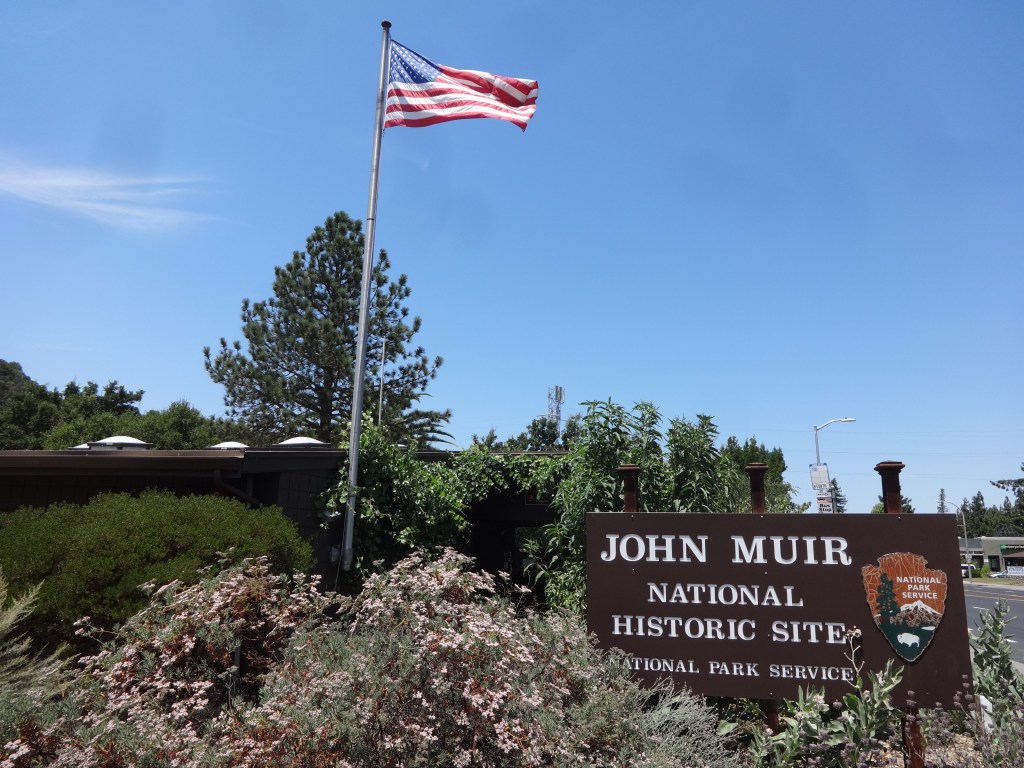
Visiting John Muir’s Home

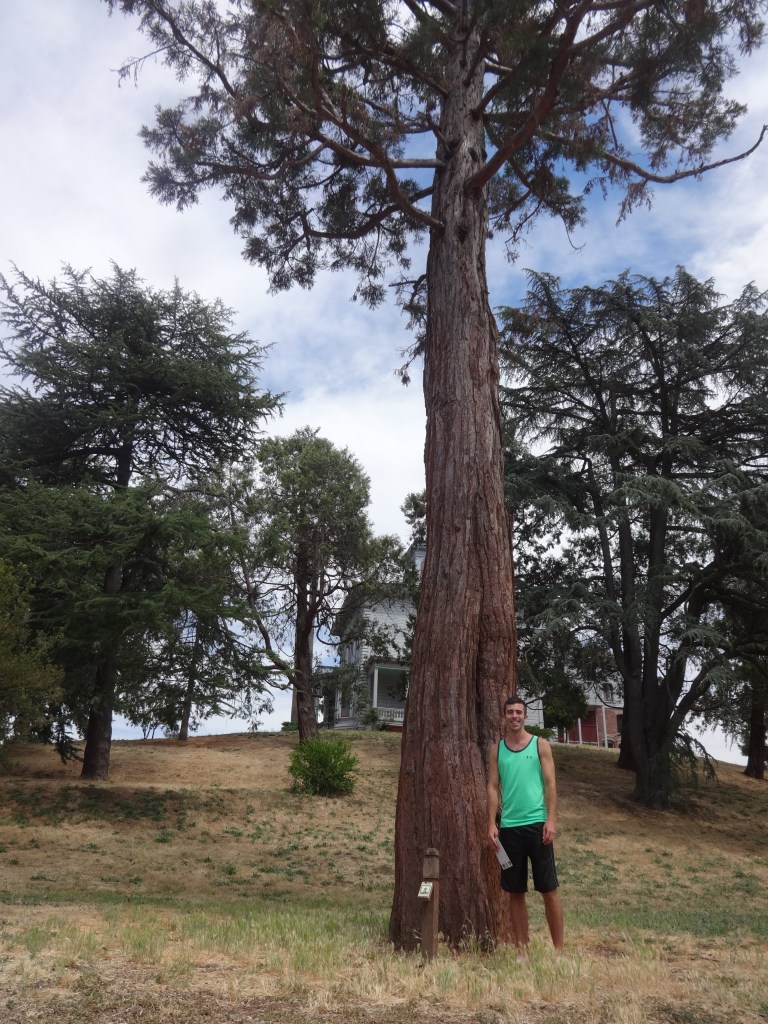
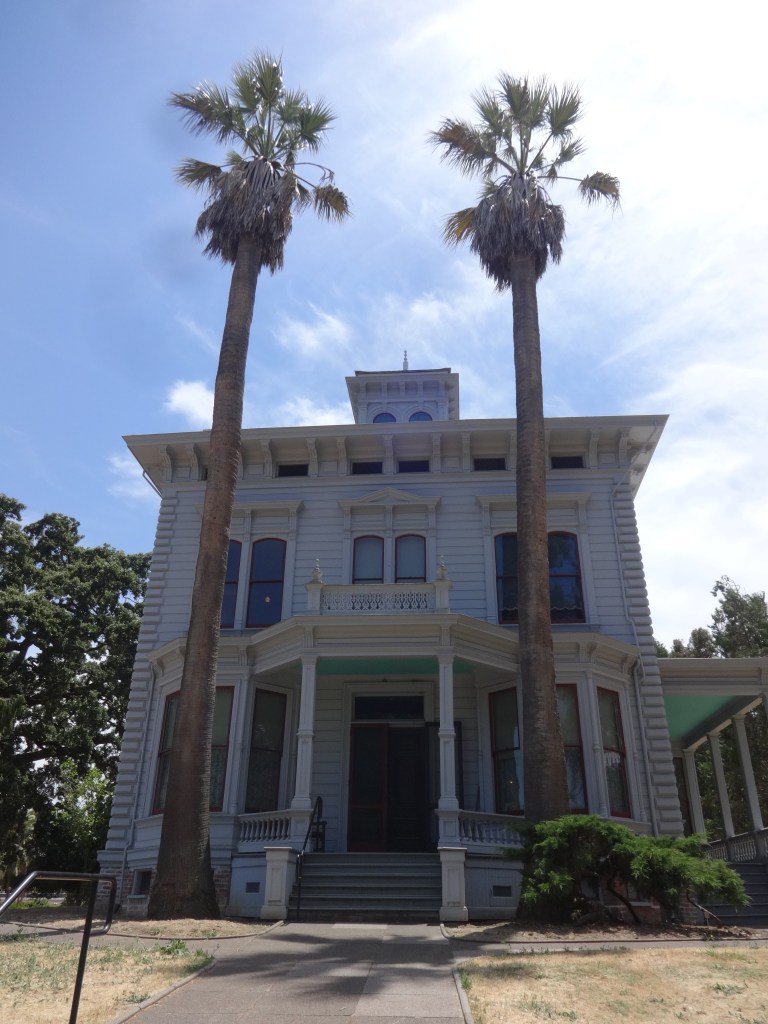
I was at the home of John Muir, one of my favorite modern historical figures whom I would file right next to Theodore Roosevelt. I was excited. Before me stood his Italiante Victorian mansion in the Alhambra Valley of Martinez, California. It was a tall boxy white house with palm trees in front. Behind it lay orchards and a giant sequoia. I thought I was coming to this National Park site the summer before, but I found myself at Muir Woods National Monument, a pocket of forest named after John Muir, instead. I was confused, for I couldn’t find his house, but now I was here. I made it!

I first came across the name John Muir on a small leather pocket-sized journal that had the overused quote on it, “The mountains are calling, and I must go.” I went on to learn a lot about him through the Ken Burns documentary: The National Parks. Later I couldn’t help but learn more about him at Yosemite National Park. My intrigue was sparked. I bought his book “A Thousand-Mile Walk to the Gulf,” at the visitor center of the Big South Fork in East Tennessee, and then listened to a number of his books in audio. His eloquent descriptions of nature and his ability to engulf the reader (or listener in this case) in his words, removed me from my troubles and lulled me to sleep pleasantly many nights. 

Upon reflection, I have found I esteem and value John Muir for primarily four reasons: his perspective, his contribution to conservation, his writings, and his simple intrigue. I thought before describing his home, it is worthwhile to explore what John Muir means to me, so I will unpack each of these reasons. 

In regard to perspective, John Muir viewed nature in such a meaningful and profound way. No other person has been able to influence my view of nature and add such unique meaningful perspective as John Muir. He beheld great wonders of nature as “cathedrals,” spiritual, soul enriching places crafted by God, direct artistry by Him. The Yosemite Valley was perhaps his favorite of cathedrals and he advocated tirelessly for its preservation. “No temple made with hands can compare to the Yosemite,” he’d write. He believed these sacred places were means of healing and restoration for man. “They will kill care, save you from deadly apathy, set you free…” His sacred view of nature has helped me to approach nature in such a manner as to silence myself, step lightly with wonder, and appreciate the brushstrokes of the Creator. 

In addition to his perspective on large areas as sacred temples and cathedrals, he also gave a great deal of thought to the small minor details in nature. He studied plants meticulously out of sheer joy and interest. He saw consistencies in design elements among even the most diverse of things, what he found to be trademarks of a common designer. He believed everything in nature was connected by this craftsmanship. His thrill of a small flower or treasure in a droplet of dew, has influenced my ability to find beauty, appreciate the small details, and look for those signatures of God even in the commonplace occurrences of nature. “Nowhere will you see the majestic operations of Nature more clearly revealed beside the frailest, most gentle and peaceful things.”

These perspectives of course are evident through his writing, and I value his writing beyond even these unique perspectives, for he writes intriguing and daring tales of adventure in all climates and terrains. He tells us about his thousand-mile walk from northern Kentucky to the Gulf of Mexico on foot, his days of pasturing in the Sierra Nevada, his trekking up glaciers in Alaska, and so much more. His writing is eloquent, clear, and descriptive. He is an excellent writer, a fine craftsman with his words. I also delight in his personification of the elements of nature. In a storm he once described trees as “excited, bowing to the roaring storm, waving, swirling, tossing their branches in glorious enthusiasm like worship… No wonder the hills and groves were God’s first temples.” And when describing the winds, they were “singing in wild accord playing on every tree and rock, surging against the huge brows and domes and outstanding battlements.”

It was largely through his writing he was able to persuade efforts toward conservation. Whether through direct plea or exhibiting the value of nature through his wondrous descriptions, his goal was to get people out in nature and discover its value for themselves. Although not founded until two years after his death, John Muir is considered the father of the National Park Service because the principals of the park service were so profoundly rooted in Muir’s ideals and advocacy. Although his legacy runs through the whole National Park Service, Muir is most largely connected with California and with Yosemite National Park. He once guided Theodore Roosevelt on a famous camping trip in Yosemite. Camping beneath a giant sequoia, he convinced Roosevelt to preserve this national treasure as federal land. Without Muir, many of our national park treasures may have been lost to industry and manufacturing. Muir set the stage and started the conversation for the conservation of our public lands. He did so with such fervent passion, often most exhibited behind the pen. 

Aside from his perspective, his writings, and his contributions to conservationism, I also am a fan of John Muir, because he is simply an intriguing individual. He once climbed up a tree in the middle of a storm to feel what the trees feel and write about it. He peered over Yosemite Falls to see what the waters see when they are about to fall. He camped in a graveyard on the moss, for there was nowhere else to go, and he tells us about it. I do not aspire to be like him in this regard. He is a little too much for my liking to model after. Even he himself advised people not to follow in his daring ways. He was self-aware and knew he was on the fringes of sanity, but this makes him all the more interesting to follow in writing. He takes people to places no one else will go.

So here I was at his home in California. How did such an eccentric man live at home? I thought. John Muir wasn’t always from California. His family was from Scotland. He immigrated with his family at age eleven and settled on a lot of land in northern Wisconsin. They toiled and formed that land into a farm. As a young man he moved to Indianapolis and was working in a factory until a metal blade punctured his cornea. Per doctor’s order, he remained blind-folded in a dark room for four weeks, dreaming and longing to see the beauty of the natural world. He thought his sight was gone, but it recovered, and Muir was a changed man. He adopted as he would call it, the life of a “tramp” traveling the nation from one pocket of wilderness to another. He wound up in California, and after extensive exploration, he married Luisa Strentzel. Together they started a family and inherited the house here in Martinez from her parents.

 At this home he’d fully engage in agriculture, planting and harvesting in his orchards. Here he’d also write many books and articles and embark on more explorations, and here he would live up until his death on Christmas eve 1914.

Given that Muir was such a nature loving, versatile man, who often was found camping out in the wild, it is peculiar to imagine him in such a fine Victorian style mansion. But the inside was not overly lavish nor pompous. The well-versed park ranger led a small group of us on a tour. On the main floor in the dining-room he explained how Muir would often tell whimsical and colorful stories to children at the dinner table. One in particular, remembered by his children, was about a kangaroo who would carry a leprechaun around in her pouch. Oh how I wish that story was written down! Muir did not write down his childrens stories, except one about their dog Stickeen in Alaska. 

When we proceeded to the second floor, there I saw the “Scribble Den,” his study, his desk where he penned all his famous works, and reached out to politicians and publishers and the public to save America’s wild lands. I nearly got goosebumps- knowing from this room came such influential writings. 

Despite how satisfying it was to see the “Scribble Den,” perhaps the highlight of my visit was the plum orchard out back. The park ranger said, feel free to pick any of the fruit off the trees.”

What?! These trees were planted by John Muir himself! I can eat an actual John Muir Plum?!  As I walked around the orchard, I read little placards about the plants. John Muir introduced us to new variations of fruit, cross bread and cultivated. I picked three plums and revelled in the novelty of such an experience. 

Upon leaving the yard I examined the sequoia tree. Muir planted it over a hundred years from a sapling of the Sierra Nevada. To this day it still stands. From there I returned to the visitor center where I browsed the John Muir books for sale. I bought “The Story of My Boyhood and Youth,” which is a great and surprisingly at times, comical read; and a copy of his children’s story “Stickeen.” I also bought two post cards, the ones featuring Muir and Roosevelt standing at heights in front of Yosemite Falls. I’d write my parents and older brother and sister-in-law about my experience.

I often wish more people knew about John Muir and could approach nature and wild places with his perspective. I despise obnoxious music being blasted by fellow hikers or camping in a park amongst loud and rowdy drunkards, or seeing people littering our forests and defacing our rocks. If more people would approach nature like Muir, with reverence, curiosity, and sacred wonder, I think it would do them and everyone an immeasurable good. I certainly owe a debt of gratitude to Muir for the way he has shaped my view and appreciation of nature.

Read the previous entry “Whiskeytown and Shasta” here: Whiskeytown and Shasta – on the verge (joshthehodge.com)

Check out my book Canyonlands: my adventures in the national parks and the beautiful wild here: https://www.amazon.com/Canyonlands-adventures-National-Parks-beautiful/dp/1711397873

Whiskeytown and Shasta

My weathered clothes spun in the washing machine as my mind spun with thoughts. I was at the KOA campground outside Lassen Volcanic National Park in Northern California. It had been a very full day, but I wasn’t reflecting on what the day had been. Instead, I was planning and looking forward to the next and final leg of my summer adventure. I had gone as south as I could and was now as north as I would go.

The day had taken me to many points of interest. Leaving the proper boundary of Lassen Volcanic National Park, I traveled about an hour over to Shasta State Historic Site on my way to Whiskeytown National Recreation Area. The historic site contained the preserved remains of one of California’s once busiest gold mining towns, “Shasta City.” Along with ruins and the facades of old buildings, there was a rustic blacksmith shop, a bakery (which was unfortunately closed), and the old restored town hall which featured the site’s museum and historic jail. I paid $3 to go in the museum. It was well put together and informative about the Gold Rush in Shasta City. Here I learned about the influx of Chinese immigrants that came to California searching for gold. I’d later come to find that this type of immigration was common in many California mining towns in the era. The Chinese immigrants, however, got second dibs to the earth, sifting through rock already mined by the American miners, searching for whatever may have been missed and remained. Here in the museum I also saw artifacts from this old Western town, including vintage gambling machines from one of the town’s past saloons. In the basement of the museum was the jail, the highlight of the site. Down in the cells, holographic prisoners appeared to tell their stories of what landed them in jail. It was pretty high-tech for a state park. Between the information presented, the artifacts shared, and the holograms in the basement, this little museum captivated my mind and took me back to the California Gold Rush. If in the area, I would not pass this site up. It is worth a stop.

After my visit at Shasta State Historic Site, I visited another National Park unit: Whiskeytown National Recreation Area. Approaching, I tuned into an AM radio station giving general advisory warnings for tourists. I stopped at the Visitor Center to get a park map, inquire about hikes, and purchase a sticker. The main attraction of the area, and center of the park, was the Whiskeytown Lake- not nature’s lake, but one created by a dam in 1962 which flooded and covered over most of the once mining town. Water sport and lake recreation is big in the area, but I also found there to be quite a few waterfalls on short hikes. I was going to have a full experience, so I needed to get on the water and see some waterfalls.

I drove on the park road, which wound around the deep blue lake, scooting into mixed forests of conifers and deciduous trees, then revealing, occasionally, short mountains. Along the water’s edge and the road’s side were beige rocks. Despite trees, there seemed to be little shade. The trees were young, short, and the bright day’s sun reached every angle in the park.

My first stop was at Oak Bottom Marina. Here I rented a kayak and got out on the lake. I asked the attendant in the marina where to paddle. She told me about a sunken road in the middle of the lake that’s close enough to the top of the lake that I could get out and stand atop the underwater road. I thought that sounded interesting, but when I started paddling, the water seemed choppier than what I expected and motorboats went zooming by, creating jolting waves. The water didn’t look inviting either. It was dark, appeared quite deep, and had a mysterious essence. I did not want to end up tipped over in the water, so I stayed a bit closer to the water’s edge and paddled over into the lagoon-like area of Grizzly Gulch. Here the water was green, shallow, and warm. Trees grew right alongside the water and even leaned over the water’s edge- giving it a more of a Floridian Jungle Cruise feel.

After an hour on the water, I proceeded on the park road to my first waterfall: Crystal Creek Falls. Here I noted the temperature. My car displayed 114 degrees. This would be the hottest temperature I had experienced thus far in all my journeys. I liked it, for it was dry and comforting.

This first waterfall was named correctly for the water flowing from it was crystal clear. It was a short, stubby, rocky cascade but pleasantly attractive despite its stature. I kicked off my shoes to get down into the clear swimming hole at the foot of the cascade. It was very cold, surprising so for such a hot day, but then not surprising considering the snow-covered volcanic peaks not far off. As I was taking pictures of the waterfall my toes grew numb. Then I decided to immerse my whole body into the water for a fraction of a second. It felt so refreshing. A family made its way down to the water, and I decided to leave it all to them.

I drove just a little way further to the trailhead for Whiskeytown Falls. This 1.7 mile one-way James K Carr Trail was a heavily wooded and shaded area, unexpectedly reminiscent of some of the Big South Fork trails in Tennessee. Whiskeytown Falls was a taller series of cascades. It was reported to be 220 feet tall, but I can confirm that only a portion of that footage was visible from the trail.

Before leaving Whiskeytown I stopped by East Beach. I had all intentions of relaxing on the beach, but it was crowded with both people and ducks, and the humans were blasting their ranchera music as they disregarded the serene qualities of nature. I decided to continue on.

I headed into downtown Redding specifically to see its modern Sundial Bridge. It was a sleek and pleasant spectacle with its enormous sundial reaching into the sky above the Sacramento River. I hadn’t been in an urban environment since Albuquerque, and so it felt strange. I drove around downtown Redding a bit, but nothing else caught my attention. I was excited at the time for the amenities of urbanization, and thus before I made my way back into the mountains to the KOA, I visited a rather large grocery store. I bought some Greek yogurt to have right away and some milk and cereal to enjoy at my cabin.

It was here in the KOA I finally made the decision to alter the remaining route of my adventure. The itinerary had me going to Yosemite. Although it would have been a fine destination, as I have been to Yosemite before, the California coast with its sand and beaches was calling my name. I wanted to reach the ocean. I could make this work. I knew I would lose money on my camping reservations at Yosemite, but I was willing to let that go. Given that cell phone service did not reach this KOA, I asked to borrow the phone in the campground office to call the KOA in Visilia. Success! They could reserve me a campsite. This would just be a stop on the road on my way to the Los Angeles area. I thought perhaps I could stay with my friend Ricky in Huntington Beach, just outside of LA, but I had no means of reaching him. I figured if I didn’t get a hold of him, or visiting so last minute didn’t work out, I could always camp up in the bluffs by Laguna Beach at Crystal Cove State Park. I had camped there two summers prior. The uncertainty and the veering off the itinerary were exciting. I had been on the road long enough now, and had worked through so many situations already, that I had grown accustomed to figuring things out as they arise and making my way around. I would make it work.

The kind people at the office in this Lassen KOA, after letting me borrow their phone, informed me they were getting ready to close their office, but they rang out a pack of laundry detergent for me, and guided me to their washing machines. “Just turn the lights off when you are done.” I love the friendly mom and pop nature of KOA campground (or “Kampground”) hosts.

As I waited for my laundry, I studied the maps. On my way tomorrow I could swing over by the outskirts of San Francisco and visit the John Muir National Historic Site- the once home of the famous man! I had intended to go there the summer before but accidently ended up at Muir Woods. Yes, I decided. I would pencil that in.

When I had all my clean clothes in hand, I made my way back to my camper cabin. This KOA was small and compact, but the owners took pride in it and paid attention to detail, and it was quaint, all nestled in the pine forest among volcanic peaks. In freshly laundered pajamas, I enjoyed a cup of cereal and milk. I turned off all the lights except the small reading lamp attached to the cabin wall behind the bed. I was warm and cozy. My tummy was happy and full of sugared grains. I had a full day and was excited for the final few days that remained of my summer adventure. 

Read the previous entry “Attack of the Squirrels” here: Attack of the Squirrels – on the verge (joshthehodge.com)

Check out my book Canyonlands: my adventures in the national parks and the beautiful wild here: https://www.amazon.com/Canyonlands-adventures-National-Parks-beautiful/dp/1711397873

Attack of the Squirrels

This was no ordinary enemy. It was smart, effective, and ruthless. I came back to my camp to find it had been violated.

In the morning I woke up early to go for a hike, having slept so peacefully in the quiet pine-filled forest of Lassen Volcanic National Park in Northern California. The campground was comfortable. A bed of pine needles was spread everywhere giving it a naturally soft and cushioned surface. At night I could look through the pines and see the star filled skies. This morning, as the sun filtered through the trees, it made the ground like gold.

I changed into some suitable clothes for hiking and threw my backpack and everything I had with me in my tent into the car for safety. I left behind, of course, my sleeping bag and pillow. I zipped and locked everything and was off for a hike. I was in the Manzanita Campground and there was a trailhead for the Manzanita Creek Trail at the edge of the campground. I made my way from Loop C to Loop D  and then along the path in the forest. During my hike I saw scores of pinecones just strewn all about the forest floor. They were of that enormous type I’d seen the days before, some as big as my head. They were from the sugar pine tree. I’d read that some of these pinecones can reach a length of two feet.

The hike was rather uneventful and un-notable- no striking characteristics of features to set it apart from any stretch of forest in the park. I hiked for maybe a couple miles until the snow banks became so dense and tall that the trail was entirely lost. Just the day before I had gone on a hike up Prospect Peak and had gotten lost in a similar fashion. Of course I found my way back eventually, but I wasn’t ready to get lost again today. There were other things to see and do This hike was just a bonus to kick start the day, so I decided to turn around and head back toward camp. On my return I passed by two older men also out for a morning hike. “How’s the trail up ahead?” one of them asked.

“It kind of just disappears with the snow. I didn’t know where to go,” I replied

As I strolled back into camp I rounded the loop and came to my site. I could feel my blood pressure rise. Something was not right. The side of my tent was flailing. It had been ripped and was dangling and floating in the quiet breeze. My initial thought was that my camp has been attacked by a bear. A bear must have ripped into my tent! How could this be? I raced up to my tent and looked around. I didn’t leave any food nor anything with any odor in my tent, just the air mattress, sleeping bag, and pillow. As I observed the rip, I noted it  was peculiarly neat, almost as if it was carefully unwoven at the tent seam. A bear would have been more vicious and careless, I thought. Something doesn’t add up.

 Just at this moment the campground host was making his morning rounds in his golf cart. I ran over to him. “Can you come over and check out what happened to my tent?” I asked

 He followed me over, took one glance, and without hesitation declared “squirrels”

“I beg your pardon?” I asked. Just kidding. I never talk like that, instead: “What?!” I exclaimed.  Was he joking? How am I supposed to respond?

“That’s right, squirrels. They were after the stuffin’ in your sleepin’ bag. I betcha they used it to make their nests all nice and warm.”

I had never heard of such a thing. I considered myself pretty intelligent and well-versed in the ways of camping, and I was responsible and cautious. I knew not to leave anything of odor in my tent. All my food was in the bear box and I even made sure nothing valuable was left out, because you can never have the assurance of trust with strange humans. But squirrels? I had never thought that squirrels would be a threat.

“Oh yeah, they are a real problem ‘round here. There was a couple here with motorcycles- real nice ones. They woke up in the morning  to find the squirrels had chewed right through the leather seats of their motorcycles and pulled out the stuffin’. We even have to be careful with the tires on the RVs. Sometimes they’re after the rubber and can tear those things up. That’s why we have tire covers.”

I never would have imagined such a thing.

“It’s definitely the squirrels,” the man said as he reached his hand into my tent and pointed out some squirrel droppings sprinkled across my air mattress. How indecent! How corrupt! I was not happy. This was Kelty, my expensive tent. Since the weather was really nice and the temperatures quite comfortable, I wanted to sleep in my airy tent, where I could look up and see the sugar pines and the night sky. I thought this was going to be a safe place for my tent. But squirrels? How dare they! I took pictures of them the day before. I thought they were cute and friendly little woodland creatures, not vandals and thieves, taking stuffing from the very pillow I lay my head to rest on.

At the campsite next to me was a man packing up his things. I went over and I asked if he had any tape. He lent me his roll of classic duct tape, and so I taped my tent together. Take that squirrels!

This time I did not add this incident to my list of misfortunes. Instead, I laughed it off. This was quite funny and would make a story, I thought. Never before did I have a tale to tell of my camp being systematically invaded by squirrels and my tent chewed into by these rodents. 

This was the second tent destroyed on this trip. The first one was True Blue with it’s tent pole snapped in a monsoon at Guadalupe Mountains National Park. Despite the misfortune, somehow my paradigm had shifted. I wasn’t focused on the negativity. I accepted this moment as part of the adventure. It is what it is, and there is nothing I could have done to have prevented this, for I did not have the knowledge to know about the threatening squirrels, and I didn’t even know to seek such knowledge. This had to happen for me to learn, and it had to happen for me to write this episode of my adventure.

When I reflect upon it, I think of how the forests out East are so lush and rich and full of plant life, so much so that the animals usually don’t care about the camper and his set up. Occasionally you’ll have a curious raccoon come by the campground at night, maybe a skunk (that’s another story), but as for the bears and the squirrels, they have a whole lush forest to enjoy. They don’t care about people’s riches.

Here in California where the forest is so dry, where drought has ravaged the land for so many years, where the plant life is scarce, these squirrels are desperate. They will go to the extremes of chewing into people’s tents and ripping the stuffing out of their pillows to make nests. And the bears too warrant concern for personal property. I remember at Sequoia National Park. in the visitor center, watching a film of bears ripping off doors of automobiles to get inside and consume whatever smelled edible. They even went to the extremes of eating car seats if they smelled appetizing.

Many of us not from California look upon California and say it is full of crazies. Like with any place, and any such statement, it can’t be applied to everyone, but here it certainly can be applied to the animals. Guard your pillows!

Read the previous entry “Lost in Lassen” here: Lost in Lassen – on the verge (joshthehodge.com)

Check out my book Canyonlands: my adventures in the national parks and the beautiful wild here: https://www.amazon.com/Canyonlands-adventures-National-Parks-beautiful/dp/1711397873

Lost in Lassen

I was lost on the mountainside on my way to Prospect Peak, and the prospect of finding the trail again seemed bleak. It had disappeared entirely right before my eyes. I tried to trace my steps to find the trail, but it was no use. The term “trail,” to begin with, was very gracious for I questioned about a dozen times which direction the trail led. I convinced myself for a while that I was on a trail, but it may have been my imagination more than anything. 

I was in Lassen Volcanic National Park in Northern California, along picturesque lakes, beautiful groves of pines, and volcanic peaks laden with snow. I had just descended from Cinder Cone volcano. Going up was strenuous, coming down, a breeze. Back at the trailhead I realized I still had quite a bit of sunlight to spare and thought I’d attempt a hike to a mountain peak. There was a trail for Prospect Peak. Not much was labeled, so I didn’t know how long it would take to reach the summit, but I thought I’d give it a try. If it became too much I could always turn around. 

As I ascended I was noting how barren the forest was. There were pine trees, the ground was covered in an endless bed of pine needles, and there were tree stubs and the remains of fallen trees scattered about, but aside from that, the forest was very bare. Unlike the forests of the East in which low growth crowds the forest into a rich jungle, here the forest was quite barren and open. As I ascended, mounds of snow laid here and there, but despite these piles of moisture, the place was dry and the air was hot and hollow. 

I was enjoying my hike up the mountain, but since the forest was naturally quite bare it contributed to the difficulty of not knowing where the trail led. Occasionally I would see where feet had trampled upon pine needles before, but the higher I got the more snow there was, and it looked like the snow had partially melted and refrozen, wiping away any footprints that might have been. I checked here, there, and everywhere. The trail cut me loose.

I figured there was no use turning around and giving up on reaching the mountaintop because I had no trail to lead me back. Afterall, in order to make it to the mountaintop, all I needed to do was travel upward, and so I did.

Now that I was just trudging through snow, apart from a trail, on my own, the forest became a little daunting, and I was becoming a bit concerned. The trail provided me company and security, but now I was alone. What’s that dark spot over there? Is that a bear? No, just a stump. It was like I felt the bears would know I was lost, and therefore I would become an easy target. 

Through the trudge of uncertainty, I reached the top. Snow, about a foot deep, spread all across the mountaintop. A few pines stood around, but for the most part it was bald. The view of Lassen Peak was unobstructed. I had never seen a mountain so snow-capped before. I found it so novel at the time to be amongst such snow in June. Later in my summers working in Montana, I learned that snow and the summer just coexist. Apart from the prominent Lassen Peak were other short mountains behind and around it, each with a sharp peak, not rounded like what I’m accustomed to seeing in Appalachia. One stood behind another, and the pattern continued until it faded into the blue sky. And then, there, where the mountains faded into the blue sky I lifted my eyes and to my utter amazement stood the fantastic, magnificent, incredible, Mount Shasta. Its majestic snow peak appeared sticking out in the blue of the sky. It diminished the grandeur of all the other mountains in the area. I had never beheld a mountain so towering and dominating, and here I was standing before it, still about sixty miles away.

When I first arrived at this point I was held in marvel by Lassen Peak, with all it’s snow, thinking it was quite a spectacle. I couldn’t have imagined a finer mountain in the moment, but  once my eyes caught sight of Mount Shasta, I was humbled, and Lassen Peak was humbled, and Prospect Peak was humbled. We were all humbled. The beauty and magnitude of Shasta was beyond our comparison.

A similar sentiment was delivered the following day in the park. I had rented a kayak and was making my way around Manzanita Lake. I was noticing the trees tightly packed together reaching and competing for the highest stance in the forest, to get the most of the sun giving light. Although beautiful and stately in their own being, the pine trees were nothing compared to the mountain just behind them. As my eyes were drawn up to the mountain, my view proceeded to the sky, and I observed the clouds, and how the clouds themselves create enormous rotundities, They formed heavenly mountains of their own, as well as canyons and valleys, with such depth and beauty. Suddenly the grandeur of the mountain was diminished by the wonder of the sky. 

This had me thinking that the beauty of nature has no end. It’s a path and always precursor to that which is more beautiful and closer to perfection. If we follow the pathway of beauty, it ultimately leads us to the Creator, whom none of us have seen. We only see His craftsmanship. Just like the majesty of Mount Shasta was unimaginable before it caught me off guard, so the perfected beauty of God is beyond our comprehension. When we see these marvels of nature, they are just fragments of God’s craftsmanship. His perfected beauty, unrevealed to us on earth, transcends all our minds can fathom. 

It is great to ponder the depths of beauty, but also there is the practical to take into account when pressing. At the moment, apart from knowing I was on a mountaintop, I was practically lost. I had to find my way back without a trail. I knew I could get down the mountain, but I needed more than just to get down the mountain. I needed to find my car. I needed to be pointed in the right direction. I was torn between whether I needed to bear more to the left or right. I had lost all sight of where I had come from. How symbolic: If we lose sight of where we come from, if we disregard our past, we end up lost. 

Focus! 

Is that a bear?! No, just another stump. 

Evening was upon me. Tonight the temperature will probably drop below freezing in these high reaches, I thought. I am unprepared to be lost in Lassen Volcanic National Park. My mind went right to the worst case scenario in which I couldn’t find my way back.

I had my hiker GPS on me. It was turned on, but I made the classic mistake of not creating a waypoint. This is an error I have made over and over again. I guess I start off my treks full of confidence and excitement, that I lack to even consider marking a coordinate on my GPS. This would have been helpful in a number of instances. 

I grasped the GPS in hand, and browsed through its features. Could there be anything to help me? I opened up the map feature. This was the bottom of the line model, and by maps, it only provided black and white outlines of state borders, nothing to be of any real use. But then I noticed lines all over the map of the U.S.. Could it be? Has this device been tracking my every movement since I purchased it?! Sure enough it had! Perhaps that’s a little creepy and invasive, but at the moment I was excited. I zoomed in as close as I could to a singular line on the screen which was my pathway. I could follow this line all the way back to my whereabouts in 2016, but all I needed was to get to the parking lot I was at a few hours ago. 

Sure enough the technology delivered!

Back at my tent I heated some canned goods over the fire for dinner and settled in my tent for a rejuvenating night’s rest. Here I was in the dry and cool forest, under the canopy of tall pines, beneath the star filled sky, with the company of the sleeping volcanoes. I was no longer lost but comforted in the luxuries of nature. I was so satisfied. 

Read the previous entry “Singing into a Volcanic Crater” here: Singing into a Volcanic Crater – on the verge (joshthehodge.com)

Check out my book Canyonlands: my adventures in the national parks and the beautiful wild here: https://www.amazon.com/Canyonlands-adventures-National-Parks-beautiful/dp/1711397873

Singing into a Volcanic Crater

“O say can you see, by the dawn’s early light…” I found myself singing into a volcanic crater in the high reaches of California. “…What so proudly we hailed at the twilight’s last gleaming…” What was it about this volcano that spurred on my patriotism and brought forth the anthem? I was in Lassen Volcanic National Park in Northern California. This active volcanic area is asleep, but it was only about a hundred years ago it experienced hundreds of volcanic eruptions in a three year span. In 1907 Theodore Roosevelt, noting the exceptional beauty of the area, designated it as two National Monuments: Lassen Peak National Monument and Cinder Cone National Monument. Nine years later in 1916 these monuments were established as one National Park. 

Lassen Volcanic is quite a wonder. Although “asleep,” it’s clearly alive. In the park museum I learned that early pioneers and homesteaders making their way across California noted the “fire in the sky” from the volcanos. Although this fire in the sky hasn’t been seen for a hundred years, there are still areas of the park with thermal springs and fumaroles boiling up from the earth’s fiery depths, reminding the visitor that beneath the earth’s thin crust much is in motion. Here all four types of volcanoes are present: cinder cone, composite, shield, and plug dome. The park features the world’s largest plug dome volcano: Lassen Peak and the last volcano in the Cascades mountain range. Although now monitored for seismic activity, Lassen Peak  will not be asleep forever and will erupt again, they say. It’s all in a matter of time. Comforting. 

I was very much looking forward to visiting this park. The pictures I had seen of it were just beautiful with pine forests, picturesque lakes, towering volcanic peaks, rich blue skies. It was even more beautiful than photographs could depict. It is certainly one of the underrated National Parks in my opinion. It is quite astounding and unique and doesn’t get the attention it deserves. It’s just so scenic, straight from magazines, and its volcanic landscape is so young and fascinating. 

When I first arrived, I visited the Loomis Museum which also doubled as a visitor center. It was constructed in 1927 by Benjamin Franklin Loomis who was a homesteader and photographer  instrumental in incorporating the area into a National Park. His museum displayed his photographs of the 1915 eruption, and he eventually donated the museum to the National Park Service. Here I soaked up some history and geology and to my dismay learned that the majority of the park was closed due to impassible snow. I was quite disappointed initially. I particularly wanted to see Bumpass Hell, the section of the park with the fumaroles and thermal springs, a mini Yellowstone-like area. Despite this closure, I’d still find plenty to explore and enjoy. I started off with a stroll along Reflection Lake, which was beside the museum. It was so tranquil. The ground was carpeted in large golden pine needles, beneath aromatic pines, and I beheld some pinecones as large as my head. This park reminded me in some aspects of Great Basin National Park in that it was this hidden little wonderland up in the mountains. 

I decided I’d spend the afternoon and evening going for a hike. One of the most popular hikes of the park was still accessible. That was the trail to Cinder Cone. The trail started into the sparse forest, proceeded to black sand, and spiraled up the cone to the crater atop. I trudged. It was quite challenging. Going uphill in sand took extra effort and strain on the leg muscles. I naturally tried to push myself up with each step but ended up partially digging my feet into the sand. My rate of progress was not adequate for the effort I was exerting, but this was the only way. This cone I was ascending was completely barren and I was so curious as to see what the crater way up there would look like. 

The air was hot, dry and thin, and there was a calm stillness to it. I was out here alone. At least I thought so, until a man started coming down the trail as I rounded a turn. I asked him something like “Is it worth it?” or “Am I almost there?” and then we got to talking. I told him I was from Kentucky. He told me he was from a city in California.

The question of “What brings you all the way out here from Kentucky?” led to me explaining how I was a teacher on a National Park road trip, and then we went right into talking about teaching. I came to find out he was also a teacher, a 5th grade math teacher. 

“You’re a Spanish teacher? In elementary school?” he questioned in surprise. “We don’t even have Spanish in elementary school here in California.”

 I wanted so badly to say: “Well, we’re just a bit more progressive in Kentucky,” but I bit my tongue. I thought it was a funny statement, but wasn’t sure if he would find it so. “Progressivism” is a hijacked political term, but California as a whole prides itself on being “progressive.” Kentucky isn’t often regarded as cutting edge, but in education, and particularly in the district in which I teach, I’d say it is- in a more classical sense of the term. Secretly, inside, I was proud Kentucky one-upped California in this regard.

When I got to the top of the volcano, a large crater was on display, uniform in appearance, of dark brown sand; and at the rim were fragments of red rock, so bright they almost looked bloody. I trailed a worn path padded into the malleable terrain around the rim of the crater. I was in awe of its size and magnitude. I found myself standing there at the rim singing the National Anthem into the crater. Maybe it was a ripple from the patriotism I felt at Roosevelt Arch in Yellowstone; maybe it was because I felt like I had really achieved something by climbing up to the top of this crater, like America has achieved so much in its young life through so much toil and effort; or maybe it was just simple appreciation for the marvelous natural wonders of my nation. Maybe it was the line “And the rocket’s red glare, the bombs bursting in air,” conjuring up images of a volcano erupting. I was sincere, but I also laughed at myself afterward. Who sings the National Anthem into a crater? Well, I do. Perhaps I’ve spent too much time out in the wild alone. Perhaps I’ve lost it. If I’ve lost it, I quite enjoy it. It’s not everyday I get to sing the National Anthem into a volcanic crater. 

On the opposite side of the crater from where I arrived at the time, I could look out and see the marvelous lava beds stretching across the landscape. Apparently marvelous is not the formal word for the lava beds. The official name is the “Fantastic Lava Beds”. And they certainly were fantastic! Unlike Craters of the Moon, where the entire landscape seems to be some volcanic wonderland, here, from up on the crater looking down, one can certainly see precisely where lava had once flowed alongside the forest, for the forest grove is still complete by the beds. Petrified waves of lava sprawled across the land, dark and ominous, and eventually spilled into a rich blue lake nestled at the foot of another volcano laden with snow. Aside this lava bed, and closer to the volcano I was upon, were pumice fields. These “fields” were very bumpy and rolled like waves frozen in time. On the tops of some of these mounds were spots of red, orange, and pink rock appearing almost like welts or blisters on the earth’s skin- a certainly unique natural wonder to behold. 

O say can you see, by the dawn’s early light,

What so proudly we hailed at the twilight’s last gleaming,

Whose broad stripes and bright stars through the perilous fight,

O’er the ramparts we watched, were so gallantly streaming?

And the rocket’s red glare, the bombs bursting in air,

Gave proof through the night that our flag was still there;

O say does that star-spangled banner yet wave

O’er the land of the free and the home of the brave?

Lost it? Not yet, but soon I was about to become genuinely lost as a mountain trail would disappear on me. 

Read the previous entry “Bruneau Dunes and the Kangaroo Rats” here: Bruneau Dunes and the Kangaroo Rats – on the verge (joshthehodge.com)

Check out my book Canyonlands: my adventures in the national parks and the beautiful wild here: https://www.amazon.com/Canyonlands-adventures-National-Parks-beautiful/dp/1711397873