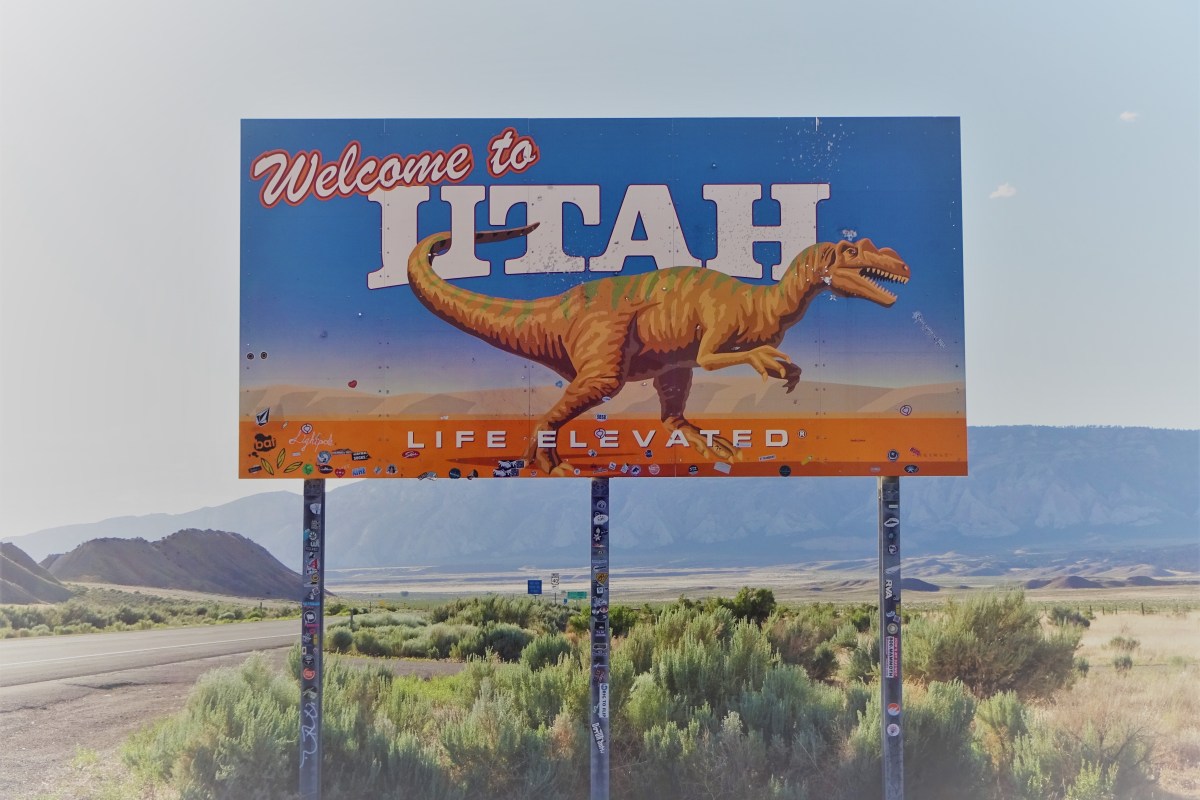
Wildfire at Dinosaur National Monument

“Hmm, wildfire,” I assumed as I looked before me as nature itself was being engulfed in flames. Billows of smoke stretched across the sky. “I should be fine,” I concluded and continued on my adventure. I was in Dinosaur National Monument, maybe the greatest underrated gem in the National Park Service. Straddling the border of northern Utah and Colorado among swirly canyon walls, Dinosaur National Monument boasts a landscape of twenty-three layers of red, grey, white, and beige rock, composing enormous formations looking like they bubbled up from the earth’s core. Along with that are gigantic plateaus overlooking the convergence of the Yuma and Green Rivers, along with forests, deserts, and savannah. Today it had the added feature of long stretches of traveling smoke from wildfire. 

The monument initially consisted of eighty acres set aside by president Woodrow Wilson in 1915 but then was expanded to 210,000 acres by Franklin D. Roosevelt in 1938. It preserves the habitat of a once dinosaur metropolis. The National Park Service informs in their visitor center that it is believed the dinosaurs of the Jurassic period died here in drought and then a great rapidly ascending flood jumbled up together the bones of over five hundred dinosaurs representing ten species. The abundance of congregated fossils remains preserved in the sandstone. Paleontologist Earl Douglass discovered the first fossil remains here in 1909 and soon it was recognized worldwide as one of the sites of the most complete assemblage of dinosaur fossils.

Before I encountered the wildfire first hand, I found myself standing in the visitor center learning such facts and marveling at the enormous rock wall in front of me preserving over 1,500 individual dinosaur fossils. This was the exact site of Earl Douglass’ first excavation and now it is enshrined and preserved in the visitor center for all to enjoy. 

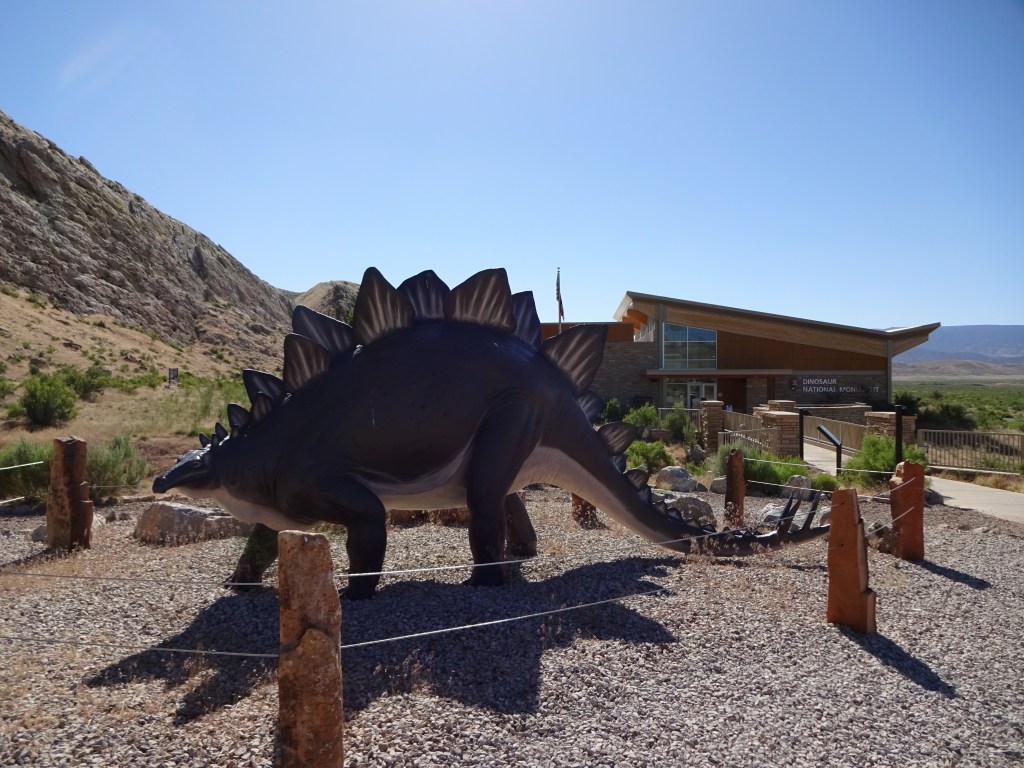
I had arrived the previous night to a reserved campsite at the Green River Campground in the park, and this morning I got up early to begin my exploration of the park. My first stop was this Quarry Visitor Center. Outside of the sleek 1960s visitor center stands a sculpture of a stegosaurus, popularized by the 1964 World’s Fair (the same one where Walt Disney debuted “It’s a Small World”). After of course not passing up the opportunity to get my photo with a stegosaurus, I walked into the visitor center dressed suitably for the occasion. I had bought myself a tank top on Amazon, specifically for visiting this park, with dinosaurs all over the front of it in neon colors of a 1990s retro style. Throughout the day, nearly everyone I came across complimented me on my dinosaur attire. In the exhibit I had obtained a pamphlet guide which explained which dinosaurs many of the fossils were of. After touring the exhibits, I went back outside to explore this strange land.
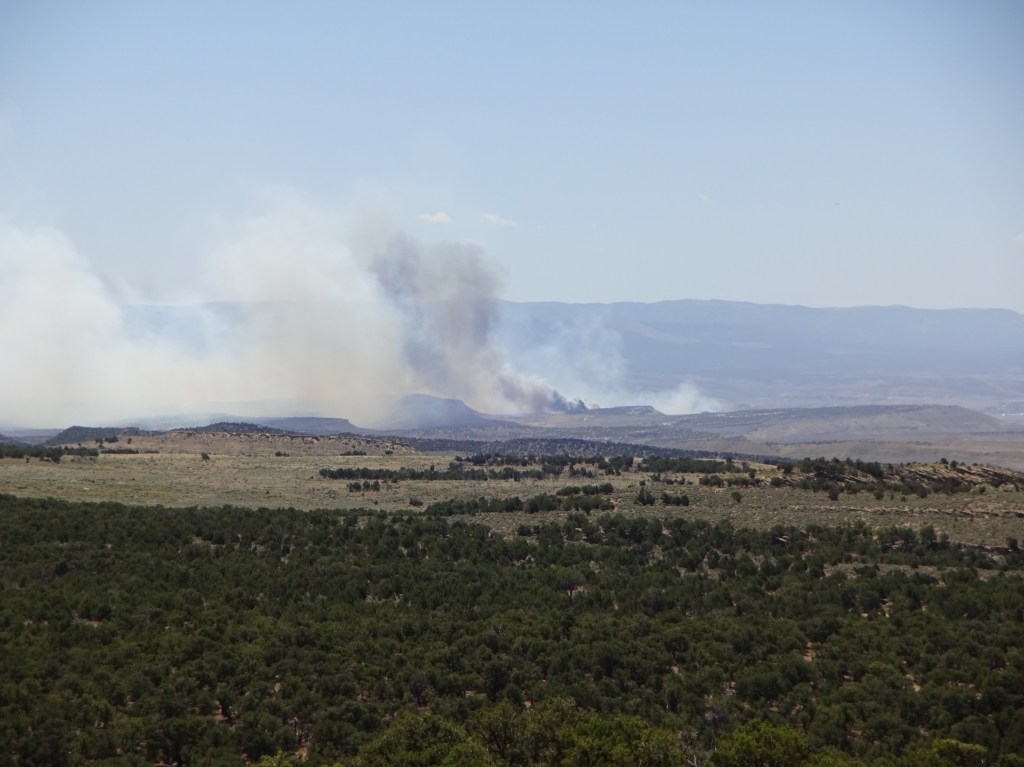
I was on the Utah side but left the park to get on highway 40 and cross over into the Colorado side. I passed through the town appropriately named Dinosaur and then re-entered the park at it’s other entrance. I wanted to get the full overview of the park by driving Harper’s Corner Road, the main stretch that runs through the park and incorporates numerous lookout points as it ascends the  mountainous plateau and ends at the peninsula which the road is named after. At the Colorado entrance there is another visitor center along with the park headquarters. As I looked around I heard a ranger on a walkie talkie talking about a wildfire. I thought very little of it, since wildfires are commonplace in the West, but I’d later see exactly what he was referring to. When I reached the first overlook I looked out upon a burning expanse. Many thoughts were in my mind. First I was reveling in the novelty of being able to witness such a marvel of nature, second I considered my safety, but then I concluded that I was probably in safe hands with the National Park Service. If there was a threat, the rangers would have closed this road or forced evacuation. Furthermore I’d be traveling away from the fire. So I got back in my car, eager to take in the next view point. 
Next I arrived at Escalante Overlook where I looked out from the plateau to see it curving around in the distance. In the middle of it’s beige cliffside, a banner of red rock streaks across the landscape where shrubs and pines burst up. The slide of rocks eventually rolls down to the canyon floor, which is neither level nor consistent but clumsily squeezes itself into whatever crevice the immense landscape provides. 
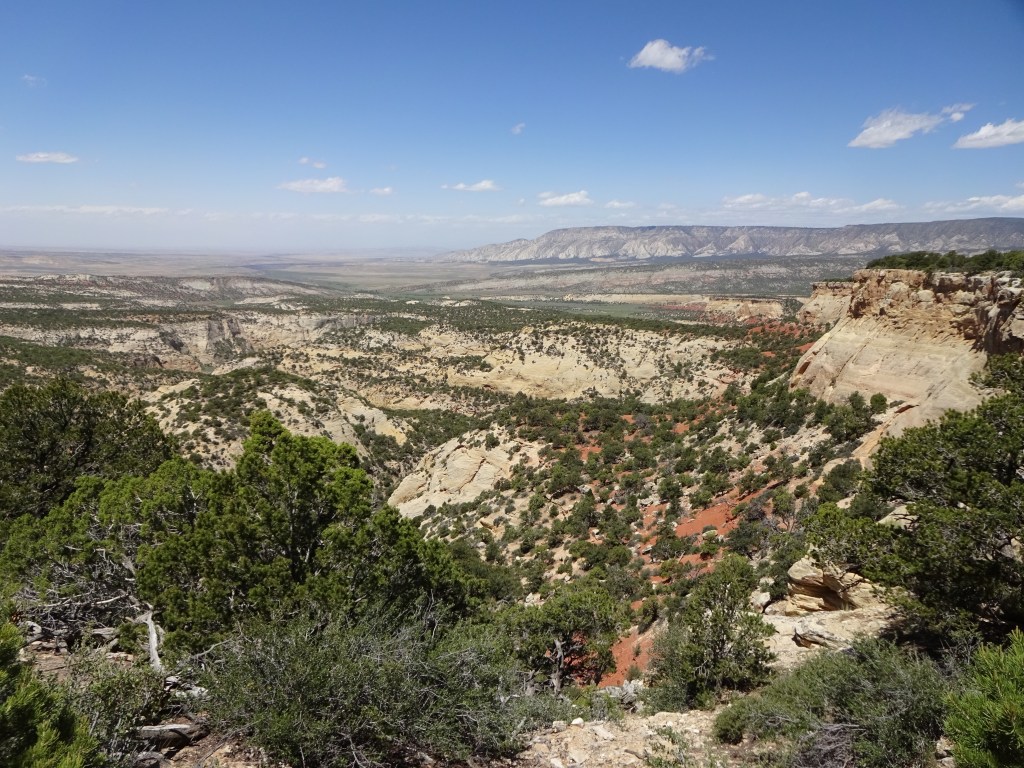
From here the road ascends higher above the plateaus to the mountains, where the landscape opens up to some wild grassland where one can look below and see a valley of grassland among spotted buttes and can so vividly imagine dinosaurs trampling and traversing the land. We as humans are so far removed from Dinosaurs that they almost seem like science fiction. This landscape is the world that has escaped the imagination. To be immersed in it is almost to escape reality for a moment.
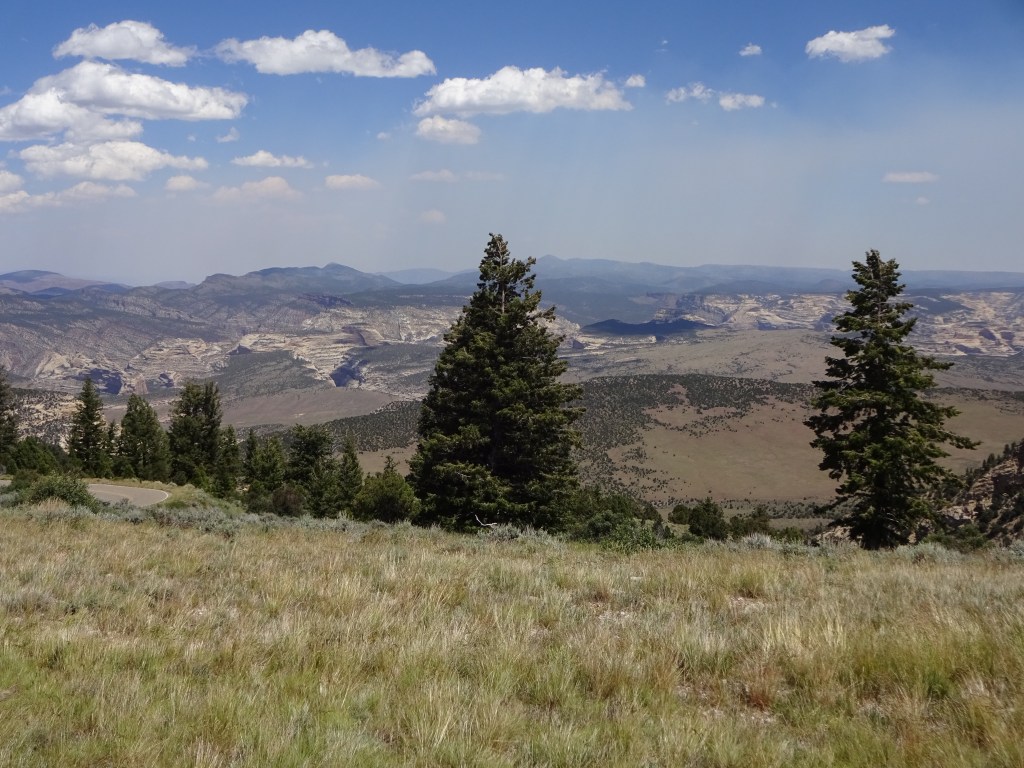
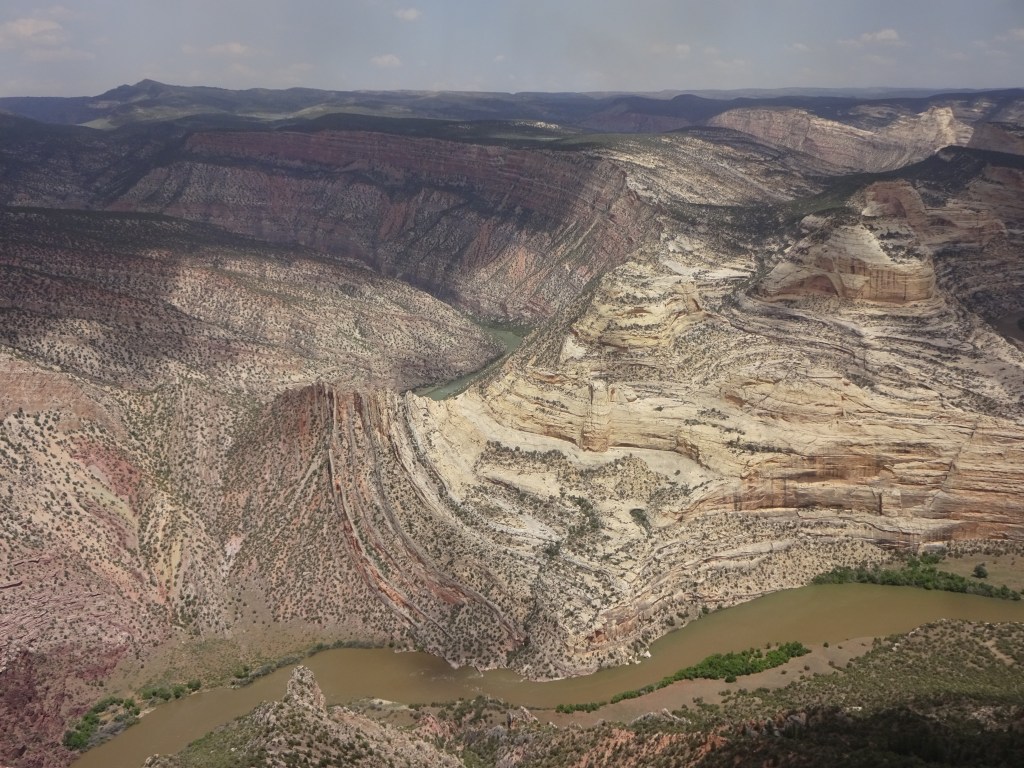
After thirty-one miles I reached Harper’s Corner, the highest point in the park at 7,580 feet. I got out of my car for a short and windy hike to the overlook. The view was unparalleled to any other view in any National Park. Strikingly unique, one can gaze down upon a landscape that swirls every which way around the canyon of the Green River. It almost looks alive, like you can imagine just how it would go about moving. Right in front of me was what looked like a giant rock wave frozen in time with ripple after ripple, color after color, and twenty three layers of history. It is undoubtedly an epic view, among the best in the nation. I know that is a bold statement.  
As usual, when I am faced with something strikingly unique, I asked, what does this mean? I believe beauty is not wasted. It is designed to speak to us truths about God and life. But nothing. I got nothing. I praised God for his beauty, but I felt him silent. There was a reason for this. The silence of God, the blankness of my thoughts would hold meaning. I would learn about this soon enough. 

When I returned to my car the wind was really whipping and I could see a storm brewing in the distance. Rain is what we needed to quench the fires. When I opened my car door, the wind ripped it from my hand, and with my keys still in my hand, I uncontrollably keyed the side of my drivers door. This was not good. Not only did I have the dented hood from the rock falling down at Davis Mountain, but now I’d keyed my car. I was concerned what these damages were going to cost me when I turned the rental back in. It was one more thing to add to my list of misfortunes. 

When I got back to my campsite, I noticed a kind neighbor had partially disassembled my tent to shield the top opening from the rain, for the rain had indeed come through the canyon. I was thankful the inside of my tent, sleeping bag, and air mattress were all still dry. 

After checking back in at the rained on camp, the thoughts of forest fires had left my mind.  I went for an evening hike, the most meaningful of my trip. God would speak to me, a paradigm would shift, a wildfire would be set in my soul that would spread throughout my life, and a great peace would find me because of it.

Read the previous entry “Valles Calderas and the Land of Enchatment,” here: https://joshthehodge.com/2020/09/10/valles-calderas-and-the-land-of-enchantment/

Check out my book Canyonlands: my adventures in the national parks and the beautiful wild here: https://www.amazon.com/Canyonlands-adventures-National-Parks-beautiful/dp/1711397873

Valles Calderas and the Land of Enchantment

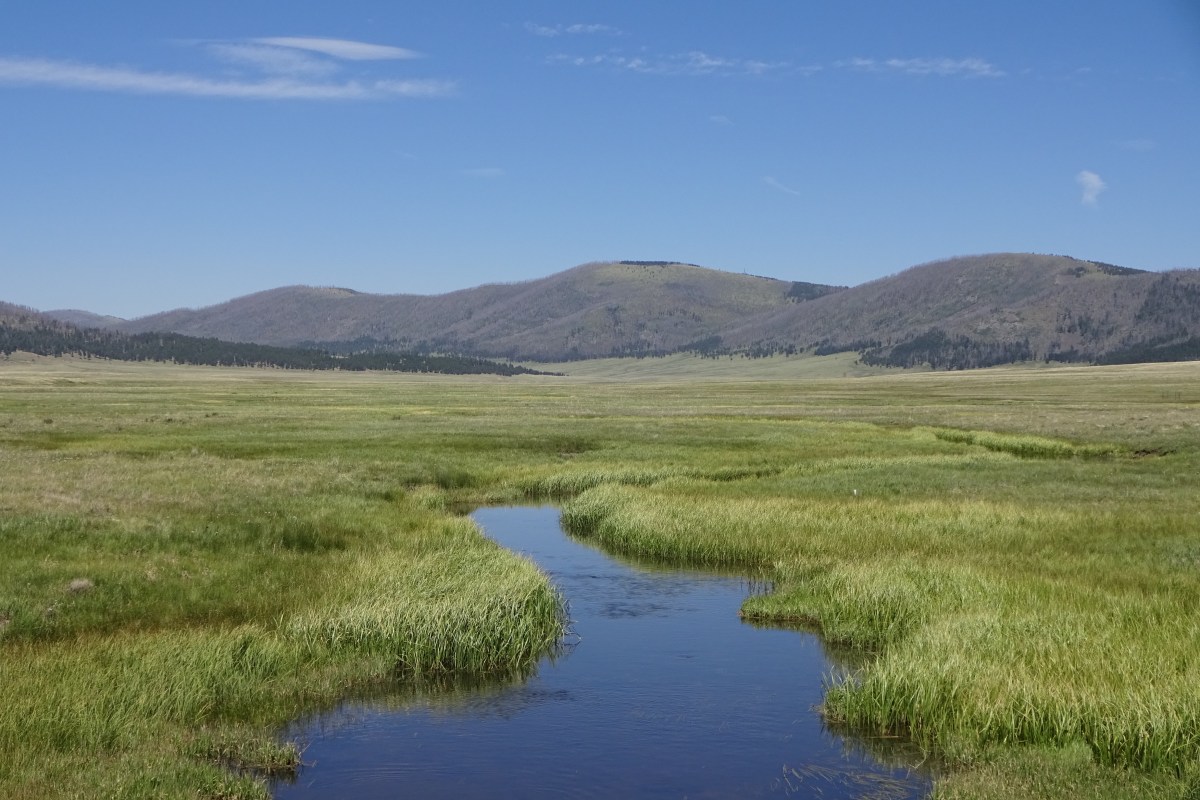
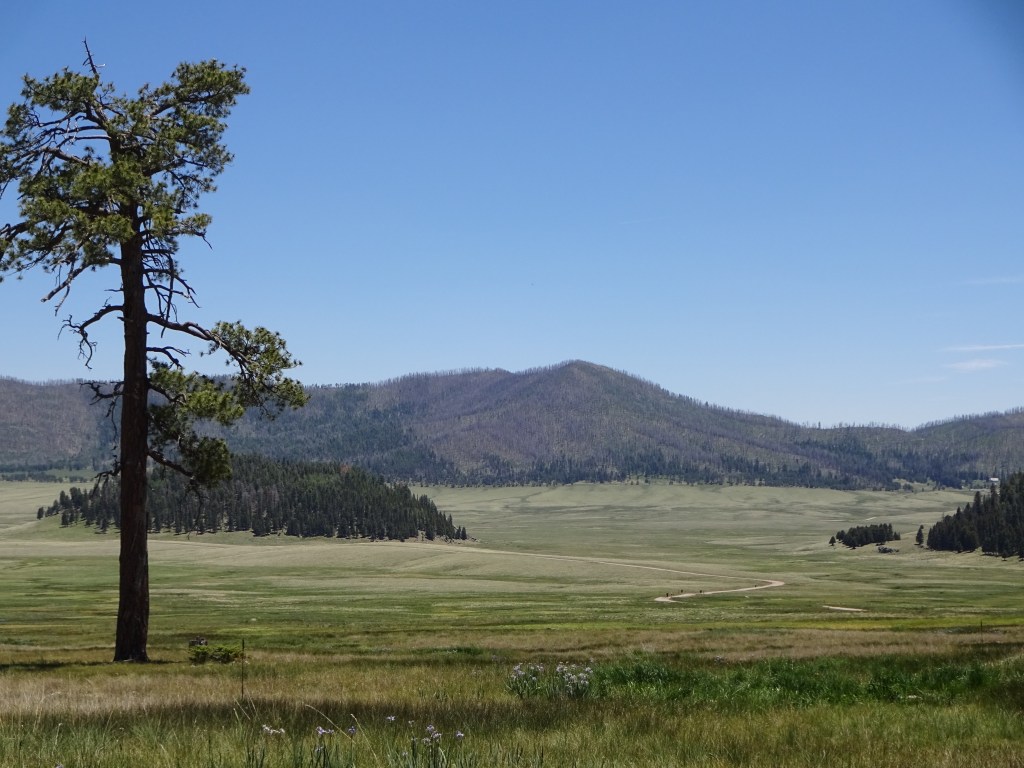
Valles Calderas is some sort of a dreamland. You don’t find it on Earth. You find it in fantasy, but it so happens to also be within the state of New Mexico. This place really makes the New Mexican state motto “Land of Enchantment ” come to life, and it’s a stark contrast from the dry desert stretches of southern New Mexico. According to geologists, long ago a giant volcano erupted creating a thirteen mile wide depression in the ground which now is rolling meadows and streams surrounded by rounded coniferous mountains. It’s not enormously epic in presentation but surprisingly comforts and charms the visitor. Wide open expanses of bright green grass contrasted with the dark green of the conifers splashed out under the cloudless blue sky create the perfect artistry. The small streams meander around the landscape, waters reflecting the rich blue of the sky.

The visitor center was a small, seemingly temporary building. Little information was provided about this National Park unit. It was designated a National Natural Landmark by the National Park Service in 1975 but then gained the designation of a National Preserve in 2000. I had assumed it was an even more recently established National Park unit since it didn’t have its own uniform National Park brochure like all the other National Park sites. 

When I arrived I was unsure of what to see or what to do. Uncharacteristic of the usual very friendly and informative National Park rangers and employees, it seemed like the employee here was just not eager to share information. After explaining that it was my first time here, and not getting much response, I decided I’d just ask about the park drive. I remember my friend and coworker, Jamie Hamblin, had been here the summer before with her parents and she shared enthusiastically how breathtaking the park drive was. I got instructions from the employee to drive up to the gate, get out of my car, open it, and close it when leaving. I came to think that perhaps being a preserve this place was not intended for recreation but more of just a place to protect wildlife. Therefore I did not get out of my car. I simply drove the road. I’d later find out that this is a recreation destination with hiking, biking, camping, horseback riding, and even hunting opportunities. I drove around for about an hour on the dirt road that meanders through the meadows. I did not see any remarkable wildlife, only deer, but I’ve been told at times one can see herds of elk here. I just enjoyed the peacefulness of the drive and the beautiful scenery.

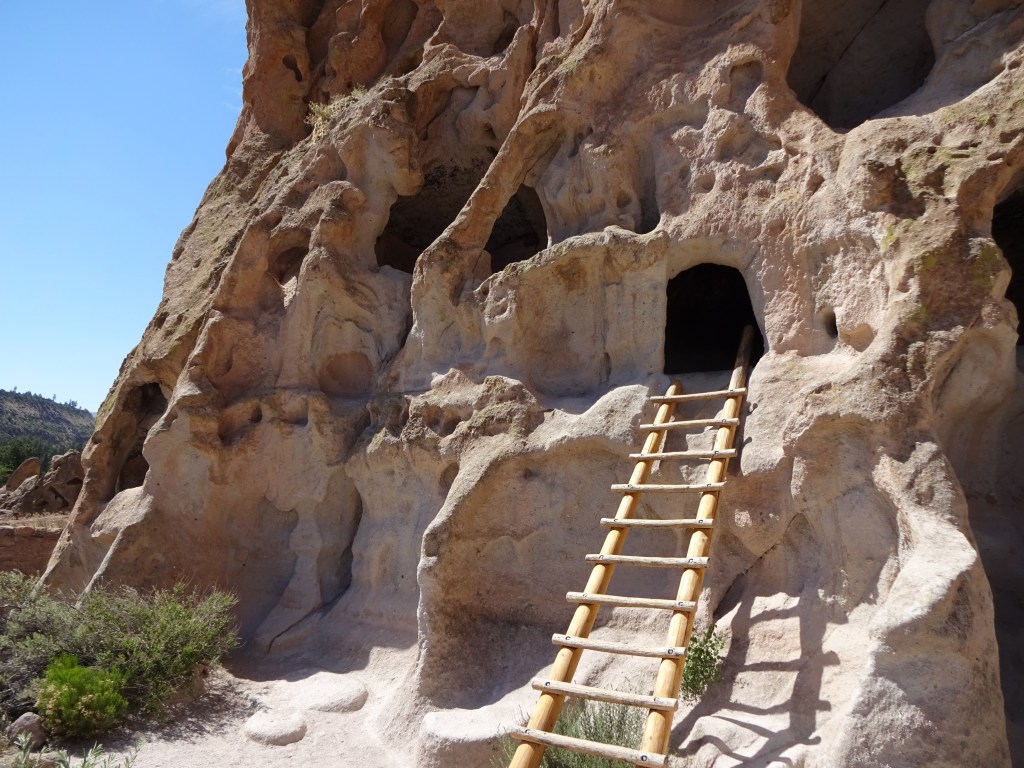
When I left, I made the scenic half hour drive through the Santa Fe National Forest alongside Los Alamos among the sweet smelling pines to Bandelier National Monument. Here much green was replaced by arid red rock. Seventy percent of the nearly 34,000 acres is designated wilderness. I only had about an hour to spare. Although National Monuments can sometimes be even more impressive and worthwhile than some of our designated National Parks, my trips give time priority to National Parks, and along the way I try to stop and visit as many National Monuments and other National Park Service sites as I can. Given my time constraints I hiked along the 1.2 mile loop from the visitor center to see the cliff dwellings and rock houses of the early pueblo people. A series of ladders adjoined rock faces, where small rock homes were formed often into the natural cavities and indents of the jumbled red rock formations. These were unique from the dwellings seen at places like Mesa Verde or Canyonlands where they are often constructed under cliff overhangs. 

As I walked across the parking lot to my car, I passed by another solo traveler just getting out of his vehicle. He had a jeep adorned with stickers of many parks, many that I’d been to. By his appearance it looked like he may have been camping for days as well. As I’ve mentioned before, people to me are like books. I am fascinated by people’s stories. Where do they come from? Where is their story headed? Solo travelers intrigue me the most. Those are the books I most want to read. Maybe it’s simply because I relate, or also because I know that traveling solo, especially on cross country road trips, takes a lot of character. It can be lonely and challenging at first and others may question, but then one resolves these predicaments and learns to carry on and enjoy the adventure, solitude and all. At least this is my experience. I want to know the stories of others.

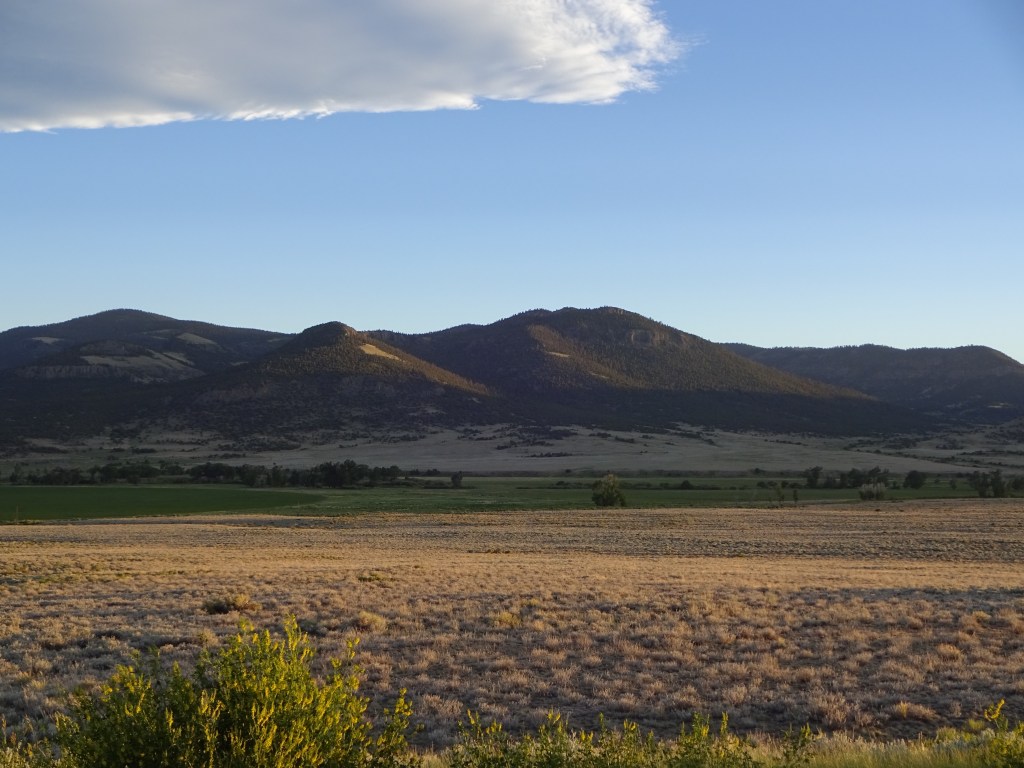
Leaving Bandelier National Monument, I drove through some remote stretches of northern New Mexico and southern Colorado. Crossing into Colorado I passed by many open fields with the backdrops of mountains behind them. This was very much the ranching part of Colorado, a side I hadn’t seen much of before. This was the backbone of the continent. This was the place I’d read about, of ranchers with grit along the continental divide. The further I drove into Colorado the more green and welcoming the environment became especially after having been in the desert for many days. I stopped for dinner at a Subway and got out of my car into a cooler and slightly less arid climate. I remember thinking how this was not the tourist route, and here I was a young man from Kentucky out in the rural stretches of Colorado. I felt out of place, far from home, but that didn’t bother me one bit. I felt accomplished to be so out of my ordinary. I stopped at a gas station for some Muddy Buddy Chex mix and I then carried on with my four hour drive.

The sun making it’s late evening descent among the mountains and fields of cattle was beautiful and peaceful. The road took me into Rio Grande National Forest alongside the East Pass Creek. This calming scenery reminded me of why I take these trips and it filled me with a renewed sense of excitement for the travels ahead of me. But I was also travel weary from spending so much of the day in the car. I realized I still had at least an hour drive left, I was not looking forward to finding my campsite and setting up in the dark in Curecanti National Recreation Area, my intended destination. While considering the predicament I came to a National Forest Service sign labeled Buffalo Pass Campground off to the side of the road. Perhaps I’d abandon my plan and stay here.

I pulled off the main road onto a gravel one and found a simple but beautiful campground sitting alone in solidarity amongst pine trees with a field to one side outlined with a rustic split rail snake fence. No one else was here, but this campground really spoke to me. It’s one of my favorite campgrounds I’ve ever stayed in. It’s difficult to put my finger on exactly why. There was something very attractive about it, being so remote, being an unexpected find, very quiet and peaceful, not crowded with growth, but open and spacious but still in the forest. It was a place of good vibes, or as in Mexican Spanish, “buena onda.” I set up camp here at dusk, changed into some comfortable pajamas, and made a campfire as the sun slowly began to rest casting a sleepy blue all over the campground. When my fire died down I laid in my tent and fell asleep while reading a book about early pioneer life in West Texas. The following day I’d check out Curecanti National Recreation Area and arrive at the most intriguing and Jurassic Dinosaur National Monument.

Read the previous entry “The Sandia Mountains and the Old Town,” here: https://joshthehodge.com/2020/03/11/the-sandia-mountains-and-the-old-town/

Check out my book Canyonlands: my adventures in the national parks and the beautiful wild here: https://www.amazon.com/Canyonlands-adventures-National-Parks-beautiful/dp/1711397873
Camping in a Monsoon (and what it taught me about life)

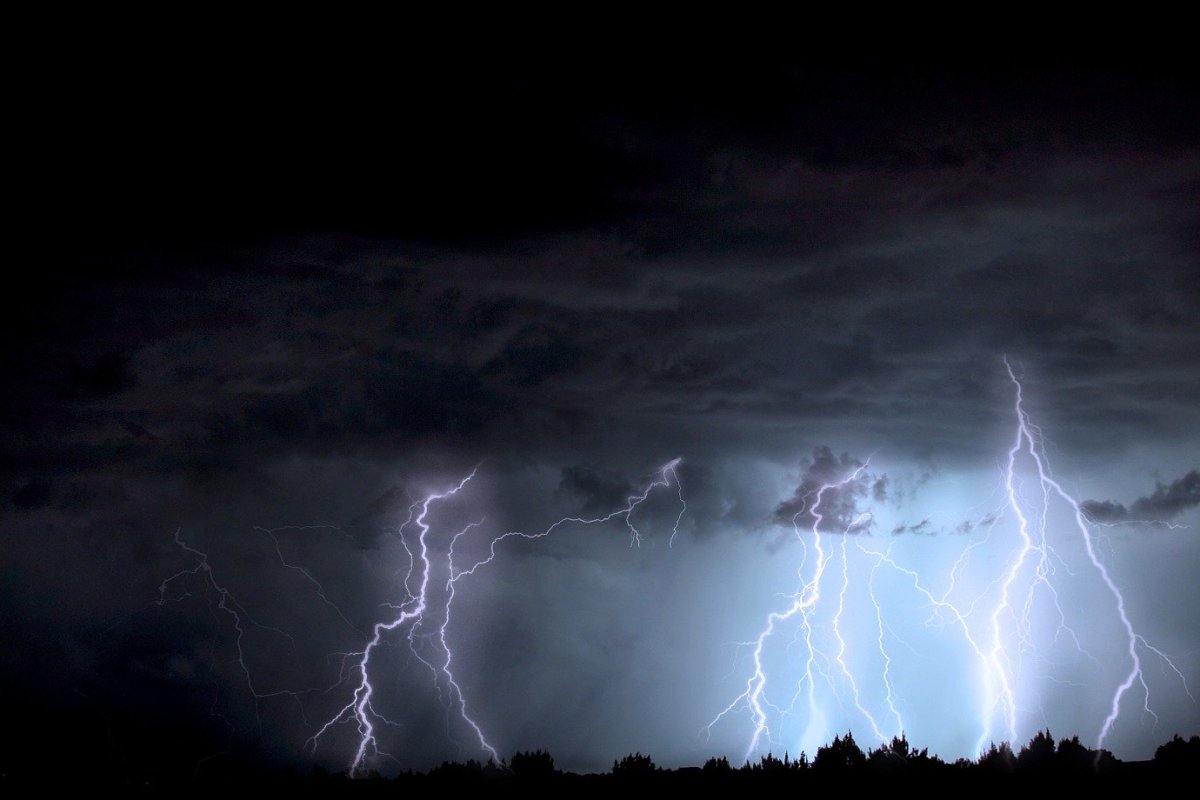
I lay in a cold wet puddle as the wind ripped around me. I felt pitiful. I had been trying to fall asleep for a long time but the wind violently jostled my tent and whipped around the sides in a clamor. In addition, the sky every so often let out thunderous cries as lightning streaked across the sky. Unlike with my previous experience out on the sand dunes of White Sands National Monument in New Mexico, here I was protected from lightning with the towering Guadalupe mountains standing nearby, and I had the waterproof fly on my tent which I thought would keep me dry. It was just the noise and the way my tent was dancing in the wind that was keeping me up. Then, as the wind picked up and the clouds broke loose holding nothing back, the fly of my tent was ripped off and the rain poured into my tent.

There’s no use going out to retrieve the tent fly, I thought, It’s probably long gone, flailing out in the wind off in the distance. I pulled my sleeping bag over my head. It was thick. Maybe it will keep me dry until the storm passes.

But the storm wouldn’t pass. It only grew more and more intense. It was undoubtedly a North American monsoon. With intense solar heating in this region of the country during the day, winds shift and low pressure troughs are created bringing in moisture from the Gulf of Mexico and gifting the desert with torrential rainstorms. 

For future reference, a sleeping bag is not enough to keep you dry from a Monsoon. Water began to soak through my sleeping bag, and it was cold. I curled up keeping my limbs close to the rest of my body to preserve heat. My car was parked about thirty yards away. This was a walk-in campsite. I couldn’t easily get to my car without being fully inundated with the cold relentless sheets of rain, and if I were to go to my car, I’d have to bring everything of value I had with me in my tent, because likely my tent would be ripped away in the wind. 

I was going to wait this out. Then with a fierce whip of wind, my tent came collapsing down upon me. The wind completely snapped a tent pole. Minutes later I was shivering in the fetal position in a puddle of water. This was pitiful. Cinematically I could picture this moment in my mind. The camera ascending upward facing downward revealing the image of a man contracted in a puddle of rain water and the water continuing to pour down. I’d look so helpless… but I wasn’t. I grabbed my backpack and was feeling around the layers of cold wet collapsed tent to find the zipper of the tent door. Then with a mad dash, through piercingly cold sheets of rain, I made it to my car. I turned the heat up high and cupped my hands around the vents. I was gonna be ok. 

My pillow and sleeping bag were soaked and had been abandoned in the tent. But I had a spare sleeping bag in the backseat. I peeled off my wet clothes, and climbed over the front seat to the back where I pulled down the seat to access the trunk. I retrieved some dry clothes to put on, and I pushed a sweatshirt and other articles of clothes up into the corner of the back seat to great a place to rest my head. 

This was not the type of camping I imagined doing this summer. I longed for the dry, star filled nights, with cracking fires, and a peaceful quietude, where cares were long forgotten and my mind and body at ease. Here I was crunched up in a small car as the monsoon raged on. 

In the moment this was all meaningless to me. I had embarked on this trip not only to enjoy the scenery and recreation but to also be inspired and hear from God. I have often found inspiration in nature. The previous year God illuminated the canyonlands to show me he could transform the deep dark places of my life. He also inspired me to be unwavering in life’s challenges. I came to moments of deep realization and inspiration by pondering ghost towns and mountain peaks. But this monsoon was a nuisance, void of meaning to me. And in regard to inspiration, this whole trip so far seemed like a failure. 

However, I was quick to forget the miraculous incident at Chiricahua when locking my keys in the car. Not only did God deliver me from my circumstances but he told me, “Be Still. Be Calm. Don’t worry.” But now, here, in the literal storms of life, I had placed this off to the side of my mind, forgetting about it and becoming inundated with the negativity around me. 

Sometimes we can only find the meaning in situations when we look back on them. There is meaning here. In life we face figurative storms that are in a whole other category than this summer monsoon. These storms of life are painful with suffering, loss, anger, change, and doubt. How often do we let the storms of life distract us from what God has promised us and what he is teaching us? We are quick to focus on the present suffering instead of focusing on what we know about God, what God has taught us in our lives, and all the promises he has made. 

Scripture is flooded with promises of God helping his people in times of trial. We can read these and be reassured and find peace, but even greater confidence is found when we consider all the times these promises in scripture have played out in our lives. As followers of Christ we see the scripture come alive in our lives as God carries us through hard times.

I reflect back when I was a freshman in college battling depression and insecurity about my faith. After spending so much time in an unhealthy church where fellow “Christians” treated each other combatively, I began to question God’s goodness and even existence. Then in my own quiet time I came across James 1, “Consider it pure joy my brothers whenever you face trials of many kinds, for you know the testing of your faith develops perseverance. Perseverance must finish its work so that you may be mature and complete not lacking anything.” In the trial of my faith in God himself, God began to reveal himself to me through a series of answered prayers and strength in the midst of my weakness. In a note to a God I thanked Him for doing good things in my life. I asked that I would always feel Him near, and I asked that He would give me a heart of worship. God, in the most miraculous way, answered me through Jeremiah 32:40 “I will make an everlasting covenant with you, promising to never stop doing good things for you. I will instill in you a heart of worship, and you will never leave me.” 

In the storms of life, I am prone to be the pessimist, letting my thoughts snowball out of control, thinking things can only get worse and speculating my doom, but then I remember this promise: God will never stop doing good things for me. After speaking to me in that moment, God set me on a path of healing. He brought a dear friend and spiritual mentor into my life. Together we held onto the verse Romans 8:28. It was our verse. “For we know that all things work together for good for those who love God and have been called according to his purpose.”

Other substantial storms in my life have had to do with my health, between ulcerative colitis, Pancreatitis, and all the challenges they have brought, I’ve clung onto my life in the most desperate of ways in the most excruciating pain and loneliness. During this time a harmony of verses was cemented in my mind “After you have suffered a while, the God of grace Himself, whose knowledge surpasses all understanding, will restore you and make you strong.” Also with diagnosis looking grim, God laid before me many times Jeremiah 29:11  “‘For I know the plans I have for you,’ declares the LORD, ‘plans to prosper you and not to harm you, plans to give you hope and a future.’” As a feeble young man, hospitalized, making my way down the hallway with my walker, this verse again jumped out to me inscribed on the wall. Not only was it a promise in scripture but I know God was directly promising it to me. When health challenges return and I question the future I have to remind myself of these promises.

And then years later there was my drive to the doctor’s office. All they could tell me on the phone is that there were abnormalities in my blood work. I knew something was wrong. I feared for the challenges ahead. My mind flashbacked to the nights in college of rolling around on the floor in so much pain that my mind couldn’t even formulate thoughts. And I began to consider all the sleepless nights in which I always had to keep moving. Movement was the only distraction from pain. I couldn’t bear this again, I thought. As I was driving on my way to the doctor’s office God spoke to me saying,”never again will you go through the pain you’ve endured.”

I’d soon find myself in a battle with lupus and a relapse of ulcerative colitis. Miserable, yes, but physically painful, no. God spared me. When medicines fail, when blood work is out of range, I remember, “never again.” God promised me. And He’s also said He has “promised me hope, and a future,” He also “will never stop doing good things for me,”  and He “will restore me and make me strong.”

When you encounter life’s storms are you quick to imagine the worst? Do you wallow in the suffering, doubt the prospects of your future, or even begin to feel like you’ve fallen away from God’s grace? Although this may be a natural human response, we can change it. When faced with the monsoons of life, pause. What has God taught you in life’s prior challenges and deliverances? What has He promised to you? Contrast your own worries and concern verses what you know to be true. 

One of my favorite musical artists, Steven Curtis Chapman, in his song “Remember to Remember” sings of just that. We have to remember what God has led us through previously. He’s led us through the canyonlands and to mountain peaks. What has He taught you along the way?

A life with God has nothing wasted. Your story is a part of God’s story. He uses your past to prove himself and his character. Next time a storm rolls in, my hope is that you don’t camp out in the monsoon, but pause and take inventory of promises you know to be true. If you’ve never heard God’s voice, may you begin to seek it and begin to start a life with Him. Only then you will realize you are equipped and empowered, not just cold wet and crunched up in the backseat of a car. 

Read my previous episode “The Mystique of Carlsbad Caverns,” here: https://joshthehodge.com/2020/02/08/the-mystique-of-carlsbad-caverns/

Check out my new book “Canyonlands: My Adventures in the National Parks and the Beautiful Wild,” here: 

https://www.amazon.com/dp/1711397873/ref=cm_sw_em_r_mt_dp_U_UjGjEbYBGF4PR

Canyonlands Cover

The Mystique of Carlsbad Caverns

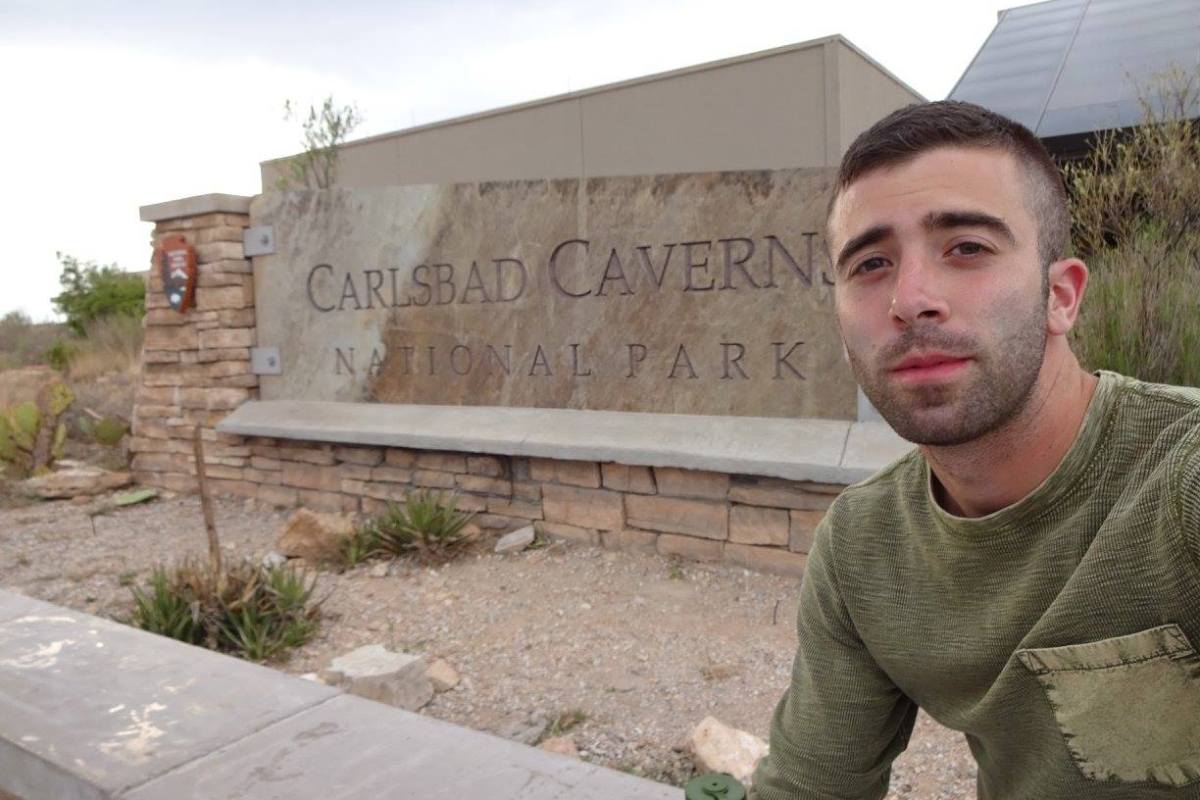
The drive from Big Bend National Park to Carlsbad Caverns is not one to boast of. I most definitely found myself on a truck route, a sure minority in my small car, with flat land and oil fields all around me and little to see. But when I arrived at Carlsbad Caverns just across the state line from Texas in New Mexico, the destination would most certainly be worth the journey. 

National Parks that are formed around caves are hard to evaluate in comparison to other National Parks. There is such an immeasurable difference between a cave National Park and any other. Caves evoke different feelings. They are dark, dank, gloomy, yet wild pieces of nature’s artistry. I like them and they fascinate me, as do all wonders of nature. They can even inspire me, but hidden from the sun, beneath the surface of the land, they place themselves in their own category of mystique.

I had reserved a lantern tour of the Left Hand Tunnel portion of caverns online months in advance and was very much looking forward to it. This would be my first lantern tour in a cave. The following year I would get to go on a lantern tour in Mammoth Cave and Oregon Caves, but this was the first so I was very excited for it. Along with my excitement came a bit of frustration because I had trouble finding the park. The address I had led me to the park’s administrative offices in the town of Carlsbad. I began to consider that I might arrive late, miss my tour, and add this to my list of grievances: feeling burnt out, locking my keys in my car, having a rock fall and dent the hood of my vehicle, getting caught in a lightning storm at White Sands National Monument, and getting reprimanded from a park ranger. Of course I shouldn’t have been focusing on the bad and instead should have been grateful for being out here and being able to go to these parks in the first place, but this is where I was at mentally at this point in my trip.

After figuring my way and zipping around the five miles of road leading to the center of the park, I arrived with a few minutes to spare. I changed my clothes in my car for the cooler temperature in the cave, which stays at a consistent 56 degrees fahrenheit, and went into the visitor center to check in for my tour. There were ten people for the tour. We met inside the museum part of the visitor center and the ranger and guide, Josh from Maine, took us to a classroom to distribute lanterns. They were simple wood box lanterns with candles inside them. We then boarded the historic elevators which dropped us to 754 feet below ground level. At the time they were installed in 1932 they were the longest single-shaft elevators in the world. 

Image may contain: one or more people and nightDuring the tour, in which we made our way through the undeveloped section of the cave on a dirt path, the ranger presented the history of the discovery of the cave. According to the National Park Service “Our first credited cave exploration happened in the cave in 1898. Sixteen year-old cowboy, Jim White, was rounding up cattle one evening when he spotted smoke from a wildfire off in the distance. He went into high alert. Fires could be just as devastating then as they are now. He rode closer to gather information. How big was it? Was it moving quickly? What direction was it burning? These questions and more pushed Jim to ride to the fire so he could report back to camp with the most accurate information possible.

As Jim approached the smoke, he noticed something strange: he couldn’t smell the smoke, hear the crackling of flames, or feel the heat of fire. Jim realized he wasn’t seeing smoke. He was watching bats. Thousands-upon-thousands of Brazilian free-tailed bats. Jim finally stopped at the mouth of the cave completely mesmerized by the spectacle of flying mammals filling the air above him. He once said he watched the bats for nearly half an hour before the darkness fell so completely he had to return to camp.

Because he knew the other cowboys would mock him, Jim didn’t immediately describe what he’d seen to anyone. He thought it over for several days.The deep hole in the ground and its secrets continued to gnaw at him. He had to find out what was down in the dark recesses.” Jim went on to explore the cave more and introduce others to it. 

I loved this story and tried to put myself in Jim’s place, discovering such an immense marvel on my own at such a young age. On another note, an additional fascinating thing I learned on my tour was that microbes have recently been discovered in the far reaches of the cave that specifically attack cancerous tissue and that this discovery may have huge medical implications on the treatment of cancer.  

Image may contain: night and outdoor Although I very much enjoyed the tour, afterward things got increasingly fascinating. I was told that if I wanted to take the elevators back up to the visitor center I would have to soon, because they would be closing for the evening. If I chose not to, I’d have to hike my way out of the cave. Of course I opted for the latter choice. This gave me time to explore the Big Room of the cave and have a sandwich. I found it unique to order food and eat at the Underground Lunchroom. Back in the early days of the park there was an actual kitchen down in the cave, but because of food preparation causing damage to the cave, food started to be prepared outside of the cave and sent down.  

After my quick bite to eat I began my exploration. I cannot put into words the uniqueness, the massive scale, the variety of what is in this cave. It is its own underground world. This is a cave with massive rock formations. I pondered if up above some if these things would be considered mountains. The scale is just astounding. And unlike Mammoth Cave which is largely covered by a capstone, this cave is a true cavern meaning it is composed of soluble rock which permits entrance of mineral water which grows speleothems and therefore makes the most impressive display of stalactites, stalagmites, straws, draperies, cave popcorn and bacon, and a plethora of other cave features. At times it all looks elegant, other times eerie. With every turn there is something strangely unique to look at. In the Big Room the park service has a paved trail with railings that meander around, and many spotlights illuminate the most astounding of features. 

Image may contain: outdoorWith a burst of excitement I went from one feature to the next, but then made the same walk again to quietly savor the surroundings and be filled with a sense of wonder. I could easily imagine I was on another planet, a more desolate one. When I was done pondering and wandering I began my ascent to the cave entrance. It was all a gradual uphill hike, along a paved path. The passage narrows and widens from one set of switchbacks to another. I was the only person on this path. Despite other parts of the park and the visitor center being quite busy, I didn’t see a singular person for the entire ascent. I felt like I had Carlsbad Caverns to myself. As I got closer to the cave entrance I began to hear chirping overhead. I looked up and saw small dark creatures flying near the roof of the cave. Bats! I thought. They grew in number and in volume the more I ascended, swirling in flight above me. The cave was very tall so I couldn’t see them up close, but I reveled in the unique experience of hiking in the company of lively bats. 

Image may contain: outdoorBack at the visitor center I told a ranger what I experienced. I would be informed that they most likely weren’t bats but cave swallows. Also in the visitor center I watched the park film and bought a pin for my collection. Then after killing a bit of time, I went back outside to the amphitheater located right at the mouth and natural entrance of the cave. It was time for the nightly bat flight program. A ranger would talk about bats and then around sunset the bats would come flying out of the gave in a grand spectacle. So, as programmed, a ranger talked about bats feeding on bugs, especially mosquitos, and how the tendons in a bats hands are designed opposite of ours. To expand their fingers from their fist it requires strength, but a fist tightly clenched is in the nature relaxed position. This is how they are able to cling onto things and one another and hang upside down. The ranger talked about the immense size of the bat population between 200,000 and 500,000 in the cave and how bat, guano a.k.a. bat dung, was once harvested from Carlsbad Caverns for its value as a nutrient rich fertilizer. 
The ranger then presented some sad news: do to the nature of the weather, the bats may not be coming out of the caves. It was a gloomy evening, clouds hung low and the wind was strong. It seemed that a storm was just moments away. The bats would not come out in storms. But then as he was talking about such a predicament a bat flew out of the cave, followed by another. They flew around a group of trees and went back into the cave.

The ranger explained that these were the “scouts.” The bat colony sends out a scout to check the weather and report to the rest. If the report is good, the group then exits the cave. If the scout determines the weather to be threatening, the colony would stay in the cave for the night and postpone eating. Minutes later a swarm of bats exited the cave in the most spectacular, eerie, yet beautiful display. They came out in a spiral formation almost appearing like a tornado, Dark black silhouettes contrasted against the evening sky. They flew right above me in a beautiful display with the precise coordination of a school of fish. With Batman and Halloween and all the other references to bats in popular culture I am quite familiar with the silhouette of a bat with its wings extended, but there is something strictly exciting and beautiful to see thousands of these silhouettes moving, flapping, flying above me in the sky. 

Nowhere else have I seen such a display. It was breathtaking, and I was very fortunate to see it. Moments later it began to rain. The bats probably wouldn’t have exited the cave if the scouts had reported rain. I made it back to my car and opened up a can of soup and ate it for supper with the sound and display of rain water crashing against my windshield.

A trip to Carlsbad Caverns is worth every bit of time and travel to visit. It truly lives up to the title of National Park, for it is an extremely unique place to be treasured, with great stories, most impressive natural features, and a stunning show presented by it’s natural inhabitants. 


Read my previous episode “On the Rio Grande: a world between U.S. and Mexico,” here: https://joshthehodge.wordpress.com/2020/02/02/on-the-rio-grande-a-world-between-the-u-s-and-mexico/

Check out my new book “Canyonlands: My Adventures in the National Parks and the Beautiful Wild,” here: 

https://www.amazon.com/dp/1711397873/ref=cm_sw_em_r_mt_dp_U_UjGjEbYBGF4PR

Canyonlands Cover

On the Rio Grande: a world between the U.S. and Mexico

“Is there a trail over there?” I asked. 

“No, but you can bushwhack,” the man replied. I was looking at Terlingua Creek in Big Bend National Park as it poured into the Rio Grande and the water flowed into Santa Elena Canyon. I had parked at the trailhead. There was supposed to be a trail into Santa Elena Canyon. It didn’t look promising, but if this man and his three small children could do it, I could too. How did they do it, really? Did he carry all his children on his shoulders? Because the Terlingua Creek was not by any means a dainty waterflow easy to cross. It appeared as a rushing river. As I put my feet in to start my “creek” crossing, the water rushed around me, and as I carefully stepped forward the water got increasingly deep. Water flowed waist up, and I nearly lost my footing. I was unsure that this was a good idea, but after crossing the deepest part, with a lunge, I met ground on the other side. Well soft silky terrain that oozed between my toes and sucked my feet down into it. 

Trudging my was through a forest of underbrush, ducking my head under curving branches and pulling others aside with my handle, I was following the footsteps of prior travelers trying to find my way to the actual established trail. I knew the level of water was to blame for the covering of the actual starting point of the trail. While I was exploring my way through this jungle-like environment I got caught up in the novelty of the scenery and moment and so lost track of footprints in the mud. I tried to backtrack, but I couldn’t make sense of the footprints anymore especially combined with mine. I was barefoot, shirtless, ankle deep in mud, and bushwhacking my way through riverside growth. I felt perhaps the most primitive and truly explorative I have ever felt before.

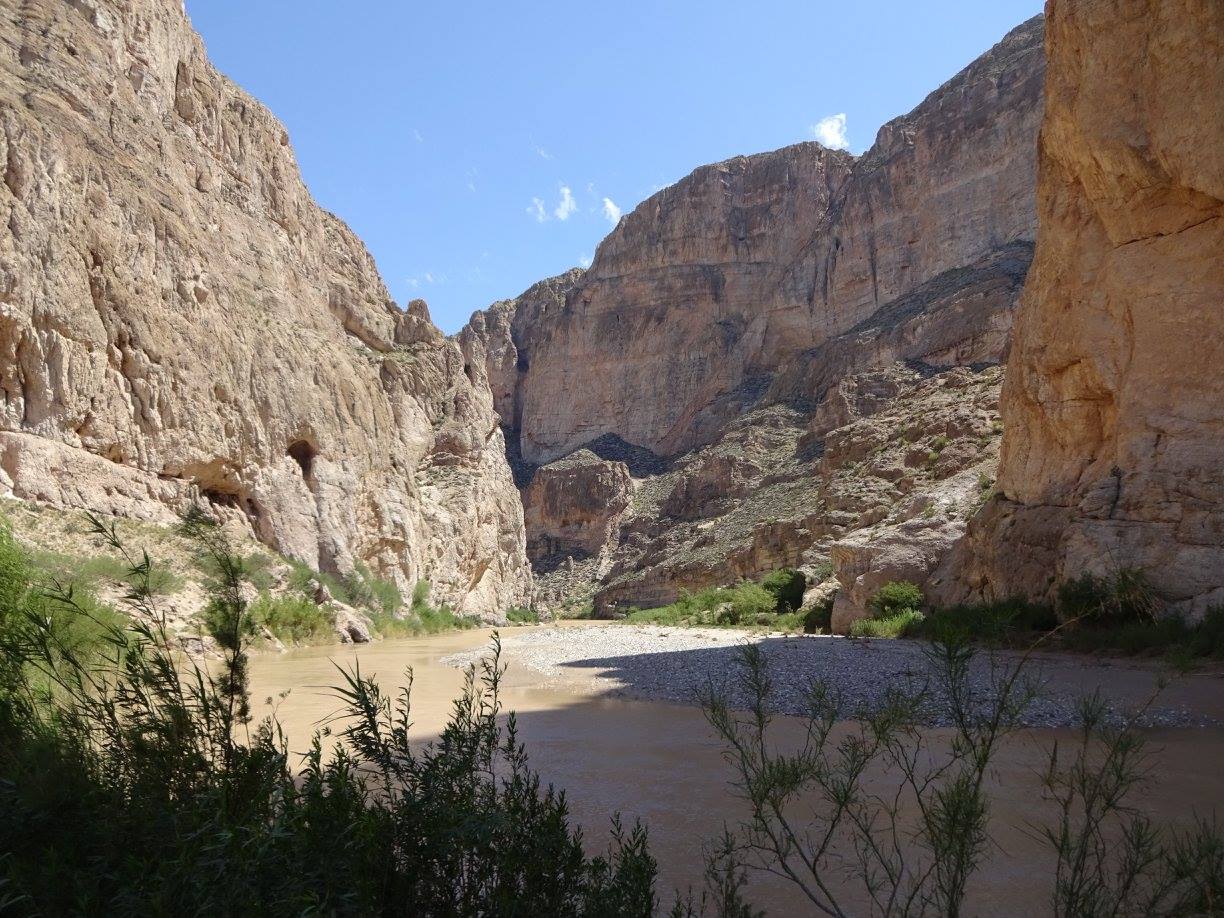
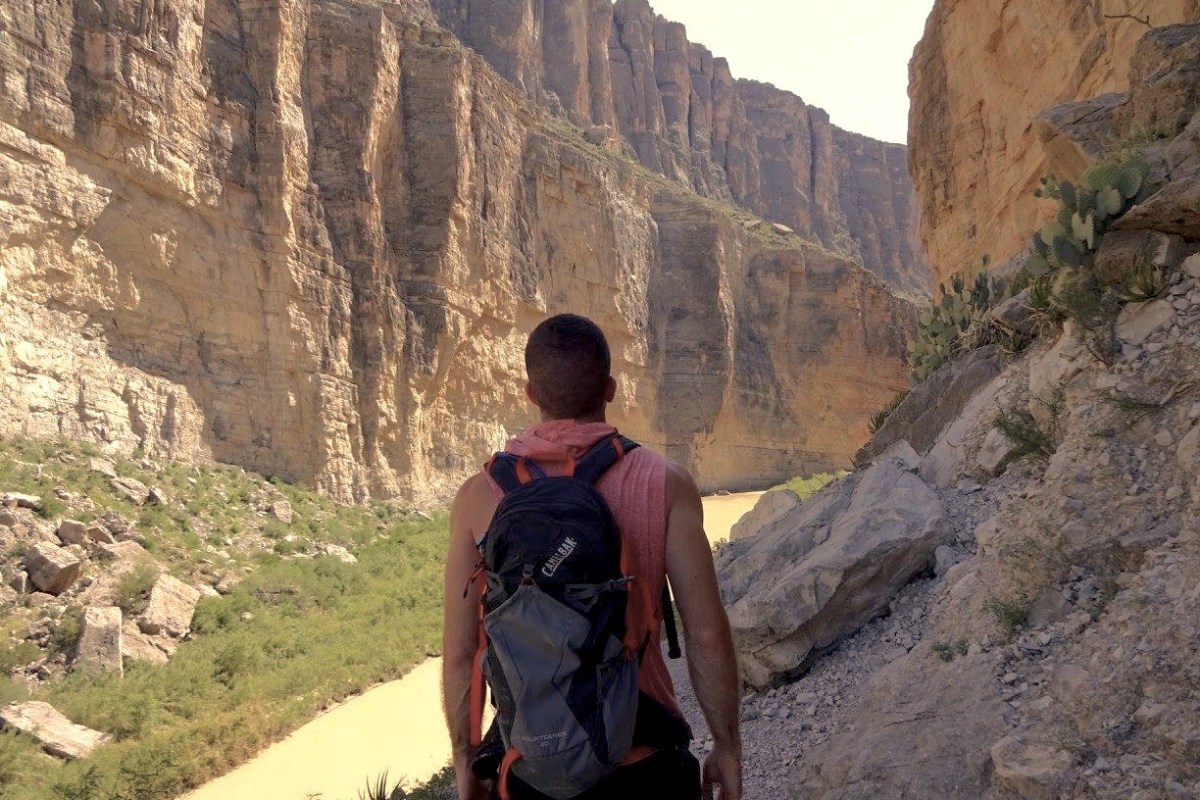
19575372_10214182240610373_3847752781553718953_oEventually, after a brief moment of uncertainty, I arrived in Santa Elena Canyon where giant cliffs forming the canyon walls measure 1,500 feet. Here one cliffside is Mexico and the other is the United States of America, and the Rio Grande flows in a murky pale brown in between. On the U.S. side, about halfway down the cliff faces, rock erodes leaving piles and a bar alongside the river where trees and other plant life grow. This is where the established trail is found. 
As I walked through the canyon, I was met with a sense of wonder at the immense bold rock walls and the knowledge that the two countries come together at this exact location. Here I was far down below in the eroded expanse created by the river. Up above on the plateaus is where the two countries exist with all their problems and all their dealings. Here in Elena Canyon I felt like I was in some secret fortress or a hidden world, protected, encased by the walls of the canyon. I walked slowly, my eyes focusing at the majestic walls and back down to the quiet river. 

I took the trail as it flowed up and down alongside the canyon wall. At one point I came across a large fish that the river must have left ashore, which had begun to dry out and be reclaimed by the earth. I took the trail until I could no longer, until it sort of disappeared and the rocks became more jagged and gave way to the river. Everyone that comes to Big Bend National Park should not miss out on this short hike. The views are among the most astounding in the park. The only word of caution would be crossing the creek.

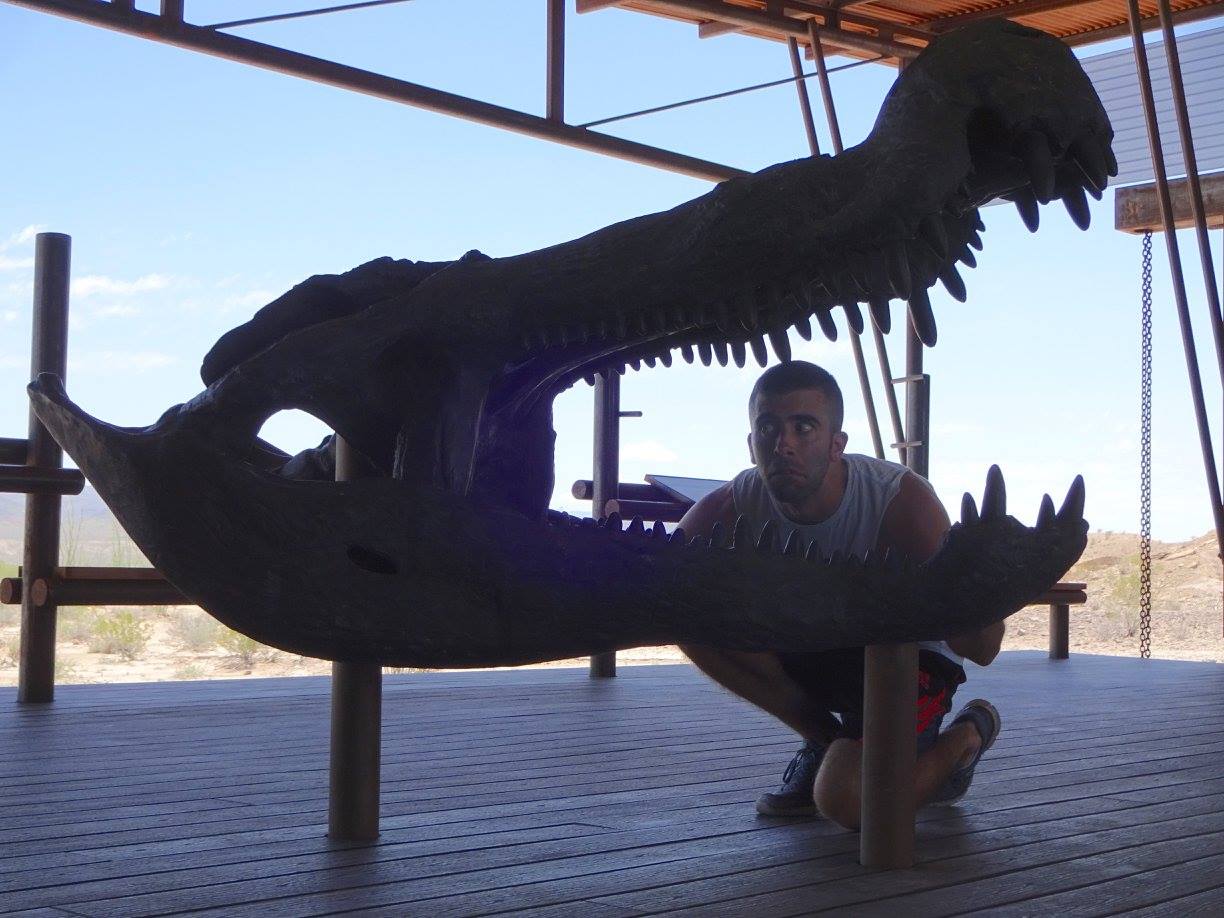
19575197_10214182232690175_5523220705420299641_oThe visit to Santa Elena Canyon was near the end of my day’s adventure. This morning I ventured out in my car to travel the whole expanse of the park and get a sampling of all it has to offer. I first stopped at the Fossil Discovery Exhibit. I learned all about the terrain and dinosaurs that used to live in this shallow sea. I even got my picture with a cask of the Deinosuchus skull. I then proceeded southward in the park on my way to the southeast corner to visit the Hot Springs. I’d read about this and was very interested I had never been in a hot spring. I stopped at the Panther Junction Visitor Center to inquire about the hot springs. New to hot springs, I just didn’t know if there were any safety precautions I should take. The park ranger said “I can tell you this:  It’s about 100 degrees outside right now, and the water is also about 100 degrees. You can decide if you want to go in or not.” 
I drove the 20 miles to Hot Springs.

The final few miles were on a remote dirt road. When I arrived in the small parking area a sign read “Vehicle Theft is common in this area.” That was not comforting. I got out of my car and very cautiously observed my surroundings, alert at all moments. I was near a part of the Rio Grande where the water was shallow and the girth of the river was small, where crossings from Mexico on foot were very possible and so frequent. 

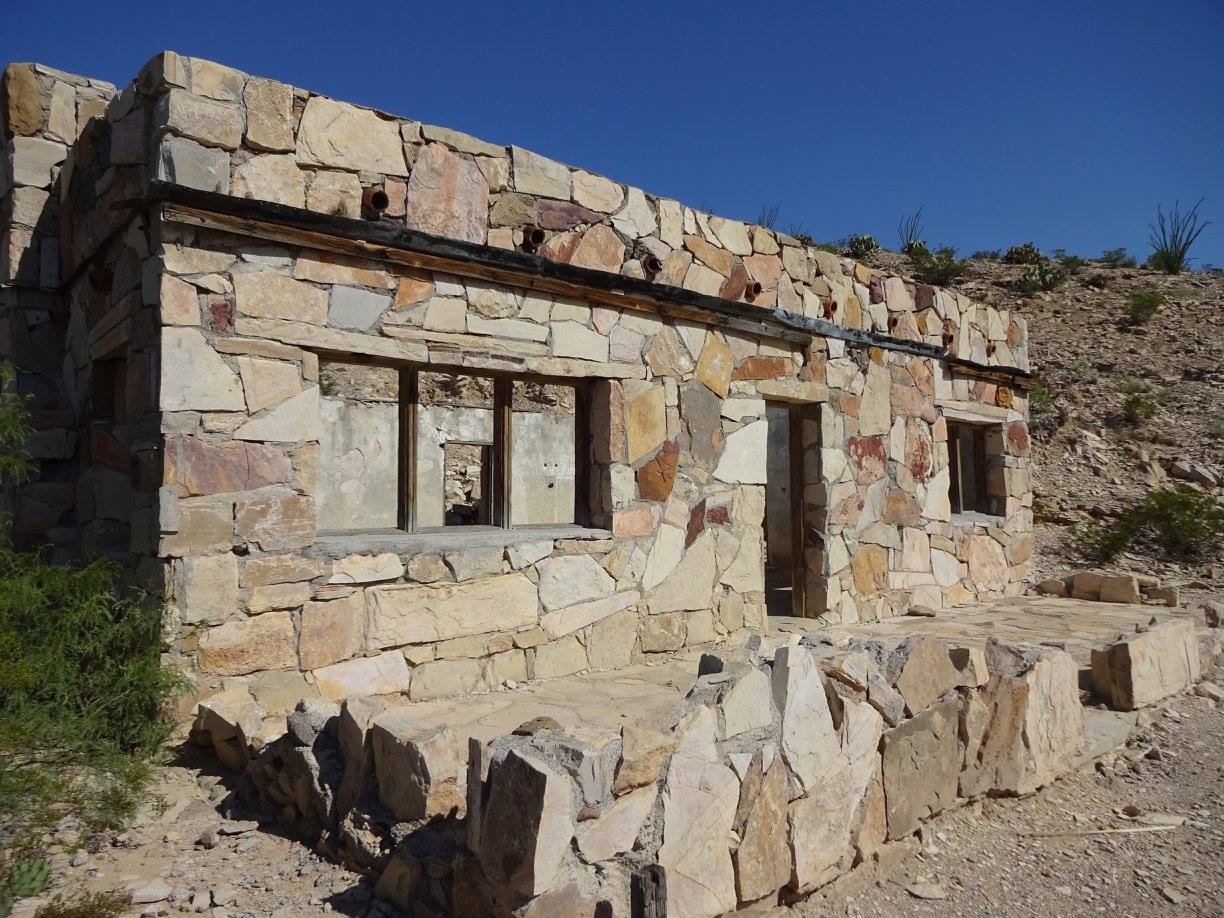
19620250_10214182241930406_2607112815732533876_oI observed the remnants of the old post office and bath house that used to stand on site. On the half mile hike to the hot spring, I got hit with an overwhelming sense of insecurity and uneasiness. I felt like I was being watched. Something was not right. Then, next to the trail, I came upon a grouping of small Mexican animal figurines “alebrijes” standing on the ground by a plastic jar with a slit cut in the top for money collection. Someone had crossed the river to place this and may be hiding somewhere at this moment, keeping an eye on the money jar. In retrospect, this seems silly, but this was the final bad omen. These figurines probably belonged to someone impoverished from across the border who was rather innocently trying to make some money. However a criminal is a criminal. This person broke laws by crossing into the U.S. this way and selling items in a National Park. Considering this, along with the sign warning of vehicle theft, I could almost hear the little figures saying “we are watching you,” and in the moment it scared me a lot. I came upon them but it seemed like they found me, and suddenly jumped out, unexpectedly. They seem like menaces of a Goosebumps novel. It sounds ridiculous, but such a negative energy surrounded those little figurines that I started running back to my car. I don’t know exactly what danger was there, but I could sense it. I knew it wasn’t worth it to see the hot springs. 
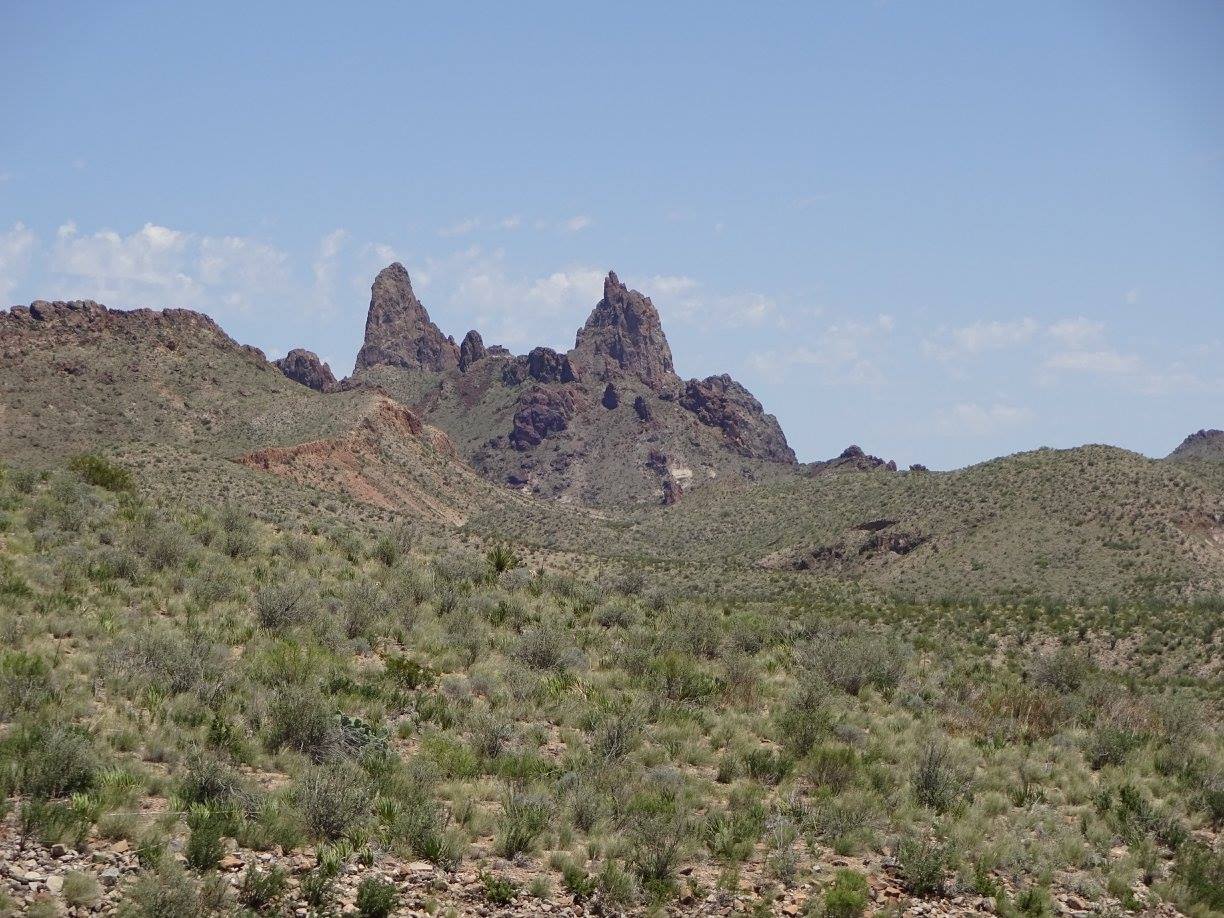
Back on the main road I took a short stop at the Rio Grande Village which was closed for the summer, except for its store. There were very few people out and about the park but here a group of about a dozen teenagers and few adults formed a line in front of the checkout counter. They were all together. I bought some Check Mix and a Vitamin Water as well as a pair of fancy socks with an image of a bear and the words “Big Bend” sewn into them. I then proceeded to the Boquillas Canyon Overlook. I parked my car and walked the short path to the river overlook. There, on the banks of Rio Grande on the U.S. side, a short Mexican man wearing a sombrero was singing Cielito Lindo “Ay, ay, ay, ay Canta y no llores.”

There were a few other tourists at this spot as well. One man asked this singer questions about where he was from This man shared. “I’ve been crossing the river for about 20 years to sing songs, any requests.” He too had a money jar for tips. 

I wanted to cross the river as well. Near this location was the port of entry to Boquillas, Mexico. One can take a short boat ride across the river, present his/her passport, and enter the small town of Boquillas for a visit and most typically a meal. Today the port of entry was closed. This man, however, did not let that stop him. 

19488749_10214182239610348_5766597606567636851_oWhen I crossed the expanse of the park and was nearing the West end to visit Santa Elena Canyon I stopped at Mule Ears Viewpoint where one can see the two giant rock formations peaking up like ears. I also stopped alongside the road to view the enormous ocotillo plants, a native to the Sonoran and Chihuahuan deserts with their skinny stems creeping well over twelve feet tall. 
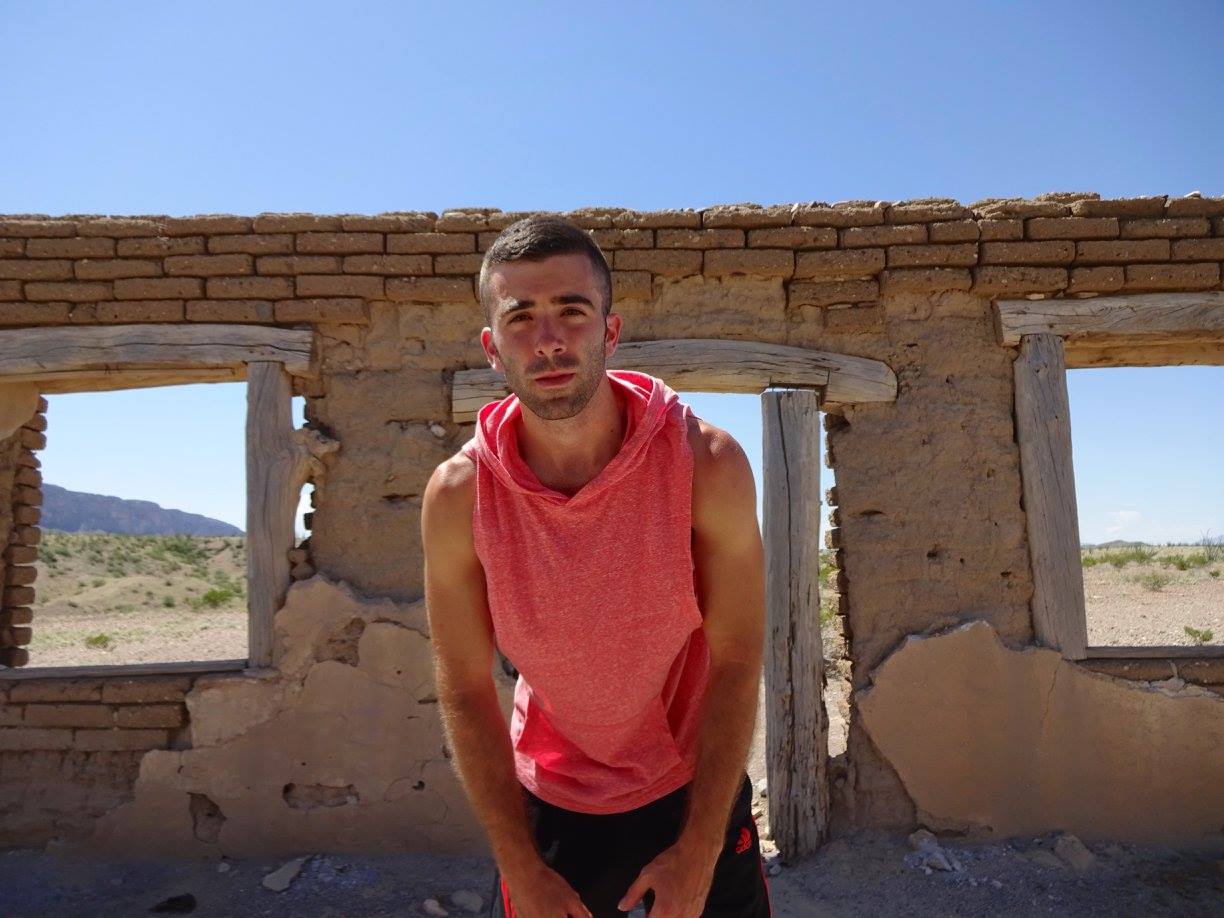
19620485_10214182231130136_1345322192240845248_oMy final stop before venturing into the canyon was at the Dorgan House Trail which leads to the remnants of an old homestead called Coyote Ranch. There were interpretive signs telling a brief history of the place. Settlers had to give up their homesteads when the government seized control of the land. The remnants of the buildings at Coyote Ranch are rusticly beautiful. There were clay bricks falling down from once fully constructed walls and door frames and window beams constructed of what looked to be driftwood. The homestead was up on a bit of the hill. I paused and looked out at Santa Elena Canyon in the distance and the expanse of savannah and rock formations in the distance. The place was so extremely quiet and remote. It fascinated my imagination to entertain that this was once home for people and they somehow raised animals and grew crops on this near barren land. 
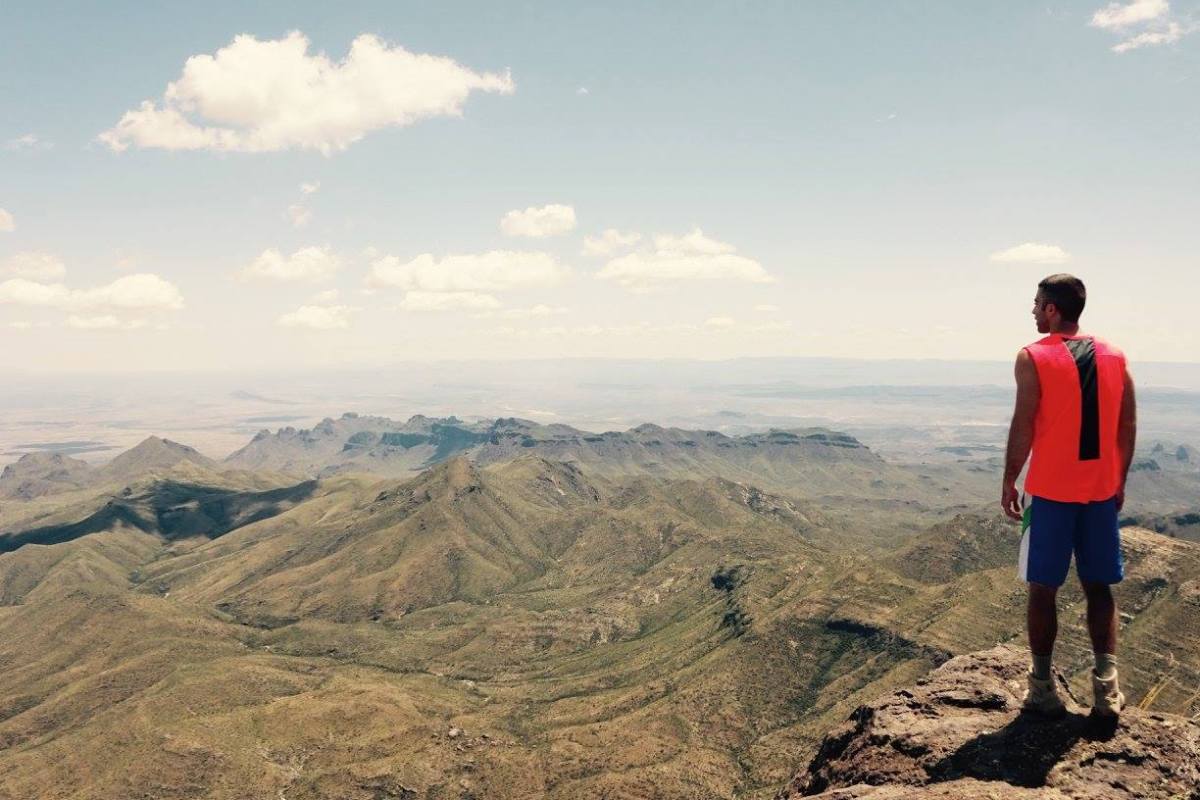
When my day was nearing its end, I headed back to the Chisos Basin in the center of the park where I was staying in the campground. I went to the lodge and bought a book titled Beneath the Window: Early Ranch Life in Big Bend National Park Before it was a National Park. The author Patricia Wilson Clothier recounts here childhood living in the region and the difficulties of trying to farm a land so harsh and uninviting. She mentioned how during her childhood in Big Bend, other people were rare, and those who did live nearby in the Big Bend region were a journey away. When they weren’t at their ranch, like others they would always leave doors unlocked and open for weary travelers passing by. It was expected that people passing through may need a place to stay or food to eat, so the door was always open. I found that information very insightful. Maybe this goes to explain the very apparent friendliness of West Texans. A culture was established in the past of excitement for people and visitors, because “new” people were a sure rarity in this rural land. I thought to myself, I don’t need to be in West Texas to be a rarity. You’ll find me a rarity wherever I am, for better or for worse.

I ate dinner at the Chisos Basin Lodge restaurant. I enjoyed some pork tacos with kale wand a great views of the rock pinnacles before me out the window. After dinner I bought some yogurt from the general store I fainted in the evening before, and I read my new book on the back porch of the lodge to another amazing West Texan Sunset. 

The following day I would head north to the border of New Mexico and Texas to visit Gualalupe Mountains and Carlsbad Caverns National Parks.

Read my previous episode “Passing Out in Big Bend National Park,” here: https://joshthehodge.wordpress.com/2020/01/20/passing-out-in-big-bend/04/11/treasures-of-the-chihuahuan/

Check out my new book “Canyonlands: My Adventures in the National Parks and the Beautiful Wild,” here: 

https://www.amazon.com/dp/1711397873/ref=cm_sw_em_r_mt_dp_U_UjGjEbYBGF4PR

Canyonlands Cover

Advertisements

Occasionally, some of your visitors may see an advertisement here,
as well as a Privacy & Cookies banner at the bottom of the page.
You can hide ads completely by upgrading to one of our paid plans.

UPGRADE NOW DISMISS MESSAGE

LEAVE A REPLY

POST NAVIGATION


Passing Out in Big Bend National Park

My vision faded to a nauseous blue and the voices around me turned into muffled echoes drowned out by anxious buzzing. My eyes were open yet soon I couldn’t see. The control of my faculties was fading. The beating of my heart was spinning out of control in a desperation. I was slipping into unconsciousness. To date, this is the one and only time I’ve fainted in a National Park.

Despite what might seem most unpleasant, don’t get me wrong. This day was a great one. It just ended with a flopping crescendo. I was in Big Bend National Park in West Texas where one of the nations most magnificent National Parks hugs the Rio Grande River bordering Mexico. This wonderland in the heart of the Chihuahuan Desert ranks on the lower end of visitation when it comes to National Parks but it’s towards the top of my list of most impressive National Parks. 

19693384_10214182230570122_6254901748591647210_o

I would venture to say that for anyone not from this area this place would seem otherworldly, like a completely different planet. Plant life is so unique with giant agave plants of all varieties and orange twisted naked indian trees. Reading up about this park afterward, I learned one of the reasons why the plant life is so unique in this are of the Chihuahuan desert is because it is the biome developed from what is believed to have once been rainforest before land masses separated, the gulf of Mexico was formed, and the sea that covered much of the park dried out. This was also the land where dinosaurs roamed and swam. Deinosuchus, an enormous genus of crocodile swam in the shallow sea that covered the lower levels of this park where now tarantulas scurry. Looking around, the age of dinosaurs doesn’t seem so distant. The peculiarity of the landscape, the enormous rock pinnacles busting up from grasslands, and the oversized plants, like the aloe vera growing stalks up to forty feet high with giant insects feasting and pollinating, make it seem like a flashback to the jurassic or cretaceous.

19667576_10214182234850229_2593713154650568465_o

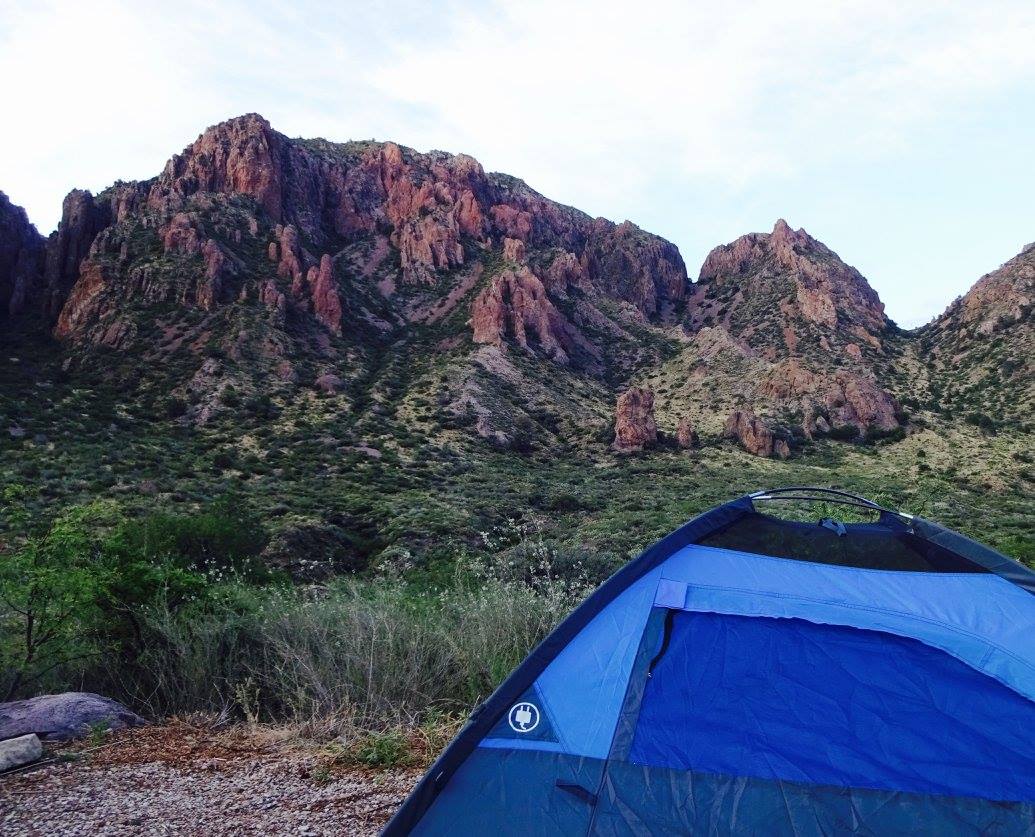
The previous night I had camped in the Chisos Basin Campground located in one of the four villages in the park. Yes, Big Bend is quite big indeed. Some of the other hubs close down for the summer but this one remains the most popular one in this season. The campground was tight and crowded. Many people were packed in, but it was situated in a beautiful basin surrounded nearly completely by rock pinnacles except for a gap looking down upon the desert. Up here at the higher elevation the landscape is greener, more trees are able to grow, and the temperature usually remains about twenty degrees cooler than in the lower reaches of the park.

Today I had a significant hike planned up in the Chisos Mountains. The trailhead was conveniently accessible from a footpath leading from the campground. The footpath climbs stairs and turns left to a visitor center, general store, and the lodge but proceeds forward to join the Chisos Basin trailhead climbing upward and gaining two thousand feet into the mountains. 

The sun had risen, but I was still getting a pretty early start. As I hiked around the campground I came upon a very friendly and pleasant young couple bidding me “good morning.” It looked like they were getting set up for something. Then I remember reading a sign by the bathroom about a campground worship service on Sunday mornings. I put two and two together. This had to be the “campground chaplain,” if such a term exists. I would assume they were the campground host, whom also led a worship service. I thought about stopping and joining them, but I also considered the many miles ahead of me. Regretfully, I did not stop. But the prospect of coming together with other Christians in the beauty of nature in a National Park seemed purely wonderful. John Muir himself often referred to beautiful spots in nature as “temples.”

Before I reached the trailhead, along the path was a sign titled “Lion Warning.” It went on to explain what to do in a lion encounter. It did not once mention the term “mountain lion” but simply “lion,” making it all the more intimidating. “A lion has been frequenting the area and could be aggressive towards humans,” it read. Mountain lions are a concerning creature, because unlike a bear which will make its presence known, a mountain lion stalks, unseen, unheard, and then pounces. It can break a neck instantly. Mountain lion attacks are rare, and it would be especially rare to encounter one during the day, but I had read that a mountain lion is less likely to attack a human if the human looks unnatural. So a good deterrent is to wear bright neon colors that make yourself look artificial and not like a tasty treat of nature. 

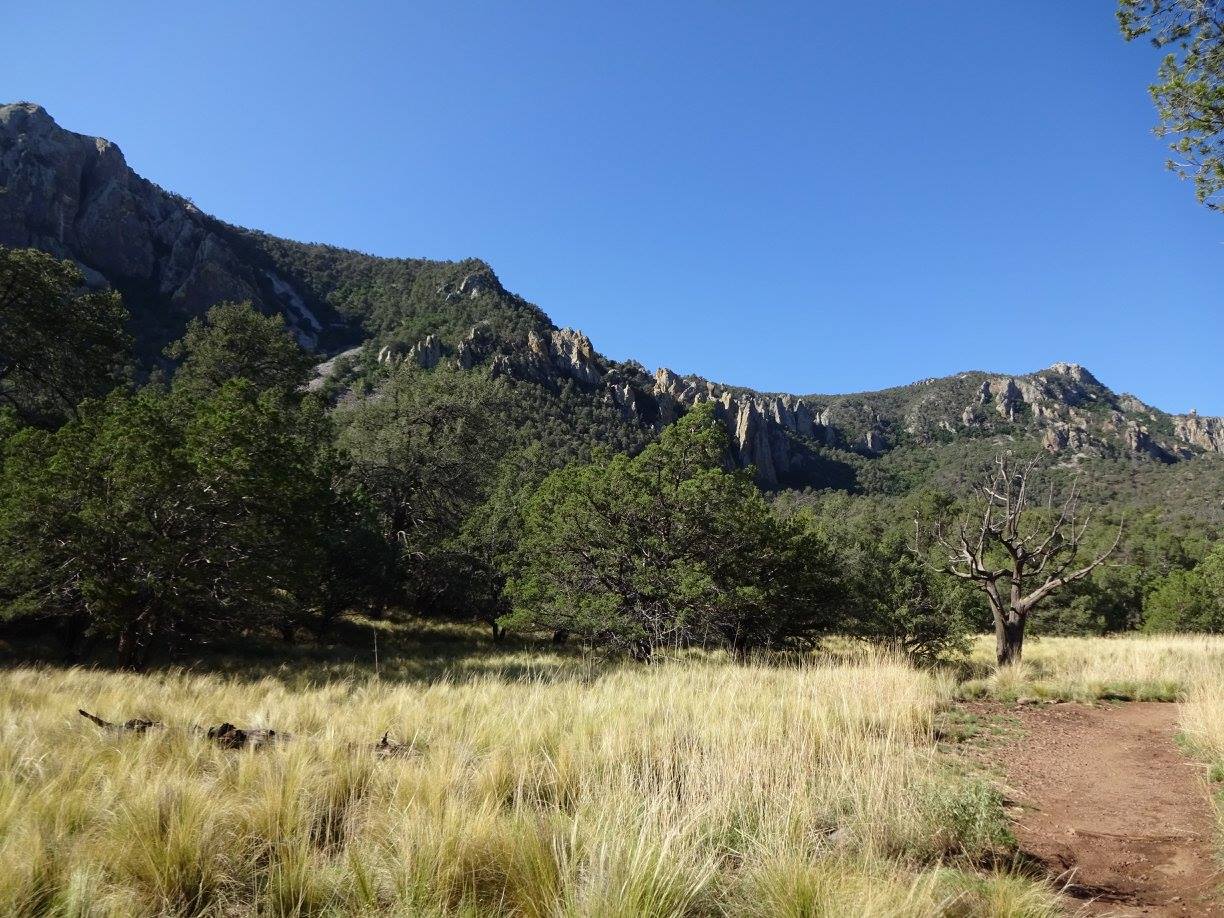
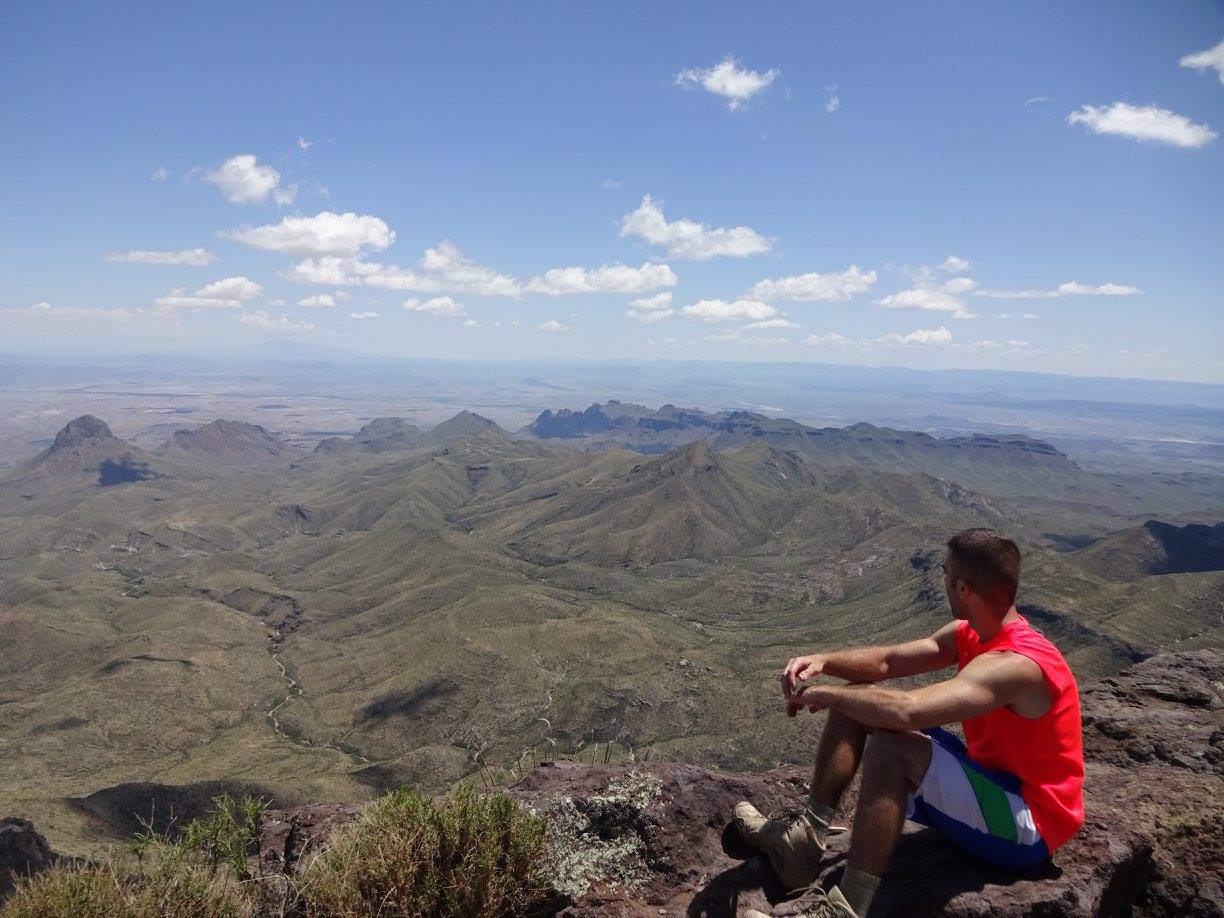
The Chisos Basin trailhead was rather steep, quickly gaining elevation, passing by shrubbery, agave, and more naked indian trees. The first point of interest was Boulder Meadow where the land leveled and displayed a hidden meadow surrounded by boulder peaks. I had almost camped here, but I hadn’t arrived in the park the evening before with enough time to pack and get to this area before dark. Setting up camp alone, in an unfamiliar place, with the presence of mountain lions, just didn’t seem appealing. But seeing it in the daytime, I certainly acknowledge it would have been a great place to camp. This trail I was on led to a network of trails up in the Chisos Mountains to various areas, remote campsites, and natural features. I wasn’t exactly sure all I was going to hike. I did know I wanted to get to the South Rim. I had seen a brochure advertising the area with a man sitting on the edge of the South Rim. I wanted to be in that exact spot, but apart from that, I had an open mind, which ended with me hiking around sixteen miles.

19621310_10214182250650624_7332457310714695452_o

I enjoyed the hike greatly. Nothing compares to the landscape of desert, grasslands, and forest all converging together, but at times remaining distinct, separated in patches up in the mountains.

For most of my hike I was alone, and I felt very alone too, always conscious of it, slightly concerned for my own safety. No one would be out here to aid me in the event of an emergency. The climate was very hot and very dry, and the sun was very powerful. I knew, not properly equipped, the climate could dehydrate me and claim my life. So i was very diligent to stay hydrated and calorie equipped. The one place where I saw others was at by Emory Peak. It was a mile and a half deviance from the main trail.  Emory peak is the highest reach in Big Bend National Park at 7,825 ft. The trail to Emory Peak slowly dissipated, to the point where any resemblance of a trail was gone. There were two peaks of ragged rock spires, like two towers sticking up on the mountain. One of these two had to be the peak. Other hikers were there. questioning which was Emory Peak. The two peaks looked to be about the same height and there were only a mere thirty feet or so apart. In urban terms they were maybe four stories high. I chose the one that looked the most manageable to climb. There was clearly no established route, but I found places for my feet and natural steps to grab hold of and pull myself upward. At the top I sat on a small plateau viewing out upon the rock pinnacles below me and all the valleys and crevices of the landscape. I enjoyed it, and it was great no doubt, but perhaps it wasn’t the most memorable of summits, because I remember more about the climb up than the view itself. From up here I was able to look over at the other rock peak where a few climbers maneuvered their way down. Just the sight made me on edge because between these two spires was a cavity, a long and dramatic fall to any solid ground.

19577192_10214182248770577_4211565750514315038_o

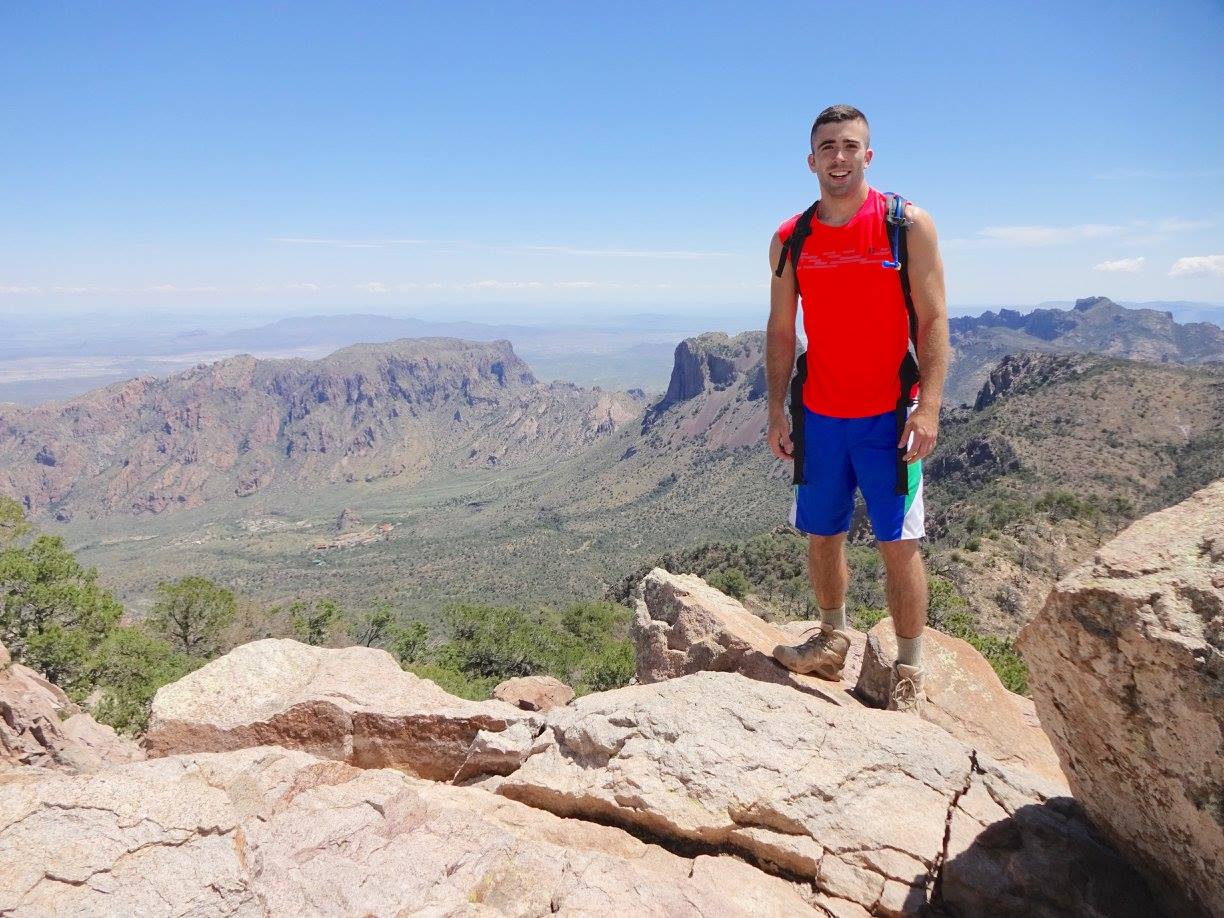
Back on the main trail I continued past the Pinnacles area to Boot Canyon- a very arid forest, which at one point the trail passed by a cabin which I assumed was a ranger residence. At one point the forest gave way to grassland where tall whispy brittle golden grass closed in upon the trail. Miles later I reached the East Rim, which traveled around to the South Rim. I had arrived! I found the place on the brochure and it was well worth it. I sat there by a prickly pear cactus looking down upon the sharp triangular mountains I was well above. They were all dark pale green or brown, reflective of the arid feel of the terrain. Far below I spotted a dried up river bed meandering among the hills, and nearing the horizon the plains of even dryer desert. While I was observing the landscape, I begin to hear a terrible buzz. It grew louder. The sound was approaching rapidly. From up above I began to see a cloud wisping through the air below growing bigger with every fraction of a second. I was very confused and did not know what this was, but it scared me. It caused me to crawl back from the canyon rim and stand up. I realized it was a swarm of insects. It seemed like it was heading right for me, and its sharp atrocious sound was piercing to my ears. I was prepared to drop to the ground and shield my head with my arms, when the swarm swopped to the right and zoomed off into the distance.

19620127_10214182236970282_1769647602224283401_o

What exactly was that? I questioned. I have never in my life experienced a swarm of insects like this before. The sound of it made me think they were a type of fly or bee. The only thing in my life experience to relate it to is the Winnie the Pooh cartoons when the silly old bear is chased by bees after disturbing their hive. It might have been terrifying in the moment, but soon after I couldn’t help but revel in the unique experience it was, and the rather stunning visual display of thousands of insects flying in a coordinated manner with such rage. I wanted to ask a ranger about this, but the visitor center was closed by the time I got back. 

This South Rim was the highlight of the hike with its stunning view. From here I looped back down to the Chisos Basin passing by the Laguna Meadows and Blue Creek which was largely dried up. Everything in my hike looked so desperately thirsty that it was strangely eerie. A bountiful forest is comforting boasting so much life, even a forest in the winter with it barren trees has its own charm, but a forested area so painfully thirsty comes across as hostile and desperate. But I wasn’t. I could certainly sense the dryness, but I wasn’t short on water. At one point I could even afford to poor some of my water supply on my head for a brief cool off. 

During the last few miles of nearing my accomplishment of sixteen miles my feet became very heavy. I thought maybe I had bitten off more than I could chew. The final steps down to the Chisos Basin village were some of the most heavy steps I have ever taken. I felt like my feet could just pop right of, or my legs would fall off from the pelvis. It was evening now. Around 7pm, I had hiked at least over 10 hours continuously up, around, and down a mountain range with only a couple of brief stops. I was more than ready to sit down.I wanted to stop by the general store in the Chisos Basin village first and then relax for a bit at the lodge.

As I was in line at the store to buy a sandwich and a Gatorade, there was a family in front of me, foreign, seemingly from India. With broken English they were trying to ask questions about purchasing a camping tent. I was so desperate to sit down that I wanted to make my purchase and be done with it. With my legs extremely sore, I began to feel a bit agitated when there was a problem reading their credit card. When I realized this might not be a quick in-and-out a is when I began to lose my senses. I began to faint. Then, it was my turn. I set the Gateorade and sandwich on the counter, but my vision left me. I felt myself falling towards the group, so I tried with all the control I had left to squat down in front of the counter. Consciousness left me, but a moment later I stood back up. 

“Sign this,” I heard. I must have given him my credit card too, but I scarcely remember. 

“I’m sorry. I just feel like I’m gonna faint,” I said. I still couldn’t see. 

“Please don’t,” said the young man behind the counter. I already had for a moment. 

I intensely tried to regain vision. It was faint and disrupted but I could see just enough to sign my name on the receipt. 

The young man behind the counter seemed to have no idea how to react. He didn’t offer to help or provide any advice. I’m sure by this point I probably looked like a ghost. In the aftermath, I felt sorry for him. He was probably just a college student with a summer job, inexperienced with the outdoors and first aid, just trying to earn some money. The sight of me fainting probably scared him. As we would say in the South, “bless his heart,” and bless mine too after what I’d been through. 

Right outside the store was a bench, where I collapsed. I unscrewed the Gatorade and drowned myself in its cold electrolyte bliss. 

A young man- the hiker junky, hippy-free spirited type came beside me. “Are you alright?”

“I just came back from a 16 mile hike, but I have gatorade and food. I should be all right.” I informed.

“A similar thing happened to me earlier. I drank some whisky. It really helped. I have some. Would you like it.”

“No, but thank you,” I replied.

He left, and I doubted for a second if I really would be okay. I still felt very weak. I was concerned to stand up and move with the prospect of passing out again. It might not have hurt to ask him to stay for a moment. But whisky? Really? Drinking whisky when dehydrated did not seem like a good idea to me. 

I hadn’t considered it before, but then it dawned on me. I wasn’t dehydrated. I had plenty to drink, and I actually had plenty to eat. I had nuts, dried fruits, and cliff bars, amongst other dehydrated snacks, but then it dawned on me: I had little to no salt. I was salt deprived. This is why I fainted. 

I carefully went back to my car, self monitoring for all signs of faintness. I had a can of chicken noodle soup cooking in the heat of the car all day. I took it with me to the patio at the back of the lodge. I enjoyed it along with an orange. 

And there in perfect view from the patio the sunset was framed between the rock pinnacles of the Chisos Basin. A bright and warm orange spread across the sky. It was beautiful and a wondrous work of artistry, but as sunsets often do, it caused me to reflect inwardly. I wasn’t as invincible and strong of a hiker as I thought I was. This was very humbling. My body was not adequately equipped for today’s hike, and I hadn’t considered salt intake. What else might I be missing? My confidence with the wild had been slashed. I couldn’t trust myself as much as I thought I could. 

I locked my keys in the car days before, been stuck out in the lighting in White Sands, got reprimanded by a park ranger, and passed out in Big Bend. I was keeping track of misfortunes. What was wrong? Was it me?


Read my previous episode “Treasures of the Chihuahuan,” here: https://joshthehodge.wordpress.com/2019/04/11/treasures-of-the-chihuahuan/

Check out my new book “Canyonlands: My Adventures in the National Parks and the Beautiful Wild,” here: 

https://www.amazon.com/dp/1711397873/ref=cm_sw_em_r_mt_dp_U_UjGjEbYBGF4PR

Canyonlands Cover

Treasures of the Chihuahuan

I woke up in the Indian Lodge so well rested that it was one of those moments in which I looked up at the ceiling and then around the room, taking a moment to process and recall where I was. I well pleased with the recollection that I was at the Indian Lodge at Davis Mountains State Park in West Texas.I got up, and the floor beneath me was sturdy and firm. This was a fortress of a structure.

I threw on some presentable clothes and decided to go check out the Black Bear Restaurant, the resident eatery at the lodge. I sat next to the window and enjoyed breakfast from the buffet, satisfying my hunger with scrambled eggs, pancakes, sausage, and fruit with some cucumber and pineapple water. I looked outside at the desert hills and yucca plants of the Chihuahuan desert with the morning sun spreading its golden light into every sleepy crevice of the landscape.

On my way back to my room, I stopped by the front desk in the lodge office. I was hoping to see my first West Texan acquaintance, the friendly lady from check in. She wasn’t there, but her male counterpart was- a young, round, jovial man. I asked him about trails and what to see around the park. He kindly and pleasantly provided me with a map. I took a moment to browse the small gift shop and bought myself a Davis Mountains State Park sticker.

Back in my room I geared up to go on a short hike, 1.72 miles one way up into the mountain to the right of the lodge. The day started off bright and sunny, with only a few bright white clouds wisping through the blue above. The path slithered around sagebrush, curved around a valley and a tall pointed brown rock formation, and trailed around to the spine on the back of the mountain. Once I reached the plateau the Indian Lodge to my right was just a miniature below. To my left was a fence. Someone’s private property butted up to this State Park.

Also, up here the weather started to turn it’s back on me. First there was a whipping wind that violently flustered the desert grass, then deep, dark clouds rolled in. Once again, I found myself in a vulnerable position. I was exposed to potential lightning. I decided to play it safe and return promptly back on the trail from where I had ascended. My nearly 4 mile hike turned out to be a mere 1.4 miles. This wasn’t supposed to happen. Weather never got in my way. But this was the second time on this trip in which the weather won. Despite its apparent threat, a storm never did reach the area.

Back at my car I noticed a dent in the hood of my car. The trouble was this wasn’t “my” car. It was a rental. I began to be concerned about having to pay for damages. I looked at the indent from different angles. It wasn’t that obvious. It was slight, only very apparent at certain angles. I pondered this dent. How could this have happened? I never remember anything hitting my car. Then I considered where I had my car parked all night. It was at the bottom of a short cliff where a road wrapped around just above. A rock could have easily fallen from the road onto the hood of the car. In retrospect, this was really no big deal, but at the time it troubled me. This was not supposed to happen. This trip was supposed to be perfect. This was an unhealthy disposition that was only beginning to be challenged.

Back at the lodge, the sun returned to shine. I took a few minutes to swim small laps in the outdoor pool, so perfectly situated behind the lodge in the beautiful valley. I also sat poolside to write in my journal and enjoy the desert sun.

I checked out of the Indian Lodge hoping to one day return and eager to tell people about such a wonderful place it was. It’s a true treasure. Despite my hangup on the dented hood, my stop at the lodge was rejuvenating, a breath of fresh air, a truly remote hidden oasis, a place where anyone could find comfort and solace on the outermost reaches of the United States, in the fold of the Chihuahuan desert, armored and hidden between mountains.

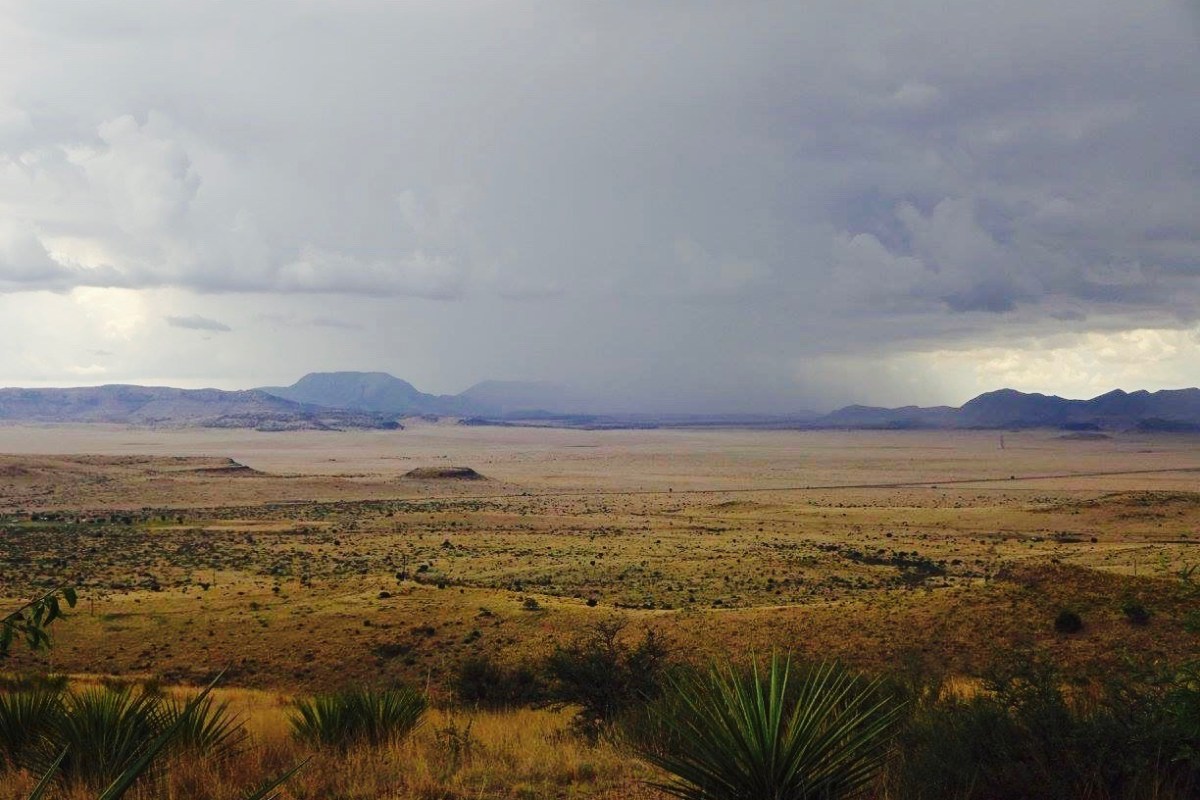
19575160_10214158419814868_3297167524510951263_oLeaving the lodge I drove Park Road 3A, also known as the Skyline Drive- one of the park’s proud features. The road switchbacks to the top of the mountain opposite that of my hike. The road ends at an old rock shelter, built by the Civilian Conservation Corps. From here I could see out on some of the wide plains of Texas with blue mesas standing in the far distance. Here I could also see the rainstorm that had threatened my hike earlier, pouring down across the plains. I encountered a family of travelers that asked me to take their picture. I took their picture and carried on.

19466485_10214193955823246_3398140235645297518_oFour miles from the State Park is Fort Davis National Historic Site- a unit of the National Park Service. It actually attaches to the State Park by a trail, but I didn’t have the time to hike there and back. I didn’t know why there would need to be a fort out here in seemingly the middle of nowhere Texas, but I would learn, and I was excited. Any unit of the National Park Service interests and excites me. All of the National Park Service’s sites tell one big story, the narrative of the United States of America. At each one I see my eyes opened to moments in history I didn’t know, and not only do I obtain the knowledge, but being in the actual place where these events took place, and seeing them with my own eyes, helps me imagine and obtain a greater depth of relation to the events. I love it!
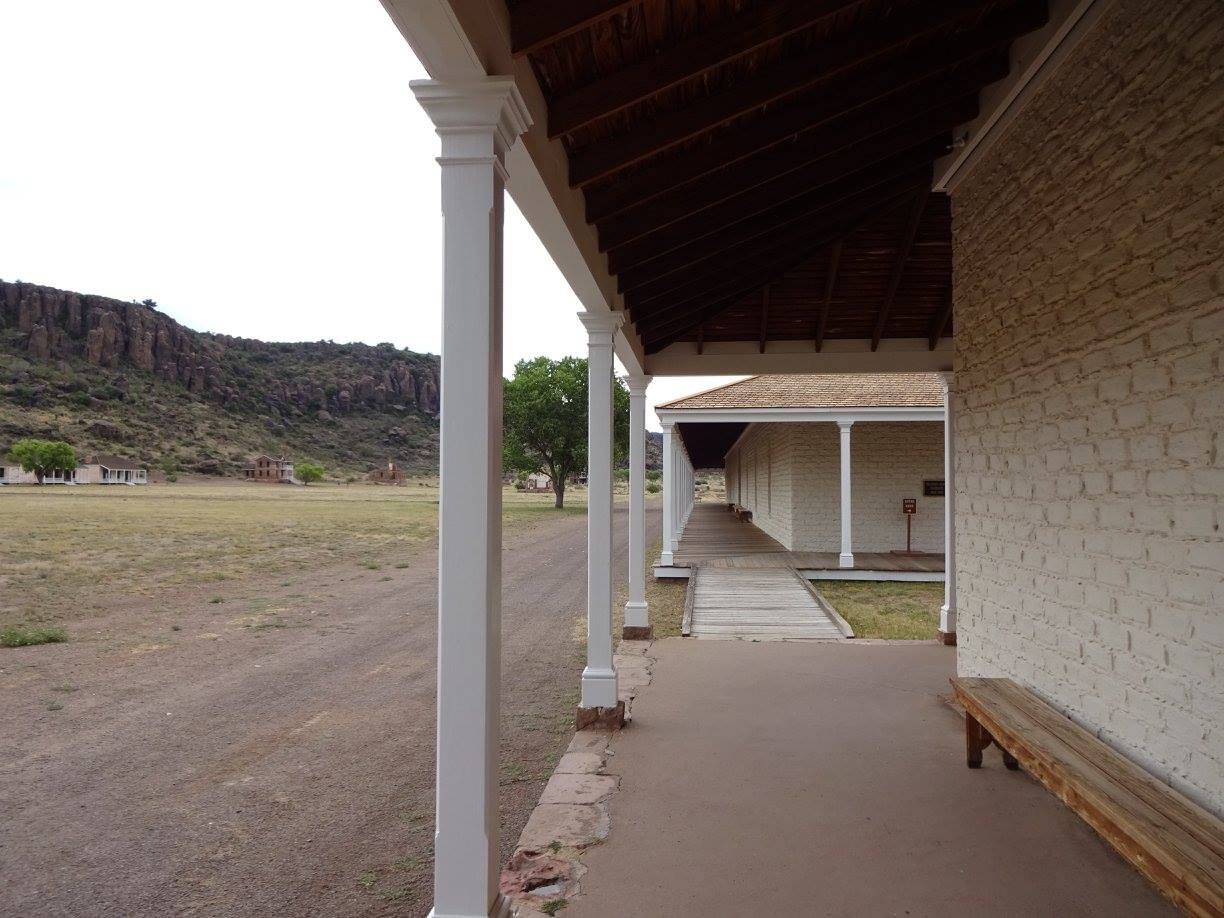
In the visitor center, the park ranger offered me a park map. I asked what to see. She opened the map and with her Sharpie highlighter she began highlighting buildings within the complex. By the time she was done, she had highlighted every single thing within the map. I wondered if that was necessary. I think she really just loved using her highlighter.

Leaving the Visitor Center, I explored the history. I learned that Fort Davis was a United States Army fort built to protect emigrants, mail coaches, and travelers along the San Antonio- El Paso Trail, many of whom were on route to the rich goldfields of California during the Rush. The Buffalo Soldiers stationed here protected these travelers from the threat primarily of Apaches and Comanches. They escorted them through the area, as well as repaired roads and telegraph lines. During the Civil War, the federal government withdrew troops from the fort which was taken over by the Confederacy later to be claimed back by the Union. In the late 1800s the fort had outlived its worth. A park ranger explained how it had been sold to a Hollywood filmmaker to film western movies. Then a few buildings of the fort were partitioned off into separate pieces of private land, only be reclaimed by the federal government as a National Park Unit in 1960.

19243325_10214193960943374_2738043865480521184_oToday exploring the park is really stepping back in time to a unique era. The Park Service has preserved and restored many of the buildings. This fort is not what we typically think of as a fort. There is no man made barrier of a wall with artillery and cannons sticking out. Rather it is a series of buildings aligned in a giant rectangle around a common green. The fort is in a large canyon, protected naturally by wide canyon walls and Limpia Creek.
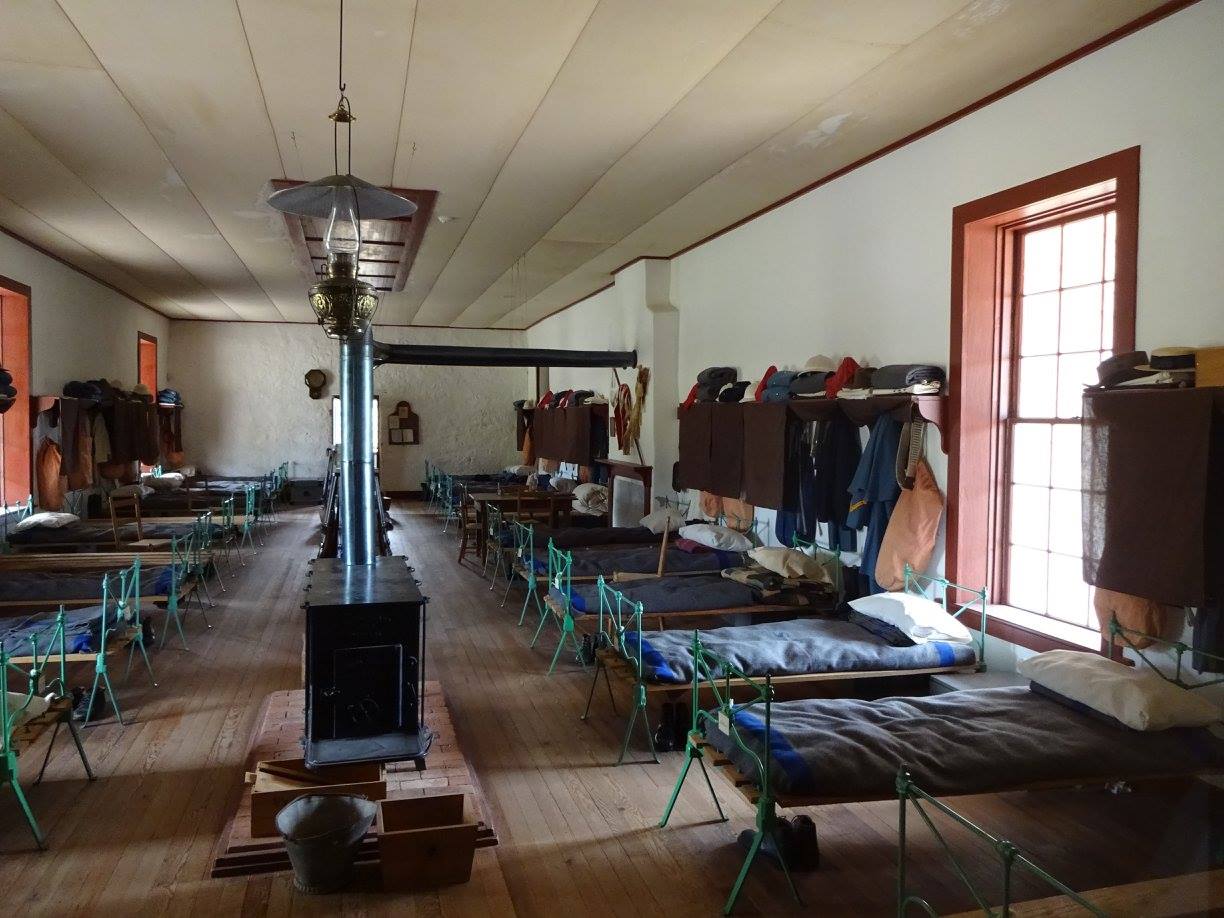
19679023_10214193960663367_2858045640103199091_oThe main attraction of the park is walking in and out of many of the buildings which are furnished to the era. I walked into the barracks. Fourteen beds lined the walls one after another. Apart from a bed, the soldiers were only allowed a few hooks to hang their clothes and a small shelf situated above their beds. In the middle of the building stood a series of coal furnaces. This was very simple. I tried to put myself in the place of the soldiers and imagine what they came “home” to at night.

On the other side of the green were the homes of the lieutenants and commanders. They had fully furnished houses, with beautiful fireplaces and artistic mantels, wardrobes, chairs of varying sizes and style, mirrors, musical instruments, decorations, and all the basic comforts of lavish living. It was such a stark contrast to the lives of the soldiers. I might as well have assumed I was in Manhattan in these homes. Here in the middle of nowhere Texas these commanders had created, perhaps at the cost of the comfort of their soldiers, luxury of modern living. In addition to these places of living, there was a fort commissary, where soldiers were quite limited in supply, and the hospital, which was fascinating and disturbing.

Before entering the hospital I read the background on some real people who once lived here. The plaque told about their ailments, and by touring the old hospital I learned whether these people survived their illness or not. Many did not. Showcased in this hospital museum were medical tools of the 1800s and explanations of how they were used. There were saws used for amputations, drills for digging into the skulls to relieve pressure, gnarly contraptions that looked like more tools for torture than anything else, created with such misunderstanding of the human illness. I forgot most of what I saw. Gruesome as they were, my mind found them not pleasant to remember.

Like nearly all National Park units, there was also a main museum at the Visitor Center with overall history of the fort and a park film. A small area of the Visitor Center was dedicated to books, postcards, and the usual National Park purchasable treasures. I found some stickers that said “National Park Geek” which had an outline of Theodore Roosevelt’s face in a ranger hat. I had to get one. I also got one for my friend and coworker, Jamie, who is also a National Park geek. The ranger who rang up my items said how these stickers were really popular. I told her how I loved the National Parks and how I actually volunteer as a Trail Keeper in the Big South Fork back on the Kentucky and Tennessee border. She told me how she loved that park and was looking for land or a home to purchase in Oneida, Tennessee- one of the main gateways to the Big South Fork. This surprised me. First off, no one ever knows about the Big South Fork, let alone Oneida, a rural small town in East Tennessee. But then again, I was in Fort Davis, Texas a place probably just as famous and well known as Oneida, Tennessee.

19620602_10214193958303308_7501458365493546060_oLeaving Fort Davis National Historic Park, I was well pleased. I learned a lot of history. I had no idea such forts existed. This was one of many which served the same purpose. Also the way the fort was restored and the plaques and markers provided, facilitated imagination, making me feel as if I had really stepped back in time. This place is high on my list of National Historic Sites. When I pulled out of the park drive I thought I’d do a little exploration around the town of Fort Davis. Affording the title “town’ is generous, because technically it’s an “unincorporated community.” The community had one main paved street. All the side streets were gravel and scenic, situated in the canyon outlined with hoodoos and rock spires like those of Chiricahua. In “town” I observed an old western hotel and drug store, a post office, a family practice located in an old adobe structure, a bank completely pieces together from rock pieces, and a courthouse situated in the middle of a green. Everything was closed, as it was Sunday. I was ravenously hungry. It had been a long time since my breakfast at the Indian Lodge. There wasn’t much to choose from. But I saw a decent amount of cars parked out of a shack of a place titled Cueva de Leon. Here’s goes nothing, I thought. I went inside. Mexican restaurant. Okay. Sweet. This could be the real deal, considering how close I was to Mexico. I sat down and ordered some fajitas. I was served a glass of ice cold water and it was perfect for my parched mouth and lips.

19577458_10214193962183405_8825385596625865428_oAs I waited for my food, I couldn’t help but observe those around me. A group of ladies were in a booth eating together and talking back and forth. They switched from Spanish to English constantly, replacing with seemingly no notable method, certain words with their other language counterpart. A middle-aged man with a cowboy hat, flannel patterned shirt, boots and a grey mustache (everything stereotypical of a cowboy) sat down to order his food. To my surprise he ordered his food perfectly and casually in Spanish. Keepin’ it truly real, from my perspective, a middle-aged white man with a cowboy hat back home in Kentucky would be the least suspected of speaking Spanish. This was not the case here. Spanish and English were truly blended together, and latino rancheros and caucasian cowboys came together with no barrier of language nor culture, no ill-will towards one another, just neighborly friendliness. They were simply gathering over good food.

I liked this scene. I liked it a lot. Much of mainstream media tries to divide people over appearance and racial heritage. Here in West Texas, it just doesn’t matter. Everyone seems to be at the same level. Everyone is a neighbor. Perhaps it is the Texas identity. Texans are Texans above all else. It doesn’t matter what you look like, what language you speak. If you are a Texan, you’re a Texan. This doesn’t hold true though in metropolitan areas. I know from my experience living in Houston, where race places a huge factor in everything. But here  and in rural west Texas there is a unique bond of culture that transcends any trivial division that the over civilized parts of the U.S. have concocted. It’s all the more reason why I am in love with West Texas.19221761_10214193961263382_6100642550502333465_o 

Check back next Wednesday for the next “episode” in the adventure.

Click here for the previous entry “Falling in Love With West Texas”: https://joshthehodge.wordpress.com/2019/03/28/falling-in-love-with-west-texas/ 

Check out my book “Among Blue Smoke and Bluegrass” on Amazon: https://www.amazon.com/Among-Blue-Smoke-Bluegrass-Tennessee/dp/1790631297

3 Rattlesnakes and a Frenchman

Although I was running short on time, my adventure in Chiricahua National Monument was not complete. I really wanted to hike to the top of Sugarloaf Mountain. The only competing circumstance was that I had a four-hour drive ahead of me to White Sands National Monument, and I needed to get there before 6pm to secure a camping permit. It was already noon. I would save time, I concluded,  by running the trail to the top of the mountain. After all, it was only a 1.9 miles hike round trip.

I pulled into the parking area. I was already up in the mountains, but this cylinder-like peak jutted up from the mountain as its own entity. I  had to see the view from atop. I grabbed my backpack and hydration pack, made sure I had my car keys, and was off. I started running up the narrow path which hugged the mountainside and spiraled DSC09539around the peak. There was one part with a narrow tunnel carved or blasted out by the Civilian Conservation Corps and another section where the rock and trail became smooth and bright white, appearing almost as if it was a part of a bobsled track. Apart from that, the rest of the trail was of typical rock and dust, with prickly plants all around and the summer sun in full exposure. Yes, it was strenuous, DSC09552going uphill the entire length of the trail, but it wouldn’t be long. I was pushing myself, taking on my machine mentality in which I concentrate on keeping mechanical movements and consistent speed, imagining I am nothing but a machine operating in a programmable mode. I was finally picking up speed and getting past my mechanical groove into a free-spirited free run until…..
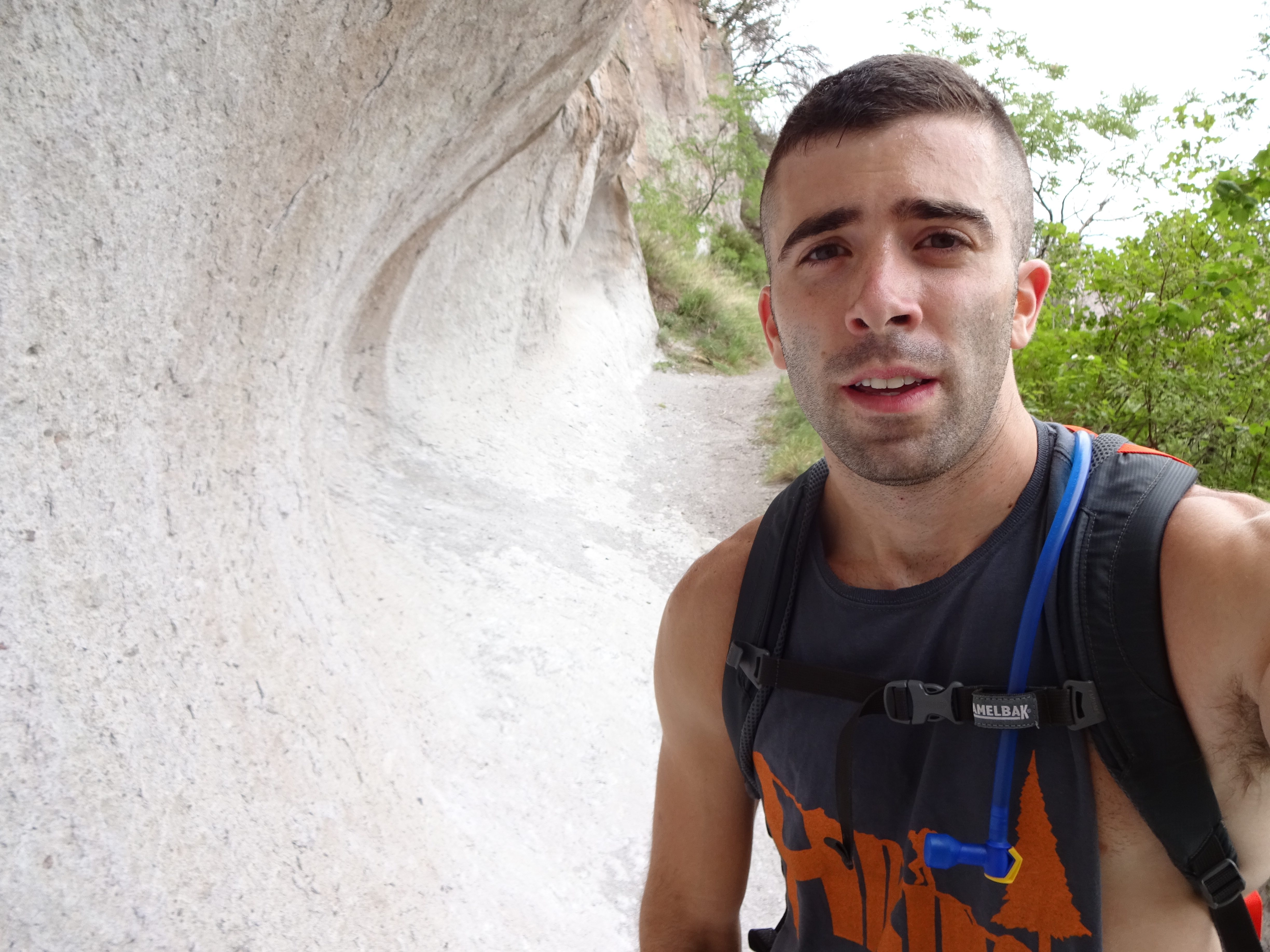
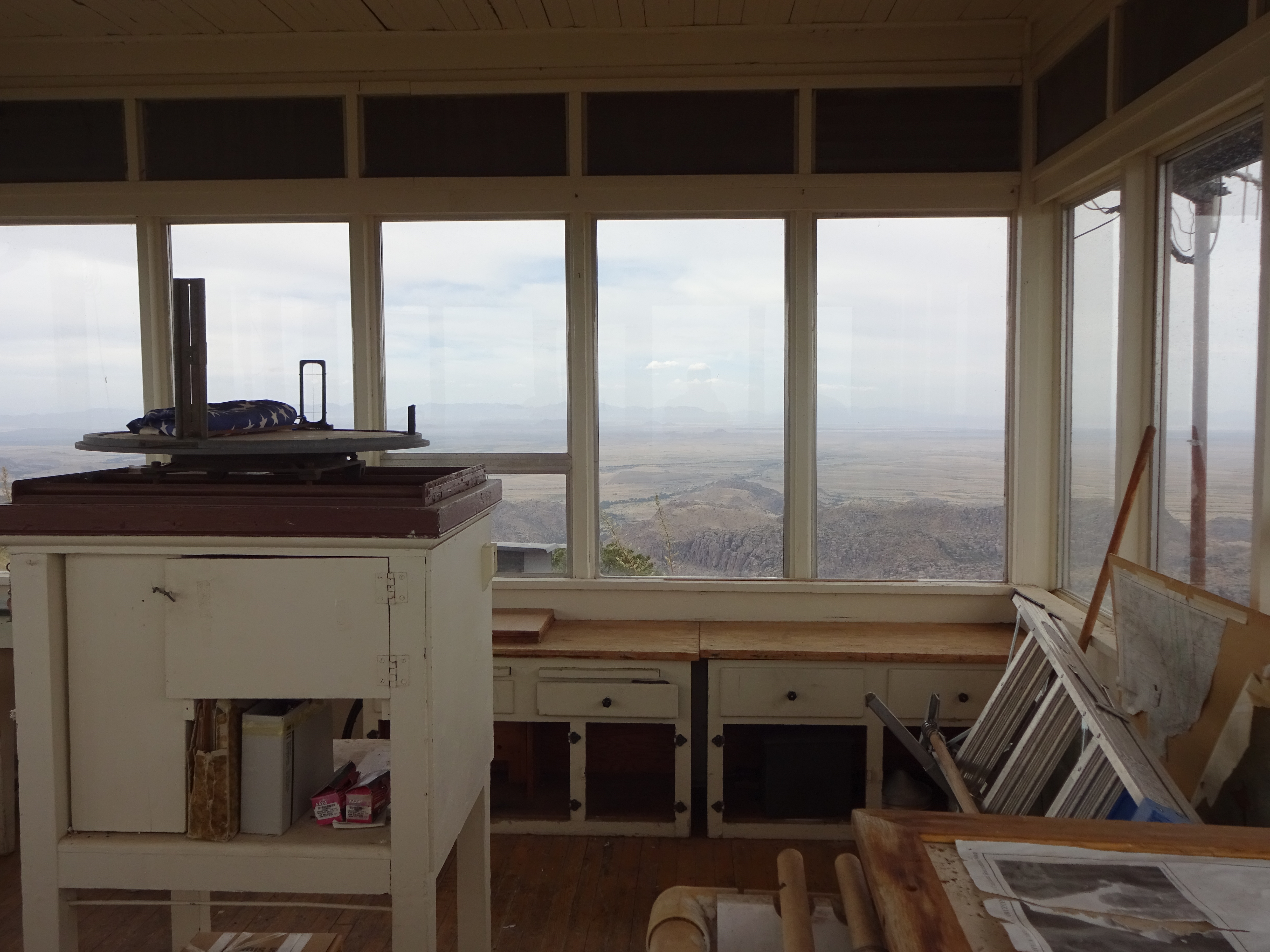
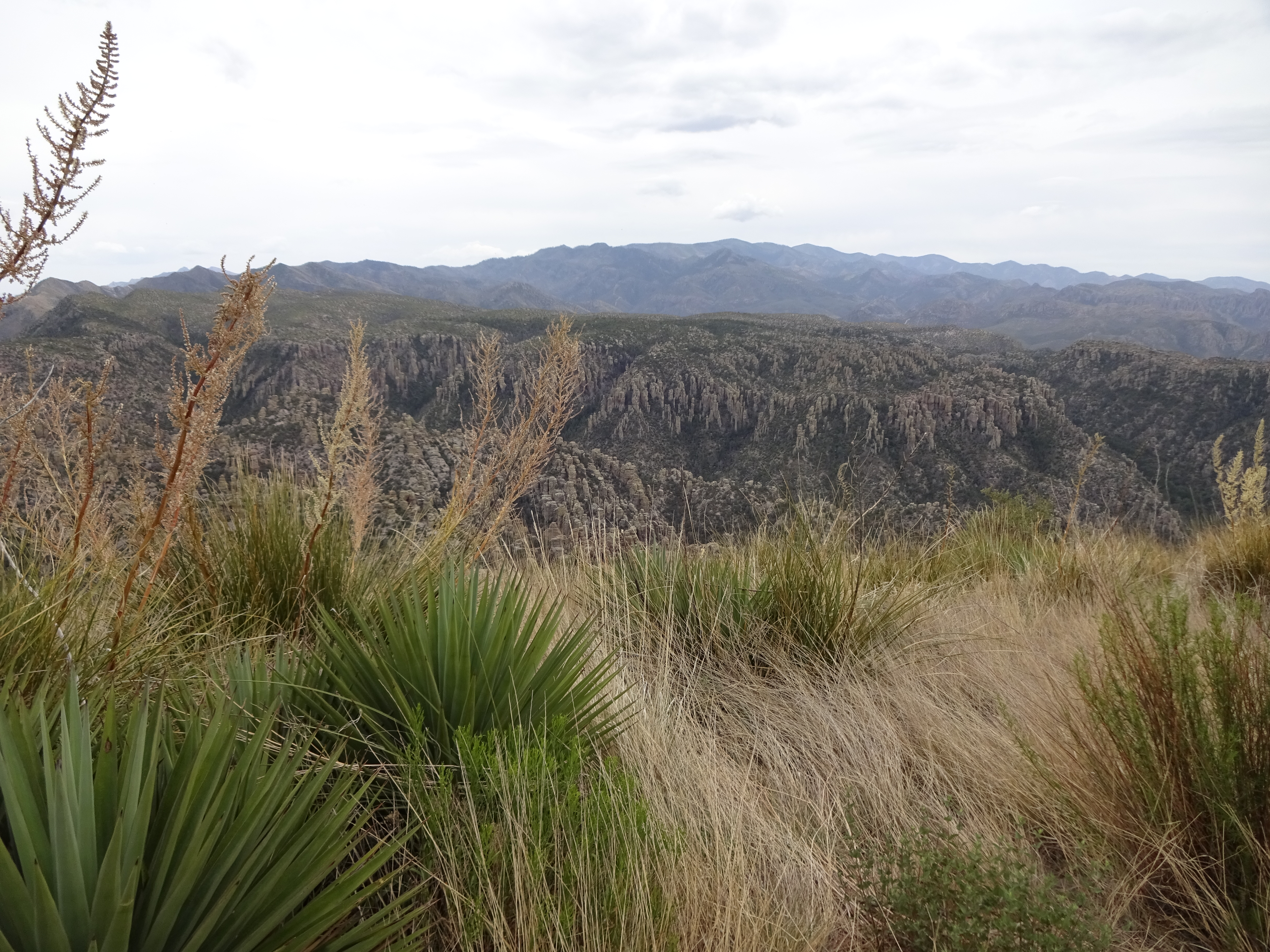
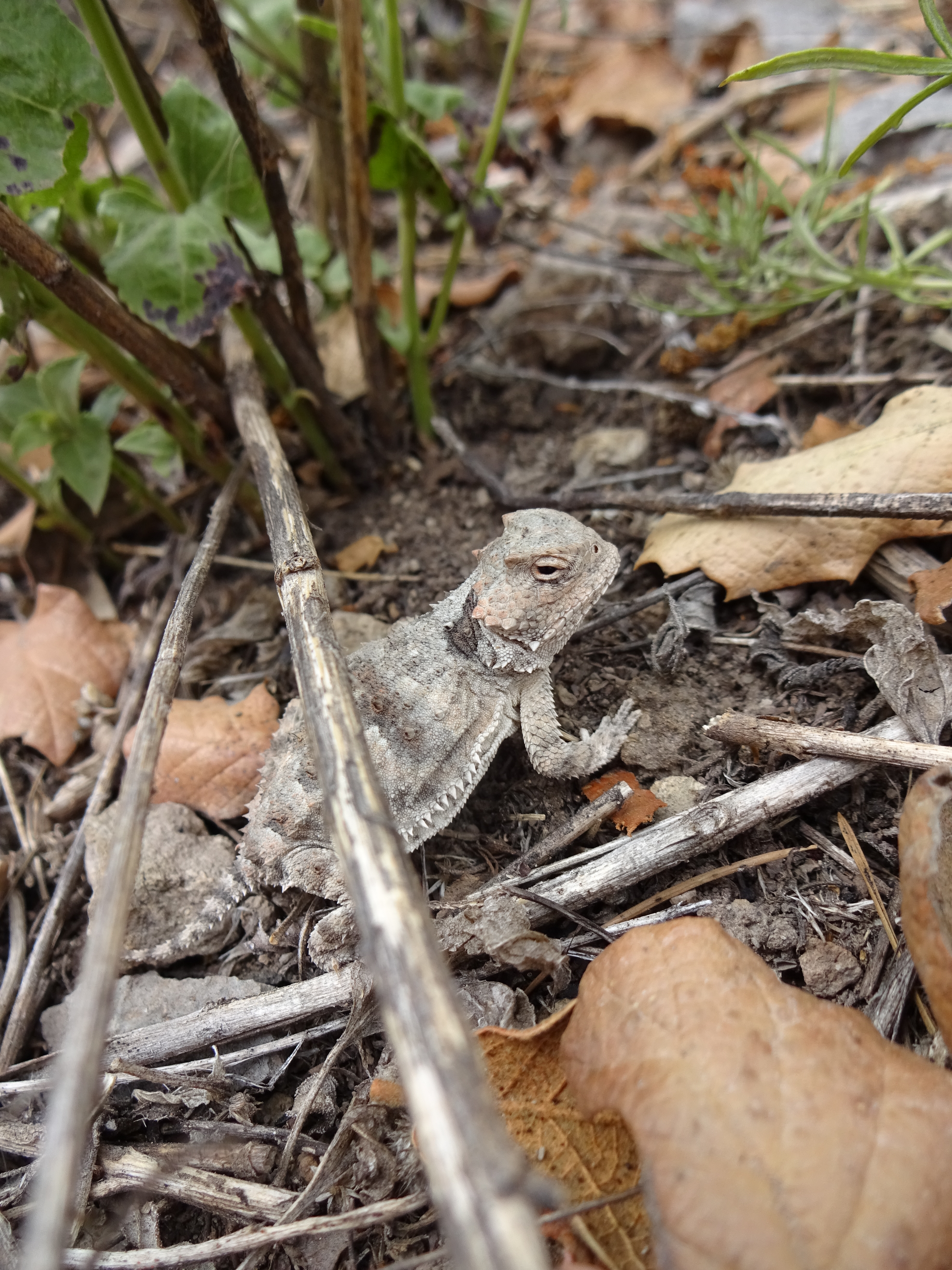
“Tststststsssss” ( That’s how I spell the sound a rattlesnake makes). That noise was coming from behind me.

I ran right over a rattlesnake. My heart instinctively jumped at the sound. My feet must have barely missed stepping on it. Offended, it cringed and rattled its way off the trail. That was a close one!

Preparing for my first trip out West, I was very concerned about rattlesnakes. I read up about them. I thought they were going to be everywhere and would be a real issue for me. I was overly cautious to the point that now it is only humous to think back. My rattlesnake encounters ended up being so few that the threat of rattlesnakes had worn off and they weren’t even on my mind, until suddenly in this moment. Although it through me for a surprise I took this situation very pragmatically. I started building a small rock cairn as an indicator for myself on the way back that I would need to be cautious of a snake in the area.

Then I drew on what I new about rattlesnakes. They are mostly blind and rely heavily on vibrations on the ground to sense what’s going on around them. They aren’t aggressive until threatened. They will move out of the way if they sense someone coming. So I decided I would tread heavily and every-so-often throw a handful of stones out on the path in front of me to startle any snakes into a rattling mode.The plan seemed good to me, so I pressed forward.

Then, unexpectedly, around the bend appeared….a man- a young man- a fellow hiker. After a friendly smile and acknowledging “hello,” I proceeded to warn him: “I just passed a rattlesnake on the trail back there around the bend. I built a cairn. So when you see the cairn, just know there is a rattlesnake in the area.”

“I just saw too more rattle snakes.” He had an accent. He didn’t sound like he was from around here.

“Did you make it to the top?” I asked.

“No, I turned around. There are too many snakes.”

Turning around because of too many snakes, hadn’t even crossed my mind as an option. It troubled me that this guy was going to give up on the hike and a potential amazing view. When you face as many hardships as I have in life, what is a rattlesnake really? It’s got nothing on me.

“Well, I’m going to the top,” I informed. “You can follow behind me if you’d like. I’ll scare away the snakes.” My ego got an espresso shot right about here. I was the brave one. I was the daring one. I had suddenly become a leader.

And just like that I had a hiking companion. His name was Gzeivieur, and he was from France. He told me how he liked to vacation in the United States and visit our National Parks. It’s a perfect topic! I love to indulge in talking about the Parks, so naturally we proceeded to talk about our National Park experiences. We had been to many of the same ones. His favorite was Yosemite. Mine was Death Valley. On his present trip, he had already been to many of the places I was headed. We got on the topic of Dinosaur National Monument, a park I would become a big fan of. He recommended I visit a place near the park called Fantasy Canyon. The name alone sounded very intriguing. He told of rock formations unlike anything he had ever seen elsewhere.

We also reined in the conversation to our most immediate happenings. I told him I camped here in the Monument. He told me he stayed in a hotel in Wilcox. My mind flashed back to those abandoned and sketchy hotels I passed by on my way here.

“Tststststsssss” My stone throwing method had worked. I had been causally tossing stones every once in awhile and I had alarmed another rattlesnake, which scooted off our path.

The trail was soon leveling off and we were nearing the end when Gzeivieur warned of another rattlesnake. This little guy was snug up against a rock right aside the trail. To continue walking on the trail would put us in teritorial risk, so we maneuvered ourselves off the trail on the opposite side, skillfully fumbling over some rocks.

And then…

DSC09570

We were there! We made it! Gzeivieur had been so close on his first attempt.

There at the top was a lookout building. I’m not sure if it was intended to be a fire tower sort of building, or a weather station at some point, but it was paneled with windows which looked out into the spectacular landscape. DSC09574

Clouds had rolled in bringing out a dark richness in the landscape. Here golden wild grass carpeted the mountaintop. Just below us was the valley spread, now so miniature, speckled with trees and hoodoos, and just level with the eyes were dark blue and grey mountains. I am so glad neither of us gave up on reaching a view like this. There was a 360 degree view. We walked around all sides a few times before we began our descent.

DSC09561Despite all our snake encounters on the way up, there wasn’t a single encounter on the way down, but I did see a short-horned lizard. As we descended, my hiking pal and I continued talking all about our National Park adventures. I might have shared with him a story or two of some of my wild happenings.
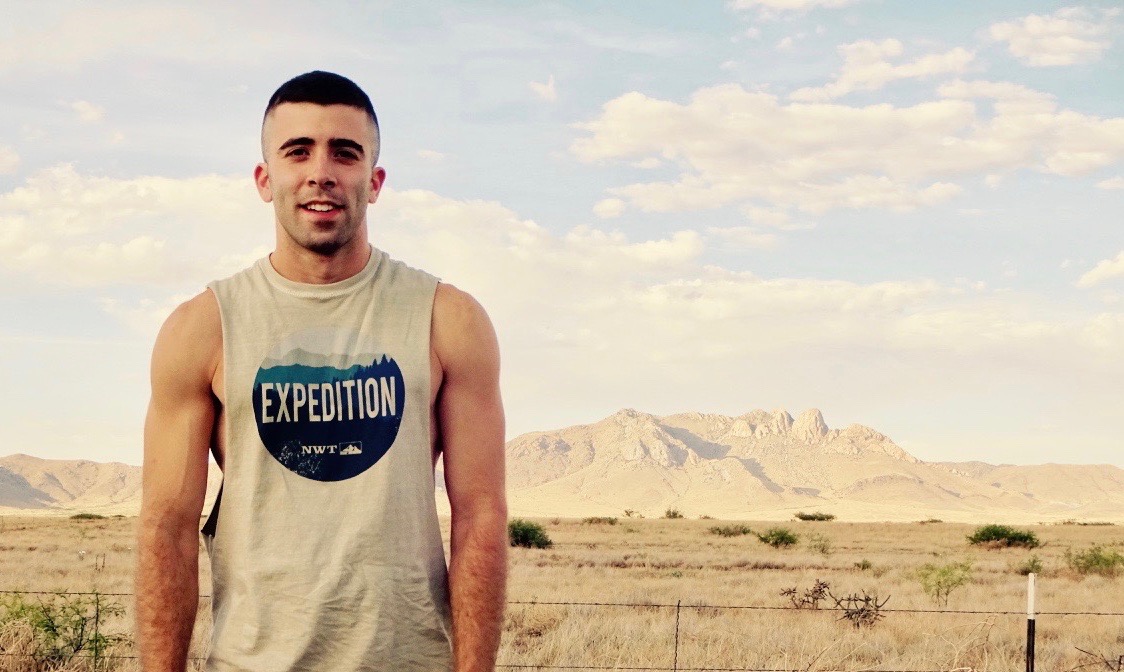
I will say some of the most interesting and genuine people I’ve met have been out on the trails or at different sites in the National Parks. I’ve made a list of them to ponder, remember, and appreciate these people. All of these people I’ve met from the across the National Parks are rich in experiences. They are like books, full of adventures and tales to tell, and our paths meeting end up enriching our own stories.

It’s one thing for a solo traveler like myself to venture across my country. But here was Gzeivieur, doing the same but as a foreigner. That’s some pretty “bad a**ery,” but hey, he still wasn’t going to finish this trail because of the rattlesnakes, so I one-upped him this time. But it’s all in good humor. I was glad to meet Gzeivieur. Before we parted ways, we exchanged social media information. I continue to follow his adventures as he does mine.

Back in my car. I strapped myself in. Chiricahua National Monument provided a full and robust beginning to my summer odyssey. I was now ready for the next leg of the adventure. It was time to head into New Mexico to White Sands National Monument.

Check back next Wednesday, as the adventures continue. 

Click here for the previous entry: https://joshthehodge.wordpress.com/2019/02/28/my-crisis-at-chiricahua/

Check out my book “Among Blue Smoke and Bluegrass” on Amazon: https://www.amazon.com/Among-Blue-Smoke-Bluegrass-Tennessee/dp/1790631297

A New Adventure: An Expedition of Being Lost

This adventure starts with blood, droplets to be precise, running down my arm. I was not sure what to do. I was prepared for many circumstances. I knew how to best handle a bear encounter. I was accustomed to venomous snakes by now. I knew how to avoid hypothermia, and I may have learned a thing or two about sandstorms, but I was not prepared for the angry TSA agent at Chicago’s O’hare International Airport.

Somehow in the midst of things, while taking off my backpack, one of the sharp edges of a National Park pin I had adorned on my backpack, latched into the skin of my thumb and ripped, providing a slender stream of blood running down my arm towards my elbow. I wasn’t aware there was even a wound, until I saw the alarming bright red color cascading down my arm. I grasped my thumb with the rest of my fingers in the palm of my hand, adding pressure to stop the bleeding, and prevent the blood from dripping onto anything.

“Hurry up! Keep moving!” The TSA agent called out in a passionate and bothered tone.

I was trying— trying to get my belt off, remove my laptop from it’s case, put my shoes up on the conveyor belt, and empty my pockets while not losing location of my plane ticket nor wallet. And trying not to bleed on everything. If anything was an omen or foreshadowing of the rest of this year’s summer adventure. This was it.

In a clumsy sort of juggling act, I got all my parts and pieces up onto the conveyor and walked into the tubular cylinder for my body scan. Nobody knew of my bloody situation. I passed through, my belongings were delivered back to me, and I was trying to put myself back together and manage my wound before I’d be reprimanded for holding up the line.

Phew! I made it. First order of business: find a bandaid. I went from gate to gate. Either there was no employee or the agents were too swamped with passengers boarding flights. After adequate effort, I found a kind lady at a gate who disappeared and came back with three bandaids “just in case.” I was all set.

Here I was, on the verge of a new adventure. I had prepared months in advance for this. This would be my third great National Park adventure and road trip. Two years prior I had ventured out West, primarily to California, and hiked and camped in Yosemite, Sequoia, Death Valley, and other National Parks. That was the prelude, the falling in love with the National Parks, that spurred my month long National Park adventure the following year, in which I pondered the Canyonlands and reached my highest summits. This summer would be the grand sequel, a continuation, the ongoing romance of me and the natural world.

Reading my accounts, one might think I am sort of a freespirit, and although that title does sound appealing, I do like my adventures to be planned out. I do make elaborate itineraries. I may not always stick to them, and I adjust when needed, but the underlying fear is to miss out on something, so I want to make sure all major points of interests possible are considered.

My plan was to fly from Chicago to Phoenix Sky Harbor, get a rental car I had secured months prior, and venture from Arizona into New Mexico, down through West Texas to the border of Mexico, back through New Mexico, up through Utah, Colorado, Wyoming, California and finally conclude in Las Vegas. The focus of the trip: visiting as many National Parks sights as possible and seek beauty and inspiration.

By now, I knew what I was doing, I was well experienced. I was only tired. A number of life’s circumstances had worn me out. I was hoping that this trip would rejuvenate me and provide me new perspective. I seek God when I am out in the wild. I believe he designs the natural world to point us to him. When we lose ourselves in it, God uses the beauty and symbols of nature to speak to us. When we seek, God opens the door. He honors that.

During my plane ride from Chicago to Phoenix there were no interesting characters to chat with, no painted young lady heading off to a tattoo convention nor a ditsy girl asking me if two bottles of water is enough for an overnight trip into the Grand Canyon. Nothing like that. I was alone to my thoughts. I knew I would be making many more memories, and it would be important to not forget any of the experiences I’ve had thus far, so I cracked open my journal and made a long outline of everything I remembered from my previous epic summer adventure. I would use that outline to start my blog, write a book, and recollect that entire summer experience. With that behind me, I would feel free to soak up new experiences, savor them, and write about them.

When I got to Phoenix, I picked up my rental car. My sweetest deal yet: $450 total for one month. I hit the road and stopped at a familiar Chipotle in Casa Grande, which I had eaten at the summer before. It was a good place to stock up on calories, and it was also right across from a Walmart to stock up on supplies. I’ve gone into great detail of how this works in the record of my previous adventure, but essentially, I have figured it cheaper to buy much of my camping gear after arriving, instead of paying for extra luggage. As quick as I could, trying to save daylight, I stocked up and hit the road southeastward to Chiricahua National Monument. I had entertained the idea of heading west to Organ Pipe Cactus National Monument, but after being bombarded with warnings online about safety; reading about a murder taking place in this National Park; and the National Park Service posting:  “Illegal border crossings and activities, including drug smuggling, occur daily,” and what to do when encountering people in distress, I decided I didn’t need any of that in my life. Hence southeastward to Chicachua I went. I knew very little about this National Monument, and hadn’t heard about it until planning this trip, but its landscape looked out of this world.

The last encounter with civilization on my way to Chiricahua National Monument, was the town of Wilcox, Arizona, a half-dead, barely-clinging-on sort of place. With abandoned gas stations and hotels here and there. I was thinking, I’m really in the sticks now, but not so much sticks as much as prickly cacti. The next thirty five miles of the journey would be desolate but stunningly beautiful. My car swooped down a long stretched of two lane road surrounded by fields of amber waves and majestic purple mountains on all sides in the far distance, bringing to life to me a line from our National Anthem. I had to stop my car to step outside and take it all in. When I turned my car off, I was greeted with a profound quietude and peace. There were no other cars, no other sounds, just a rich and warmly golden glowing landscape, great distances for my eyes to see, an overwhelming sense of appreciation, and a keen sense of patriotism.

I took some photos and continued on my way. As I was driving, I was reflecting on all the diverse landscapes I have seen, from the tropical islands of Florida, the thick forests of Tennessee and Kentucky, the rounded reaches of the Sierra Nevada, the odd beauty of the Death Valley, the rocky cliffs of Maine, the red earth and pine forests of Utah, the beaches of California, and the prairies of the Midwest, even the high forests of Mexico, the deserts of Peru, and the jungle of Panama. I have seen many places, and I know they come from the same artist. The more landscapes I see, the more I get to know God in a grander sense. I see the extent of his artistry. The creativity and diversity is abundant, showing just how magnificent, wide, and expansive God is. Who is God? Take a moment, hike a trail, climb a rock, watch the sunset, observe everything and consider it purposeful, designed with meaning: God revealing truth about himself to you.

That is one of the main appeals of nature to me— the intimacy I find with God. Surely in this trip God would speak to me like he has done in the past. Formulaic, I thought: Get away, spend time alone, surely God will meet me here again. I do, I truly do believe God finds the soul out seeking him in the wilderness. But at the beginning of this trip, to an extent, I thought I had God figured out. I had put him in a box. I thought I found a way to hear from him on demand. Need God to speak to my soul? Simple. Get out in the wild alone. This would prove to be a humbling experience. Literally and figuratively I first would have to spend some time wandering in the desert.


Check back every Wednesday for new “episodes.” Next: https://joshthehodge.wordpress.com/2019/02/28/my-crisis-at-chiricahua/

Check out my book “Among Blue Smoke and Bluegrass” on Amazon:

https://www.amazon.com/Among-Blue-Smoke-Bluegrass-Tennessee/dp/1790631297

The Golden Gate National Parks

“I’m here, but I’m not really sure where I am,” I said going up to the counter in the visitor center for Point Reyes National Seashore.

After much back and forth, I came to the conclusion that I would skip my plans to drive into San Francisco, and stay in the Fisherman’s Wharf Hostel. I had fun things planned on my original itinerary. I wanted to visit the Walt DIsney Family Museum, Lombard Street, Japantown, as well as some other typical sites. But for some unknown reason at the time, my plans did not sit well with me, and many nights I reviewed my atlas, trying to figure out how I could change my plans.

Along my way across California from Lake Tahoe I connected to internet with my tablet and found the address to this visitor center for Point Reyes National Seashore. I decided I would pay a visit to the seashore, check out the nearby Muir Woods, and find a good view of the Golden Gate Bridge, but at the end of the day I would not cross over into San Francisco, instead I would proceed to Pinnacles National Park.

I followed my GPS instructions to the Bear Valley Visitor Center for Point Reyes National Seashore, and when I arrived, I knew close to nothing about the layout of this park, what its features were, or how it fit into the surrounding area.

The kind National Park Service employee handed me the park map. She explained some sites worth checking out and gave advice on where to get the best view of the Golden Gate Bridge.

Leaving the visitor center I headed towards Point Reyes Lighthouse. The drive was very pleasant, through forest, and along the water of Tamales Bay, by little fishing ports and quaint small towns, and then into the rolling hills and grasslands that led up to Point Reyes itself. Eventually the road was closed, so I parked my car and went walking on the road at the cliff’s edge.

DSC06149Another couple were walking near to me. We exchanged small talk about the intense wind and thick fog which came over the place. Just moments earlier, little further inland, the sky was blue and warm. But here it was cold, windy, and all mysterious-like. We could hear the ocean and smell the salt air, but the fog and mist was so thick that we couldn’t see water at all. All we could see along this road were the trees that grew on the sides, which had been so consistently blown by the wind that all of their branches had grown in one direction.
The lighthouse sat down lower than the plateau of the land among rock cliff on a peninsula, where the land fell sharply into the ocean somewhere below the fog. To get to it I had to walk down hundreds of stairs. Roaring sea and misty wind was whipping all around. Inside the lighthouse I found refuge and a small group on a tour with a Park Ranger. I listened in.

DSC06159This place was fascinating, but was by no means relaxing. It seemed at any moment this lighthouse could fall off the cliffs edge into the sea hidden somewhere below the thick fog. I knew this was not going to happen, but it was astounding to imagine the lighthouse keeper having to live out here back in the day, so isolated from everyone else, hidden in the fog for much of the year with the tumultuous weather all around. My attempt at imagining such a life inspired me to conjure up pieces of a story I considered writing, but I would eventually abandon that story, and those ideas would become but a ghost town.
After seeing the lighthouse, I drove down to the beach. It was so cold and windy that my visit was very brief. I got back in my car and drove further inland. I stopped by a small gourmet grocery store across the street from the bay where I ordered a double decker BLT and chicken salad sandwich which was absolutely monstrous and delicious. This was not the kind of store catering to tourists but seemed like a local establishment for the people who were so privileged to live nestled in these woods among the bay, cliffs, and sandy beaches.

DSC06182At one point in the day, I came to a great overlook of the ocean. I looked down across the shoreline and could see the many cliffs and the very edge of California spilling into the Pacific. I noticed a path along the wispy wild grass. It descended down a hill among the cliffs to the water below. It was beautiful. I could see miles of beach and waves reaching for shore all over. The sun was warm, and the California coast was just plain golden. I got down to the water and was climbing over rocks to get to a cove where I saw a beach. When I approached the cove, I noticed something peculiar. Everyone was naked. There were maybe ten elderly, weathered, leathery, naked old men. Welcome to California!  I turned around. I didn’t want to see anymore. I passed some young clothed teenage boys descending while I was ascending. Should I warn them? Nah, it’ll be a surprise.
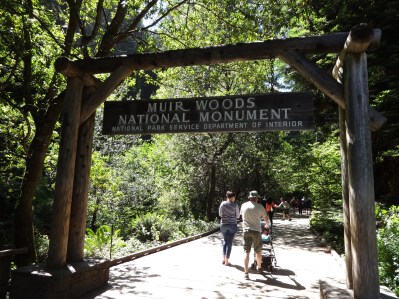
I got back in my car and made my way to Muir Woods National Monument, named after, John Muir, a man difficult to encapsulate with words. He was alive from 1838 to 1914 and is one of the greatest and my most admired explorers. He wisely advocated for the preservation of American wilderness, back before conservation was a thing. He is informally referred to as the father of the National Parks. As a skilled writer, he involved people in his adventures through essays and books. I admire John Muir greatly for his view of the world, like myself he looked everywhere and saw design and meaning. He viewed nothing in nature as accident but all as part of a continual creation. He also saw commonality in design, throughout nature, and saw unity in the entire natural world, which he writes reveals the “glorious traces of the thoughts of God.”

All throughout the day, with all my driving through the Point Reyes area, cars were sparse, parking was ample, but here at Muir Woods, the place was full, and many people were walking alongside the narrow road. These people looked like true city folk, parking in every nook and cranny. All lots had signs stating they were at capacity, but I’d come to not trust those signs. I was able to snag a spot quickly as another car was pulling out.

I was excited to go to Muir Woods, because I thought I was going to Muir’s home and would be able to learn more about him. I was wrong, so when I arrived at the park, I was very confused. I kept looking for his house. It wasn’t there. This was just a section of forest named after him. I discovered Muir Woods is basically a series of short paths and boardwalks through a Redwood forest, adorned at times with quotes of John Muir and signs asking visitors to be quiet and enjoy the scenery. This was my first experience in a Redwood forest. Although similar to Sequoias, the Redwoods seem much more jungle-like, in a wetter environment, with giant ferns and more plant life growing on the forest floor. The Sequoia seems to be much more of a dry pine and very much fits the dry-piney feel of the Sierra Nevada.

DSC06194I took this visit to Muir Woods as a preview to what I would eventually find in the future in the Redwood Forest National Park. Based on just the preview from the Muir Woods, I knew the Redwood Forest must be amazing and inspiring.
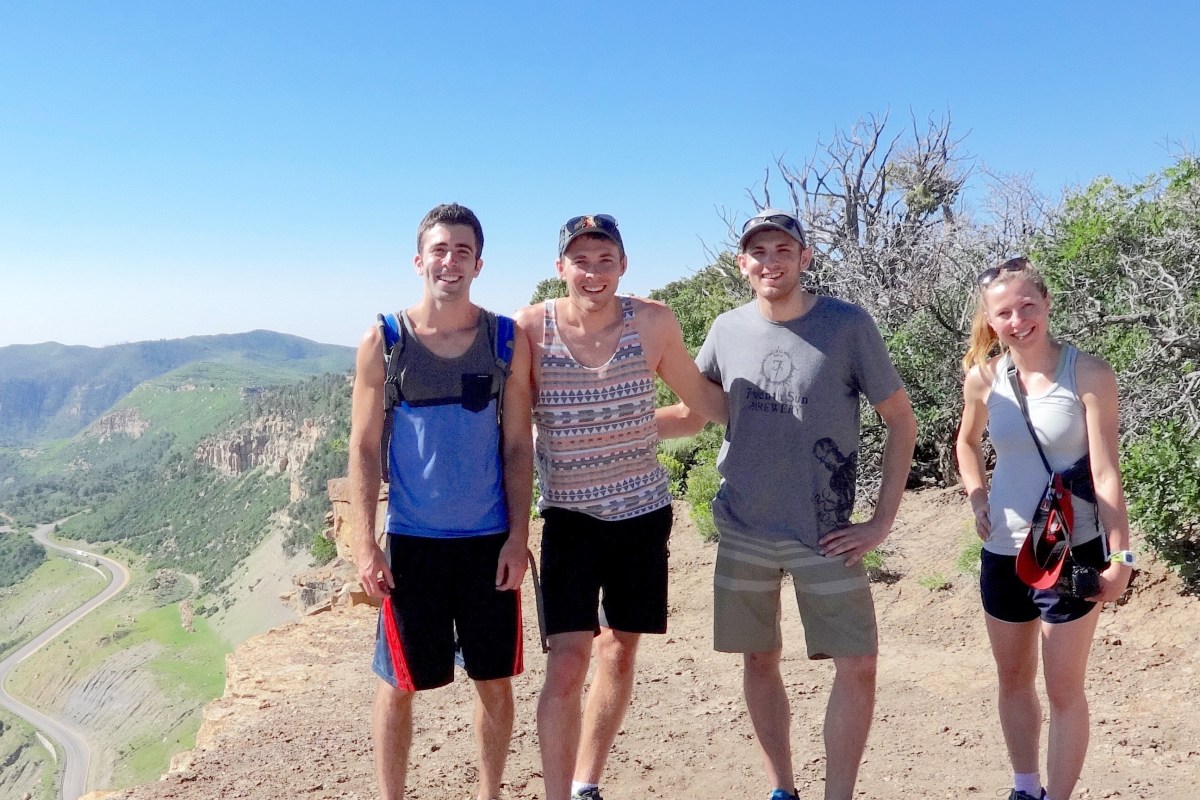
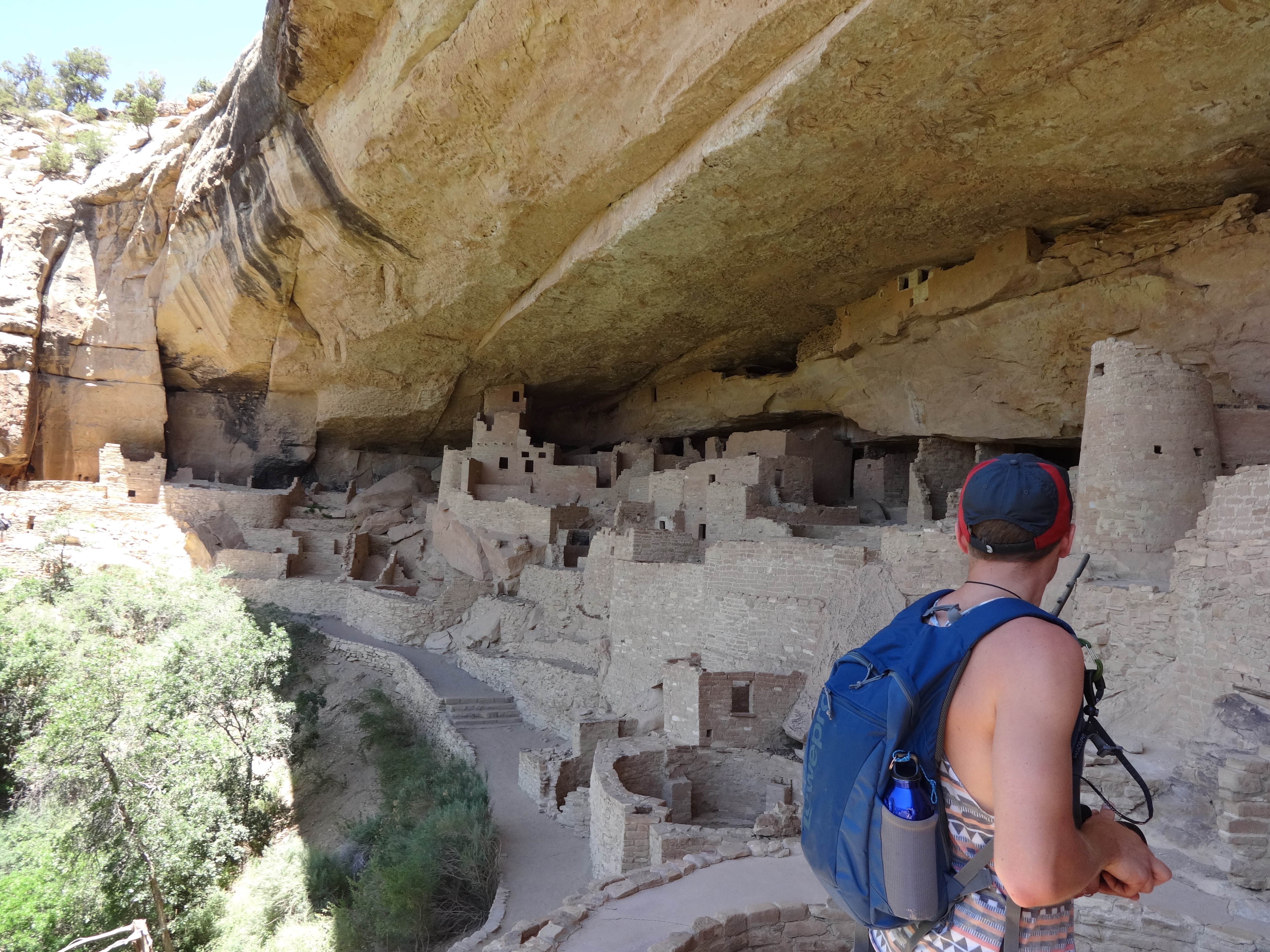
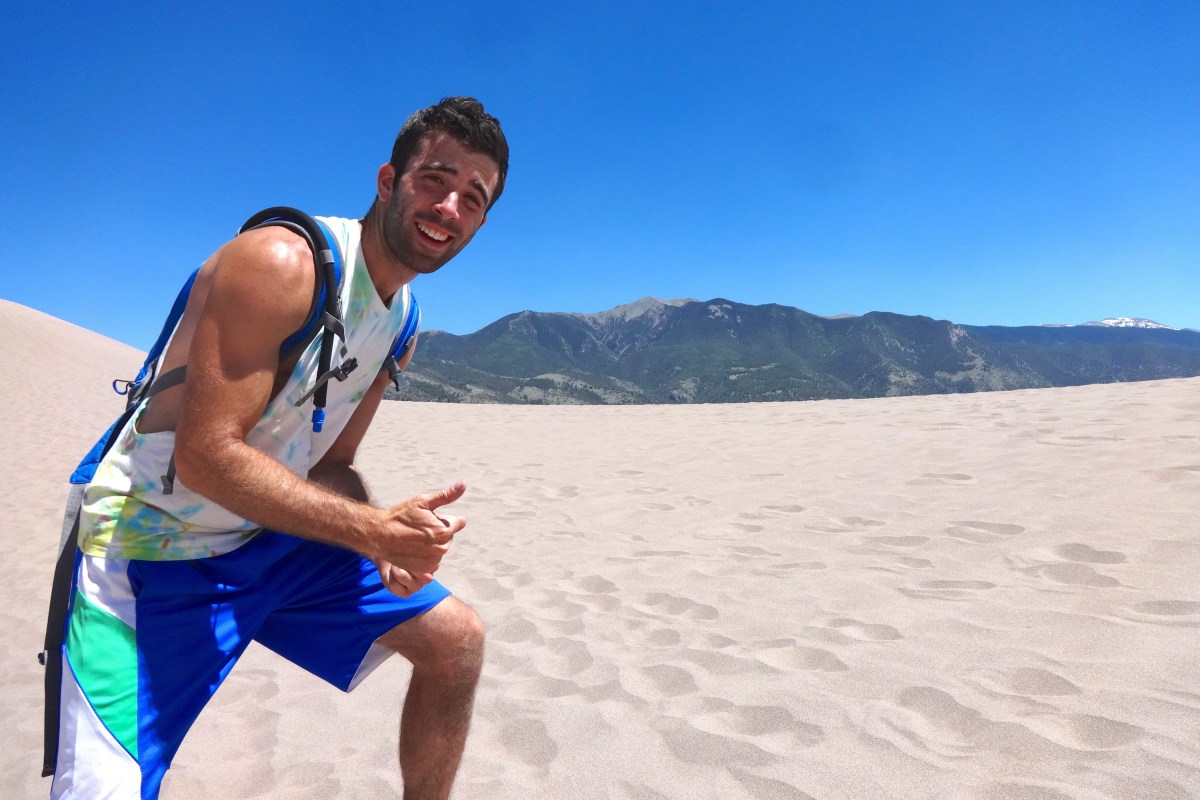
My final stop of the day’s exploration was a visit to the Golden Gate Bridge. A prime viewpoint was from a place called Battery Spencer, a nineteenth century concrete battery. There was parking at the battery, but when I was there, the lot was full. There were even cars lined up waiting to pull in.

I drove further down Conzelman Road. There was another lot for people to park and observe the bridge. It too was full. I eventually found parking at a third lot, which on Google Maps is called Golden Gate Public View. Since the view at Battery Spencer was the closest and seemingly best, I decided to run alongside the road .6 miles from the small parking lot to Battery Spencer. I got to enjoy the Golden Gate bridge along my run.

Might I say the Golden Gate Bridge is something definitely worth seeing. For it’s the most impressive human construction I have ever seen. The immensity of the bridge along with the fact it was constructed in and over water, is nearly beyond comprehension. It is quite a view. I stood there captivated in wonder, imagining Baymax and Hiro flying up around its giant Red spires, and observed the little miniature San Francisco on the other side.

I might not have made it to San Francisco itself, but my visit to the surrounding Point Reyes National Seashore, Muir Woods, and Golden Gate Recreational Area was definitely a rewarding experience. At Pinnacles National Park I would soon find out that all of my hesitation to go to San Francisco was for a reason.

When I arrived at Pinnacles it was late that night, around 11pm. I had a hard time seeing campsites and orienting myself to the grounds in the dark,  but I eventually got a rough grasp. I quickly popped up Kelty and found the campground bathroom. Signs were posted everywhere about the extreme threat of wildfire, but I wasn’t too concerned. The bathroom was located right next to the campground host’s site. My car trunk had become unorganized, so as I was brushing my teeth and getting ready for bed, I kept having to open the trunk, and this door and that door, searching for things. I was growing concerned that I would become an annusiance to the campground hosts, but as far as I knew, they weren’t too disturbed.

Back at the campsite, I zipped myself into my tent. I had covered a lot of ground, seen a lot of sights this day, and now it was late, so I was tired and fell asleep quickly.

Read the next entry, “Pinnacles of Purpose,” here: https://joshthehodge.wordpress.com/2018/04/06/pinnacles-of-purpose/

Read the previous entry,  “The Plague at Lake Tahoe,” here: https://joshthehodge.wordpress.com/2018/04/04/the-plague-at-lake-tahoe/

Facebook: http://facebook.com/joshua.hodge

Instagram: http://www.instagram.com/joshthehodge/

Mesa Verde with My Cousins

The living room floor was covered in gear and supplies all laid out and organized in piles and distinct sections. We were prepping for our overnight backpacking journey up into the San Juan Mountains to camp in a valley by the Ice Lakes. We had to divy up supplies and see whose pack could carry which things. We hadn’t even begun our journey, but I was excited. The spirit of adventure was alive and thriving.

I had never backpacked overnight with anyone and here we were, this was actually going to happen! And for once, I didn’t have to take the lead. My cousin Paul had sought this trail and plan. He had seen it online while in Germany and had been waiting to do it next time he was in the U.S.. I was relieved to be a follower. All I needed to do was make sure I packed what I needed for the adventure. My aunt Mary, cousin Jonathan, cousin Paul and his wife Ines were all packing at the same time, asking each other questions, trading off supplies, helping each other come to decisions about what was best. I loaned Paul an inflatable pillow, and I volunteered to carry the majority of the water supply. Jonathan, volunteered his pack to carry our bear canister with most of our food supply. We weren’t sure if there were even bears in the mountains, but better safe than sorry. Food, however, wasn’t our strongest of priorities, but we packed what would sustain us. We had apples, peanut butter and jelly sandwiches, jerky, Clif bars, and trail mix. I had also tucked away in my backpack some electrolyte gummies. I had noticed how useful they had been on other hikes.

A couple of us had hiking backpacks, but some of the others had standard back-to-school type backpacks bulging with supplies. So we got creative, tying things to packs with ropes and miscellaneous straps. We didn’t have the most expensive backpacking gear, but we were going to make this work.

When we finished packing, I went out on the terrace of the abode-like apartment Airbnb we were staying in, and sat there with Paul and Ines. We were relaxing and snacking on some vegetables and cherries, enjoying the summer heat slowly fade in the late evening, and writing in the guest book for the Airbnb. The host lived in an apartment on the bottom floor of the building. I had never met her, but the others had been there for a couple days and apparently she had been very friendly and had even brought a homemade breakfast bread to them. I was able to sample it. It was delicious. Although I do not remember exactly what the note we wrote in her guest book was, I’m sure there was appreciation expressed for her bread.

Sometimes it’s the most simple things that stick out more apparent in our memories. Sitting here on this terrace with my cousins is just such a fond memory of mine. Three things about it made it special to me. First off, it was a conclusion of such a fine day. We had spent the day touring around Mesa Verde National Park. It was also the eve of a grand adventure into the San Juan Mountains, and it was also the joy and comfort of reconnecting and resting in the company of family after having been alone for weeks.

In the morning, we had arrived at Mesa Verde early, shortly after the park opened. We wanted to make sure we could secure tickets for a tour of the Cliff Palace. It was a success, and my Aunt Mary kindly purchased the tickets for all of us. I then made sure we all stopped to see the park film, because personally, we know, for me, a National Park visit is not complete without seeing the park film. After that, we went on a short hike up to the top of the mesa where we took some nice cousinly photos and looked down at the windy road we had ascended in the park.

Our tour of the Grand Palace went well. The tour took us down around and inside the famous rock houses that comes to most minds when Mesa Verde is mentioned. The large and intricate rock house city hidden under the overhang of the mesa was impressive. There were about fifteen of us on the tour.  We were guided and informed by a round native american park ranger, with a black braided ponytail sticking out behind his ranger hat. He carried with him a spray bottle, and along the tour he asked us tourists trivia questions. If any of us were correct we earned a spray from his bottle. It sounds silly, and I thought it was a little much at first, but the second time I answered a question correctly I gladly accepted a spray. The dry summer heat of southern Colorado is oppressive, any relief should always be accepted.

What’s most fascinating to me about Mesa Verde is how the inhabitants of this place seemingly suddenly disappeared. No one knows what happened to them. It’s believed that at its prime 22,000 people lived here. There is speculation that drought led them to other places where they assimilated into other native cultures. To me that doesn’t make sense. How could a civilization build an entire city like this and have the resolve to abandon it and move to another location? Furthermore how could there be no history of this migration and assimilation of one people group into another. Let’s imagine for a moment they migrated and into the  Navajo or Ute society. Wouldn’t their certainly be history, or at least legends, of such a large invasion of another people group. It doesn’t add up to me. These people literally disappeared from Mesa Verde, leaving no trace nor evidence, which leads me to certainly not yet believe but still entertain the thought of some sort of extraterrestrial intervention. Call me crazy, but it’s also the wild imagination I have that allows to me speculate and entertain the thought. It’s fun to conjure up your own theories to the matter.

Mesa Verde, unlike many National Parks, doesn’t have an abundance of recreational opportunities. There are not a lot of hiking trails, and the terrain is not terribly unique in my opinion. The main attraction are these rock houses, and they are justly deserve all the attention they get, but, in all my experiences, this part seems more like a National Historic Site. However, curious enough, how could it be a Historic Site, if we really don’t know that much about the people who lived here nor a timeline of their events. It could be something new: a National Mystery Park.

Leaving Mesa Verde, we headed into Durango, Colorado. A classic railroad town turned tourist hub. We walked around Main Avenue, which is lively with numerous restaurants, cafes, and shops. Most of the buildings were made of brick with arched windows, and tasteful facades that were true to the architecture of the buildings the represented. We were looking for a place to have a mid day meal.

The downtown had a classic small town feel to it. We got distracted from seeking food to looking at t-shirts. Aunt Mary wanted a Durango t-shirt, and so we went into a few t-shirt shops. Durango had been a special place for the her, because here is where they got on the historic Durango and Silverton Train and took it out to go white water rafting. Also Aunt Mary rarely gets to see her kids, as they all live so far away. I also purchased a t-shirt, because although I didn’t  get to see much of Durango, it is where I got reunited with my aunt and cousins. That held significance.

Our mid day meal proved to be tasty. We ate at a local brewery with very atypical and delicious burgers. I believed mine included avocado and mango. I remember my cousins had asked me how my brothers were doing. I told them about Timothy graduating from college and seeking his place in the world, and telling them about my older brother, Nathan. They hadn’t heard all the details of how Nathan’s chocolate company, Raaka Chocolate,  in Brooklyn had grown into a new factory and how my brother has really become a leader in the connoisseur chocolate world.

After our meal, we ran a few errands, popped into Dairy Queen for a treat, and headed back to the Airbnb, where we began our package and assembly party, getting ready for the adventure the following day. We also had to clean up the place, as we were checking out early the next morning and wouldn’t be back. The day ended with me sitting out on the terrace with my cousins munching on the fruit and vegetable tray we had put together. The day had been full and rich, and so I relaxed in the peace of a day well spent and the anticipation of the adventure ahead.

DSC05442
Cousin Paul at the Cliff Palace

Read the next entry “Backpacking in the San Juan Mountains,” here: 

https://joshthehodge.wordpress.com/2018/03/10/backpacking-in-the-san-juan-mountains/

Read the previous entry “On the Great Sand Dunes,” here:

https://joshthehodge.wordpress.com/2018/01/27/on-the-great-sand-dunes/

Facebook: http://facebook.com/joshua.hodge

Instagram: http://www.instagram.com/joshthehodge/


On the Great Sand Dunes

I could see them from seventy miles away, the Great Sand Dunes of Colorado. I was intrigued by this park well before arriving. It was another park I heard very little about. It was founded as a National Monument in 1932 by Herbert Hoover but gained the title National Park and Preserve in 2004 by an act of Congress. Sand dunes have always fascinated me, just because they are so different than anything I’m used to. This would be my fourth trip to desert sand dunes. The first was my harrowing plight for survival in a sand storm in Death Valley. The second was in Coral Pink Sand Dunes State Park in southern Utah, where I peacefully watched the sunset over the pink sand. My third experience was in Huacachina, Peru where I went sand-boarding with my brother and sister-in-law.

I had driven about five hours from Rocky Mountain National Park to Great Sand Dunes National Park and Preserve. It was now the middle of the day. Just like my arrival at all National Parks, I had picked out some accompanying music. Since I would be greeted with large sand dunes, it was time again for some more Star Wars music. This time it was Rey’s Theme from The Force Awakens. That song is heard when Rey is traveling about and sliding down the sand dunes on her home planet of Jakku. That’s the connection. That’s why it was chosen.

While I was approaching the park, I was again draining my battery from my Chromebook into my cell phone. I had tried plugging the charging cord from my phone directly into the USB port in the car. I thought it was charging, but all along it was wasting battery. I had on and off communication with my cousin, Jonathan, days prior. I knew him and other family were in Colorado, but I didn’t know their exact whereabouts nor plans. I was trying to connect with them. I assumed draining a Chromebook battery into a cell phone was not good for the life of the Chromebook battery, but I remembered the purpose of buying this Chromebook in the first place. I had purchased it super cheap the summer before, just outside of McFarland, California simply to back up photos from my travels. This device was meant to be an emergency travel device, and connecting with my cousins and aunt would be far more valuable than this piece of technology.  Arriving at Great Sand Dunes National Park and Preserve I still had no plans with my cousins. I didn’t know why reaching them was so difficult, but later I would learn why.

Great Sand Dunes National Park and Preserve is a very isolated park. I drove many miles in wide open space with very little civilization in sight. I had spoken to a Park Ranger about this park the following summer in Grand Teton National Park. He told me that this park was petitioned to transition from a National Monument to a National Park in efforts to increase tourism in the area.

When I arrived at the park my first stop was the campground. Plan A was to set up camp in the park campground. Plan B was to obtain a wilderness permit and camp out in the sand dunes. I was able to pursue Plan A, as there were still a few sites left. I thought arriving mid-day I would have no luck, but perhaps because this place was so very hot, maybe it wasn’t quite appealing for the general camper.

The campsite I chose faced the sand dunes but I could only see one large dune which served as a wall, hiding all the curves and waves of the other dunes behind it.DSC05324

I quickly set up Kelty, hopped in my car, and drove to the visitor center. Then I was off to the dunes. There are no trails on the dunes. There is simply a large parking lot and the great sand expanse. I applied sunscreen in plenty, filled up my hydration pack, and then needed to make a decision about footwear. I thought I had come up with a brilliant idea. I didn’t want to wear my boots because I thought they would be too heavy in the sand. I didn’t want to wear my tennis shoes, because I knew they would collect sand, especially since one of my shoes had caught on fire from campfire embers and had a nice hole burnt through on top. I was imagining the sand collecting in my shoes and making the trek uncomfortable. I knew I couldn’t go barefoot, because there were many warning signs about that. The park warned that in the summer afternoon the sand can reach temperatures up to 150 degrees. My genius idea was to go in socks.

A group of young adventurers from a vehicle next to me approached “Do you know what we should wear out there,” one of them asked as I was getting myself together.

“I am just going like this “I replied, standing shirtless in a pair of blue gym shorts and socks.

“Have you been here before.”

“No I haven’t” I replied

“What should we wear on our feet.”

“I don’t know, but I’m just wearing socks.”

“That’s a good idea,” he replied. I thought so to. I was glad to share my wisdom.

I began my trek barefoot, because at first there was a stretch of water trickling down from snow melt in the the mountains far away, that created a very shallow river on top the sand. Many people were congregated in this area, wading their feet. Children ran about splashing in the water and playing with the sand, as if at the beach.

After crossing the water, the incline began, and the expanse of dry hot desert dunes stretched on for miles. Socks were on, and traveling was great. Although the area of sand dunes was very expansive, it was not endless. In all directions were the tall rocky mountains of Colorado with pine trees and snow melt creating stripes down their sides. It was an interesting contrast to be in stifling hot sand dunes, looking around at mountains with snow. It was also interesting to think that just yesterday I was venturing through deep snow drifts on my attempt to make it to Mount Ida. Colorado is definitely a place of contrasts.

The sand dunes were relatively busy. People were following each others footprints to dune peaks. As typical, I wanted to to go farther than anyone else. So I trudged further and further up and down sand dunes, which is not easy. It takes maybe five times the effort than hiking on solid ground, because with each step your feet sink, and there is not stable ground to push yourself off of. Hiking downward is fun though, because you can descend inclines too steep and perilous for solid ground. On sand there’s no harm done when you fall, tumble, and slide. The sand is a giant encompassing cushion.

Here the color of the sand was uniformly a typical beige color. No plants grew. It was everything you might imagine sand dunes to be. Nothing out of the ordinary like pink sand, or black sand, or wild scary-looking desert shrubs. It was just a giant sand box of a place.

I had reached the highest dune I could see from when I began my quest. Standing on top, DSC05337I could see there were more mighty dunes in the distance, which were temping to pursue. But at the moment, my feet felt like they were on fire. Wearing socks was not a bright idea. Hot sand found its way into the socks over and over again, and was burning my feet. The hot sand mixed with coarse friction had also burned and ripped a giant hole in one of my socks. It appeared as if part of the sock had disintegrated.  I was about a mile and a half in, but my feet couldn’t endure anymore hiking, so I turned around. I wasn’t disappointed the least bit. I felt like I got a true Great Sand Dunes experience, greater than the rest of the tourists who gave up much sooner than me.
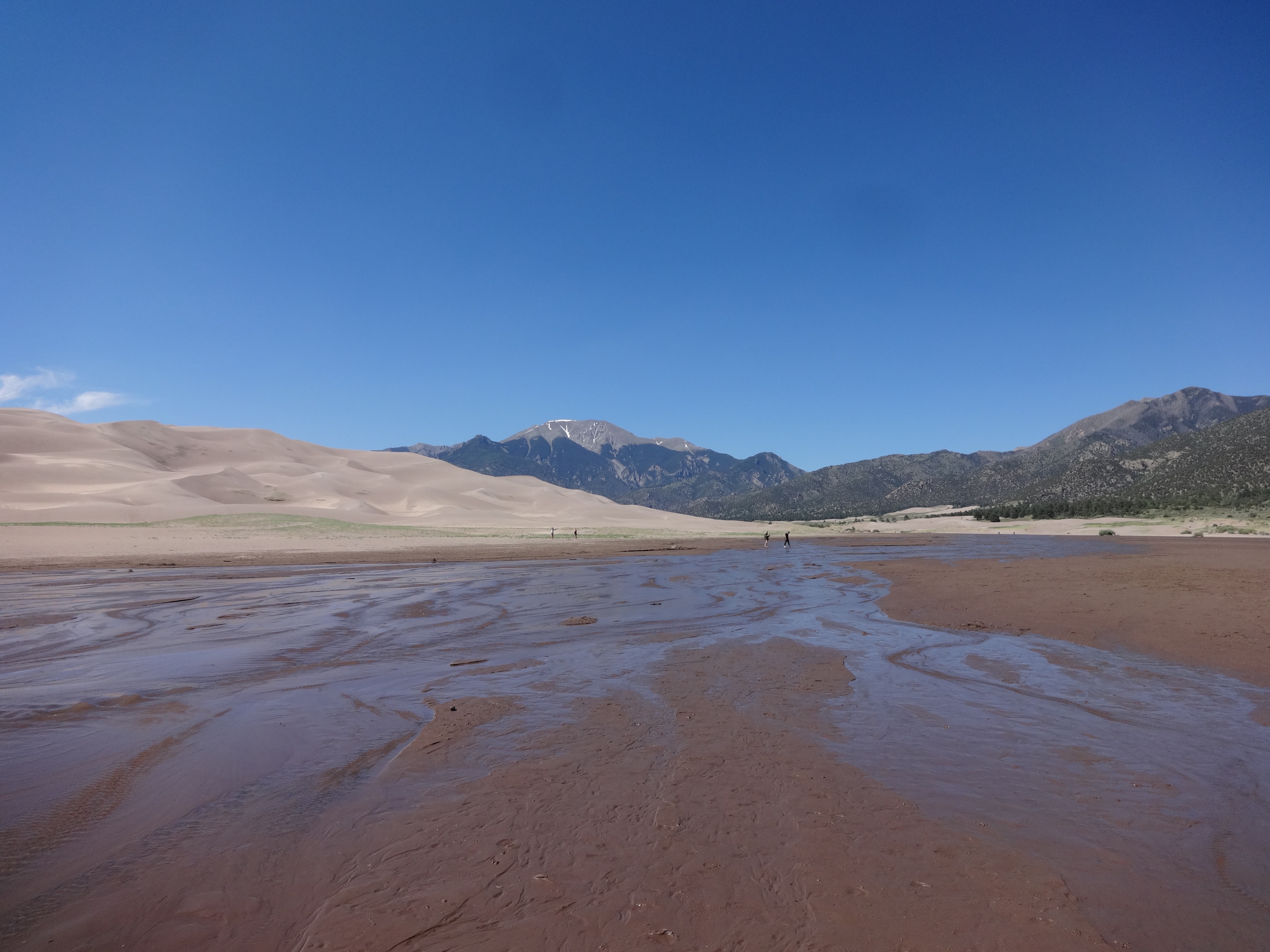
On the way back, I remember sitting down for a moment and looking around, at the sand, the mountains, and the people way below. I remember thinking, how in the world did I get here? Although I knew the answer, it was all sort of a marvel to me that I found myself in such a unique and different place than where I typically live my life. This sort of moment had happened more than once on my trip. In these pauses I try to take it all in. My life sort of replays summatively through my mind. It’s a summary of my weaknesses that I conjure up. I think back to when I was a teenager, being so depressed that I didn’t care to be alive anymore. At that time self-doubt and insecurity ripped me apart inside, and my world was so small. It didn’t extend beyond my own feelings.

I also think back to college when I was incredibly sick and weak, plagued with complicated Ulcerative Colitis and Pancreatitis. I grew tired climbing just one flight of stairs. Then I was hospitalized. I remember when I was able to walk again. I went out into the hospital courtyard with my walker, and just being able to stand on my feet, clinging onto my walker in that little landscape patch between cement buildings, was enough for me to find hope.

Now, here I was sitting on top of a giant sand dune, in the beating sun, thousands of miles removed from home, alive, strong, full of spirit. I’d come from the Sonoran Desert, seeing Saguaro cactus, through the Petrified Forest, across the plains of the Navajo Nation, around the canyons of Utah, up to aspen forests and alpine tundra of Colorado, and now here I was on a giant sand dune. I’d climbed higher than everyone else. They tired before me. I looked down at them as little ants. I realized my past was marked by canyons of illness that kept me trapped in low places, but now I was on a mountain, not by my own doing, but by the force of restoration and strength attributed to God.

In addition to marveling at how far I’d come, I was also struck in wonder by the diverse beauty of the United States. A few years ago I would have never even imagined that such a place as Great Sand Dunes National Park and Preserve existed in the United States. The more and more I travel to National Parks, the more I fall in love with this country. It is so full and rich in natural beauty. I remember, when I was younger I thought that the United States was just sort of uniform place with varying degrees in temperature. I couldn’t have been more wrong. The United States in amazingly rich in geological diversity. The National Park service does a great job at preserving all of these wonders and surprises.

After trying to take it all in, I began my hike down the sand dunes back to my car, tumbling and sliding down, despite my feet were in much pain. I had to arch my feet, trying to keep contact with sand limited to the tips of my toes and my heels. I had to pause at times and raise one foot up in the air to give it a chance to cool off, cooling down from the 150 degrees of the sand to the 105 degrees of the air. It was such a relief when I got back to the shallow river, and placed my feet in the ice melt water. I hoped the other young travelers from the parking lot hadn’t followed my example in footwear.DSC05389

I would have stayed longer in the river if it weren’t for some intrusive ranchera music blaring and ruining the serenity. A group of people had set up a canopy by the river where they had a picnic and enjoyed their choice music. I would have been happy listening to the water trickle and the wind wisp across the sand. It’s okay. I let it go. I wanted to go relax at my campsite and figure out a plan for the evening from there.

Back at my site I had received a text from my cousin, Jonathan. He and his family had been busy white water rafting most of the day, but now they were done and staying at an Airbnb in Durango, Colorado. I was welcomed to come spend the night there and visit Mesa Verde the following day, and then backpack overnight in the San Juan Mountains to the Ice Lakes the next day.

I plugged in the address into my GPS. They were about 160 miles away, which would equal roughly 3 hours of travel. I would arrive at night, but it wouldn’t be a problem. Sign me up!

I tore down my tent and threw my it back into my car. I found the campground host to inquire about a refund. She said refunds are never issued but I could sell my campsite. So I peddled around and sold my site to a couple at a slightly discounted price. Then I was out of there.

Durango, here I come! I was excited to see family. I had seen my cousin Jonathan the summer before when we adventured around Yosemite National Park together. It was a memorable time, and he was great company.  That was the last time I’d seen him. I would have liked to have seen him more, but I lived in Kentucky and he was stationed in California with the Airforce. As kids, we were decently close, although I would only  see him in the summer when my family would travel back to Princeton, Illinois. I thought we had a pretty good cousin bond, given our limited time together, but then the expanse of time grew larger between us and we grew up. When we met up in Yosemite, it had been years since I’d spent any time with him. I wasn’t sure how our interactions would go, but I couldn’t have asked for a better adventure buddy and a better time. Sure, we had grown and time brought change, but we were family and we were able to reconnect effortlessly and have a great time.

I also hadn’t seen my cousin Paul and his wife, Ines, in a few years. They had been living in Germany and their lives would be very different from what I last knew. And then there was my aunt Mary who lived in Illinois, whom I hadn’t seen in even a longer period of time. I knew she had endured heavy challenges and changes in life, and I admired her for her strength and raising my cousins, whom I respect so greatly, in the midst of it. I was so excited to see all of them and go on adventures together.

When I arrived, Paul and Mary were still awake. I spoke with them for a while, filling them in on my adventures and them filling me in on theirs. Their white water rafting trip was seriously legit. They rode some high class rapids and took the famous Durango and Silverton Railroad to their launching point. After visiting with them, I got laundry started, took a much needed shower, shaved, and retired to the living-room floor where they all had kindly left the comforters from their beds. I had a plush island of comfiness to myself, luxurious compared to the weeks of tent camping I had grown used to.

I was happy. Although I hadn’t seem these family members together in a long time, there was comfort in being with them. I had found a little piece of home way out in Colorado.


Read the next entry “Mesa Verde with My Cousins,” here:

https://joshthehodge.wordpress.com/2018/02/04/mesa-verde-with-my-cousins/

Read the previous entry “Chillin’ Like a Moose,” here:

https://joshthehodge.wordpress.com/2018/01/21/chillin-like-a-moose/

Facebook: http://facebook.com/joshua.hodge

Instagram: http://www.instagram.com/joshthehodge/