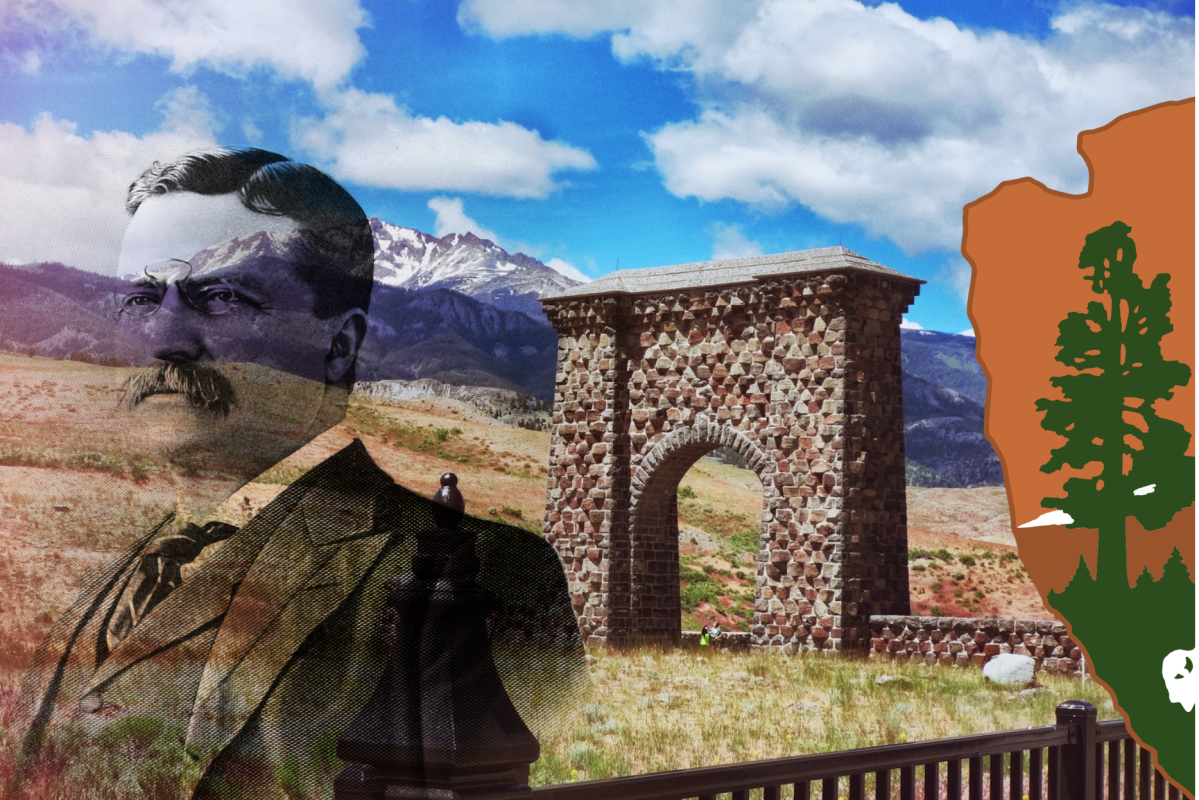
When I saw Roosevelt Arch I cried. It churned up an emotional response in me. This gateway to Yellowstone National Park, situated near the Northwest corner of the park, tugged at my heartstrings. To understand why, I must reflect on it and consider myself in the moment, for the emotions brought up were so deeply entrenched. It’s not something to skim off the surface of my being.
I think to best understand the reason for my emotions I must consider Roosevelt Arch in three aspects. First, I must consider its symbolic meaning, what does Roosevelt Arch mean? Next, I must consider it’s visual appeal, why does this visual provoke this feeling? And thirdly, I must reflect upon the man whose name is inscribed upon it: Theodore Roosevelt.
It is certainly not without evidence the measure of significance the National Parks means to me. I have visited so many and have written extensively about them. The National Parks are places I go to restore my soul. When life is burdensome, and I’m weighed down by the heaviness it entails, when I lose perspective and get caught in the rush and concerns of the moment, the National Parks with their magnitude, beauty, and remoteness have become places I go to step out of my troubles and find perspective. The immensity of the mountains, the richness of the forest, the profoundness of the canyons humble me and diminish the concerns in my own life as I gain perspective of the bigger canvas of life.
As I am inspired by the grandiosity of things I also find such beauty in the smaller things- in the wildlife, in the design of plants, the way water flows and sits, and in the beautiful way the sun filters through the trees or paints across the plains. Everything big or small is so near perfectly balanced, beautiful and unique, reminding me of the awesome expansive creativity of God. And here, as I am surrounded by God’s artwork, I am reassured knowing the same wonderful Maker who crafted these lands and natural wonders is the Architect and Orchestrator of my own life. I see that the fingerprints in nature are the same fingerprints in my own design. It is such a humbling yet reassuring feeling to know the awesome Creator and Coordinator of nature has His hands on my life.
Here in the remoteness and solitude of so many parks I am ushered into a place where I can focus in on this masterful Creator, to pray, to reflect, to enjoy His company in the still, calm, and quiet. Man has constructed temples, churches, and cathedrals, all of which can serve so much good, but God has also gifted us, in his own incredible design, temples in nature that point us back to him in a unique way. Whether it’s the stunning Yosemite Valley, the wide openings of the Rio Grande, the mountain peak in Appalachia, the spread of glaciers in the Rockies, or beneath a giant sequoia, these places of quietude and beauty are here for us to draw us back to the Creator.
In addition to these spiritual aspects, there are other more broadly understood terms in which the parks have been meaningful to me. They have been places that have put me up to challenges, physically and mentally- taking on long strenuous hikes, pulling my weight up cliff sides, overcoming fear in turbulent water, and problem solving when things have gone awry. The experiences in the parks have strengthened me physically and mentally and in return have been good for my soul. In the same regard they have instilled in myself a greater confidence in my own abilities, and have given me a passion to which I identify. My experiences in the parks have molded me into the outdoorsman I am, have spurred in me the desire and necessity to learn new skills, and have kindled the appreciation and thirst for beauty and adventure.
So here I was at Roosevelt Arch, this manmade structure was the first and primary entrance to Yellowstone National Park for many years. Montana was the main means of entry into the park as support for the exploration of Yellowstone primarily came out of the Montana Territory through the Washburn Expedition. When the railroad was brought to Yellowstone it came through Gardiner, Montana, and thus a grand entryway to Yellowstone was constructed in 1903 with the inscription above it “For the benefit and enjoyment of the people.” This phrase comes out of the Organic Act which established Yellowstone as a National Park, but it is unofficially a slogan used throughout the National Park Service. Standing here in front of the arch I see how it greatly contrasts the wild remote landscape around it of mountain and field. And this structure is bold and tall, a mighty gateway to Yellowstone. It was evident to me that this was the entrance not simply to Yellowstone but to the first National Park. Thus this arch, this portal, is where it all began. This is the doorway to all the National Parks and a monument to one of America’s best ideas.
In this moment, before the arch, I was also swept away with patriotism. My country has chosen to preserve such treasures and honor such beauty. The heroes, the fathers of the National Parks- now long gone- made this possible, people such as John Muir, Theodore Roosevelt, Stephen Mather, Nathaniel Langford- all outstanding Americans. Just the fall before, a turbulent election took place. Some people became very vocal about their thoughts on the United States. Some citizens renounced patriotism and attacked the country with boisterous and repetitive rhetoric, and many in higher education proudly slandered our nation. When I was in New York City visiting my brother and sister-in-law, walking down Fifth Avenue, a group of young people chanted and pleaded for the abolishment of the United States. How infuriating that was, but how refreshing and restorative to be here at Roosevelt Arch to celebrate the natural wonders my country has chosen to preserve for the ‘benefit and enjoyment” of all people and recognize the patriots that made this possible. People need to get out of the cities every once and while and enjoy the wonders of nature and the diversity of the country.

It is without question that my knowledge of Theodore Roosevelt himself is part responsible for this emotional response to seeing this arch. Theodore Roosevelt, more so than any modern historical figure, has had the greatest influence upon my character. It is largely due to the difficulties he endured and the principles by which he stood. This man knew pain, physical and emotional, to great profundities. Some may see him as privileged, and although he was in some regards, he also was a man of great misfortune. Life was not nice to him in many ways. He lost his father as a young man and both his mom and wife died soon after on the same day- a day in which in his journal he’d remark solely: “the light has gone out of my life,” with an X. This was a man who felt like he lost everything. Before, he spent much of his younger youth physically Ill. Severe asthma and intestinal issues plagued him. I have not experienced nearly as much hardship as Roosevelt, but I, like so many people, have faced my own hardships in life. I’ve had my own extensive and grave health issues, have lost dreams, and have been in emotional distress. How inspiring it is to see Roosevelt not allow himself to be beaten down by life, not to wallow in self pity, but rather do the most unexpected thing and learn to embrace the difficulties of life, to accept life for what it is, to find value in challenge and hardships. He grabbed difficulty by the horns and called it for what it is: “the strenuous life,” something he preached about. Although his lot in life initially dealt him misfortune, he did not let that hinder him. Roosevelt loved life. He had a passion for it in all regards, and lived it to the fullest, courageously and vigorously.
This wimpy, sickly child, not expected to survive past childhood, would go on to occupy the bully pulpit. He’d clean up sin loving New York City as police commissioner and governor, charge up San Juan Hill as a commander, see that the Panama Canal was constructed under his presidency, attack corruption in Washington, author more than forty-five books, raise six children, and work to preserve more federal land than any other president, creating a culture of natural preservation. Although so accomplished as president, being one was not always in his plans. He once said he never wanted to become president, but he became one by destiny. When president Mckinley was assassinated in 1901, Roosevelt had to assume office. Although, expectedly so, he rose to the occasion and preserved the dignity of the office, he made light of the frivolity among the Washington political elite, for Roosevelt, despite his status, was a common man. He may have been born into the New York elite, but this man was relatable to the ordinary American. He’d camped with them, hunted with them, ate with them. He left the comforts of high-class New York City and became a rough and tumble cowboy and rancheman in the Dakota Territory. He did not simply identify with a class of people, he identified as American.
Along with his firm sense of nationalism, Roosevelt also defined in his own terms what it meant to be a man. Having read many books by and about Roosevelt, this is a motif I’ve found that spans his life and story. Always to some extent he was preoccupied with thoughts of manhood and how to live up to and fulfill his duty as a man. He’d observe characteristics in others, then write about them and speak about them. He would come to define manhood by four principles: courage, hardiness, integrity, and independence. I think presently, our nation, as a whole, lacks strong male role models. Modern attacks on masculinity, and fatherless homes, have left a generation confused and lost in society. Media has watered down or redefined manhood in physical and lustful terms. The youth more than ever need men like Roosevelt to lead them and teach by his legacy.
I suppose on a more uniquely personal level, I identify so strongly with Roosevelt because of his passions: America, history, reading, recreation, nature, and writing. Although hunting and fatherhood are two huge parts of the Roosevelt experience that I am not yet personally acquainted with, we have such similar interests and worldview, that an overwhelming majority of things Roosevelt said are relatable to me in some regard. Thus he has become quite intriguing to me.

So with all these characteristics in mind, here I was at Roosevelt Arch. Theodore Roosevelt had laid the cornerstone for this magnificent construction that would be dedicated to him. With all the symbolic meaning, as a gateway to America’s National Parks, bearing the name of Roosevelt and the slogan, “For the benefit and enjoyment of the people,” how could I not get emotional? This place appealed to me on so many levels. This was the door that unlocked all the National Parks which would mean so much to me and to so many.
“Everybody needs beauty as well as bread, places to play in and pray in, where Nature may heal and cheer and give strength to body and soul alike” – John Muir, The Yosemite.
Read the previous entry “Providence in Yellowstone” here: https://joshthehodge.com/2021/01/15/providence-in-yellowstone/
Check out my book Canyonlands: my adventures in the national parks and the beautiful wild here: https://www.amazon.com/Canyonlands-adventures-National-Parks-beautiful/dp/1711397873
Check out my book Theodore Roosevelt for the Holidays: Christmas and Thanksgiving with the Bull Moose here: https://www.amazon.com/dp/B08M8Y5P29
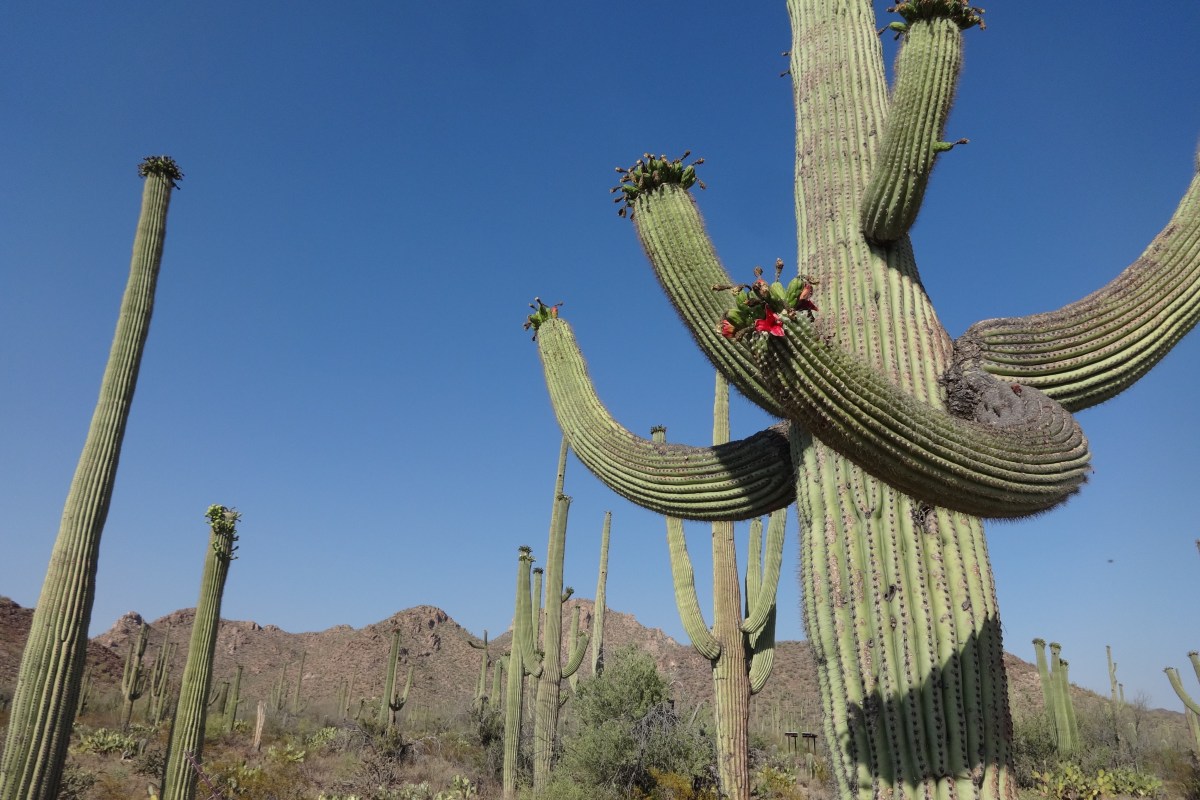
 Desert Discovery Nature Trail, which is a short interpretive half-mile loop around various cacti. There were some impressive Saguaros to observe. I learned that the inside of the Saguaro cactus can be up to 20 degrees cooler than the air outside. Therefore birds, kangaroo rats, and even foxes find shelter within the cactus. I would have never known this and find it fascinating that there is much more to the cactus than what meets the eye. Walking around the trail loop was intriguing as simple and short as it was. I had been in deserts before but not a desert with so much cacti and plants. The ground itself was very barren and crusty but all over and placed, in such an impressive array, were all sort of cacti and rocks. It almost looked like it was designed purposely despite it being wild. Also looking up at the Saguaro evoked a feeling similar to that of looking upon the mighty Sequoia- both are iconic, stately, and extremely resilient plants. While the Sequoia is largely fire resistant, the Saguaro is heat and sun resistant, enduring extreme heat and sunlight. These plants just give off an inspiring essence of strength.
 I departed Saguaro National Park and made my way around the outskirts of Tucson to Catalina State Park where I had reserved a campsite in advance. When I made my reservation I did so online rather blindly. When I arrived I was surprised to find that my reserved campsite was probably the most scenic one in the whole place. From where I pitched my tent, I had an amazing view of the Catalina Mountains, which were golden with the warm glow of late evening sun resting upon them. There were a number of holes in the ground where rather large ants and beetles would run in and out of. I tried setting up my tent in the least obtrusive area. While I was setting up my tent, I saw a coyote trotting around just next to my campsite with the mountains behind him.
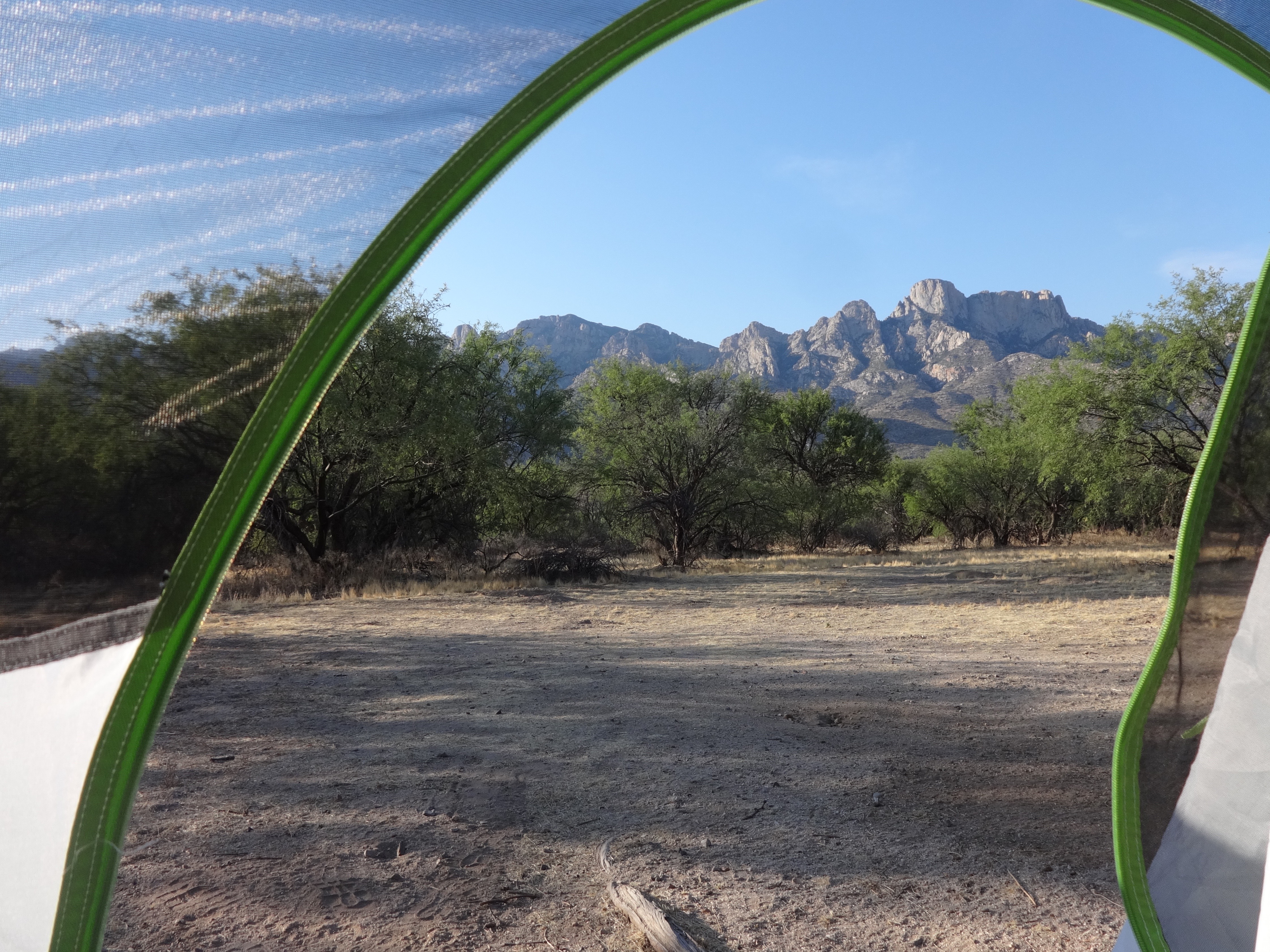 This night I slept in my tent on the ground in just my sleeping bag. I brought my road atlas and driving GPS with me into the tent to work on my route for the following day. I wasn’t looking at the atlas very long before I fell asleep. I slept well, except remembering waking up a few times cold. I wasn’t expecting it to get cold at night. In the morning I woke up to a chorus of coyotes. I took advantage of the shower at the campground, knowing my next opportunity for a shower would be a number of days away, a few National Parks later, and on the other side of the Navajo Nation.
 Josh Hodge blog