Yellowstone, with gurgling mud pots, colorful pools, hot springs, and geysers shooting into the air, it’s nature’s wonderland. Herds of bison, elk, the curious badger, and ravenous wolves call it home. Cascades and waterfalls, sprawling valleys, rivers, and lakes are pocketed in all corners. It’s so huge and magnificent that it’s daunting to even write about. It is the first National Park, founded in 1872, and among the larger ones at 3,471 square miles, larger than Rhode Island and Delaware combined. Central Park is to New York City as Yellowstone is to the United States of America. It is America’s park.
I wanted to give myself plenty of time to make acquaintance, so I had given myself three days, but one could really spend a lifetime exploring its vast wonders. I had bought a book in the gift store at the visitor center of the neighboring Grand Teton National Park titled “Yellowstone in a Day,” published by the Yellowstone Association. It really spelled out an itinerary for Yellowstone in 3 days with optional additional days itineraries.. It was precisely what I needed, and so truly I visited Yellowstone by the book. It calmed my worry that I might miss something of importance. I knew assuredly, before all else, that I needed to see Old Faithful. That was a must, along with the Grand Canyon of the Yellowstone. I knew I wanted to see Grand Prismatic Spring, but at this point, arriving at the park, I didn’t even know its name nor if the images I had seen of a grandiose and colorful pool were of various springs around Yellowstone or one specific. I’d learn that Grand Prismatic is definitely that one that sticks out from the rest, boasting its own character, photographed many times.
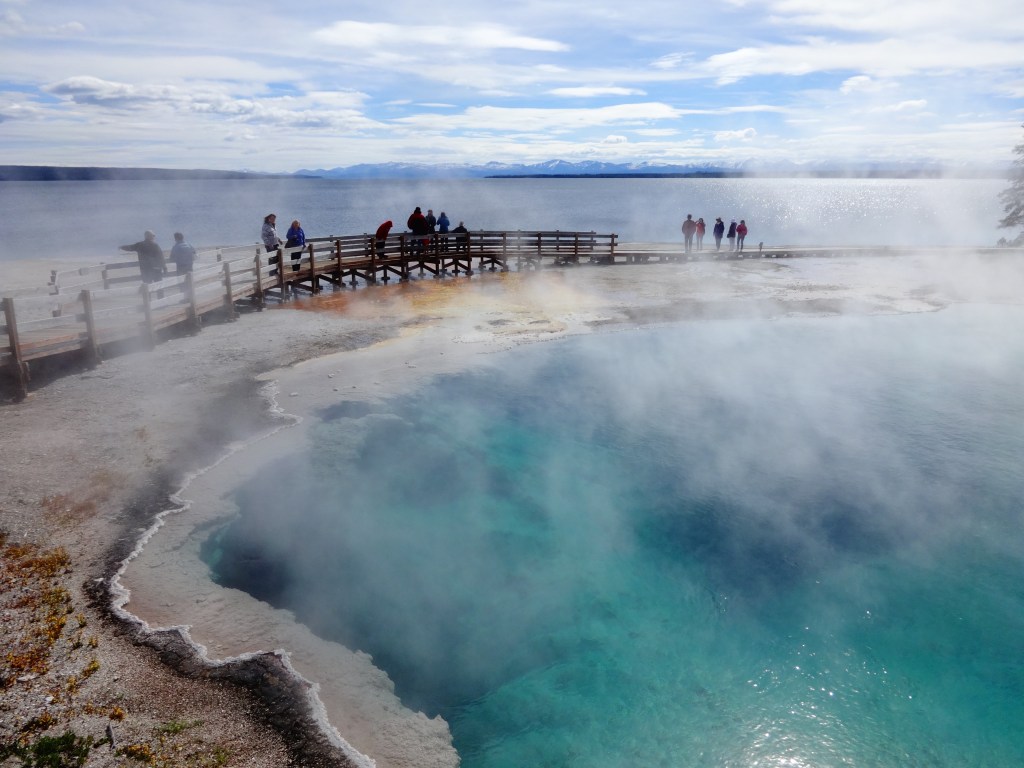
I entered Yellowstone from the south from Grand Teton National Park via the John D. Rockefeller Jr. Memorial Parkway which connects the two parks together. I beheld the entrance sign and took my photo by it and then proceeded to the West Thumb Geyser Basin. Here a half mile boardwalk meanders atop of a delicate landscape where a number of geothermal springs display extravagantly bright turquoise pools which steam into the cool air. Signs warn that the ground may be thin and advise visitors not to step on it but to stay on the boardwalk. Thus the ground appears to the eye like a thin pebbly and crispy crust just atop a earth that bubbles and steams, alive and breathing. The boardwalk descends down along the side of Yellowstone Lake, where one can see over three miles across to the snow capped mountains. Just aside the boardwalk are a few geothermal features within the lake water visible to the eye. There is one called the Fishing Hole. It is not more than a mound that pokes up in the lake with a couple-foot hole in the top where boiling water feeds into the lake. It got the name as the Fishing Hole because there is a tale of a man who would go fishing right here in Yellowstone Lake. Once he caught his fish he’d dip the line over in the hole and cook his fish right there and have himself a meal.

When I came near the completion of the West Thumb Geyser Basin Loop, a female elk popped out of the adjacent pine forest and stepped onto the boardwalk. She simply crossed over the boardwalk and meandered between the geothermal pools. People stopped and gathered to take pictures. I was surprised how unfazed the elk was with all the visitors- but most animals in Yellowstone are rather comfortable with visitors. It’s as if the animals are trying to say. “This is my home, I am quite comfortable here. You are on my turf.” As a visitor, I really do feel like I’ve come inside the animals’ home in Yellowstone. I truly am a visitor here- more so than in any other park. This is the animals’ park.
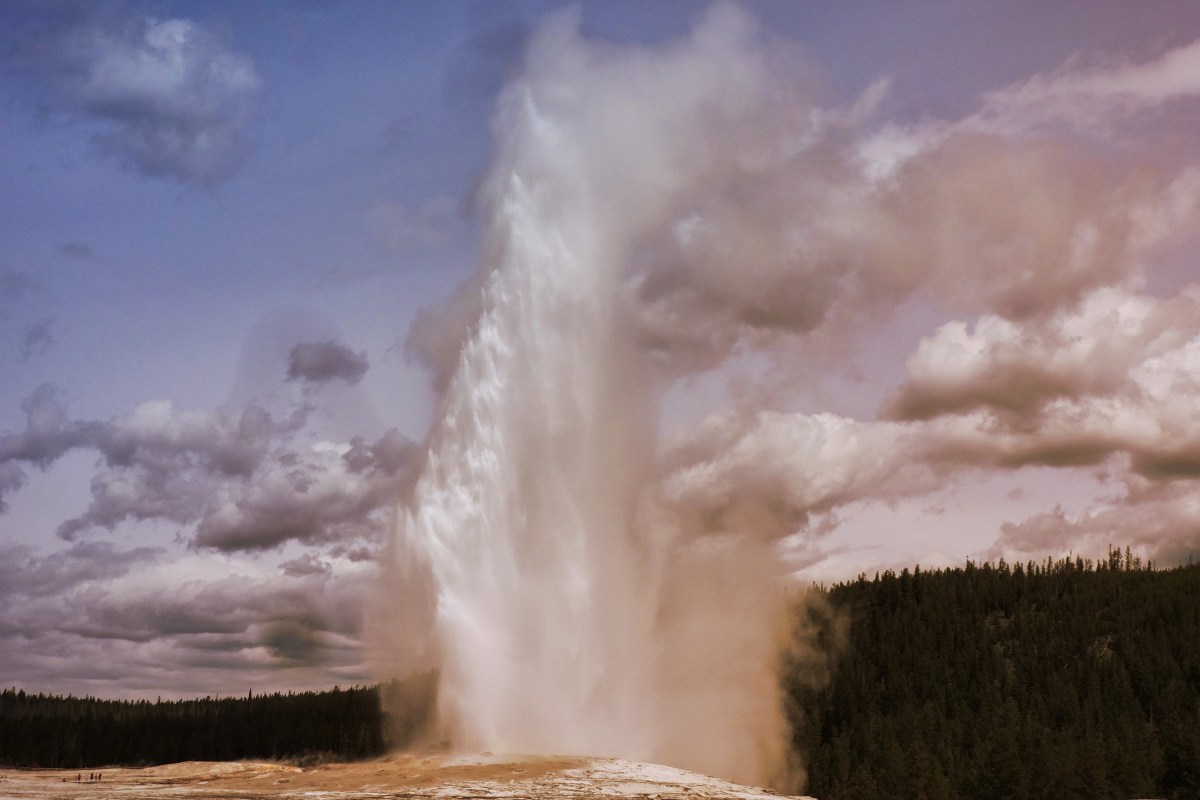
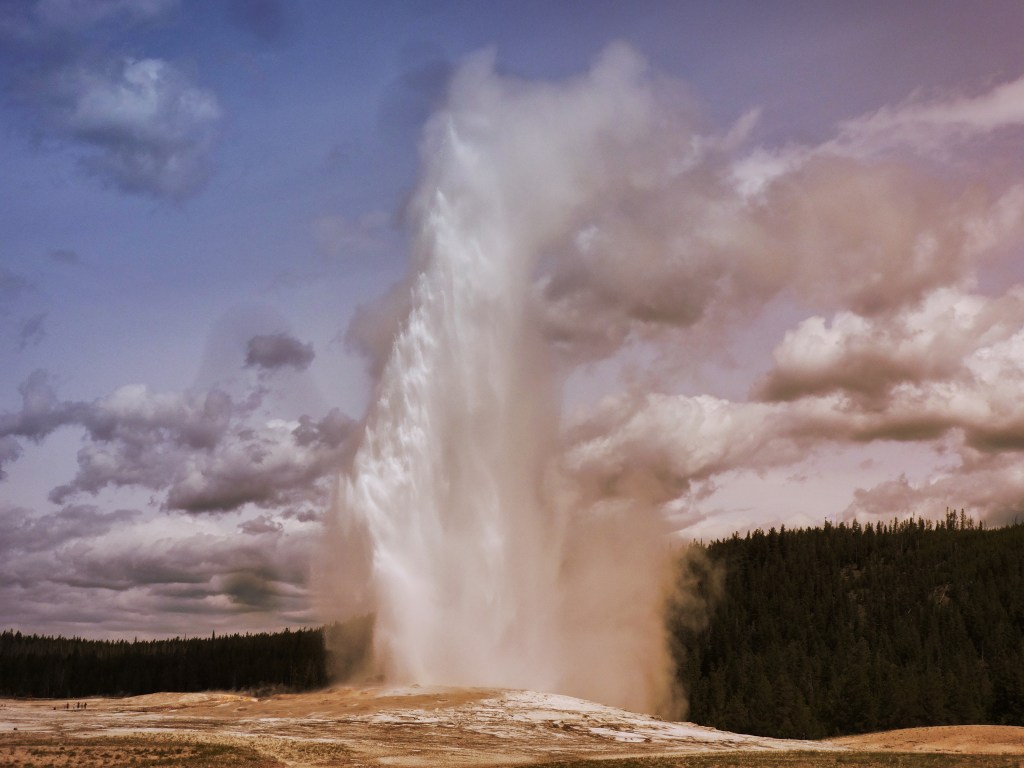
Leaving the West Thumb Geyser Basin in car, I traveled to the Upper Geyser Basin, the home of Old Faithful! This is perhaps the most prized feature of the National Park Service. The parking lot conveys so with its enormous size. Here a village sprawls horseshoe alongside this feature. Here in this park within a park, is the Old Faithful Inn, Old Faithful Lodge, main park visitor center, Snow Lodge Cafeteria, and a large gift shop and general store. I wanted to see it all, and so I did. When I left my car, I saw a number of noisy crows perched atop a few vehicles. Were they welcoming me, or was their pestering cry their attempt to tell me to go away? Probably they were just looking for handouts. I rushed into the village in excitement. I just had to see Old Faithful erupt! I learned she did so about every hour. Enormous crowds gathered around a boardwalk which outlined the site of the geyser. Some wood benches were built into the boardwalk, but they were already taken. Intently observing, before its eruption there were a few brief spurts, leaving me wondering is that it? Sometimes tourist attractions can be overhyped, but when Old Faithful did erupt, she DID erupt, unmistakably, shooting into the sky pillars of water. People oohed and aahed, and it was everything I hoped for. Water towered upon water, hissing and boiling. It was an overcast day so unfortunately Old Faithful didn’t contrast against a blue sky, but she was still visible with great billows of steam. When the tower of water sunk back into the ground, the tourist quickly disappeared. Many headed back to the parking lot or into the gift shop. I was hungry and ready for lunch. I ate in the Old Faithful Lodge cafeteria, which has an exposed log frame and overlooks the site of Old Faithful through its big windows. This was one of five choices for me to eat just in this village, but at the time I did not know.
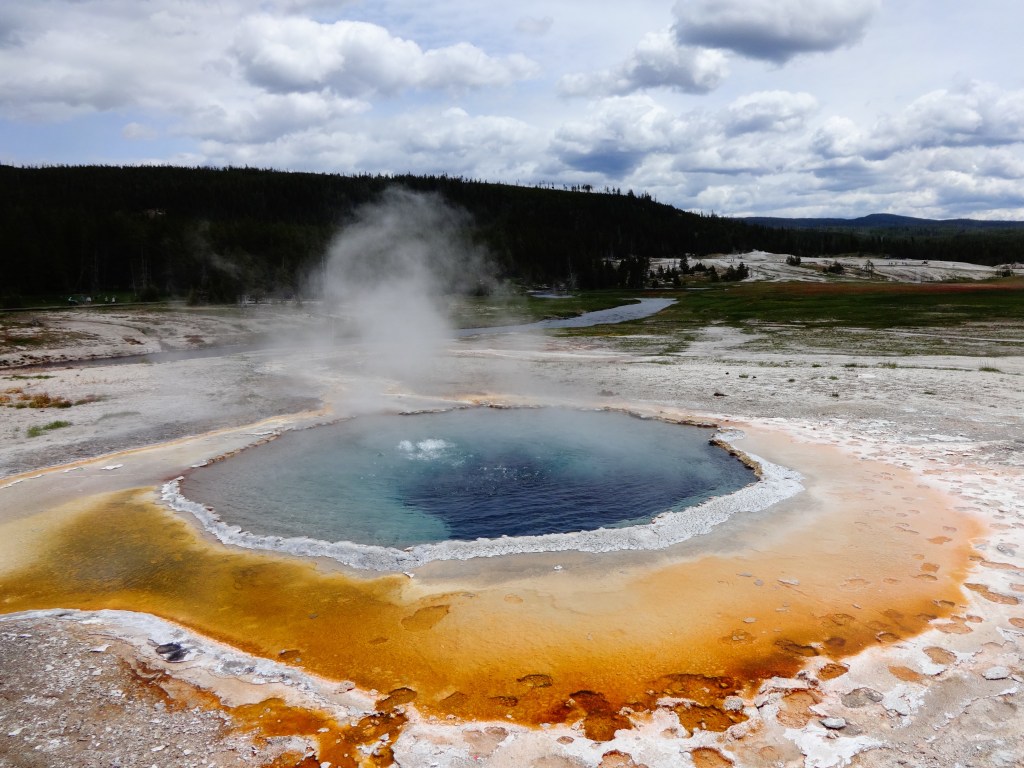
When I was done with lunch I took the couple mile boardwalk loop from Old Faithful along the Firehole River to the Upper Geyser Basin boardwalk. Here there were numerous geysers, the highest concentration in the world. There was lots of hissing and bubbling all around, and the air was filled with the repugnant smell of warm sulfuric acid evaporating into the cool mountain air. Seemingly at random, a geyser would erupt for a few minutes, tourists rushed to it, but then moments later elsewhere along the boardwalk, another would erupt and the tourists were drawn to another direction, each tourist reveling in the presumption that perhaps they were the first one to have seen the geyser erupt in maybe hundreds of years, but most of these geysers like Old Faithful are pretty consistent.
When I neared the farthest end of the path, I was desperate to go to the bathroom. The hissing and bubbling eruptions, and the flowing water taking place all around, did not help my predicament. There was a line for an outhouse of about a half-dozen people. I couldn’t fathom having to wait so long with the urgency I was experiencing, but I did and in the meantime I helped a few tourists open a bear proof garbage can. They were struggling and did not know how to open it. I felt quite experienced.
When my walk through the Upper Geyser Basin was complete, I was back next to Old Faithful and walked into the Old Faithful Inn. I get goosebumps on the verge of writing about this place, because it is the most impressive structure and most magical hotel in all of the National Park Service. It is the first “grand” lodge in all of the National Park Service. Shabby accommodations did exist beforehand, but this inn took everything to another level. This became the largest log hotel in the world. This inn was also the birth of the National Park Service Rustic architecture style, which sought to create buildings which harmonized and fit in with the natural surroundings. Imperfections and asymmetry, rebellious to the styles of the industrialized world, were welcomed. Hand labor contributed greatly to this style, and Robert Reamer who designed this hotel went on to create a number of other lodges in National Parks. When Theodore Roosevelt and naturalist John Burroughs toured Yellowstone in 1903 they saw plans for the lodge, and it’s been noted that Theodore Roosevelt praised the plans extensively.

When one walks into the lobby he or she is greeted by an enormous stone stacked fireplace in the middle of the atrium. Its chimney is extremely bold, larger than the rooms would be in many houses, and it extends six levels up through the rustic log roof. The logs which make up the whole building are not shiny and refined, but rough and rustic, unpolished and wild. Each level has a balcony which looks down into the main lobby. Just standing in the lobby looking around the place impressed me greatly. It truly looked handmade, and most of it was. It’s a mighty fortress of a structure and the epitome of a childhood dream of a fort in the woods. The top two levels in the lobby were small crows nests for musicians. Back in its earlier days, dances were held on this lobby floor to the live music above.
I wanted to spend some time here and enjoy this building and its architecture, so I went to the small cafe adjacent to the lobby and bought an overpriced cinnamon scone and a cup of orange spice tea. I walked up the rugged uneven stairs, noticing families on vacation climbing the stairs causally, hauling their suitcases. I couldn’t even imagine the delight of spending a night in such a place. I’d be so elated you’d see it all over my face. On the third level I stopped and sat on a rocking chair which faced the railing before me and the lobby below. A violinist up in the crow’s nest began to play soothing and relaxing music. This moment was so perfect. I just reveled in and savored it. The sights, the sounds, and the comfort of my hot tea were all perfect.
Resting here I imagined what it was like back in the day when the only way to this remote lodge was through the great wilderness on coach. There weren’t any roads nor the infrastructure of today. What a magnificent place to come upon in the wild after days of travel by horse, foot, or coach. The warm fireplace would have been so welcoming, and although rustic in style, this would have been luxurious. I imagined the visitors all dressed up dancing across the wooden floor below to the sound of the fiddle in the rafters.

Then, stop, I reminded myself: Be still. Be calm Be quite, and be ever present in this moment, savoring it completely for what it is. I so thoroughly enjoyed my break of peace and quietude here and often think back to it at the mention of Yellowstone. After sitting here for probably a good half hour, I resumed meandering around and found myself outside on a rooftop terrace facing Old Faithful. She was erupting again and I enjoyed it all a second time. This was a great vantage point of Old Faithful without the herds of people. It was cold outside so I didn’t loiter for too long. I went back in and went into the gift shop in the inn. I bought two post cards- one vintage one for my parents and another artistic one for my friend Ricky in California. I took them with me to the second floor where a few small old wooden desks outlined the walls. The desks had built in lamps and cozy wings for privacy. I filled out the postcards and then decided I better head to camp. I took a short stop by the Kepler Cascades, as the book instructed, on my way to my campsite at Bridge Bay, which I had reserved months in advance.
I arrived at the campground just before dusk. The campsite was mostly an open field with no privacy and very few trees, but I didn’t mind. By the time I was done setting up camp, the sun had set and I could hear a ranger giving a talk over at the campground amphitheater. I thought about joining but felt my time was best spent getting reorganized in my car and off to bed. After cleaning out my car and getting organized, I made my trip to the campground bathroom to brush my teeth, and then I settled into my tent with my park map and my “Yellowstone in a Day” book to see what the plan would be for tomorrow.
Read the previous entry “The Mighty Tetons” here: The Mighty Tetons – on the verge (joshthehodge.com)
Check out my book Canyonlands: my adventures in the national parks and the beautiful wild here: https://www.amazon.com/Canyonlands-adventures-National-Parks-beautiful/dp/1711397873
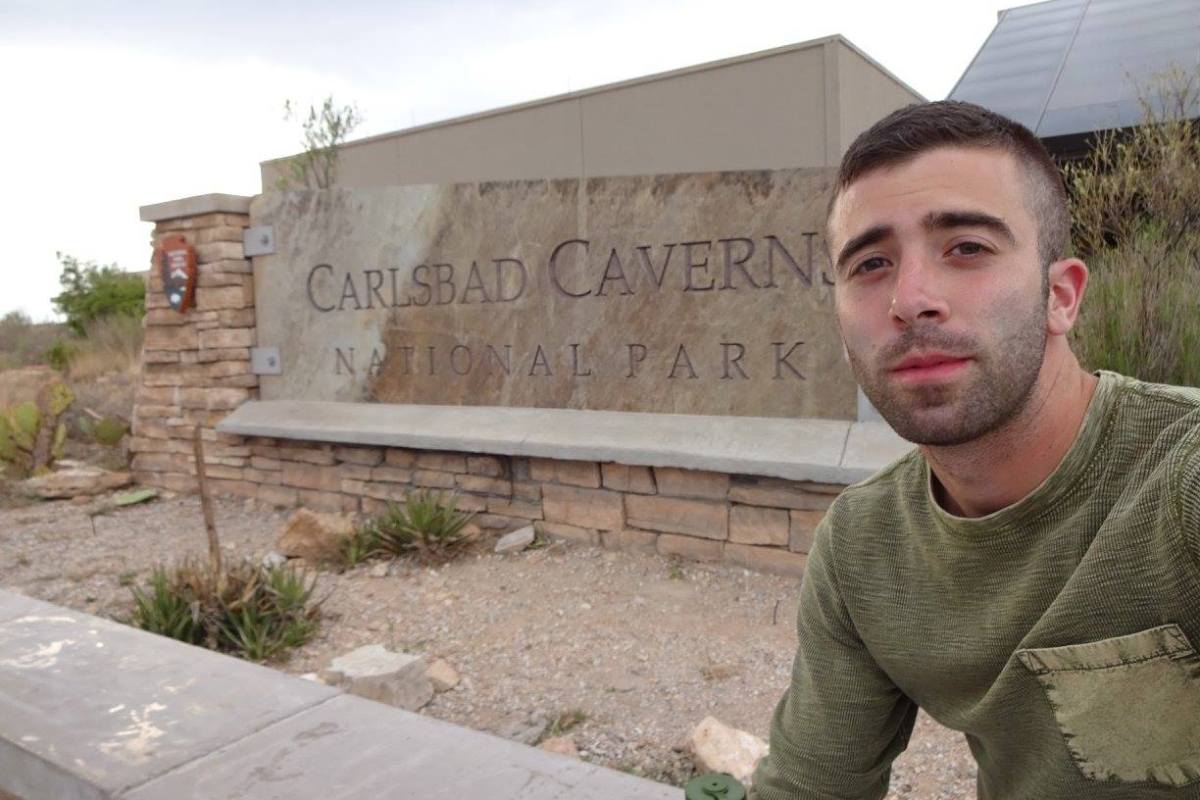
 During the tour, in which we made our way through the undeveloped section of the cave on a dirt path, the ranger presented the history of the discovery of the cave. According to the National Park Service “
 Although I very much enjoyed the tour, afterward things got increasingly fascinating. I was told that if I wanted to take the elevators back up to the visitor center I would have to soon, because they would be closing for the evening. If I chose not to, I’d have to hike my way out of the cave. Of course I opted for the latter choice. This gave me time to explore the Big Room of the cave and have a sandwich. I found it unique to order food and eat at the Underground Lunchroom. Back in the early days of the park there was an actual kitchen down in the cave, but because of food preparation causing damage to the cave, food started to be prepared outside of the cave and sent down.
  With a burst of excitement I went from one feature to the next, but then made the same walk again to quietly savor the surroundings and be filled with a sense of wonder. I could easily imagine I was on another planet, a more desolate one. When I was done pondering and wandering I began my ascent to the cave entrance. It was all a gradual uphill hike, along a paved path. The passage narrows and widens from one set of switchbacks to another. I was the only person on this path. Despite other parts of the park and the visitor center being quite busy, I didn’t see a singular person for the entire ascent. I felt like I had Carlsbad Caverns to myself. As I got closer to the cave entrance I began to hear chirping overhead. I looked up and saw small dark creatures flying near the roof of the cave.
  Back at the visitor center I told a ranger what I experienced. I would be informed that they most likely weren’t bats but cave swallows. Also in the visitor center I watched the park film and bought a pin for my collection. Then after killing a bit of time, I went back outside to the amphitheater located right at the mouth and natural entrance of the cave. It was time for the nightly bat flight program. A ranger would talk about bats and then around sunset the bats would come flying out of the gave in a grand spectacle. So, as programmed, a ranger talked about bats feeding on bugs, especially mosquitos, and how the tendons in a bats hands are designed opposite of ours. To expand their fingers from their fist it requires strength, but a fist tightly clenched is in the nature relaxed position. This is how they are able to cling onto things and one another and hang upside down. The ranger talked about the immense size of the bat population between 200,000 and 500,000 in the cave and how bat, guano a.k.a. bat dung, was once harvested from Carlsbad Caverns for its value as a nutrient rich fertilizer.
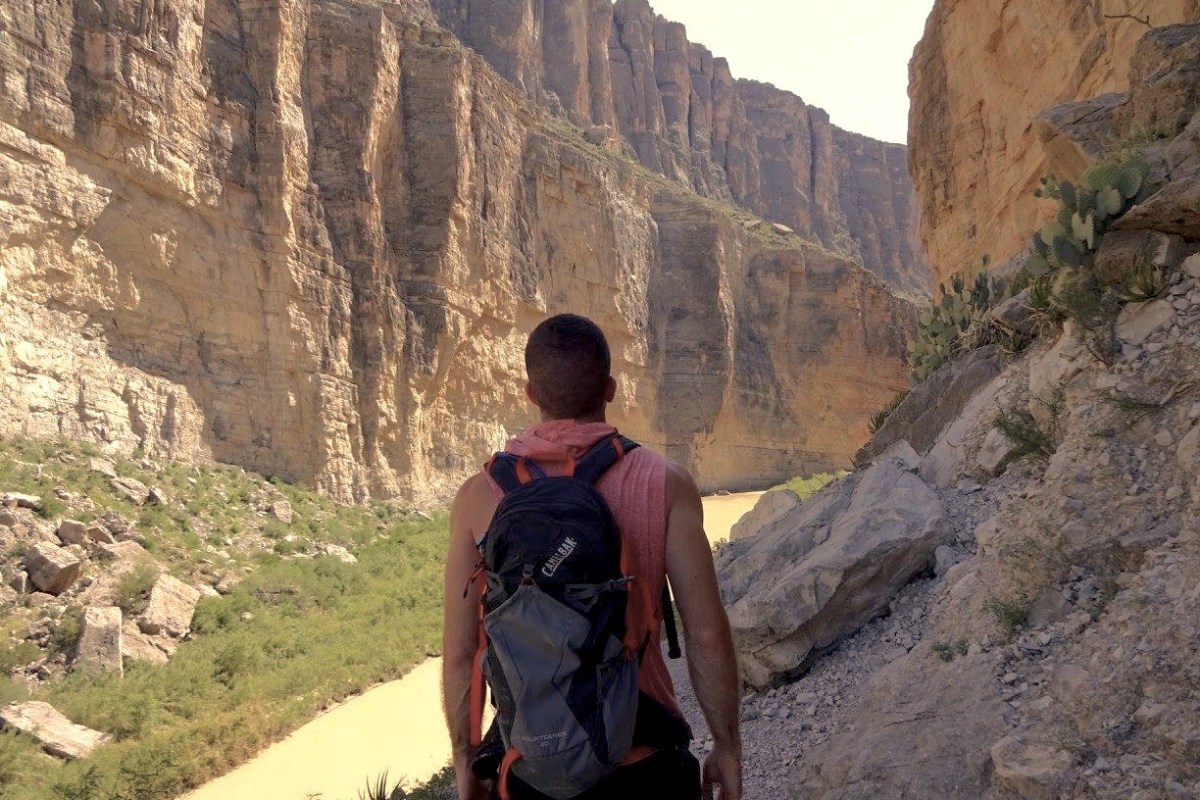
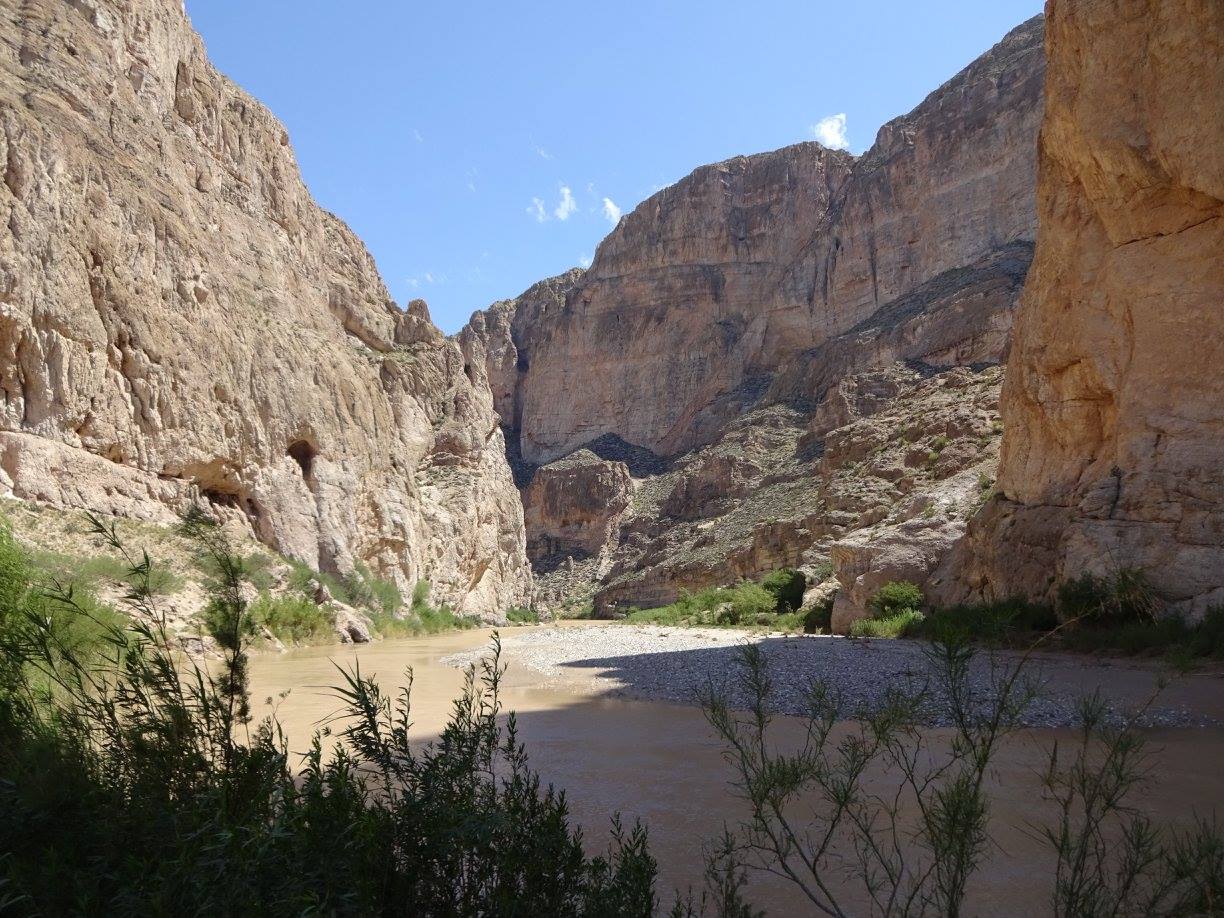 Eventually, after a brief moment of uncertainty, I arrived in Santa Elena Canyon where giant cliffs forming the canyon walls measure 1,500 feet. Here one cliffside is Mexico and the other is the United States of America, and the Rio Grande flows in a murky pale brown in between. On the U.S. side, about halfway down the cliff faces, rock erodes leaving piles and a bar alongside the river where trees and other plant life grow. This is where the established trail is found.
 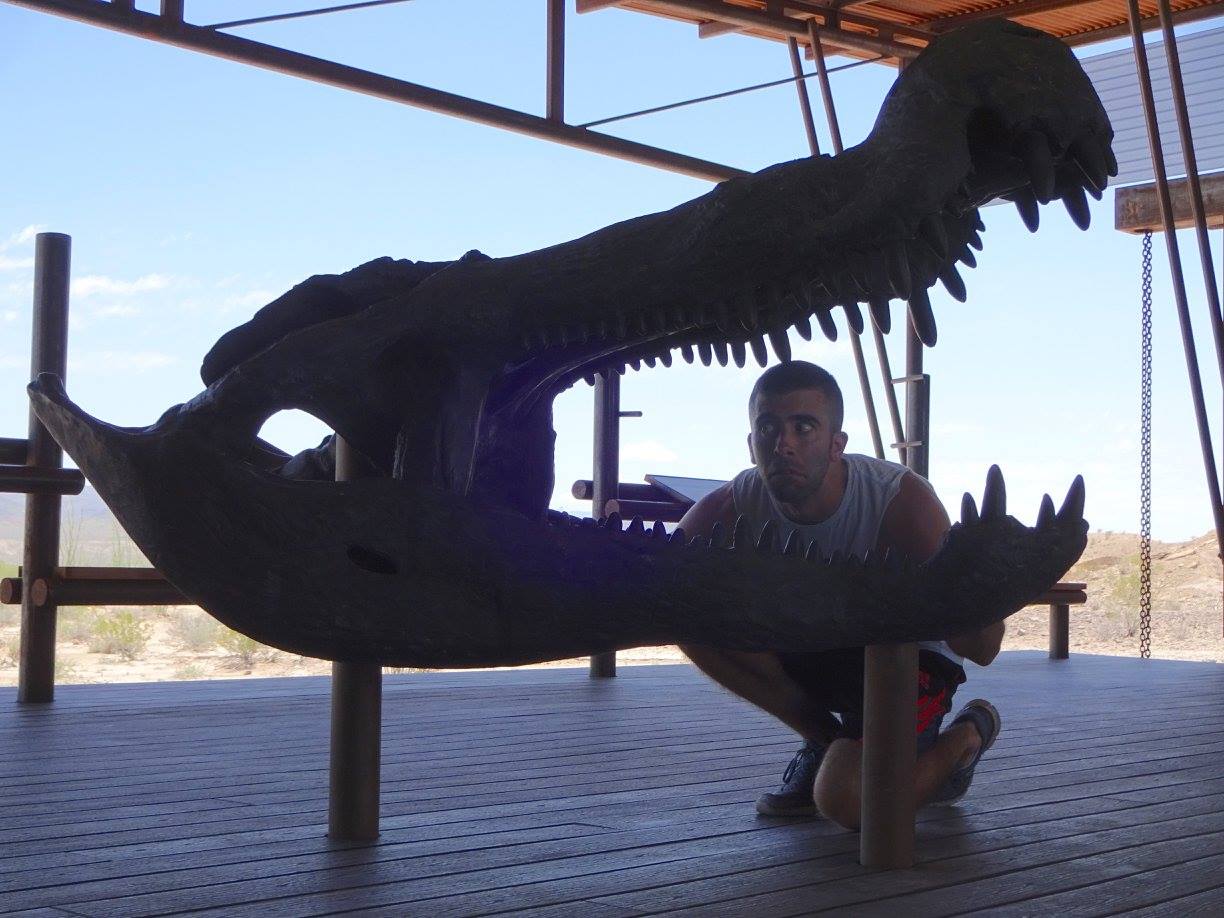 The visit to Santa Elena Canyon was near the end of my day’s adventure. This morning I ventured out in my car to travel the whole expanse of the park and get a sampling of all it has to offer. I first stopped at the Fossil Discovery Exhibit. I learned all about the terrain and dinosaurs that used to live in this shallow sea. I even got my picture with a cask of the
 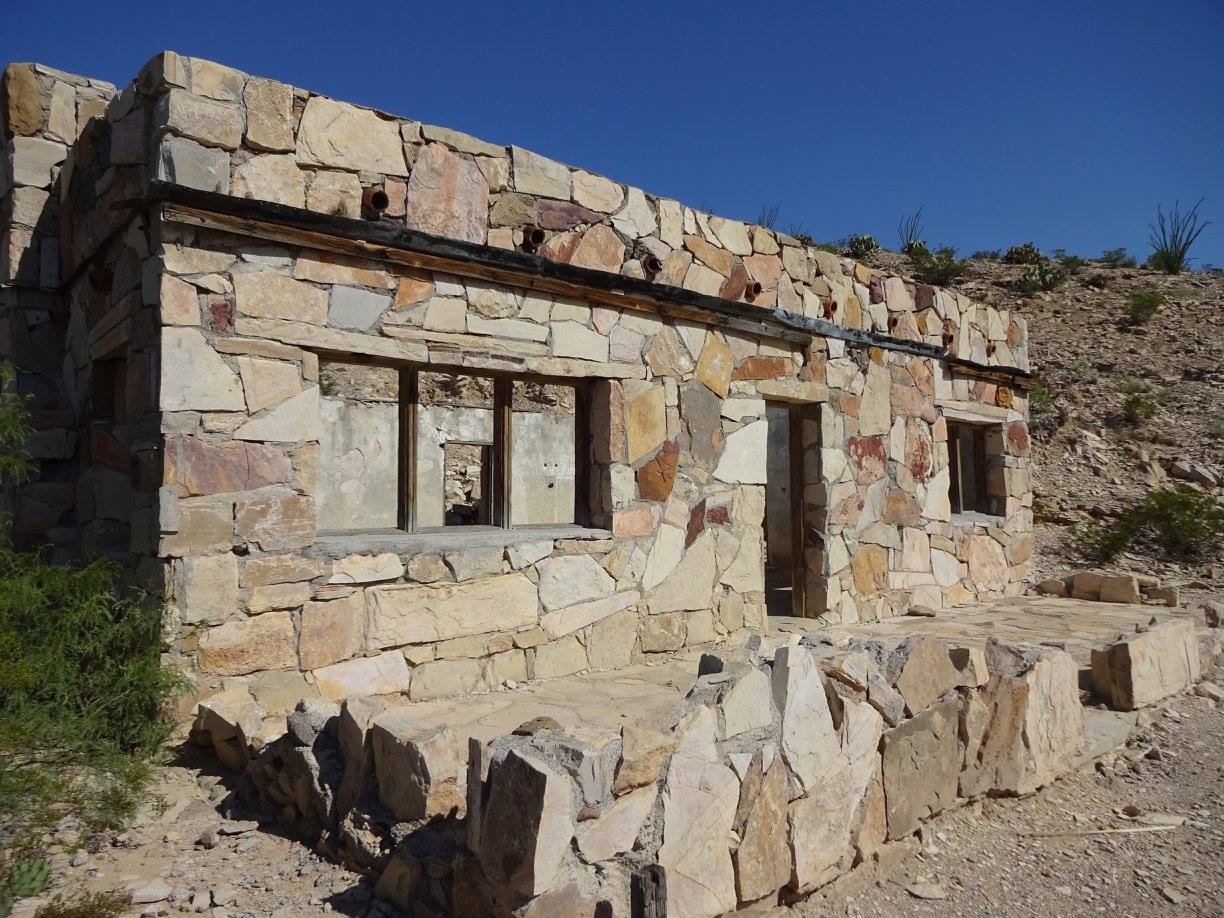 I observed the remnants of the old post office and bath house that used to stand on site. On the half mile hike to the hot spring, I got hit with an overwhelming sense of insecurity and uneasiness. I felt like I was being watched. Something was not right. Then, next to the trail, I came upon a grouping of small Mexican animal figurines “alebrijes” standing on the ground by a plastic jar with a slit cut in the top for money collection.
 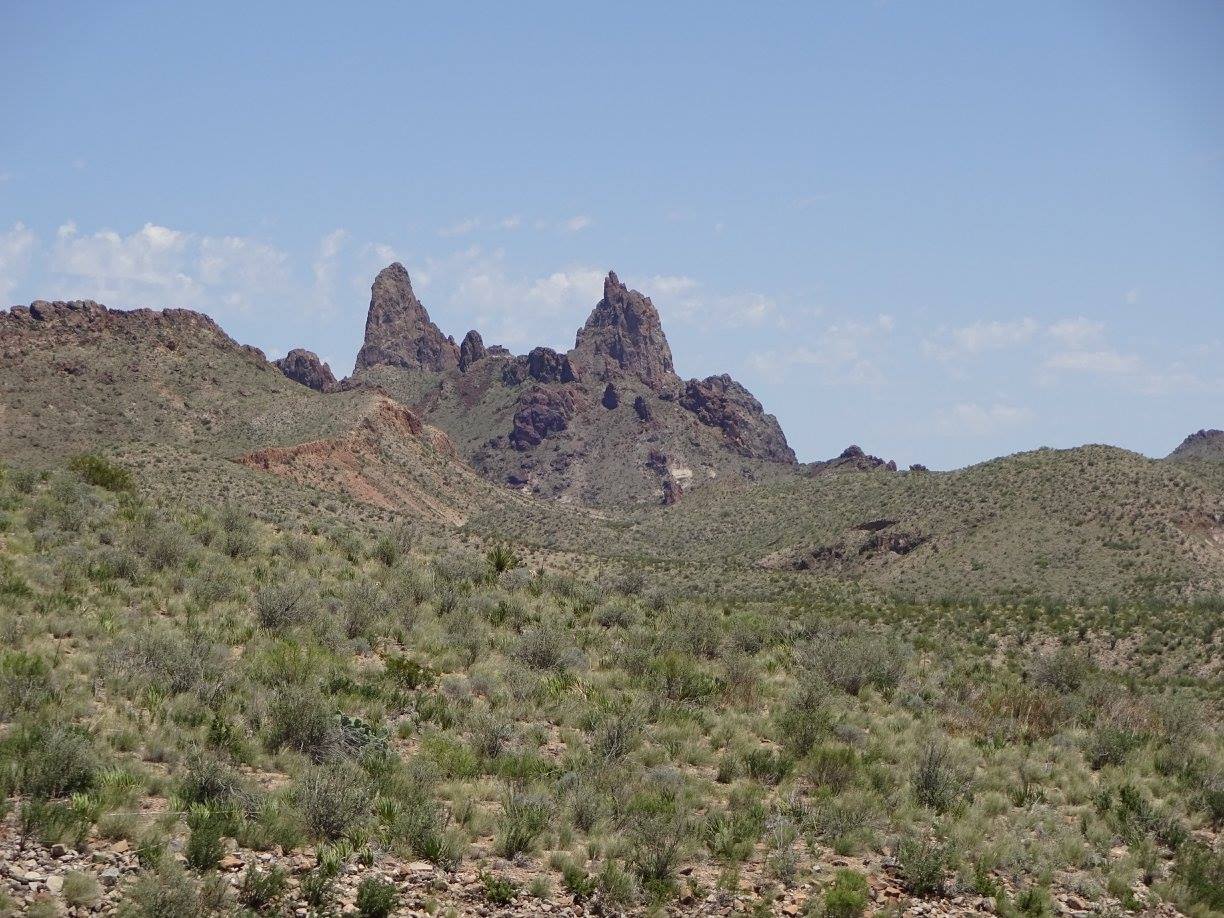 When I crossed the expanse of the park and was nearing the West end to visit Santa Elena Canyon I stopped at
  My final stop before venturing into the canyon was a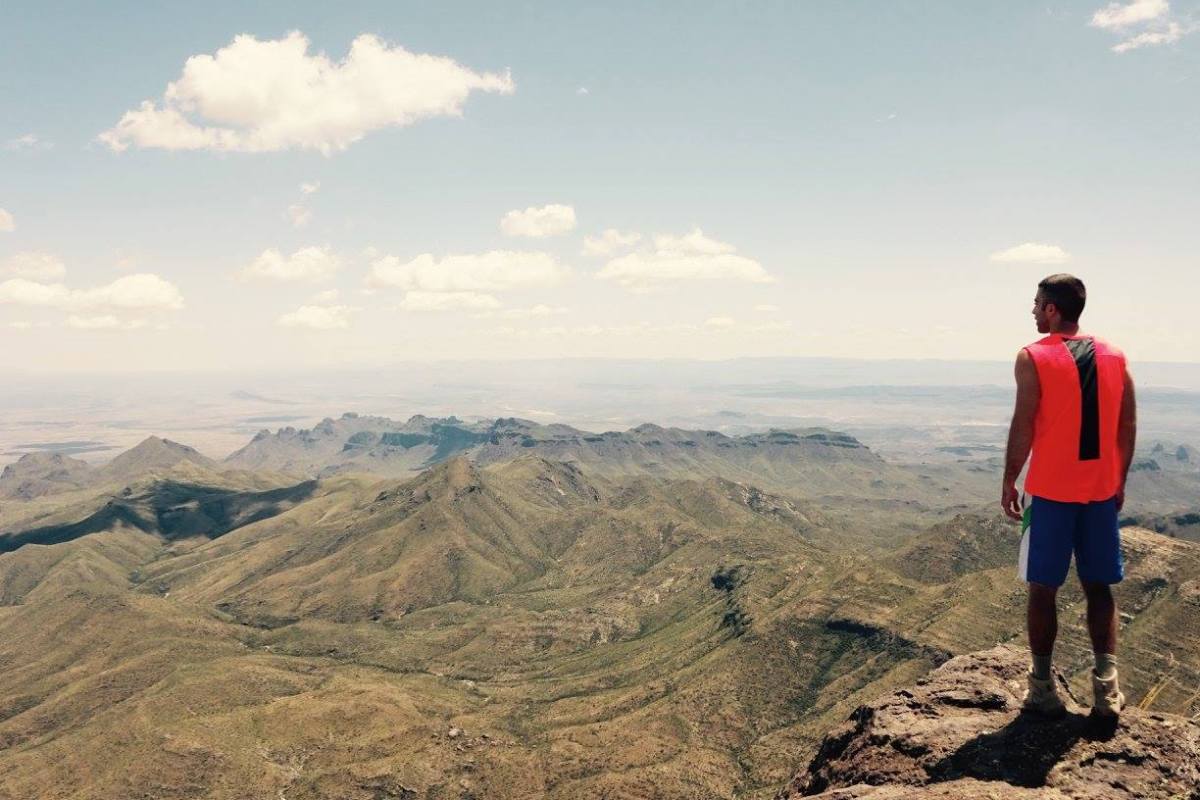

 Leaving the lodge I drove Park Road 3A, also known as the Skyline
  Four miles from the State Park is Fort Davis National Historic Site- a unit of the National Park Service. It actually attaches to the State Park by a trail, but I didn’t have the time to hike there and back. I didn’t know why there would need to be a fort out here in seemingly the middle of nowhere Texas, but I would learn, and I was excited. Any unit of the National Park Service interests and excites me. All of the National Park Service’s sites tell one big story, the narrative of the United States of America. At each one I see my eyes opened to moments in history I didn’t know, and not only do I obtain the knowledge, but being in the actual place where these events took place, and seeing them with my own eyes, helps me imagine and obtain a greater depth of relation to the events. I love it!
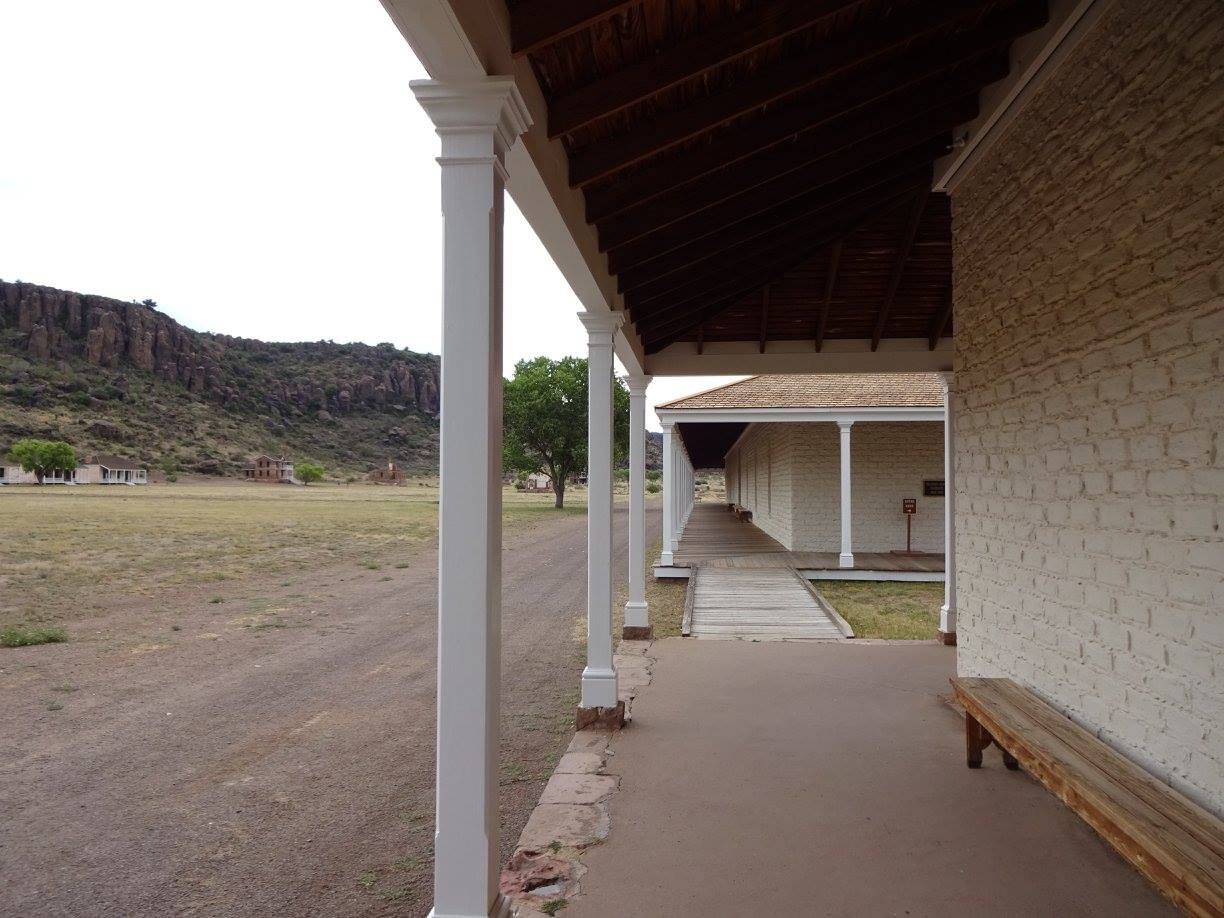 Today exploring the park is really stepping back in time to a unique era. The Park Service has preserved and restored many of the buildings. This fort is not what we typically think of as a fort. There is no man made barrier of a wall with artillery and cannons sticking out. Rather it is a series of buildings aligned in a giant rectangle around a common green. The fort is in a large canyon, protected naturally by wide canyon walls and Limpia Creek.
 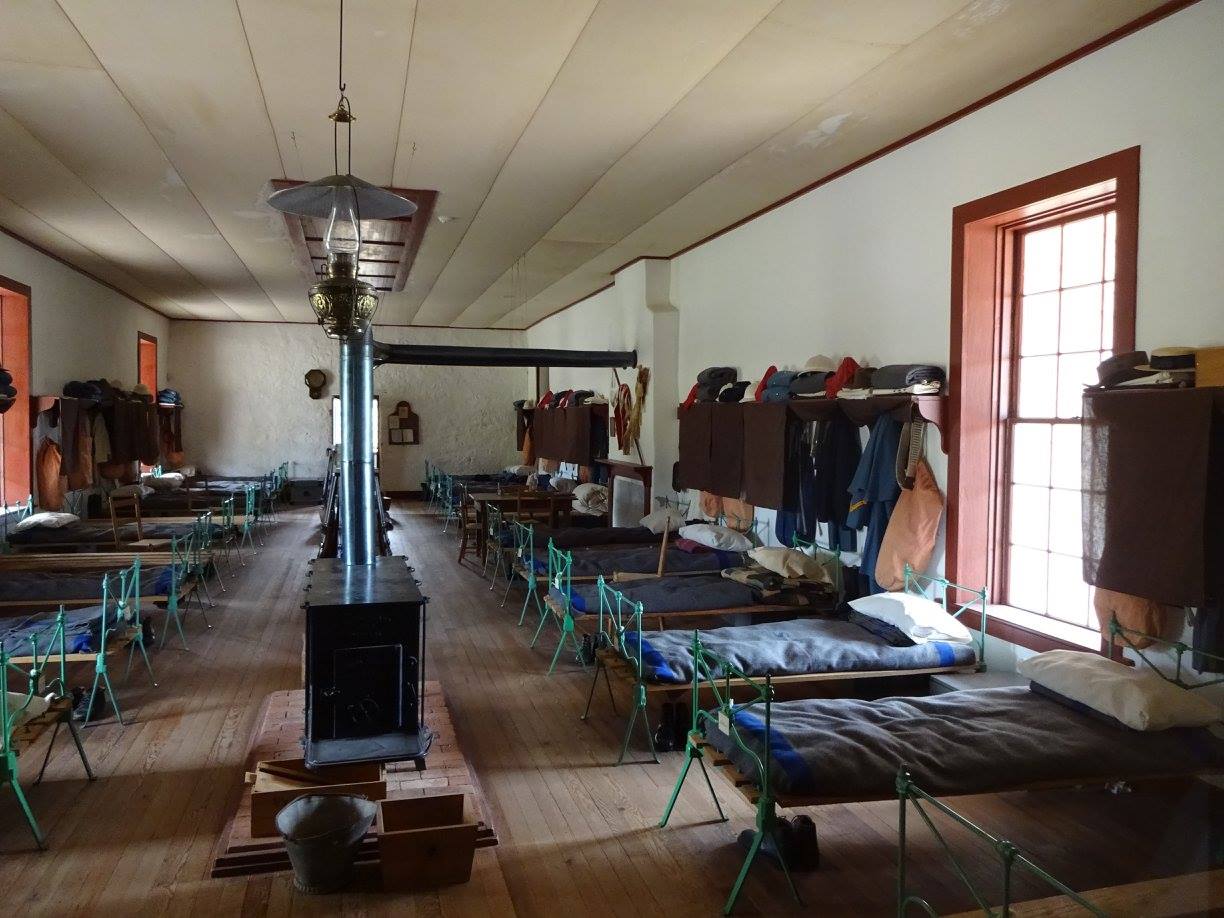 The main attraction of the park is walking in and out of many of the buildings which are furnished to the era. I walked into the barracks. Fourteen beds lined the walls one after another. Apart from a bed, the soldiers were only allowed a few hooks to hang their clothes and a small shelf situated above their beds. In the middle of the building stood a series of coal furnaces. This was very simple. I tried to put myself in the place of the soldiers and imagine what they came “home” to at night.
  Leaving Fort Davis National Historic Park, I was well pleased. I learned a lot of history. I
  As I waited for my food, I couldn’t help but observe those around me. A group of ladies were in a booth eating together and talking back and forth. They switched from Spanish to English constantly, replacing with seemingly no notable method, certain words with their other language counterpart. A middle-aged man with a cowboy hat, flannel patterned shirt, boots and a grey mustache (everything stereotypical of a cowboy) sat down to order his food. To my surprise he ordered his food perfectly and casually in Spanish. Keepin’ it truly real, from my perspective, a middle-aged white man with a cowboy hat back home in Kentucky would be the least suspected of speaking Spanish. This was not the case here. Spanish and English were truly blended together, and latino rancheros and caucasian cowboys came together with no barrier of language nor culture, no ill-will towards one another, just neighborly friendliness. They were simply gathering over good food.
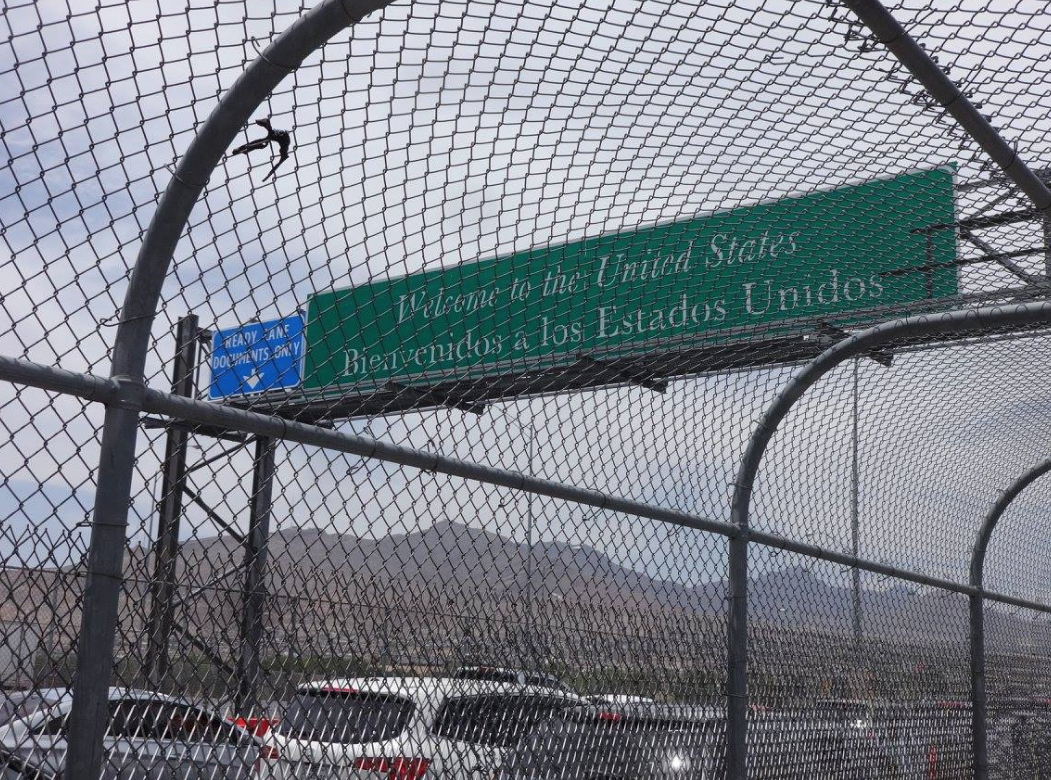 It was a new, peculiar, and patriot moment for me to read the sign above the highway stating “Welcome to the United States.” My visit to Ciudad Juárez is a tale to be further unpacked at another time. I was glad I went, but I was so grateful to be back home and ready to continue on with my U.S. National Park adventure.
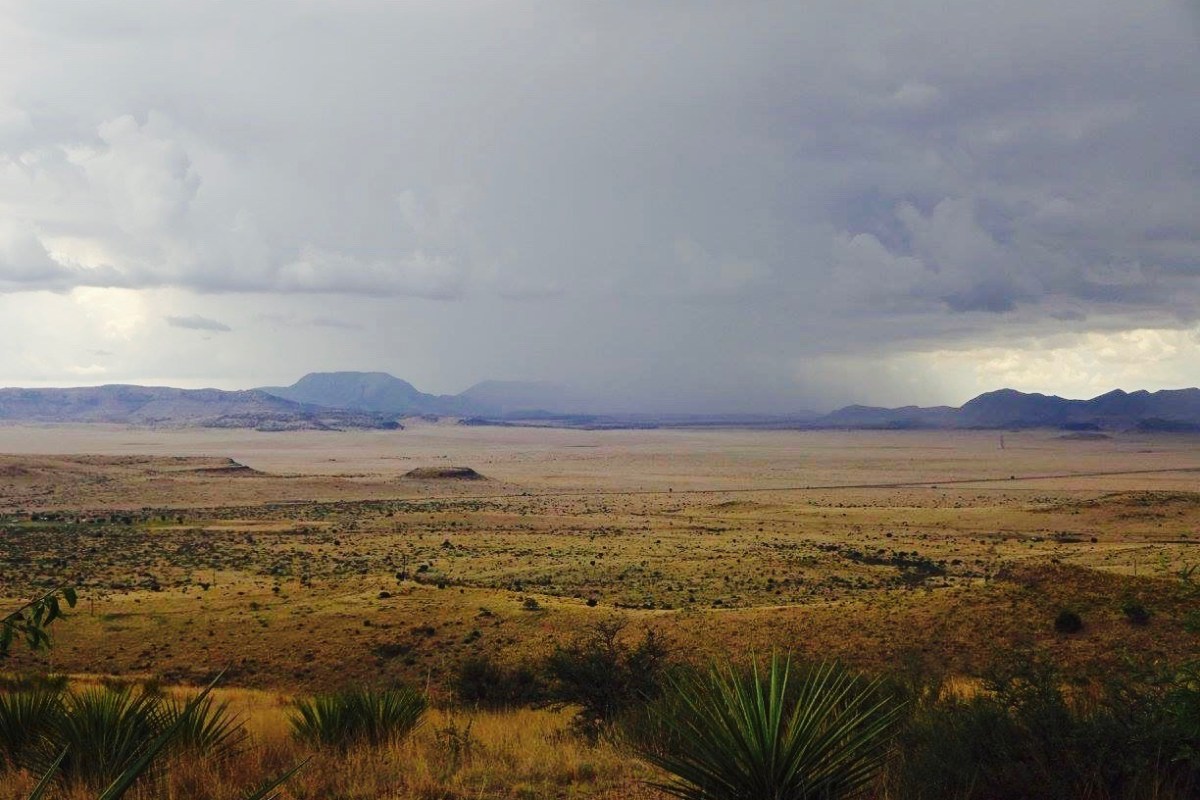
 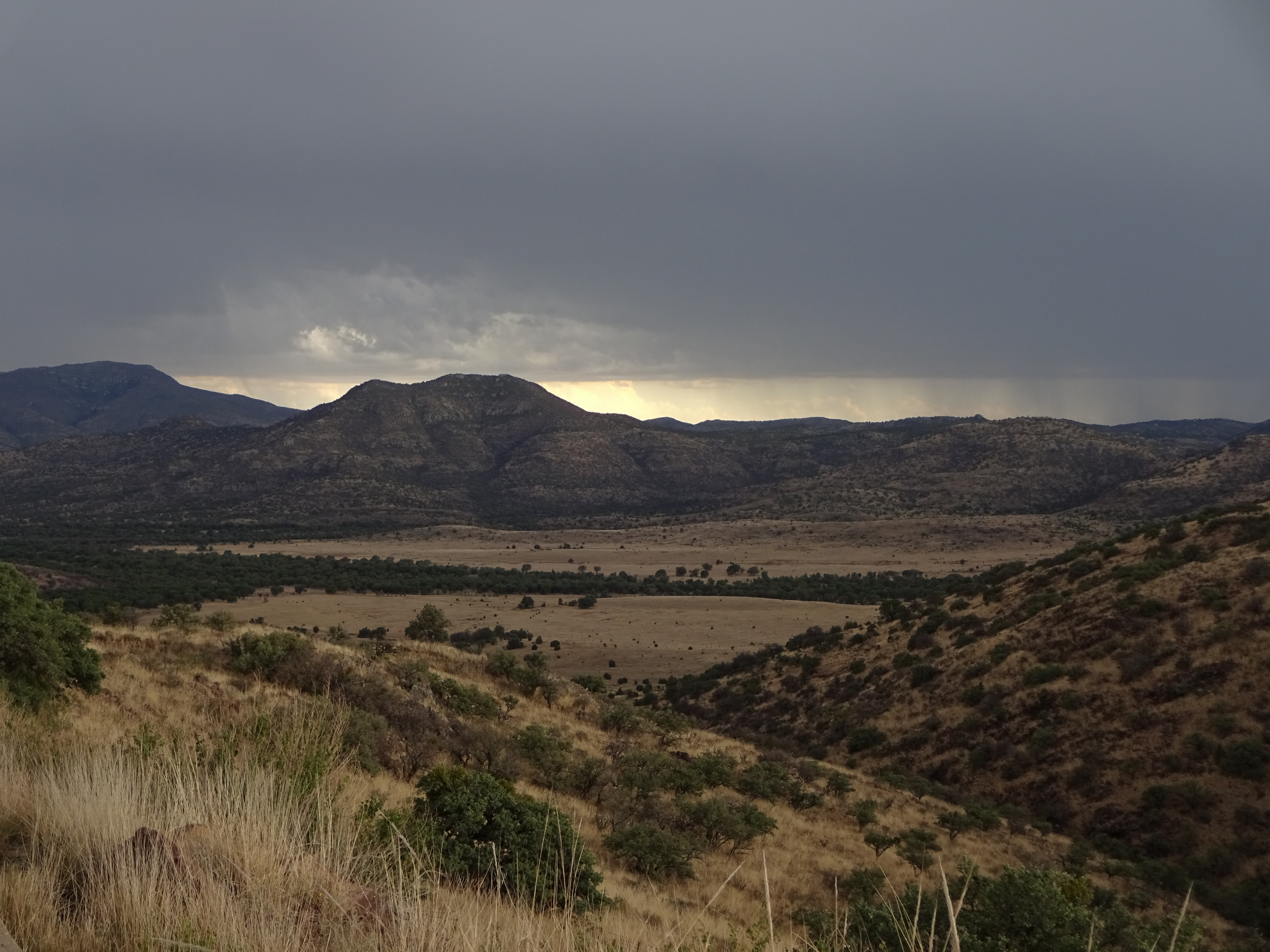 The road wound through countryside and slithered among mountains. At one point I came to a overlook where I looked down across the grasslands and the mountains. In the distance, over the mountains, it was storming. I could see the dark clouds and rain contrasting with a golden sun that was peeking out from the corner of the sky. The contrast in the sky, brought about contrast in the land between the deep greens of the scattered trees to the accents of golden grass.
 I could sense the arid land giving off a sigh of relief for the rain that would soon arrive. A could feel the tension released in the air. As I continued on my drive, a parade of javelinas jumped a stone wall, scurried across the road, and leaped into the wild grass and brush. These creatures look like wild boar, and although javelina is the same name given to a wild boar in Spanish, these javelinas are peccaries, and unlike boars are native to the Americas. But combine the savanna with a javelina, and the fact I hadn’t seen a business for hundreds of miles, and you could have fooled me to thinking I was out and about somewhere in the African savanna and I’d be prone to see a zebra, or a lion.
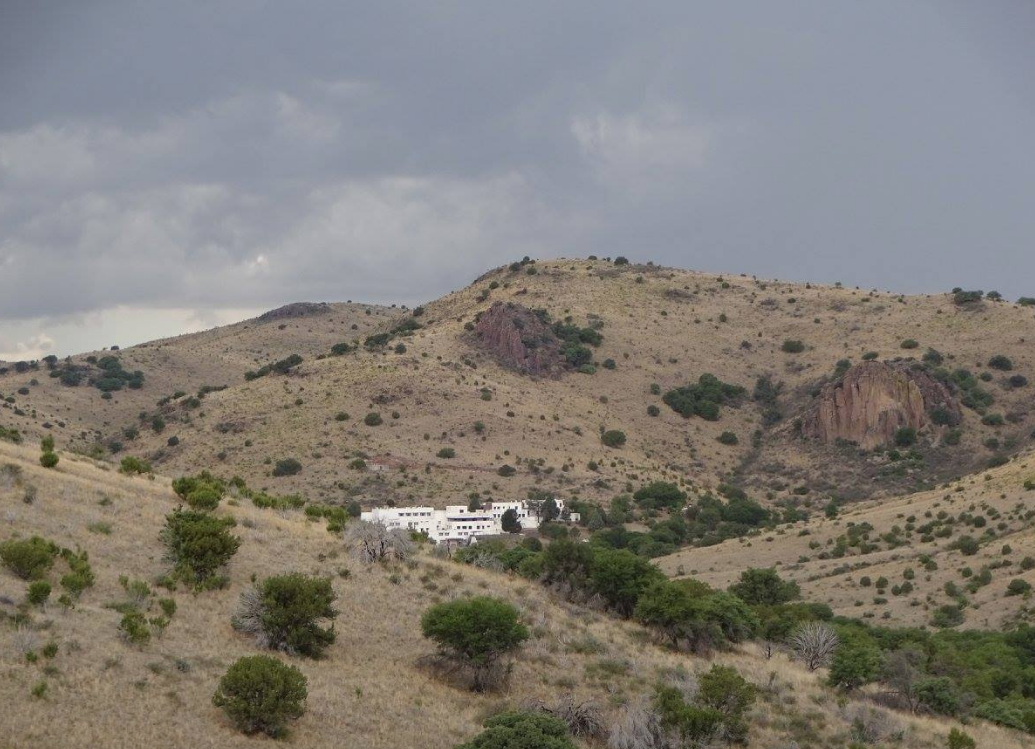 Except for the one elderly couple who asked me for directions at the drop box, whom I couldn’t assist with any knowledge, I didn’t see any other people on my way to the lodge. This place was very quiet.
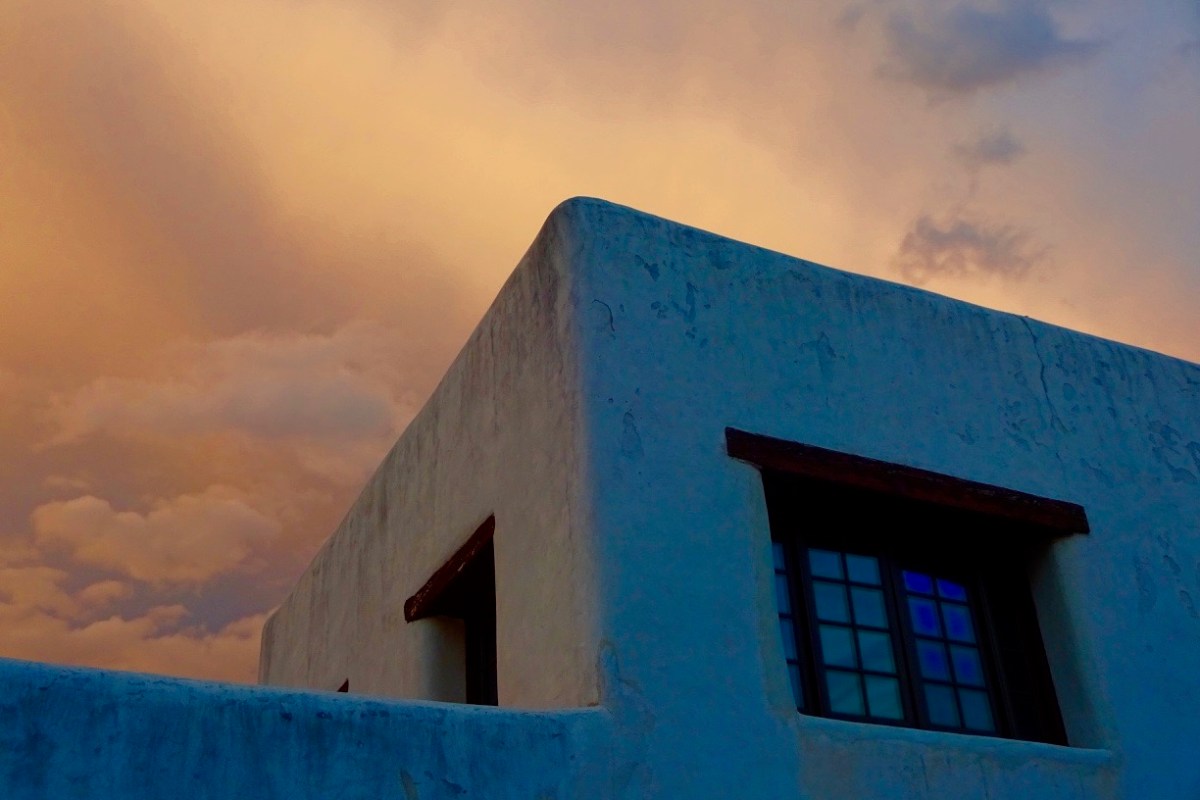
 Rustic, beautiful, charming. An old stone fireplace stood with an extending stone hearth. The walls were white abode, the ceiling wooden logs, the furniture hand made of cedar, some original historic pieces from the 1930s. The lamps here and there gave off a warm and homey glow. A rocking chair stood next to the fireplace and in front of the wood framed window with the bright orange sunset. The window on the opposite side was tucked into its own nook where a desk and chair stood, as if looking out intrigued by the view of a tree reaching out its branches. And the bed in the middle was adorned with a beautiful lacework comforter and a blanket depicting running horses and geometric designs, looking like a true piece of native craftsmanship of the area.
 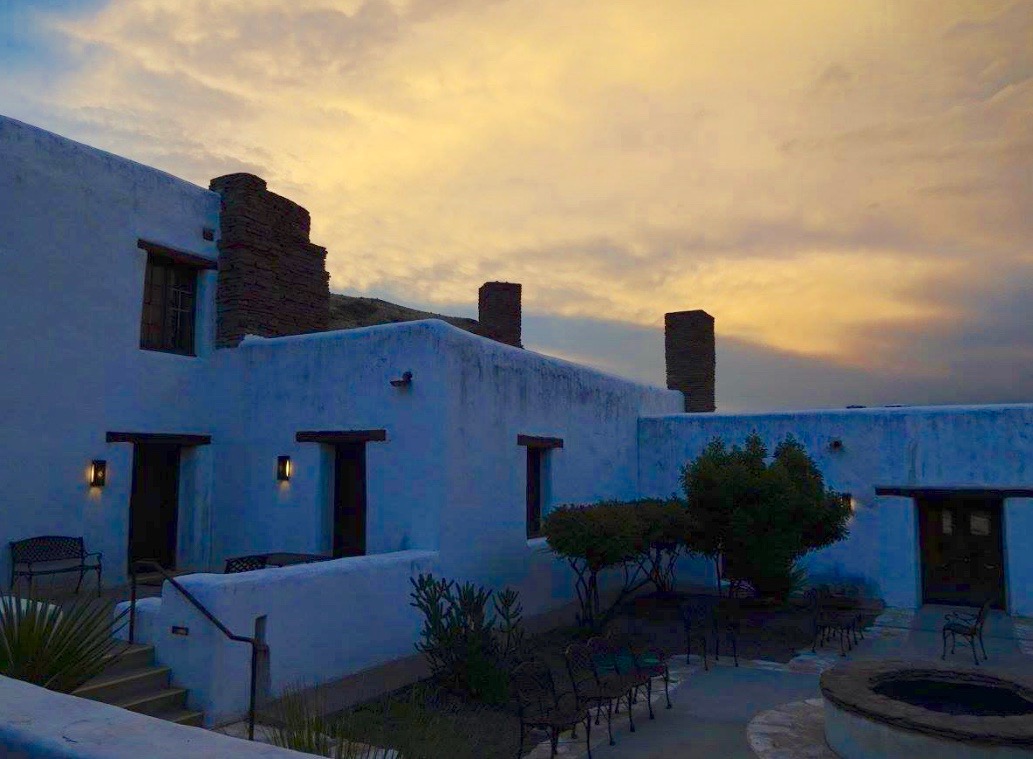 Also pertaining this this vibe was this true lodge feel. Back in the early days of park lodges, arriving at a lodge was sometimes an accomplishment in and of itself. Long horseback rides or wagon trips through challenging terrains would finally lead one to a lodge of comfort and peace. Same situation today. A long and isolated journey through very remote roads to the middle of nowhere, brought me to the Indian Lodge, and the lodge was the only thing here. There was nowhere else to go this evening. This was it. The lodge was its own oasis. Everyone staying at the lodge had nowhere to be but at the lodge. We all had to make comfort and do with our own limited amenities and food. And without distraction, we all shared the sunset together, the maze of the abode structure, and each other’s own company. Although this place was isolated, and it was quiet, I was not the only one here. I believe there was a wedding party staying at the lodge. Clues of confetti, signs, and gatherings of multi-aged people, led me to this assumption.
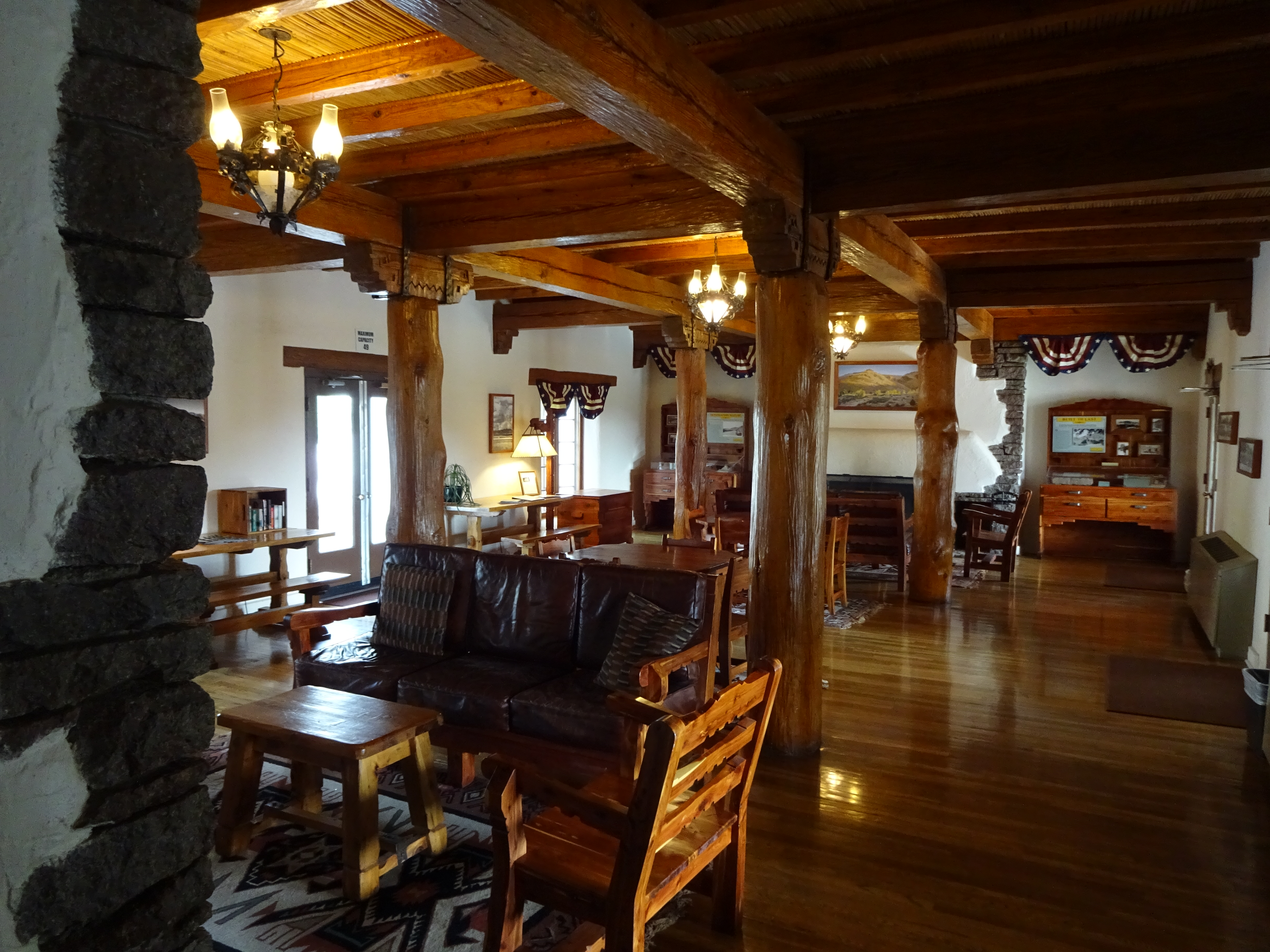 After dropping off my bags in my room, I peacefully explored this village of a structure. The clouds had melted away and the sky above was a calm darkening blue. Going from one adobe island to another from and one terrace and courtyard to another, I sat and enjoyed the remainder of the sunset and listened to the water trickling at a courtyard fountain. I also explored inside. The common indoor area was constructed with beautiful woodwork, old western chandeliers, nooks and crannies to sit and relax, and a small statue and area honoring the work on the Civilian Conservation Corps. I. Loved. This. Place.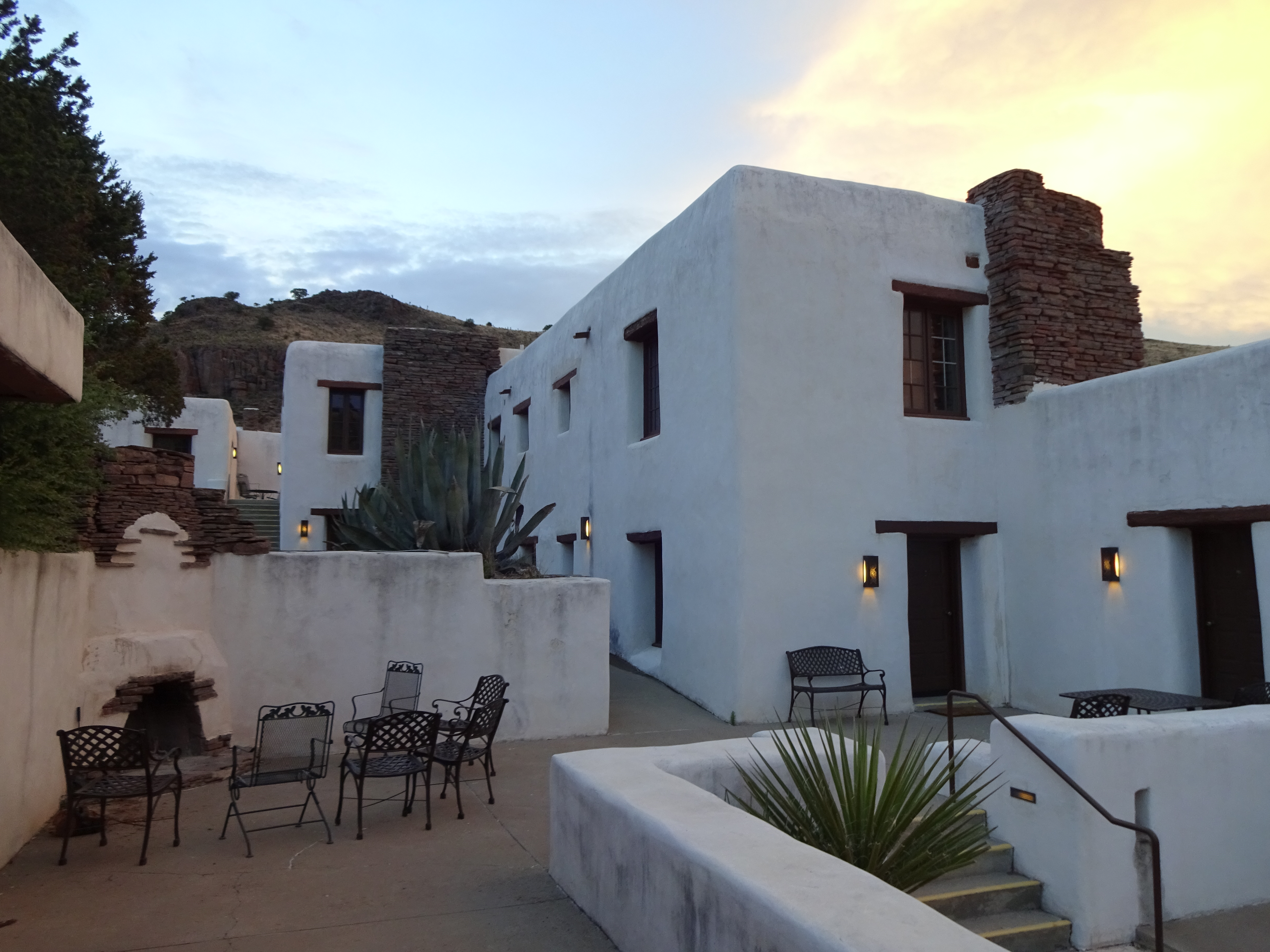
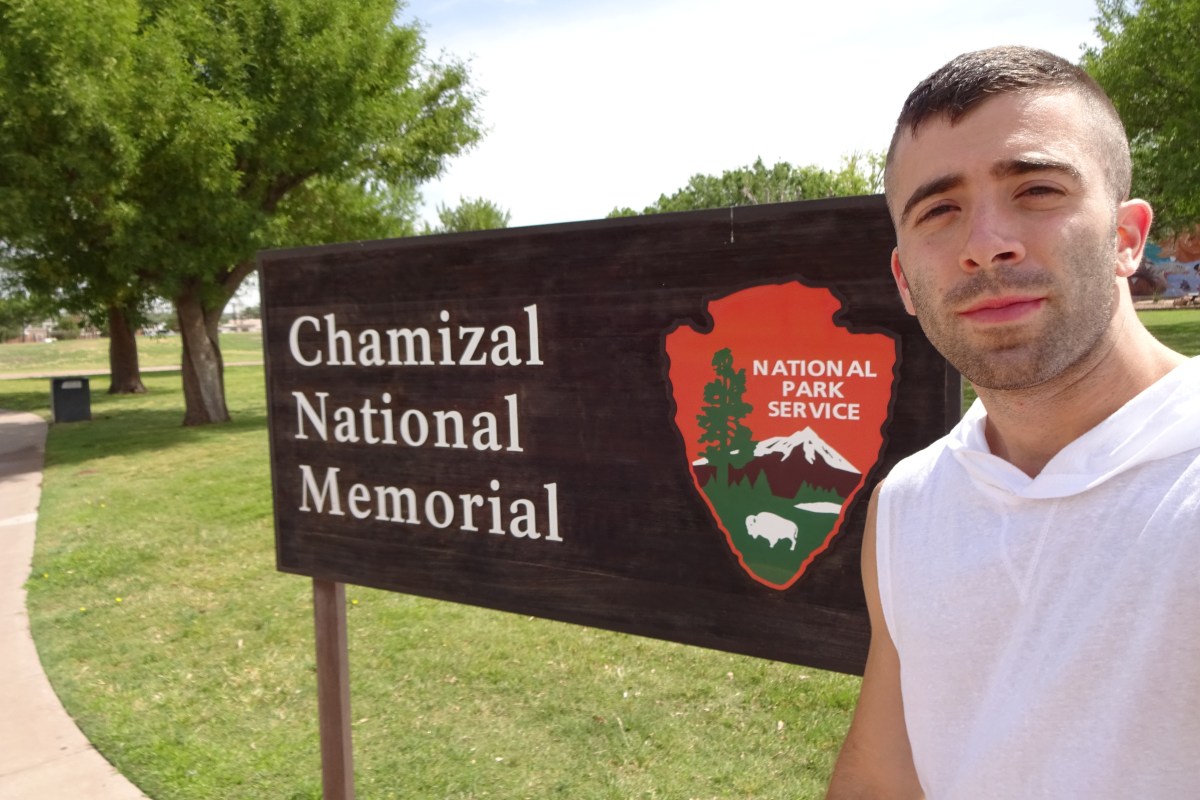
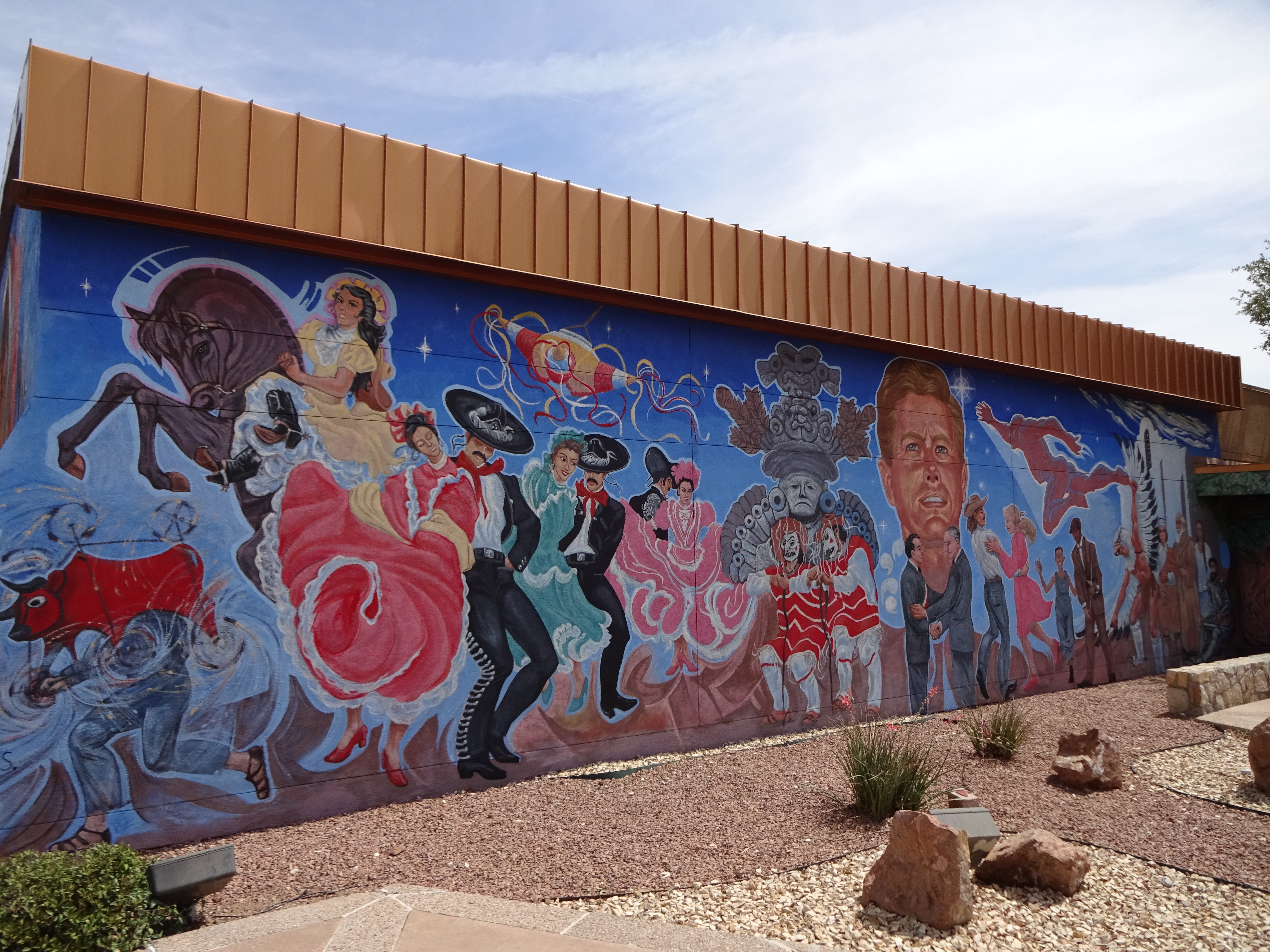 I was greeted with a colorful mural depicting important moments in Mexican-American history and aspects of Mexican culture. Upon opening the door I was welcomed in Spanish by a National Park Service employee. It was an elderly Latina lady with grey hair, a friendly smile, and an aura of a traditional abuelita. She didn’t reveal that she spoke English, so we just continued in Spanish. I explained this was my first time visiting the memorial. She got up from here chair, enthused yet composed, and explained that there was a museum and film. She guided me over to a rack of brochures where she proceeded to fill my hands with brochures of other National Park units in Texas and neighboring New Mexico. She was funny. I liked her. She authoritatively but sweetly was telling me what I needed to see and what I needed to do. She was a culmination of Mexican hospitality and West Texas friendliness. I thanked her and proceeded to take in the museum. I was fascinated.
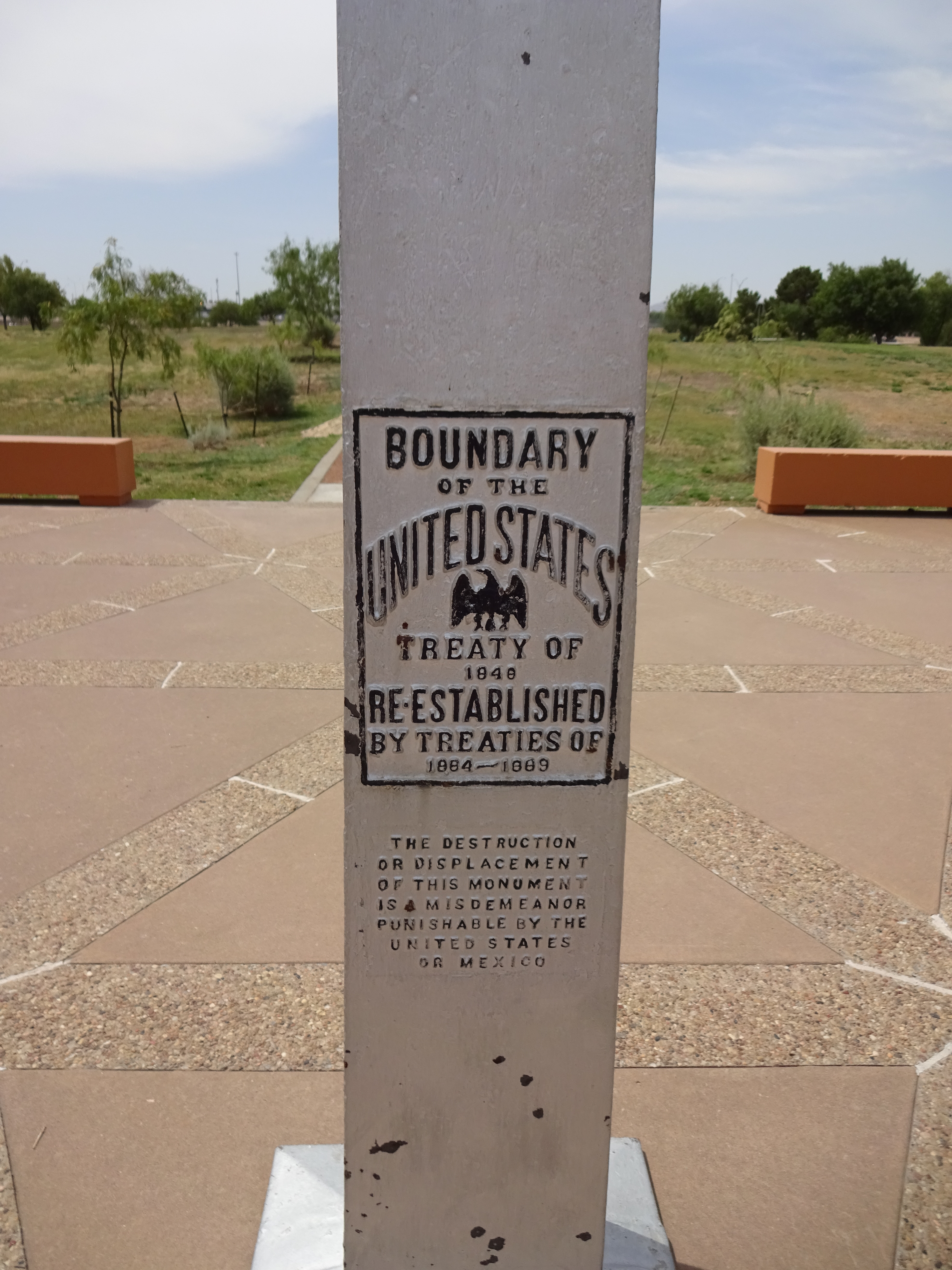 I left the museum to check out the small city park out back. There was a group of students perhaps on a field trip. I sought the post marking the prior land border between the two nations. I took a picture of it and then fixed my eyes on my surroundings. There was a bridge encased in fencing. A sign stuck up in the center of it declaring “Bienvenidos a Mexico.” I watched the vehicles flow and back up at the border. Then i noticed the business men walking across the border with their briefcases, returning home from a day in the office in another nation. Then I noticed others so informally coming across the bridge. Was is this easy? My curiosity was sparked. This was supposed to be an all-American National Park road trip, but maybe a side trip to Mexico could add a little spice to the slice. I had to go back in the museum and inquire. I found my little abuelita.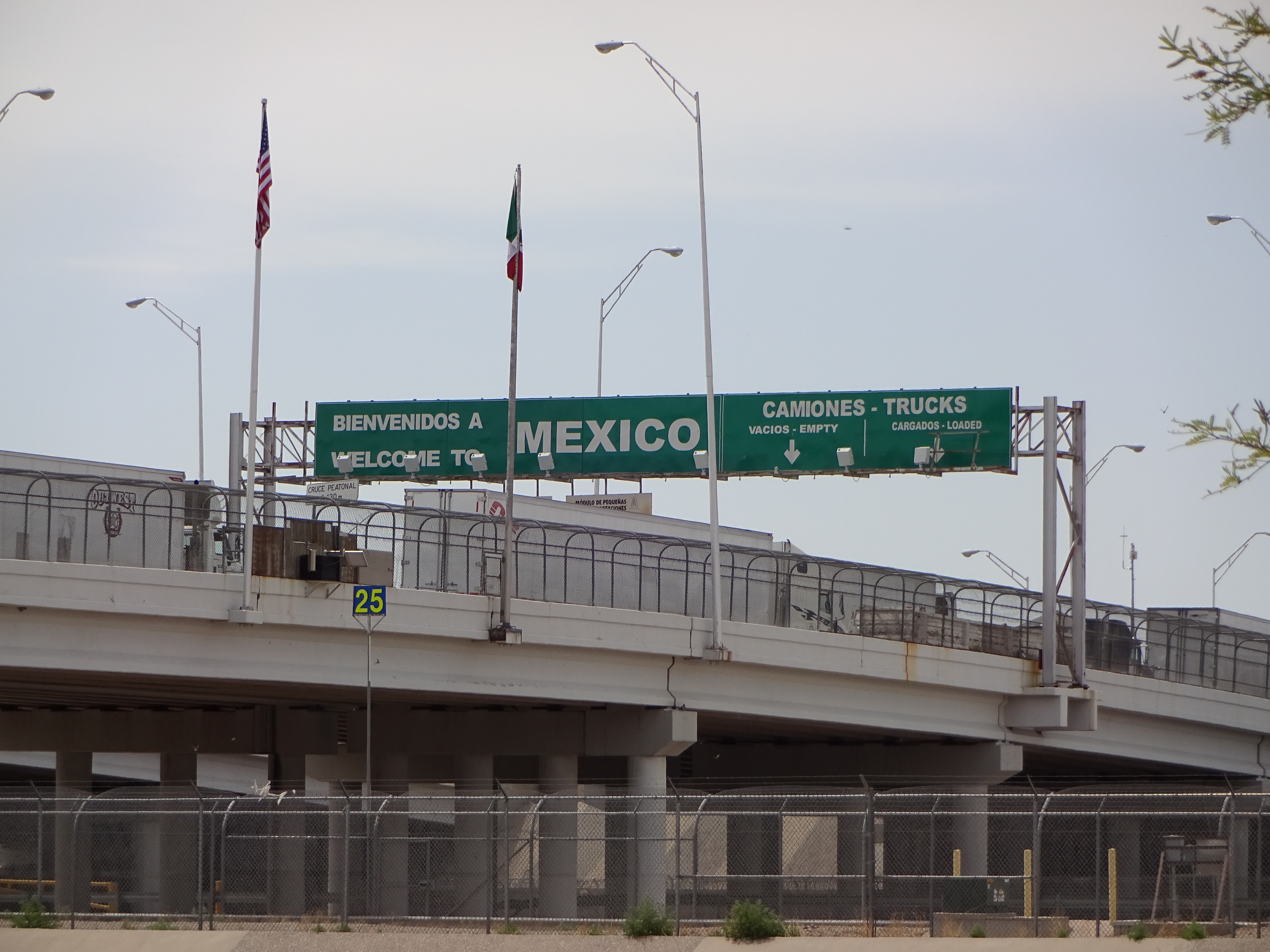

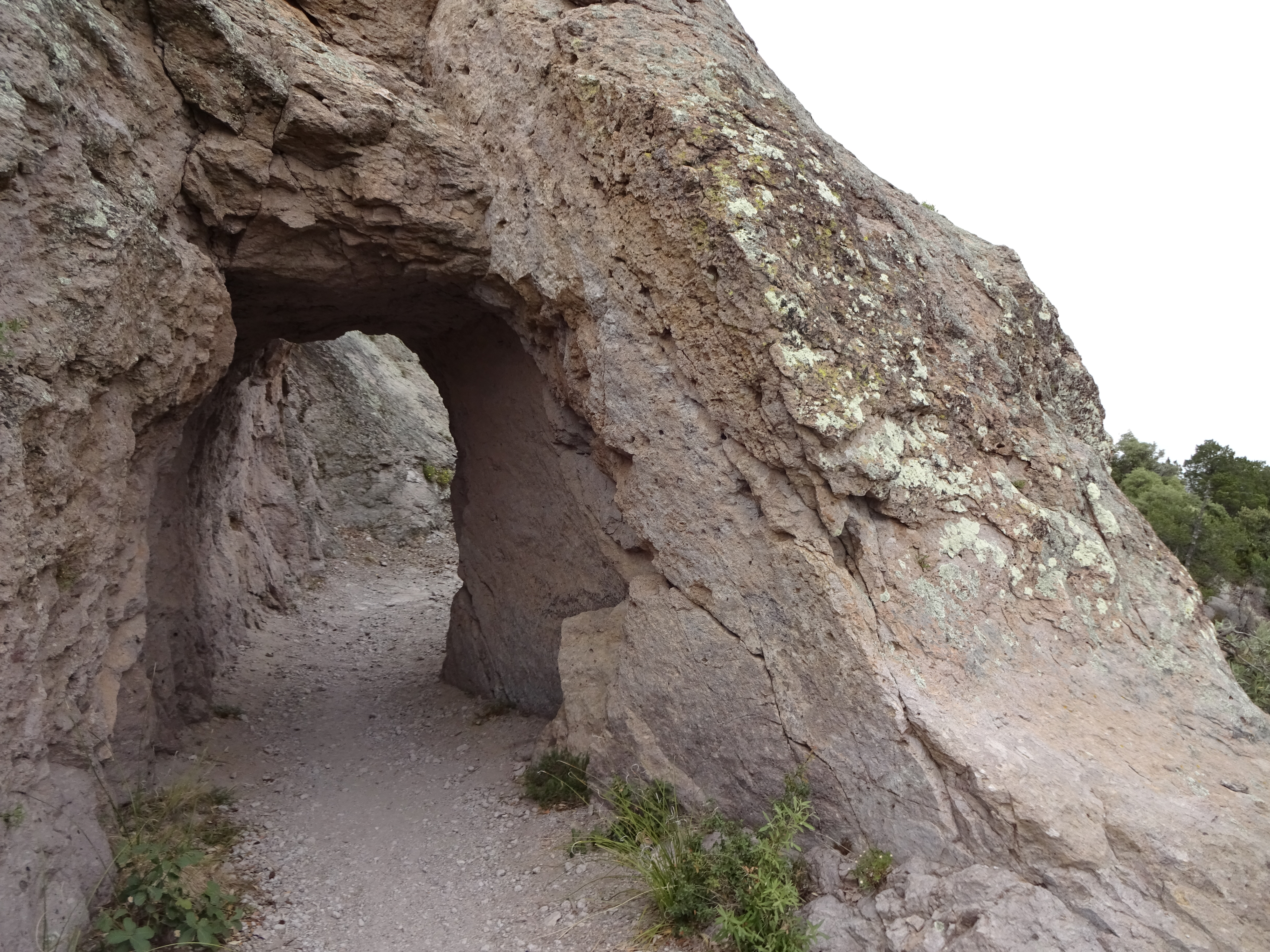 around the peak. There was one part with a narrow tunnel carved or blasted out by the Civilian Conservation Corps and another section where the rock and trail became smooth and bright white, app
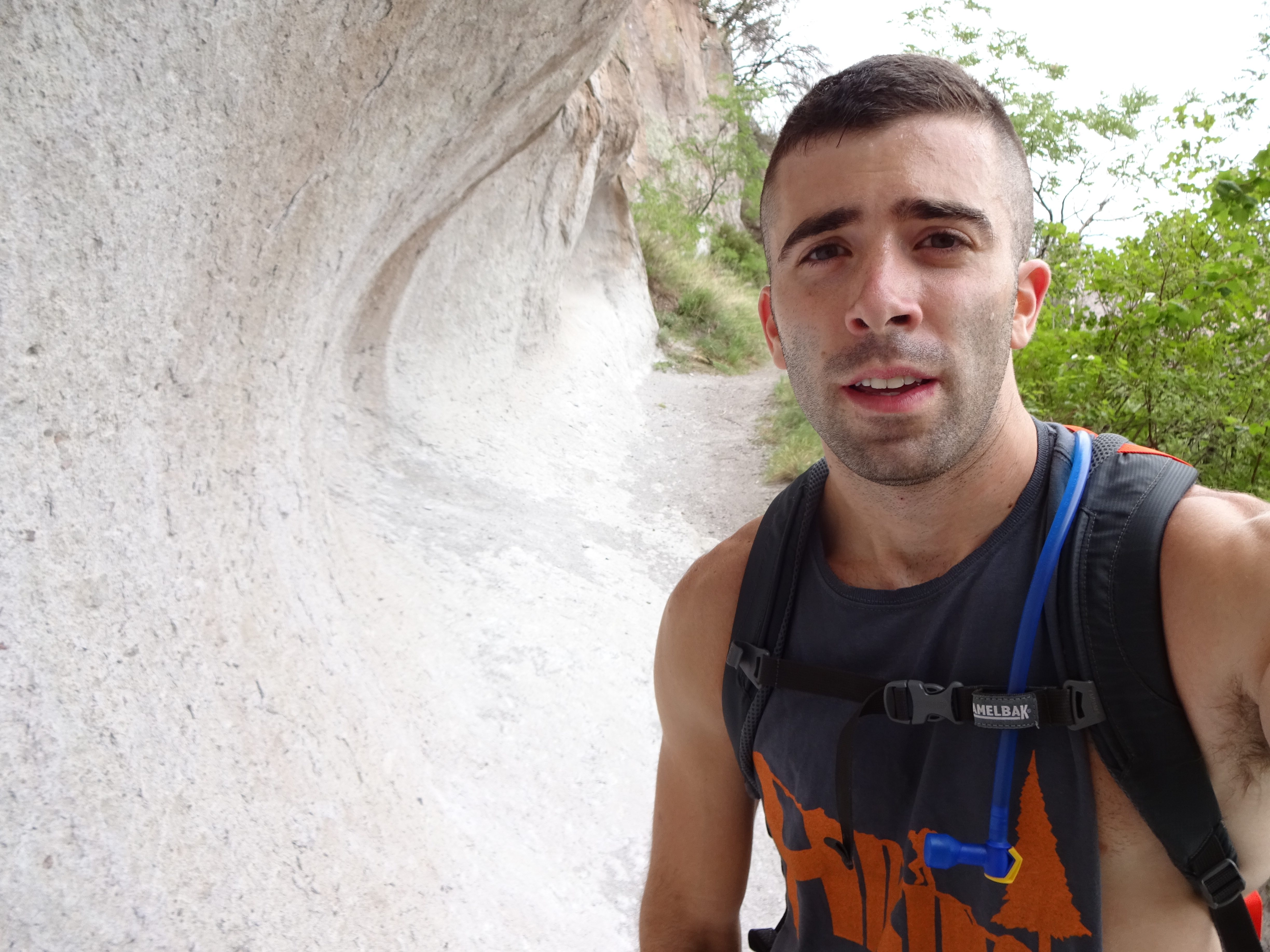 going uphill the entire length of the trail, but it wouldn’t be long. I was pushing myself, taking on my machine mentality in which I concentrate on keeping mechanical movements and consistent speed, imagining I am nothing but a machine operating in a programmable mode. I was finally picking up speed and getting past my mechanical groove into a free-spirited free run until…..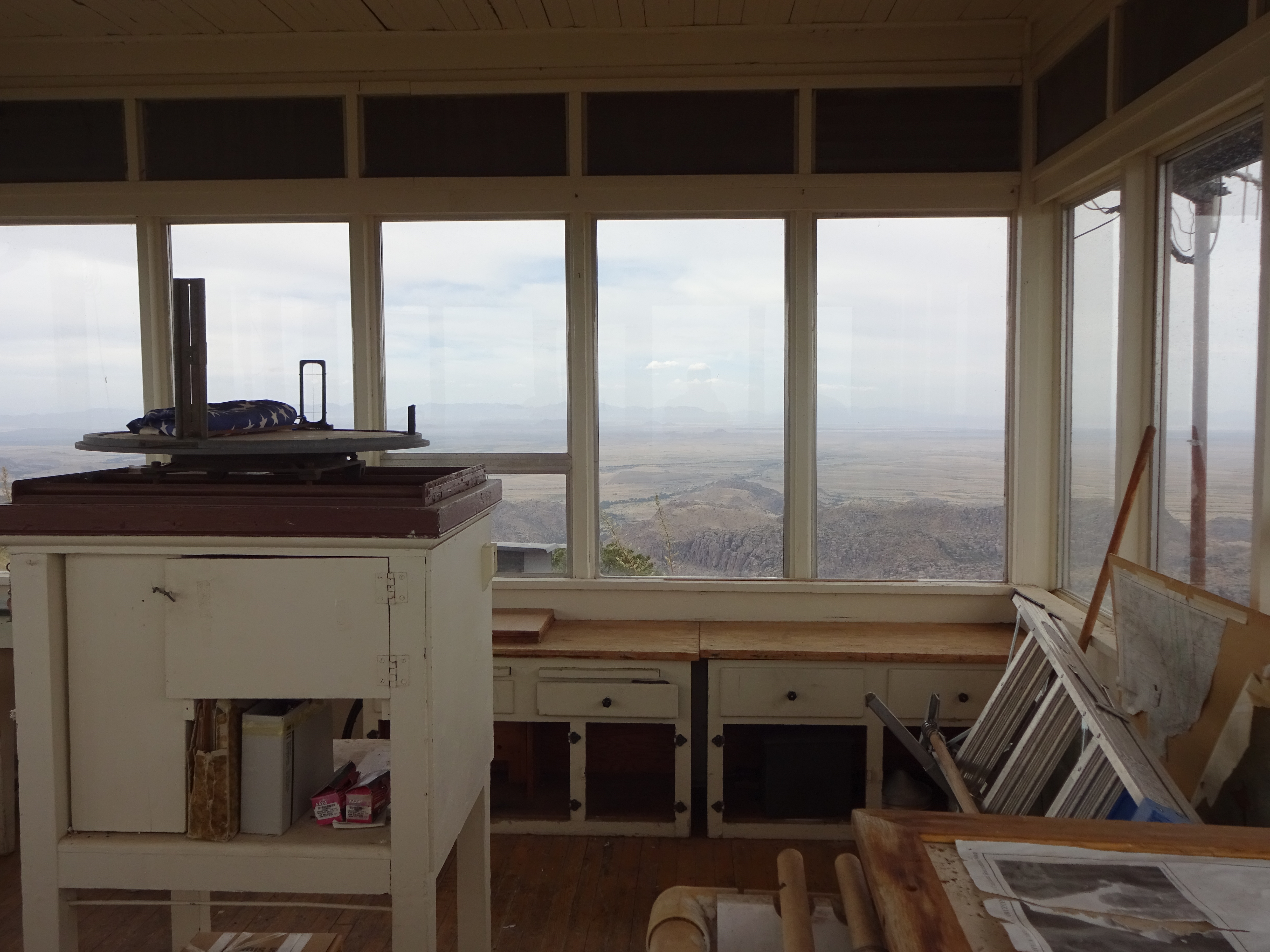
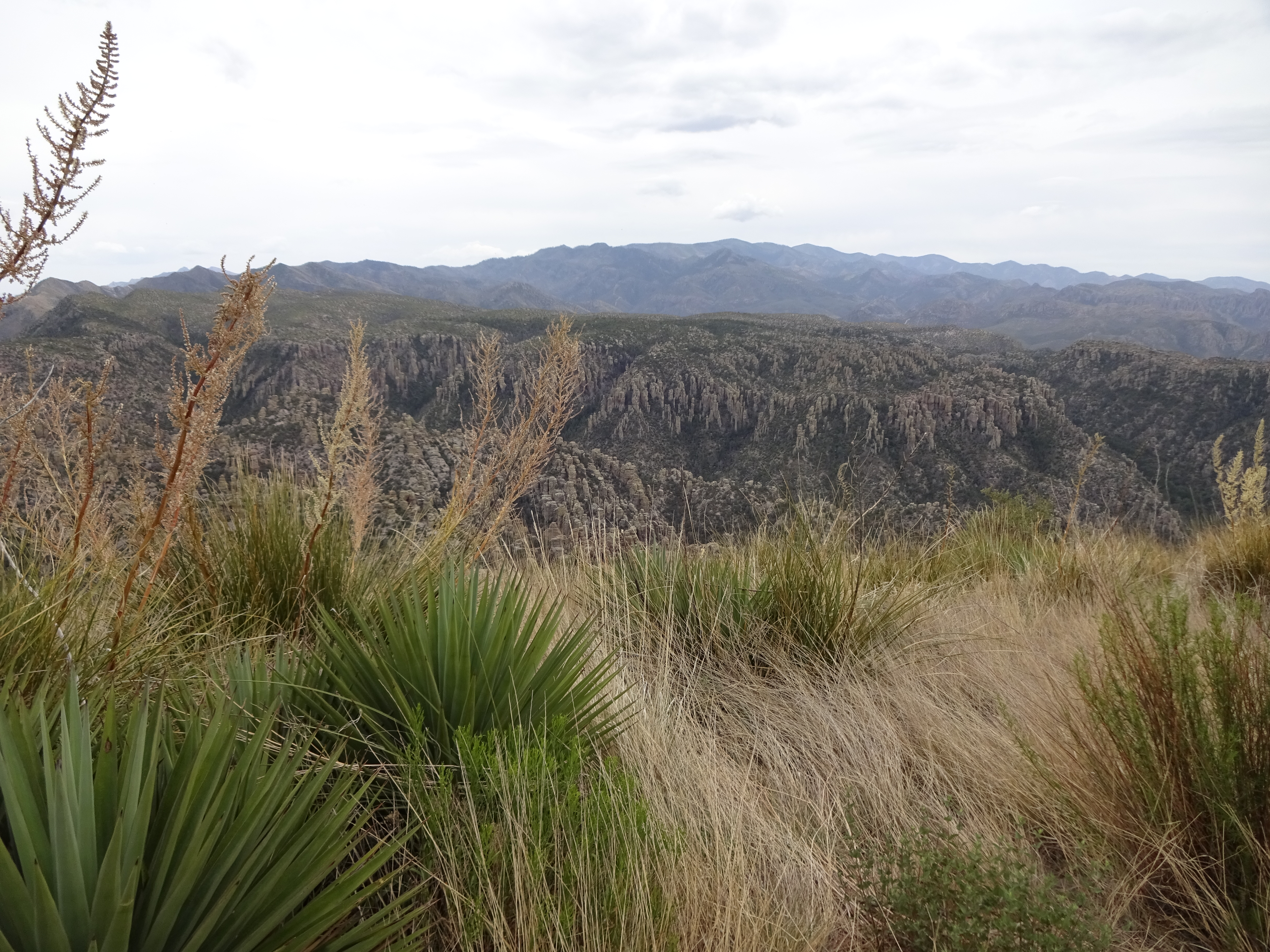
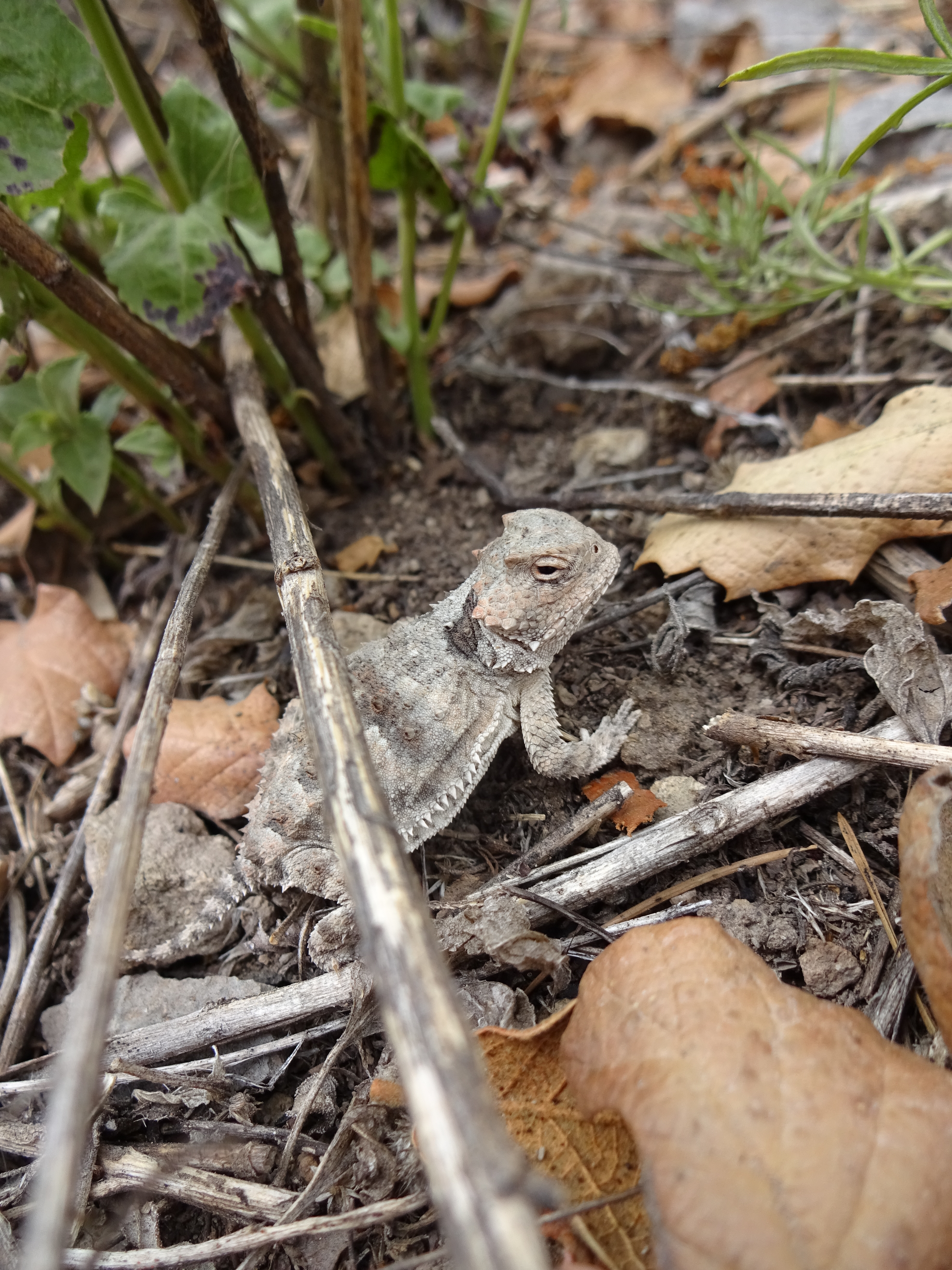 Despite all our snake encounters on the way up, there wasn’t a single encounter on the way down, but I did see a short-horned lizard. As we descended, my hiking pal and I continued talking all about our National Park adventures. I might have shared with him a story or two of some of my wild happenings.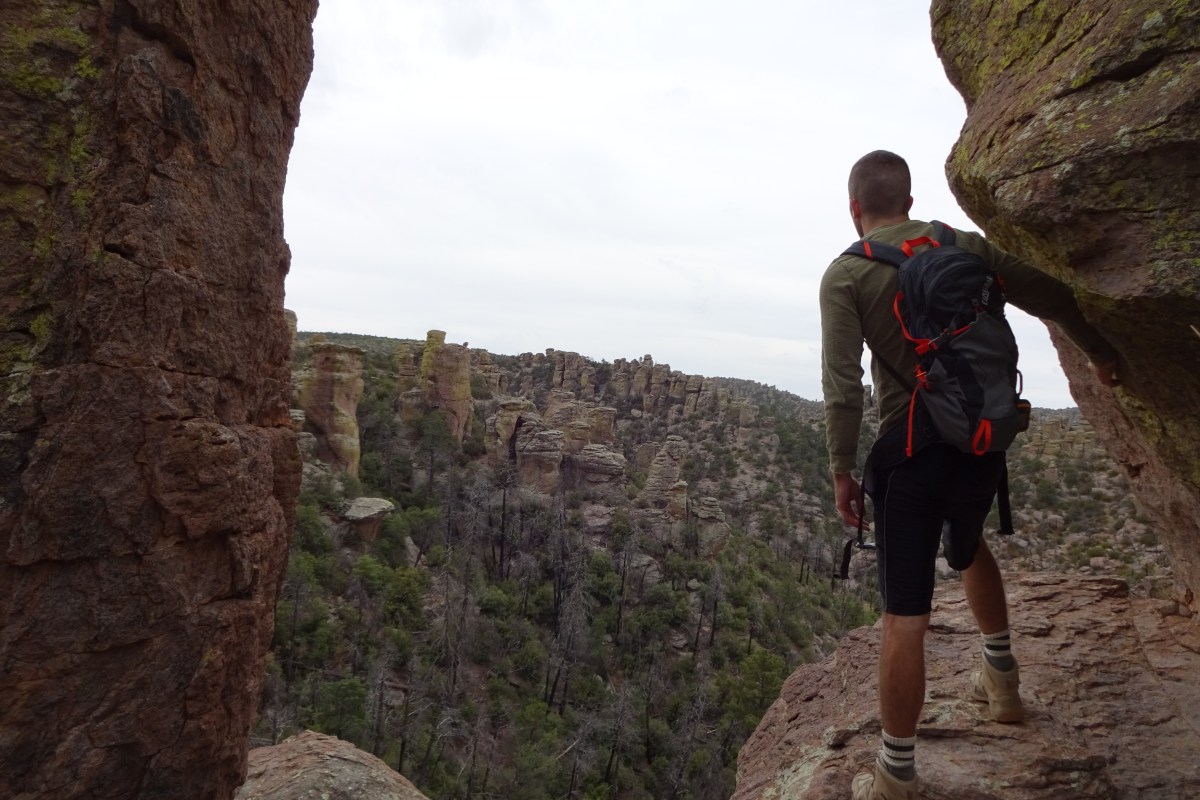
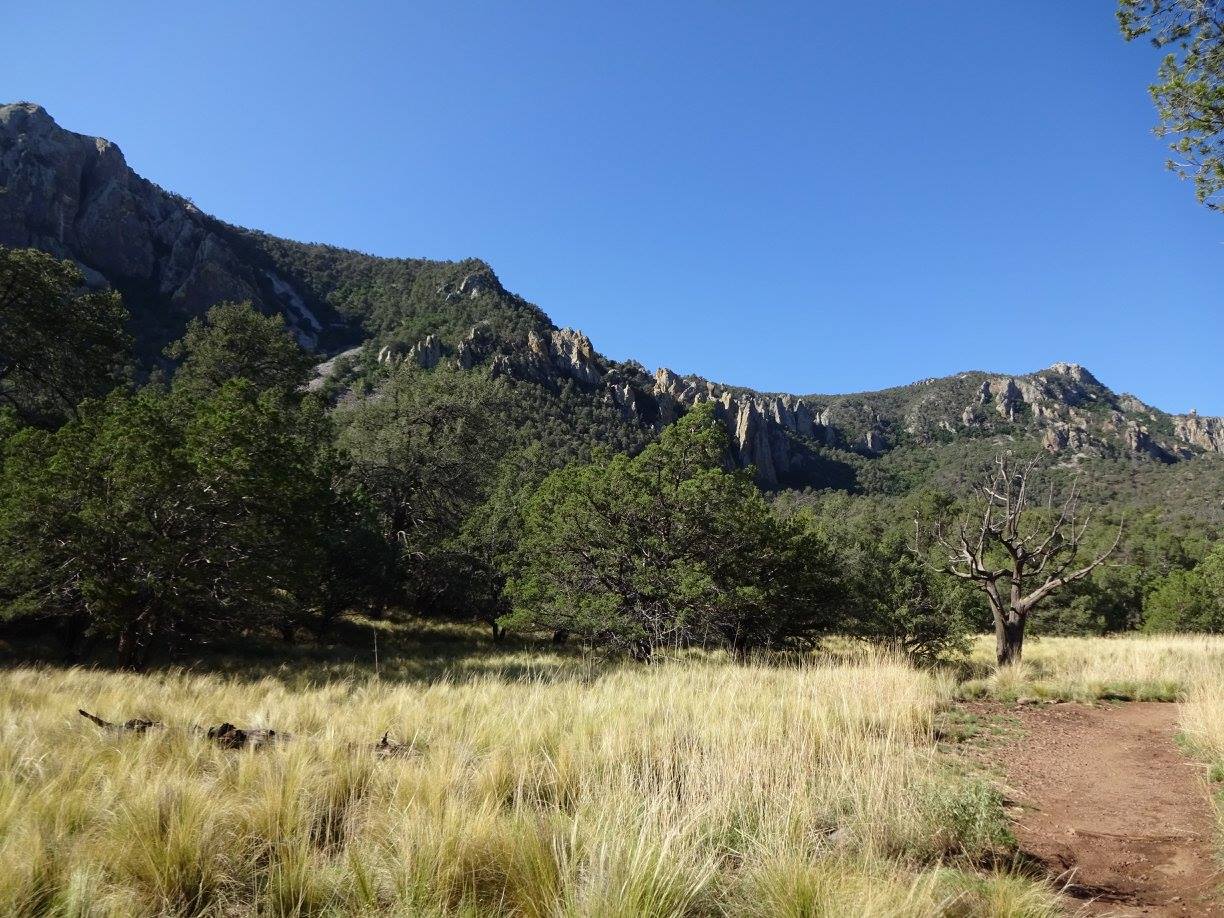
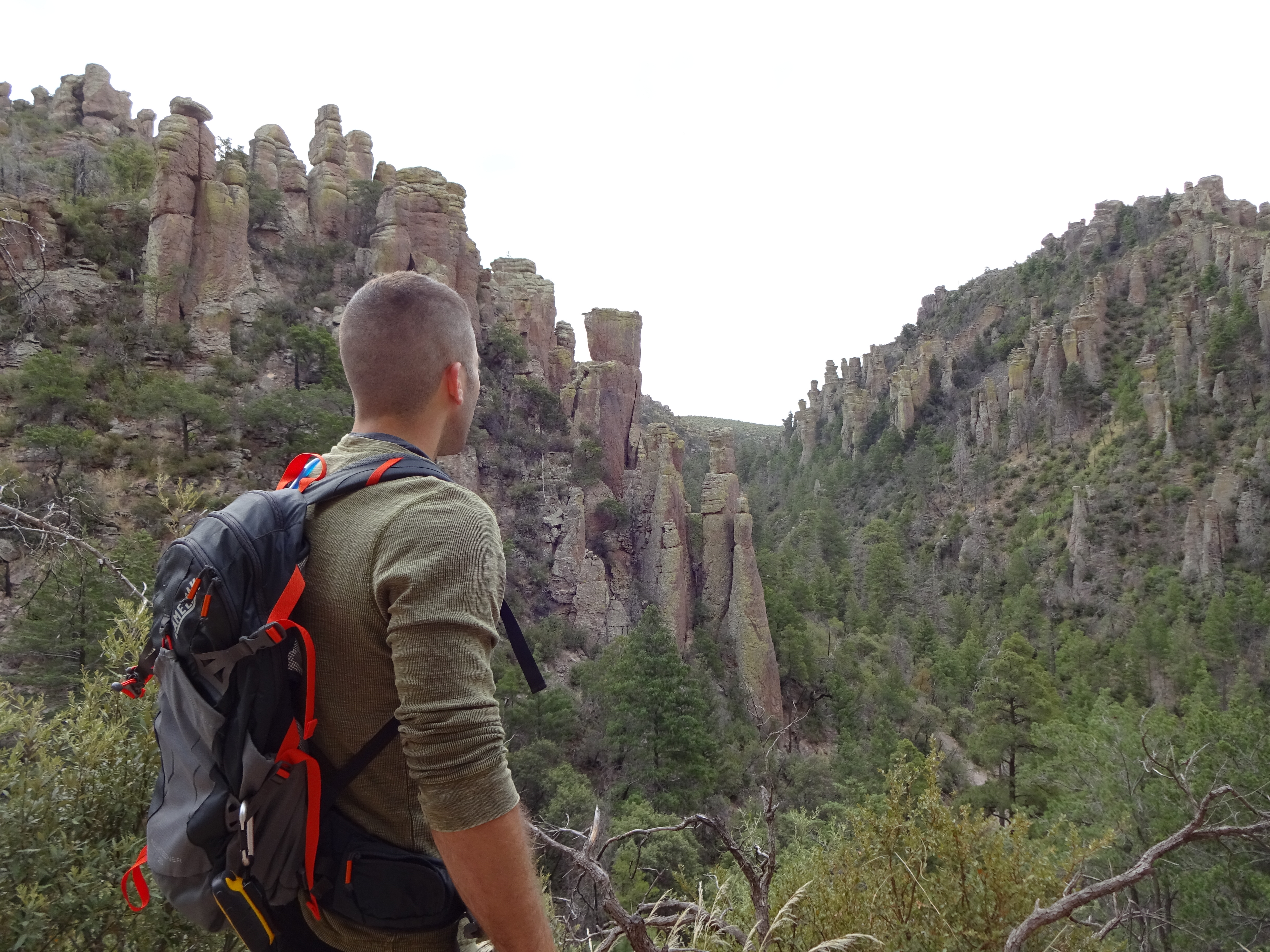 As intended I hiked Ed Riggs Trail to Mushroom Rock Trail to Inspiration Point Trail to Inspiration Point itself. The first trail began by descending into a valley of trees and shrubbery. All around me stood tall dark hoodoos, clustered together at various heights. They looked alive, almost as if they were in the process of growing. In some aspects the view was reminiscent of Bryce Canyon, but here the hoodoos took on a more stalky, weightier form, and their color was a sandy grey. Here these geological features were the result of an ancient volcanic eruption. Also, though arid, lichen adorned the rocks, and greenery was draped over the landscape. At one point I came to a window in the rocks, and could look out into the valley.
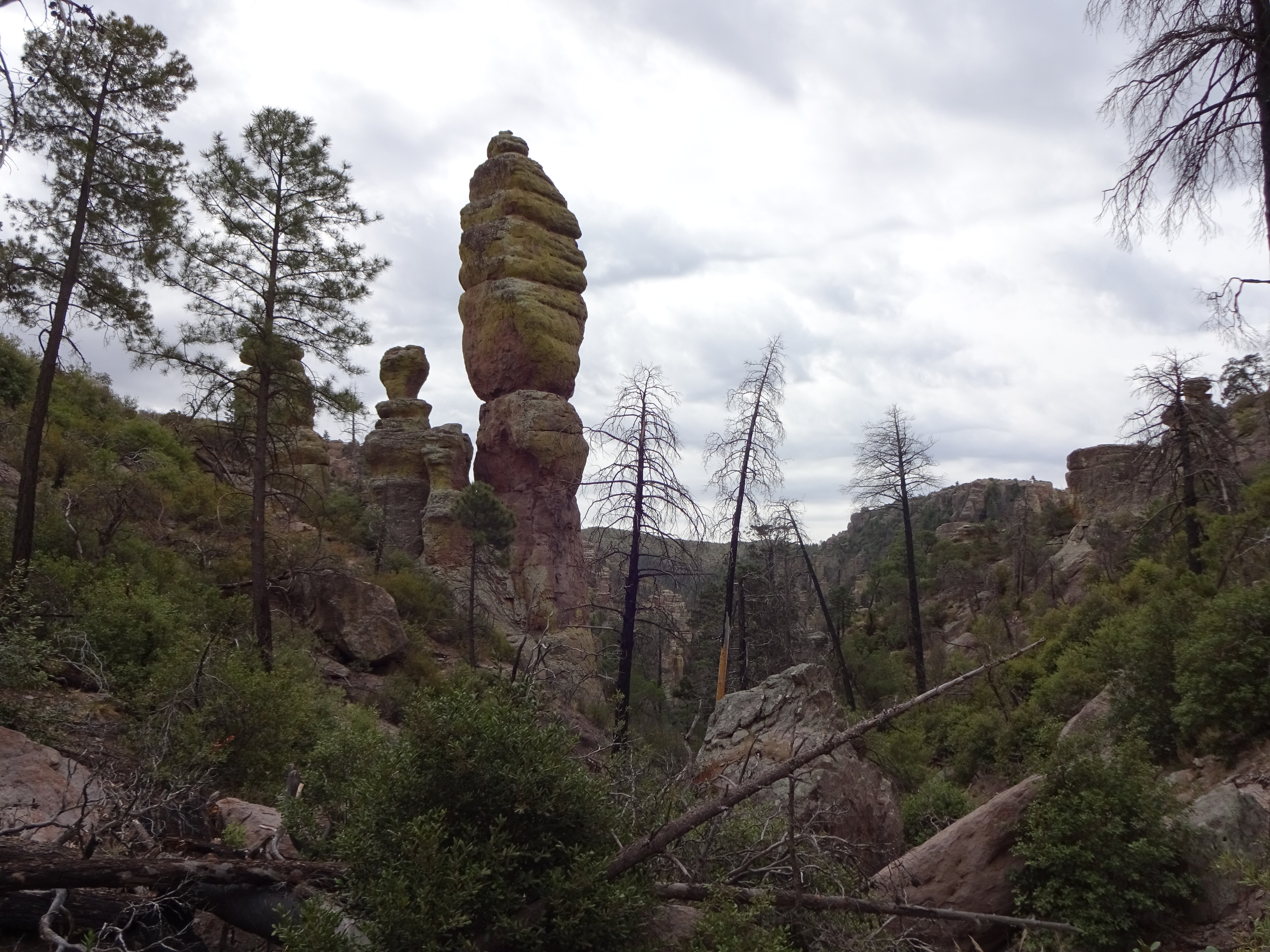 I had never beheld a landscape like this before. To me, it looked like what I might imagine one of China’s stone forests to look like. I’ve never been to China, so this is purely out of speculation and comparison to photographs. Nowhere in the United States have I been in any environment quite like this. There was such a combination of environments that it became confusing to identify and best to consider Chiricahua its own entity.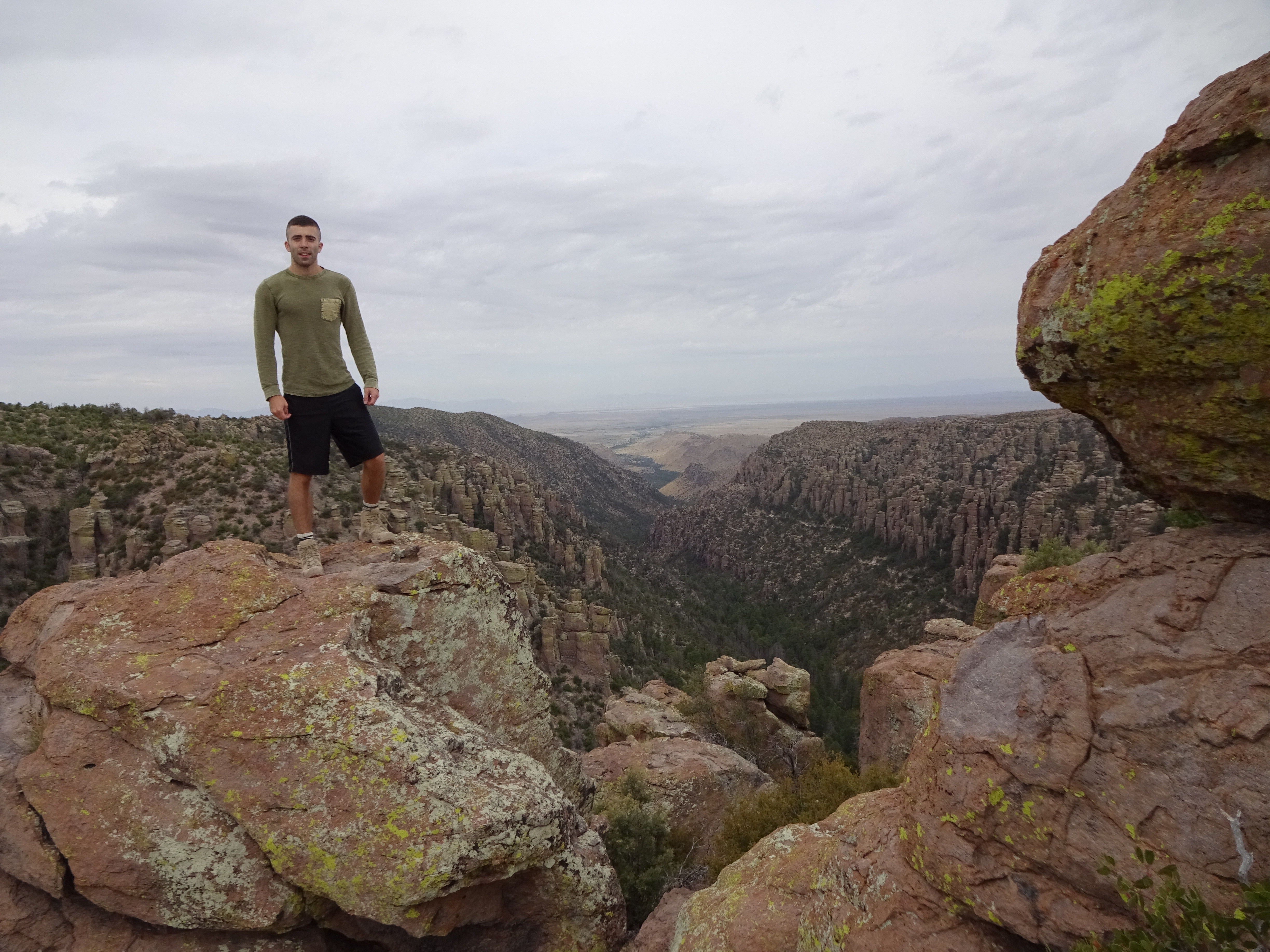
 Josh Hodge blog