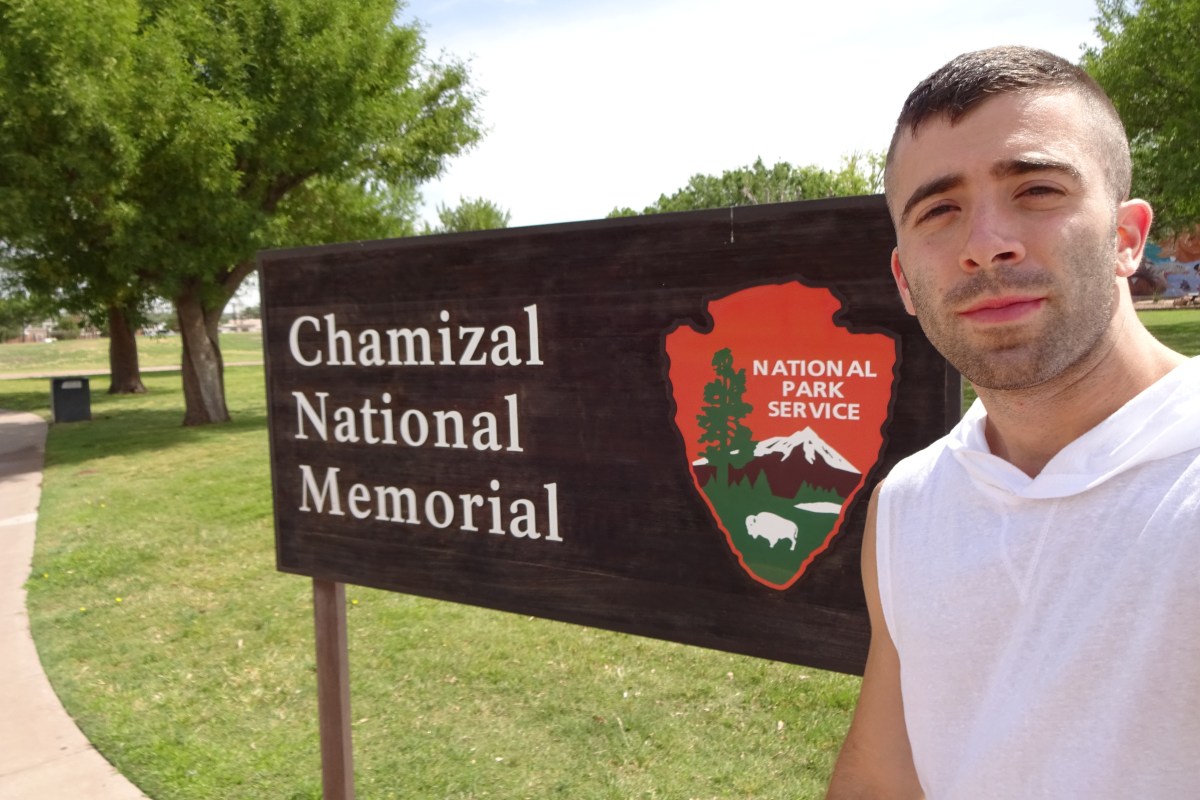
I was hesitant to go in the first place. Chamizal National Memorial could be one more National Park site to check off my list, and it pretty much was in route, but it would require a slight detour right into the heart of El Paso, Texas.
On a definitive burst of whimsy, I decided I’d do it. I would go to Chamizal. First I decided to stock up on a few food supplies at an El Paso Walmart. In the parking lot, just as I was about to turn the car on, a man came tapping on my window. He motioned me to roll down my window. Nuh uh, not doing it, I spoke in my mind. It sounds like a great way to be mugged. I didn’t move and kept my composure. He held a receipt up to the window. “Return for me, this. I have receipt.” His English was broken. He proceeded to showcase a pair of shoes. Does this even require an explanation? There was no need for me to return an item for him. Something smelled fishy in the hot Texas air.
Being back in Southern Texas brought back poignant sensations. I was accustomed to this type of environment and behavior. I had lived in Houston, Texas for a year. It was my first year out of college. When I stop to remember this time, it seems like some vague dream, and I often do have dreams about Houston drawn from the catacombs of my memory. But I had lost acquaintance with the true Southern Texas vibes until I arrived here in El Paso. It was here in was assured will all certainty that my experiences in Houston were but a breath away. Cities of Southern Texas have their own unique identity, feeling like their own entity- a foreign place to the rest of the United States.
I was fortunate to live in a nice part of Houston, although in a humble apartment tucked in between towers of luxury. But I worked south of the city in the rundown poverty stricken area in which I served in a charter high school funded in part by the Federal government as a school of choice but also a school to send juveniles who were kicked out of public school and were on probation. A number of students were in gangs, working for the Mexican drug cartels, and on judicial trial.
Among this population I learned where some immigrants bought pirated social security cards, how they worked around the legal immigration system, and how they took advantage of the welfare system. It was a very rough environment. It was gritty, but I loved it. Things went downhill, however, when both our principals resigned and things became dangerous. I decided to pack my bags, leave, and head back to the Bluegrass. But now 5 years later, I was getting reacquainted with Texas.
It was midday and the southern Texas sun was bright and hot. My memory has everything painted over in a pale brown, with a bit of desert dust and barb wire. Businesses I’d seen had steal bars over the windows. Signs advertised Mexican auto insurance and money transfers. I had found myself on Highway 85, the CanAm Highway.
When the road was clear and afforded me the opportunity, I looked out the window to my right at the houses so tightly packed, square and simple, made of cinderblocks flowing up and down the hills. It reminded me a lot of the poorer parts of Mexico, like on the outskirts of Mexico City in the Estado de Mexico. Then I took a double take. No Way! This was Mexico right to my left. Nearly an arms reach away was the border fence. I had mistook it for a common highway barrier, but this was it. There was a ravine in between the fence and these houses. It was the Rio Grande River! I knew I was getting close to Mexico. I could sense it. I didn’t know I was this close.
These houses literally had their front windows pointing into the United States. They could look upon the modern developing city of El Paso, upon its malls, museums, and universities, but for many this place would be unreachable. Some would have to look at it, but could never go. It would be out their window, perhaps for their whole life, so close but never attainable. Looking at it day after day, stuck in a neighborhood of narrow dirty streets and cinder block houses, is just profound to think about. I can’t even begin to imagine the desire and curiosity that builds up in these people to want to see what is on the other side so close, yet in so many cases, forbidden.
Within moments I was pulling off the highway into Chamizal National Memorial. I knew little about this place, but I was here to learn, perhaps this could further my perspective which was already beginning to grow. I have for a long time, taken a great interest in Mexico. Although my allegiance is pledged to the United States, I also have a deep admiration for Mexico. I completed some of my undergraduate education in Mexico City as an international student. I spent some of my most formative years there and really felt like I came of age while living in Mexico. It is there where I developed my own personal independence and sense of self. I have visited Mexico many summers, applied for many jobs there and even for a visa to work and live more permanently in Mexico. I’ve explored much of central Mexico, made many friend there, and identified with the culture and people as I lived there. I knew this memorial would speak to the relationship between Mexico and the U.S., and now I had arrived.
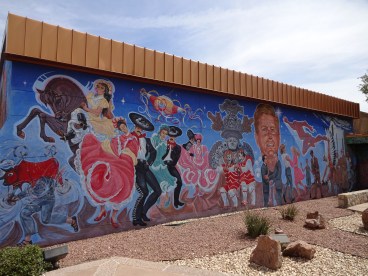 I was greeted with a colorful mural depicting important moments in Mexican-American history and aspects of Mexican culture. Upon opening the door I was welcomed in Spanish by a National Park Service employee. It was an elderly Latina lady with grey hair, a friendly smile, and an aura of a traditional abuelita. She didn’t reveal that she spoke English, so we just continued in Spanish. I explained this was my first time visiting the memorial. She got up from here chair, enthused yet composed, and explained that there was a museum and film. She guided me over to a rack of brochures where she proceeded to fill my hands with brochures of other National Park units in Texas and neighboring New Mexico. She was funny. I liked her. She authoritatively but sweetly was telling me what I needed to see and what I needed to do. She was a culmination of Mexican hospitality and West Texas friendliness. I thanked her and proceeded to take in the museum. I was fascinated.
I learned through the museum, that this place commemorates the peaceful agreement between Mexico and the U.S. over a land dispute. Two Mexican presidents and two U.S. presidents, JFK and Lyndon B. Johnson, created a peaceful agreement.The issue had been that the Rio Grande river marked the boundary between the two countries, but there was an island on the river after the course of the river changed routes. It was long disputed whom it belonged to. Conclusively the route of the river was solidified in a canal and Mexico gave up its claim of Chamizal. People had to give up their land and that was sad, but overall the museum had a very positive spin on the whole Chamizal agreement
“The Chamizal is a very small tract of land. But the principle is a very great one. Let a troubled world take note that here, on this border, between the United States and Mexico, two free nations, unafraid, have resolved their differences with honor, with dignity, and with justice to the people of both nations.” – President Lyndon B. Johnson, September 25, 1964
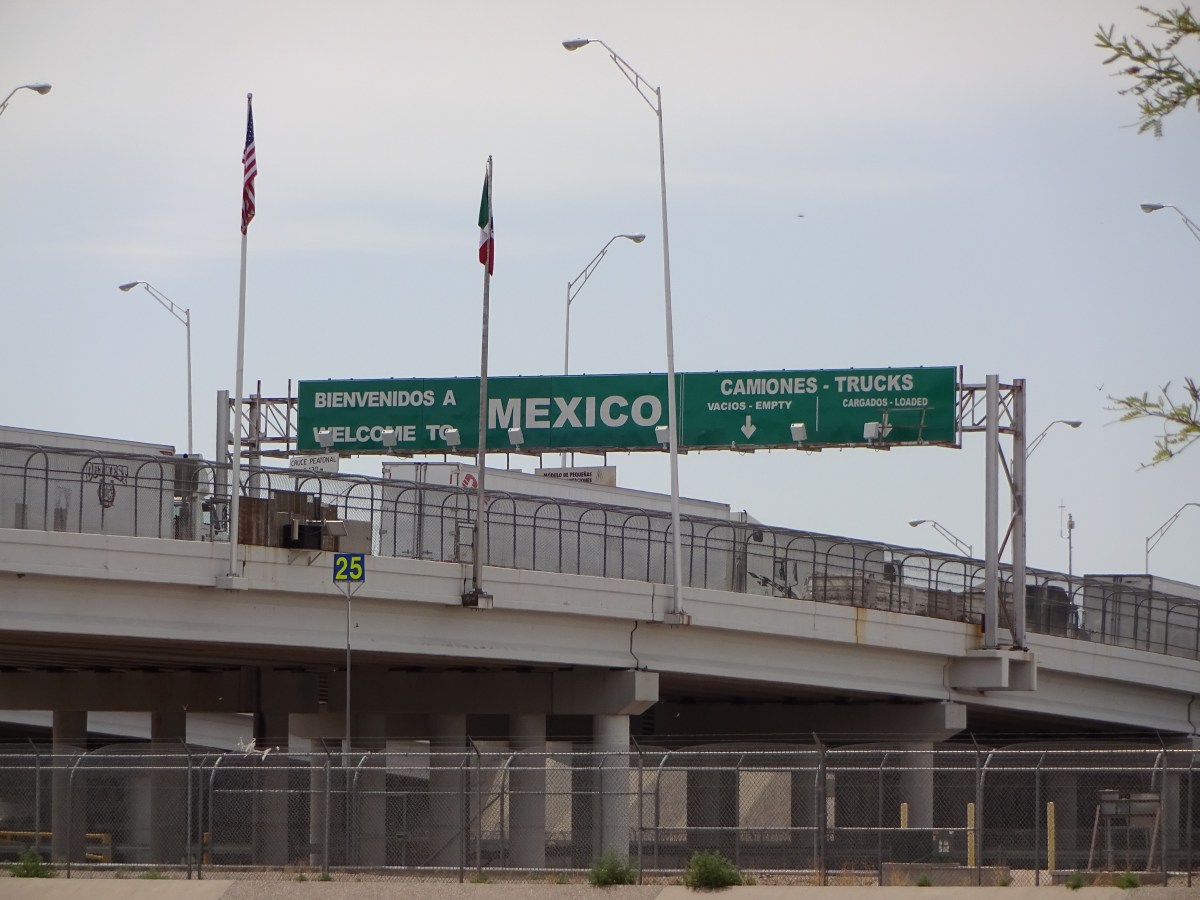
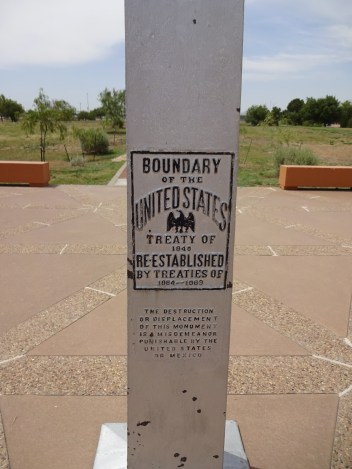 I left the museum to check out the small city park out back. There was a group of students perhaps on a field trip. I sought the post marking the prior land border between the two nations. I took a picture of it and then fixed my eyes on my surroundings. There was a bridge encased in fencing. A sign stuck up in the center of it declaring “Bienvenidos a Mexico.” I watched the vehicles flow and back up at the border. Then i noticed the business men walking across the border with their briefcases, returning home from a day in the office in another nation. Then I noticed others so informally coming across the bridge. Was is this easy? My curiosity was sparked. This was supposed to be an all-American National Park road trip, but maybe a side trip to Mexico could add a little spice to the slice. I had to go back in the museum and inquire. I found my little abuelita.
“I noticed people walking across the border, is it really that easy?” I asked
“Oh yes, you just need a passport.”
“What is on the other side?”
“Mexico,” she replied Of course I knew this. I hope abuelita wasn’t trying to be sarcastic with me.
“I know that, but is there a park or something on the other side.”
“Oh, si, hay un parque Chamizal de Mexico y tambien el museo Chamizal Mexicano.”
A Mexican Chamizal museum? I was intrigued. I wondered how Mexico’s museum would portray the whole Chamizal land dispute and agreement. Would they paint it in the same positive light as the U.S., or would it have a more bitter aftertaste after the land loss. I wanted to know and I also wanted a good excuse to cross the bridge to Ciudad Juarez, the city often deemed as one of Mexico’s roughest and most dangerous.
“Is it safe for someone like me?” i didn’t specify exactly what I was referring to, but I thought it obvious: tall, white and gringo… especially in this moment. I was dressed and prepared for my all-American road trip, not a stroll through the streets of Ciudad Juarez. I know how to blend into my environment, but this was going to be tricky given my circumstances.
“In this time of day, you’ll be fine,” Abuelita informed. “You should go, and then come back and tell me what you think.”
She was the final push. I was gonna do it.
I went back to my car, located my passport, and utilized some methods I learned when i used to explore the streets of Mexico City. I hid some cash in my shoes along with a photocopy of my passport. I emptied my wallet to the bare essentials. I strapped my camera string to by belt loop and let it hang on the inside of my pants. I changed from a sleeveless shirt and shorts to a t-shirt and jeans. I took all my typical safety measures. I was excited. Moments ago I had been beginning to question if I had lost my sense of adventure. Certainly not! This was proving it. Curiosity and daring ambition was driving me, and I took off on my journey to Mexico on foot.
This visit to Mexico would be unlike any other I’ve ever had before. It would be eye-opening and informative. In Mexico City they always say never go to the border because it’s really dangerous there. Why did they always say this? Was there validity to it? I would certainly find out.
Check back next Wednesday for the next “episode” in the adventure.
Click here for the previous entry “A Nightmare at White Sands”: https://joshthehodge.wordpress.com/2019/03/13/a-nightmare-at-white-sands/
Check out my book “Among Blue Smoke and Bluegrass” on Amazon: https://www.amazon.com/Among-Blue-Smoke-Bluegrass-Tennessee/dp/1790631297


 around the peak. There was one part with a narrow tunnel carved or blasted out by the Civilian Conservation Corps and another section where the rock and trail became smooth and bright white, app
 going uphill the entire length of the trail, but it wouldn’t be long. I was pushing myself, taking on my machine mentality in which I concentrate on keeping mechanical movements and consistent speed, imagining I am nothing but a machine operating in a programmable mode. I was finally picking up speed and getting past my mechanical groove into a free-spirited free run until…..
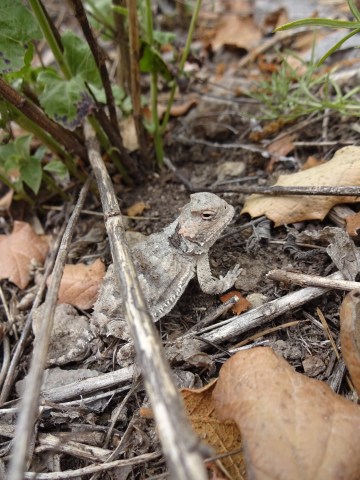 Despite all our snake encounters on the way up, there wasn’t a single encounter on the way down, but I did see a short-horned lizard. As we descended, my hiking pal and I continued talking all about our National Park adventures. I might have shared with him a story or two of some of my wild happenings.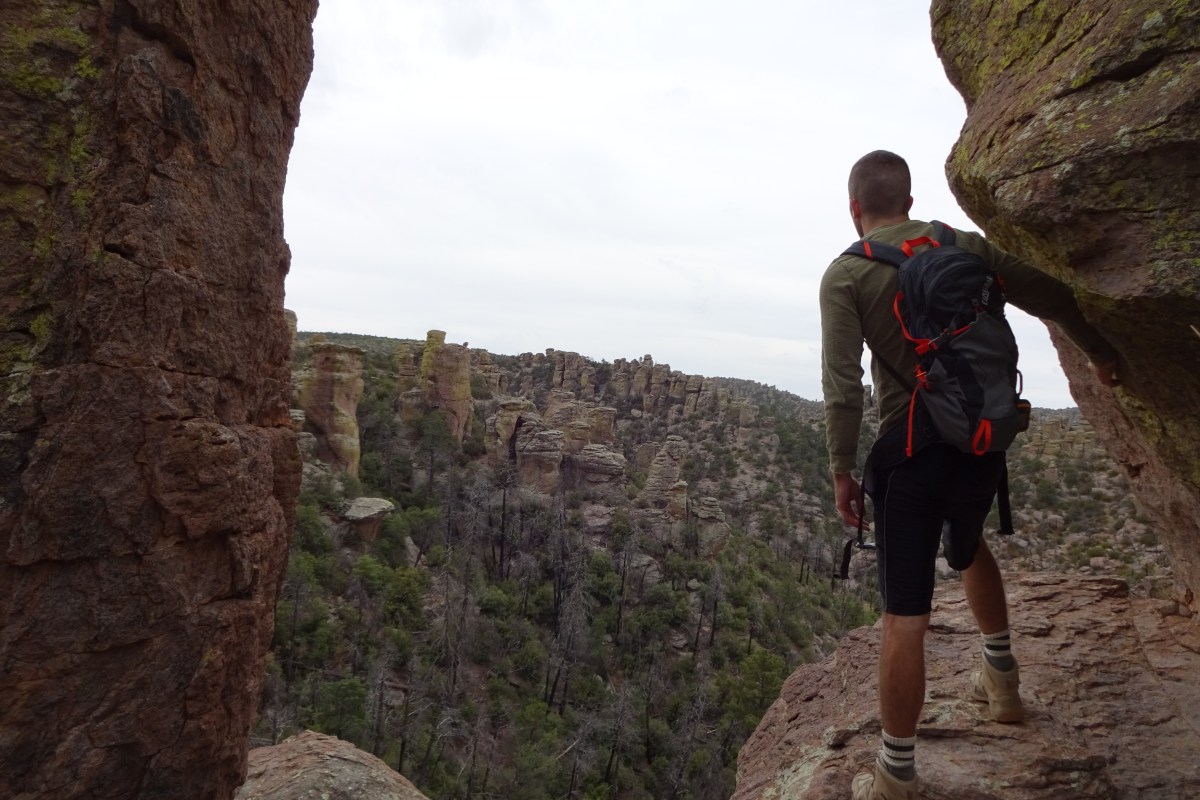
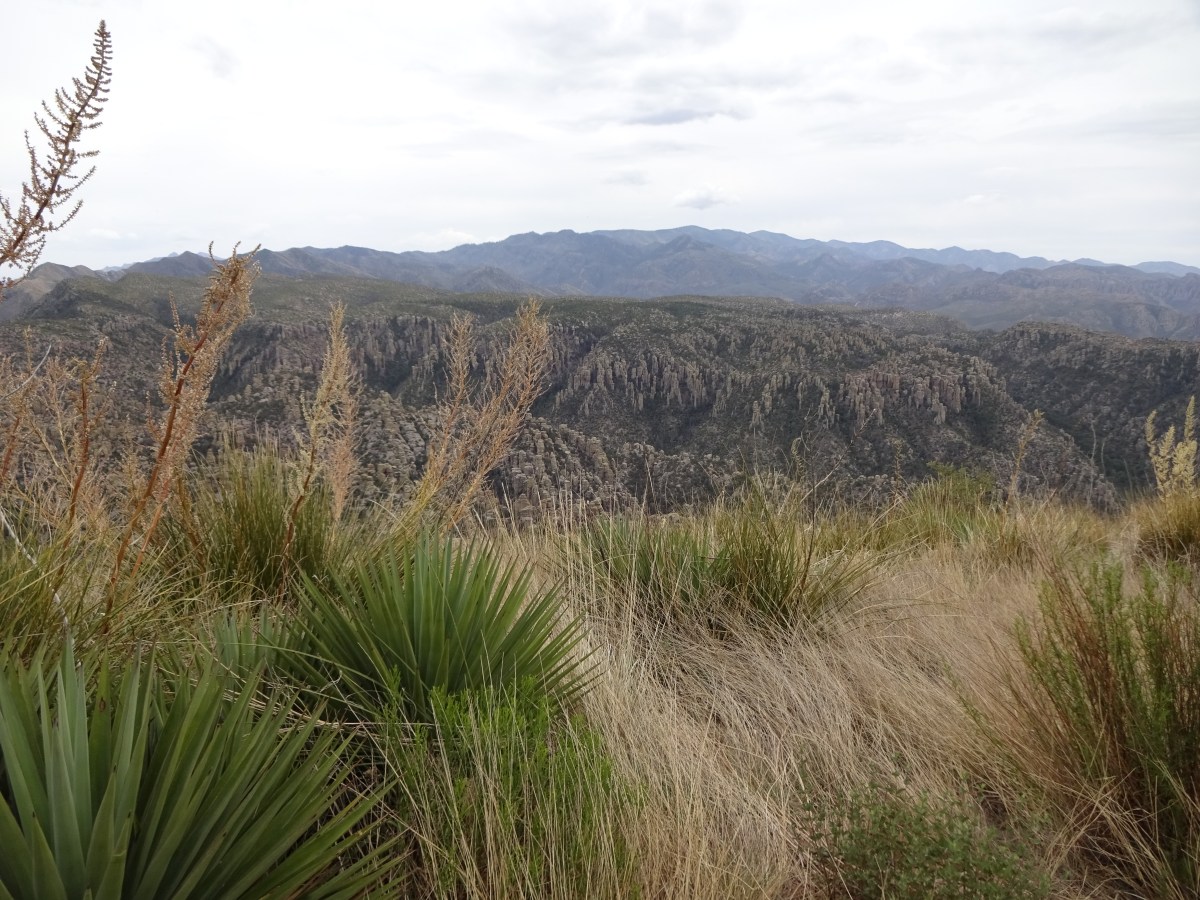
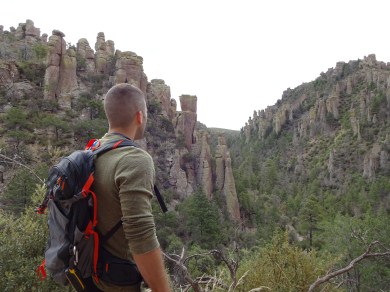 As intended I hiked Ed Riggs Trail to Mushroom Rock Trail to Inspiration Point Trail to Inspiration Point itself. The first trail began by descending into a valley of trees and shrubbery. All around me stood tall dark hoodoos, clustered together at various heights. They looked alive, almost as if they were in the process of growing. In some aspects the view was reminiscent of Bryce Canyon, but here the hoodoos took on a more stalky, weightier form, and their color was a sandy grey. Here these geological features were the result of an ancient volcanic eruption. Also, though arid, lichen adorned the rocks, and greenery was draped over the landscape. At one point I came to a window in the rocks, and could look out into the valley.
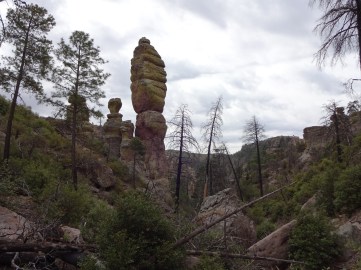 I had never beheld a landscape like this before. To me, it looked like what I might imagine one of China’s stone forests to look like. I’ve never been to China, so this is purely out of speculation and comparison to photographs. Nowhere in the United States have I been in any environment quite like this. There was such a combination of environments that it became confusing to identify and best to consider Chiricahua its own entity.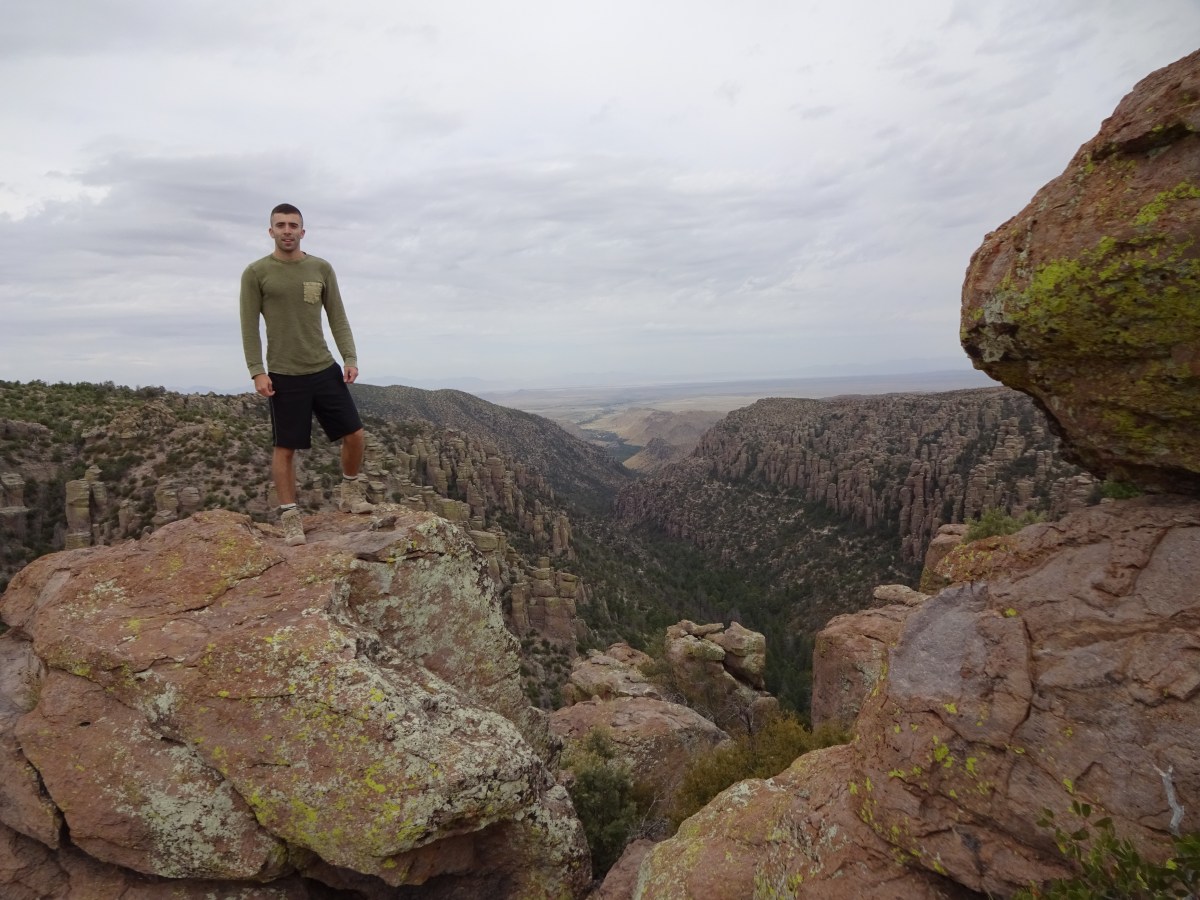
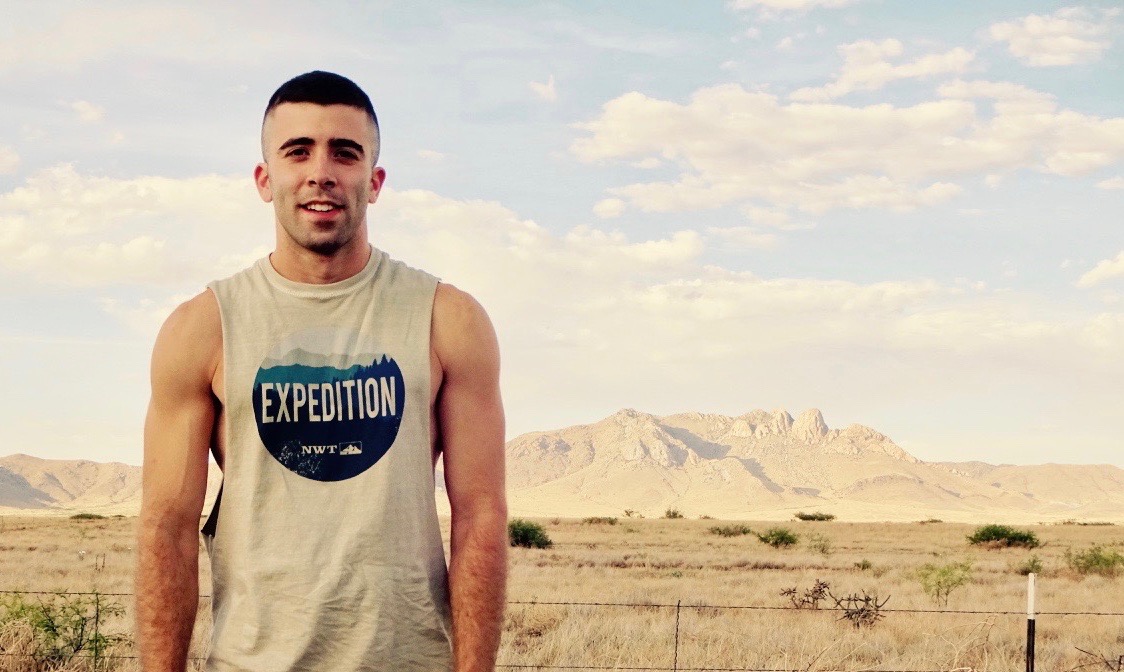
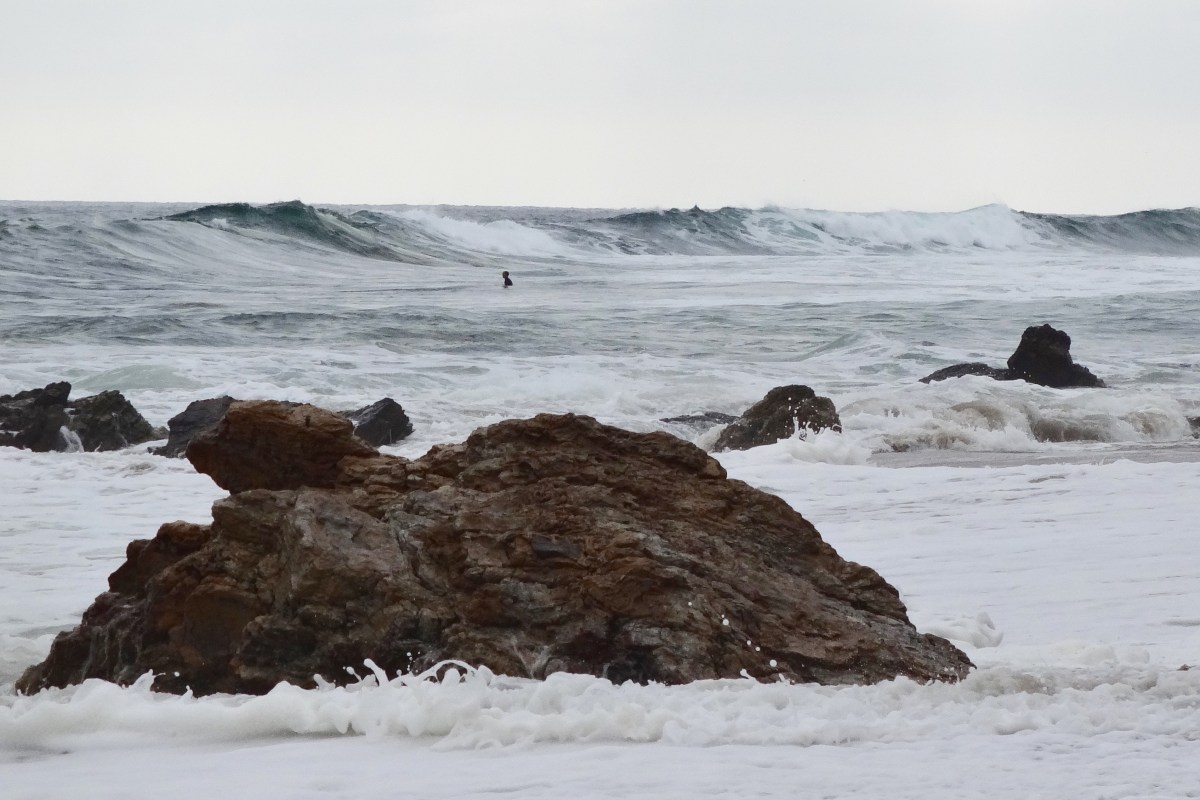
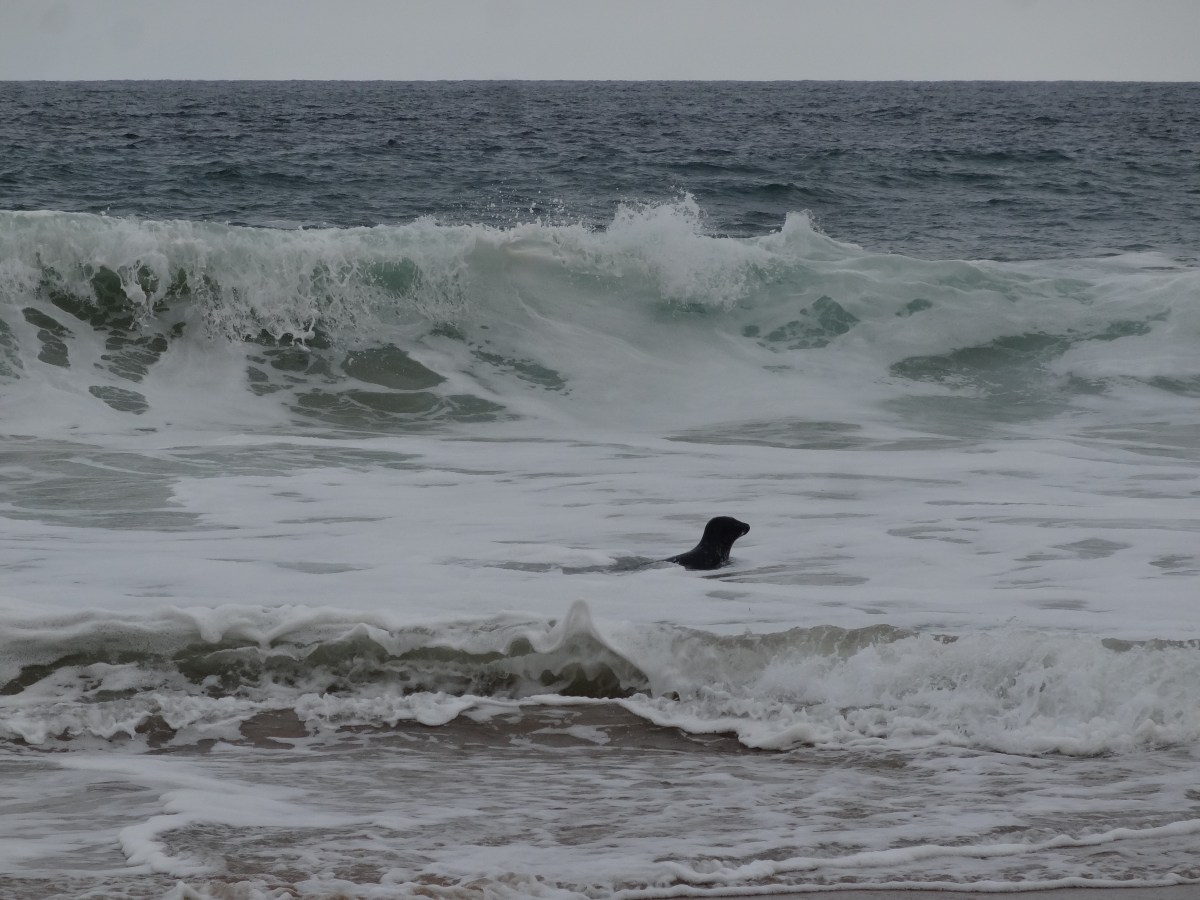

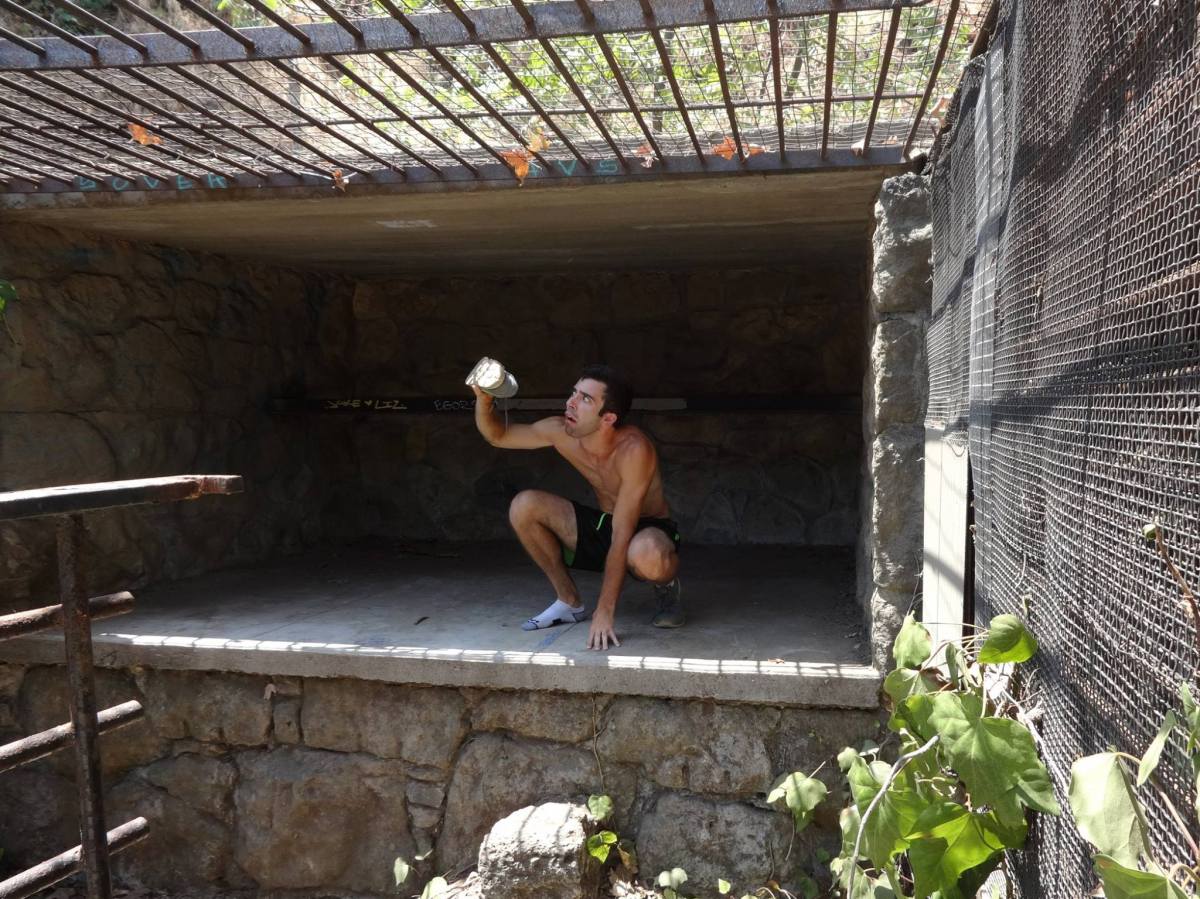 “Visit the old Los Angeles zoo and see the wild Josh in captivity. The Josh is a very adaptable amiable creature who can be found in prairies, temperate forests, alpine tundras, and dry deserts. The Josh is native to North America but it is believed to be an ancestor of those from the Iberia peninsula. The Josh is an omnivore and gatherer whose diet consists of meats, vegetables, nuts and berries, breakfast cereals, and tacos. When threatened the Josh is known to retreat and is rarely found to be aggressive.“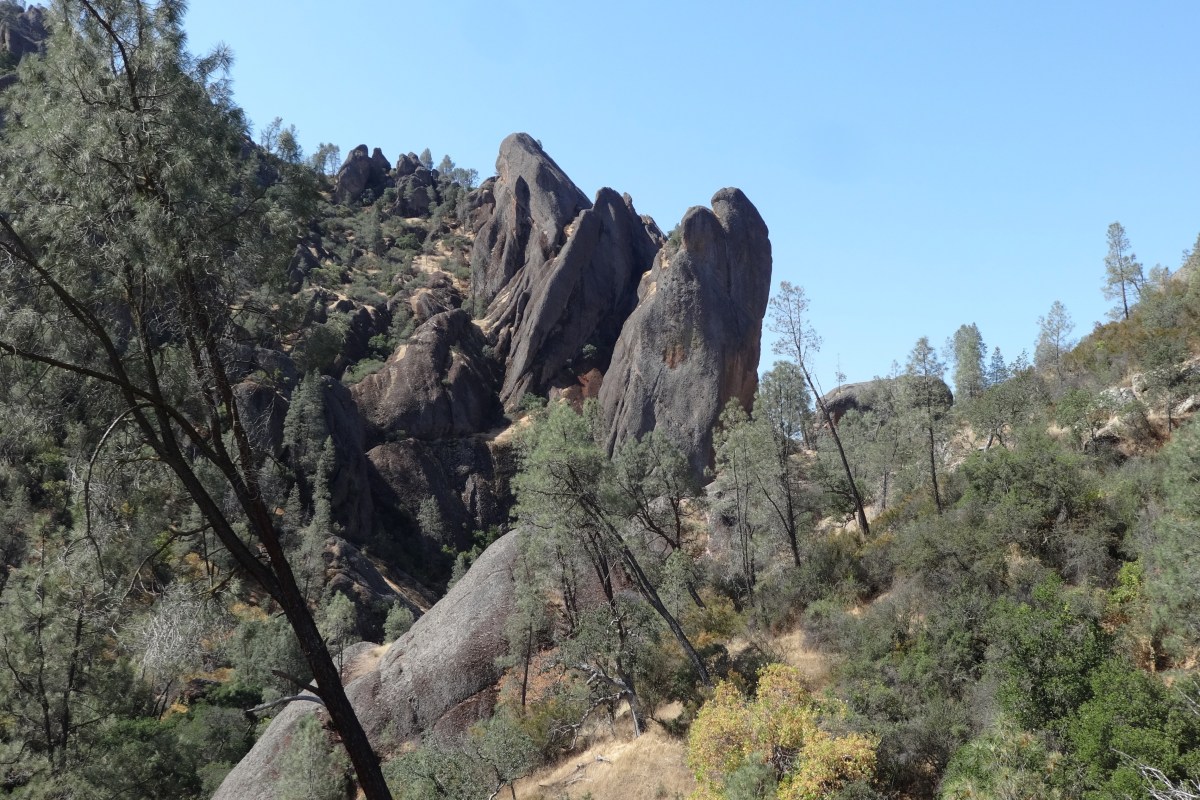

 Another couple were walking near to me. We exchanged small talk about the intense wind and thick fog which came over the place. Just moments earlier, little further inland, the sky was blue and warm. But here it was cold, windy, and all mysterious-like. We could hear the ocean and smell the salt air, but the fog and mist was so thick that we couldn’t see water at all. All we could see along this road were the trees that grew on the sides, which had been so consistently blown by the wind that all of their branches had grown in one direction.
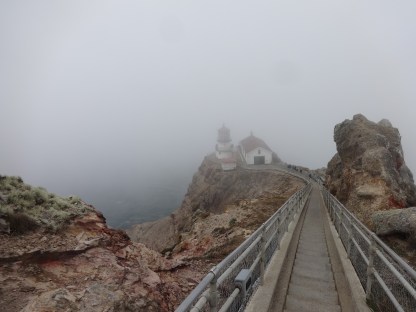 This place was fascinating, but was by no means relaxing. It seemed at any moment this lighthouse could fall off the cliffs edge into the sea hidden somewhere below the thick fog. I knew this was not going to happen, but it was astounding to imagine the lighthouse keeper having to live out here back in the day, so isolated from everyone else, hidden in the fog for much of the year with the tumultuous weather all around. My attempt at imagining such a life inspired me to conjure up pieces of a story I considered writing, but I would eventually abandon that story, and those ideas would become but a ghost town.
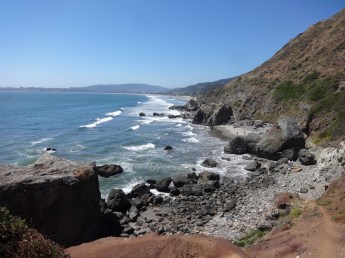 At one point in the day, I came to a great overlook of the ocean. I looked down across the shoreline and could see the many cliffs and the very edge of California spilling into the Pacific. I noticed a path along the wispy wild grass. It descended down a hill among the cliffs to the water below. It was beautiful. I could see miles of beach and waves reaching for shore all over. The sun was warm, and the California coast was just plain golden. I got down to the water and was climbing over rocks to get to a cove where I saw a beach. When I approached the cove, I noticed something peculiar. Everyone was naked. There were maybe ten elderly, weathered, leathery, naked old men. Welcome to California! I turned around. I didn’t want to see anymore. I passed some young clothed teenage boys descending while I was ascending. Should I warn them? Nah, it’ll be a surprise.
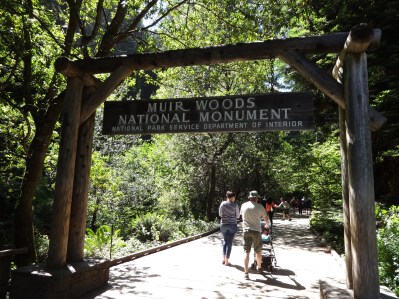 I took this visit to Muir Woods as a preview to what I would eventually find in the future in the Redwood Forest National Park. Based on just the preview from the Muir Woods, I knew the Redwood Forest must be amazing and inspiring.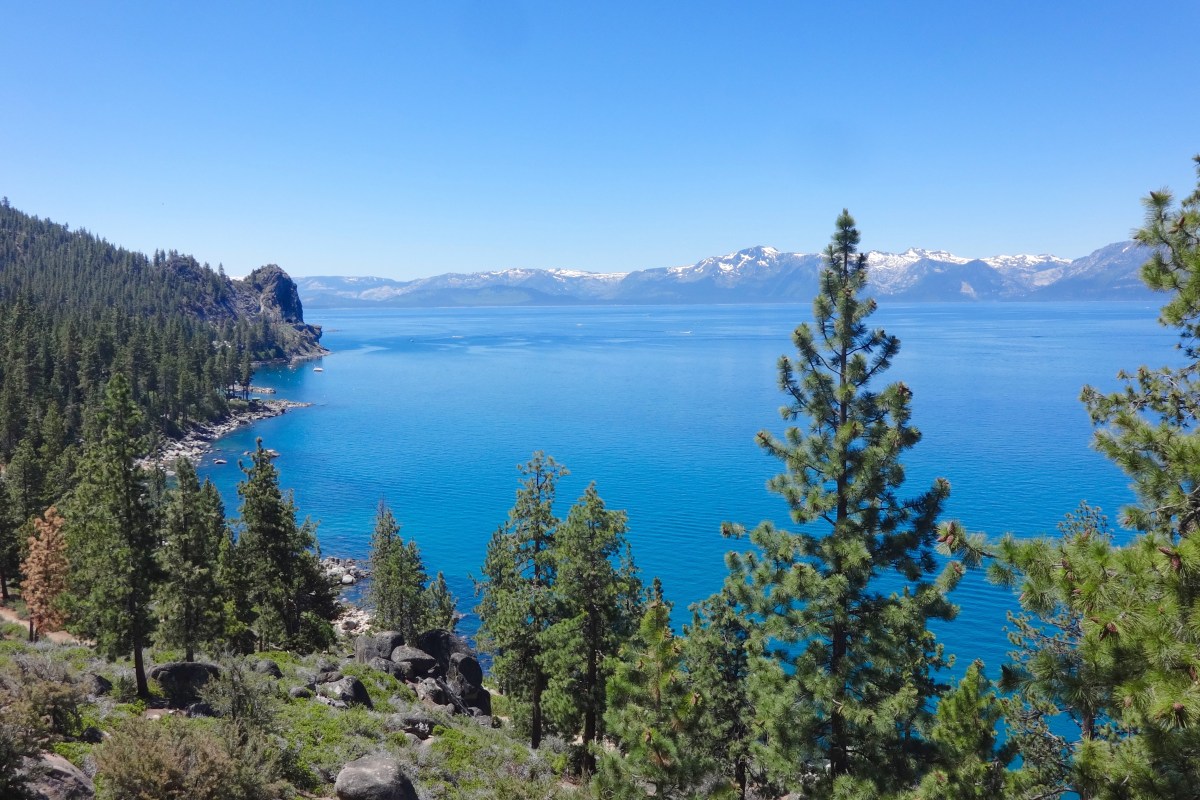
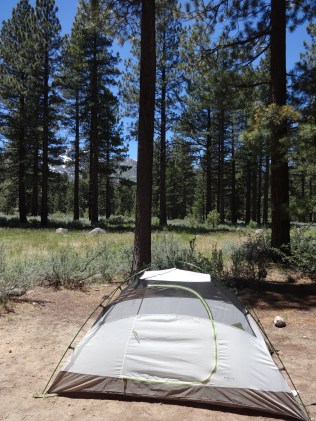 I knew I wouldn’t be in contact with rodents. It’s not in my liking to approach them, unless we are talking about an adorable golden-mantled ground squirrel posing for a picture in Bryce Canyon. Apart from that I didn’t foresee rodents being a concern. But fleas, on the other hand, well, I didn’t know a lot about flees except that they were insects and insects get around. So I stepped out of my car and drenched myself in deet, and then I soon forgot that the Plague was even an issue. I set up my tent in the company of tall pines. In the distance between the pines I could see the snow capped mountains of the Sierra Nevada. When camp was set up, I walked across the smooth paved campground road to a general store on the grounds. I wanted to inquire about the coin showers. I exchanged my dollars for coins, enough for me to have two complete shower cycles.
  Another way to enjoy Lake Tahoe is what I was doing that evening from the sand of one of its many beaches, feeling like I’d made to the ocean and had become a beach bum while at the same time looking up at the snow capped mountains feeling like a northern mountaineer.
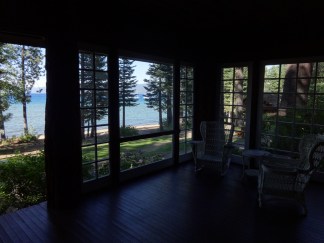 A final way I enjoyed Lake Tahoe was from one of the porches of the Baldwin and Pope Estates. There, just next to the trail I arrived on, and set up behind the beach, were these two estates, preserved as the Tallac Historic Site, managed by the U.S. Forest Service. The estates contained a collection of houses built in the late 1800s and early 1900s that were the private resorts for three social elite families of the San Francisco Bay Area. All of these buildings were composed of wood fashioned in one way or another, blending this rustic north woods style with tudor elements. The estates included the large summer cottages, accompanied with dark wooden shingles, and numerous guest houses and small log cabins for the tutor, groundskeepers, and servants. They were all tied together by well kept pathways and gardens. During the day, the buildings were open for tours, but I was there in the evening. They were all closed, but people were free to explore the grounds.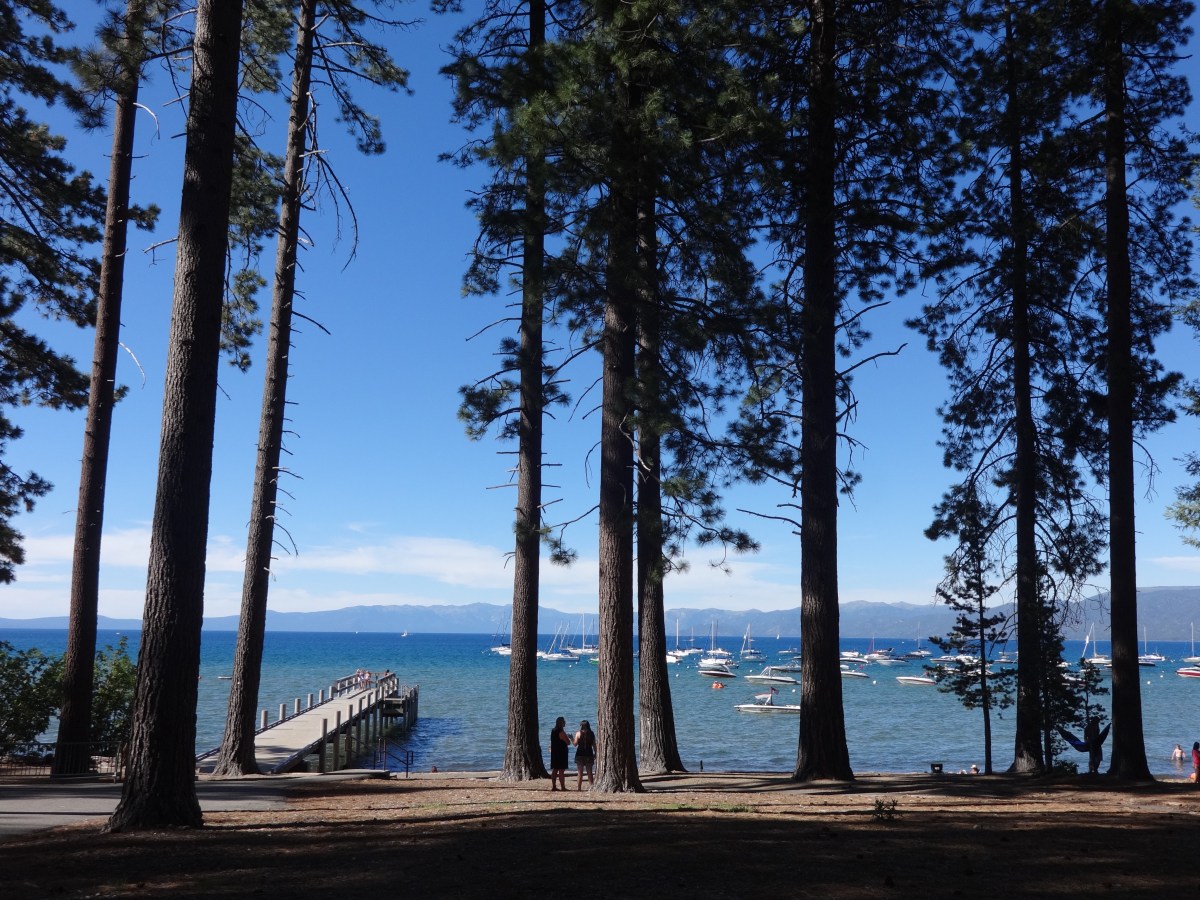
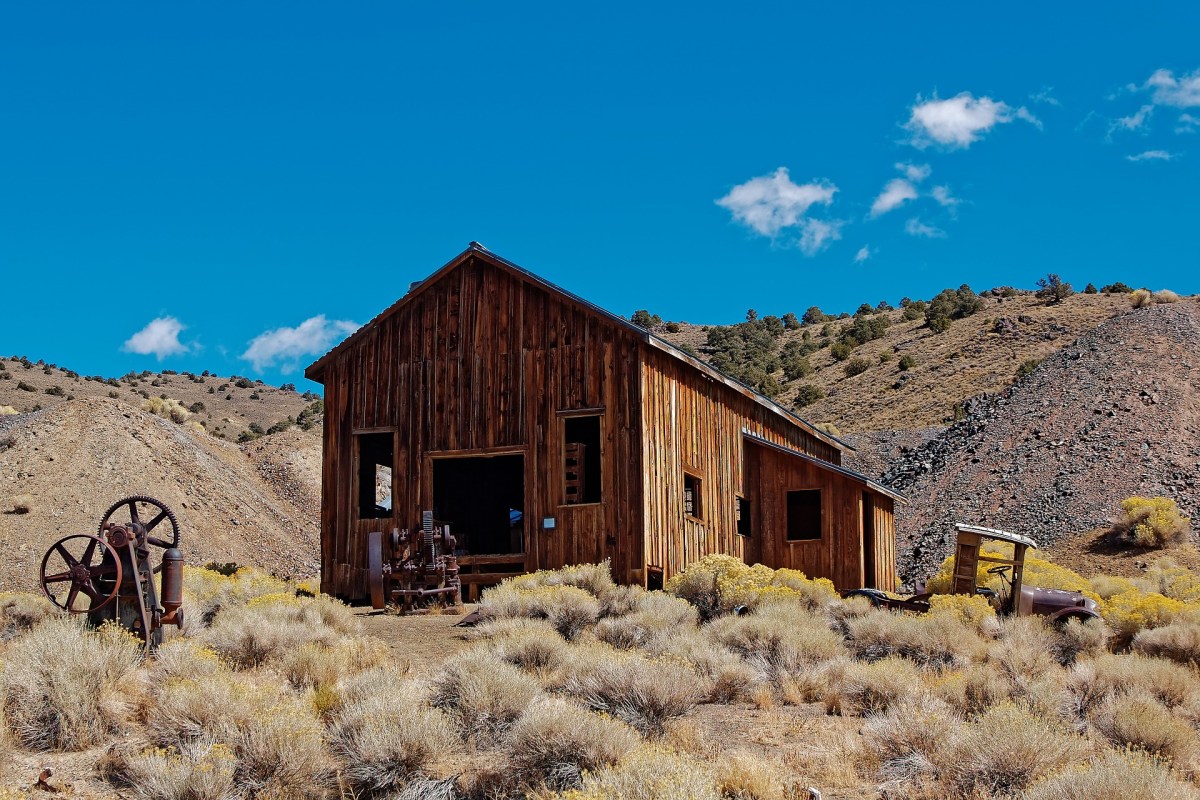
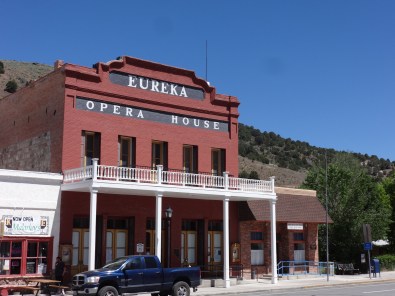 My journey along Highway 50 in Nevada was one of visiting ghost towns. As I left Hamilton, I drove the twelve rough miles back to Highway 50, and was relieved to get back to a paved road. Forty five miles later I rolled into the grand metropolis of Eureka, population 610. In Eureka, Highway 50 turns into Main Street, where one finds a hybrid ghost town and functioning county seat. I parked on Main Street and went for a walk. I found a brochure that led me on a self-guided tour of the downtown, taking me past the elegant Eureka Opera House, abandoned saloons, the hollow yet historic Colonnade Hotel, and other gems of the wild West.
 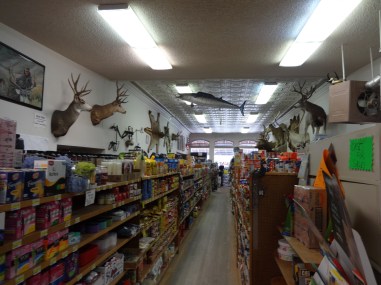 I finished my stroll with a visit to a Rains Market, a small grocery store on Main Street. I stepped inside and was greeted with classic Nevada. Of course it wasn’t enough for Rain’s to just be a grocery store. It had to be a little above and beyond, in a Nevada sort of way. It had taxidermy animals all along the walls above the shelves. There were deer, mountain goat and lion, and fish. Later, when I was looking at Google Maps, I noticed the place is labeled Rains Market and Wildlife Museum. How fitting.
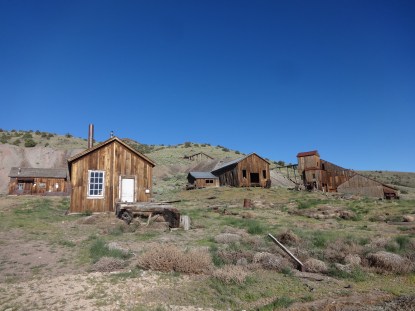 Just like in Eureka, there was a pamphlet that led me on a self guided tour, but this one was hand written and copied. It told the history and significance of each building, explained how the mining system worked, told of how many young men who came to work the mines lived in a bunk house, how at its boom it had a population of just 250, yet they still had a town prostitute. It guided me to the mine supervisor’s house, the machine shop, and a big old mill. Each building was furnished, but it an haphazard unkempt way, as if one day people got up and left, and everything was left as is and wore with time. Although the buildings were blocked off from entry, I could look inside and see the titles of books left on the shelves and read the containers of products left around. It was fascinating.
 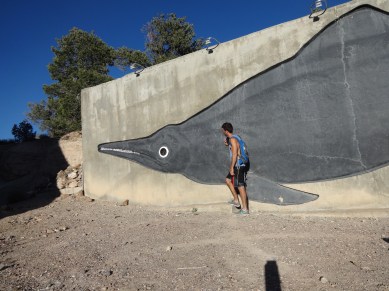 There was a little pathway next to the shop that led further up the hill. I wanted to see what I could find further up, but, as I walked, a snake slithered on the path before me. I was done. I drove back to my campsite, which was beautifully located at a hills edge, overlooking the desert valley and out to the mountains in the distance. I took a short walk from my campsite to the building housing the grand Ichthyosaur. The building was locked, but I could look inside and see the fossils. On the outside of the building, on the wall, was a large mural of an Ichthyosaur, which I took my picture with, realizing this was a once in a lifetime opportunity. Where else could I get my picture with an Ichthyosaur, except in the middle of Nevada? And when would I be back?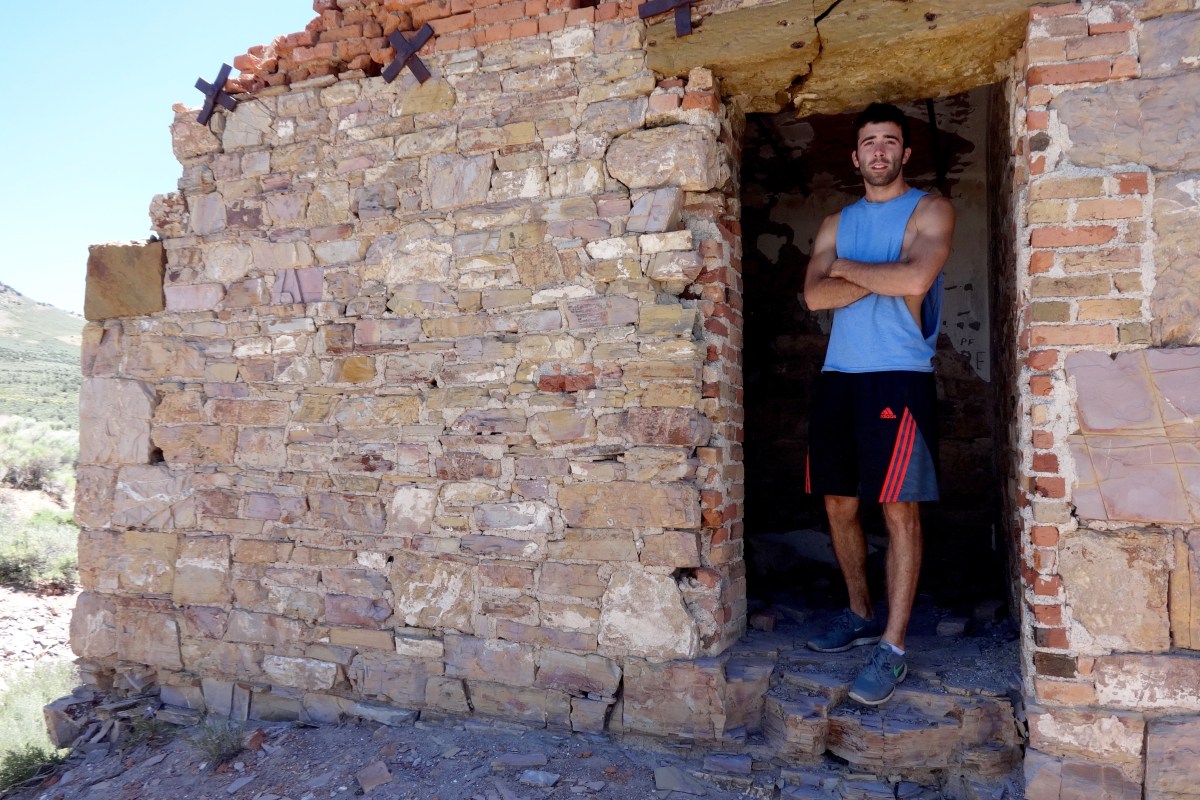
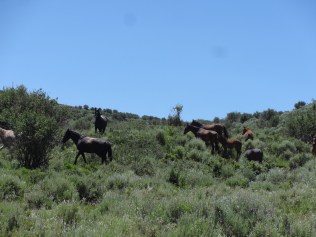 A band of wild horses galloped through the sagebrush to my left. To my right, the dirt road crumbled off into a ravine. The sun was bright and hot, and I was out here by myself. If something happens to my car, I’m done for. Stranded in the scorching desert miles from anybody, this would be it. I had taken the unnamed and barely marked road from America’s Loneliest Highway, Highway 50, further into the remoteness of Nevada, seeking the ghost town of Hamilton.
 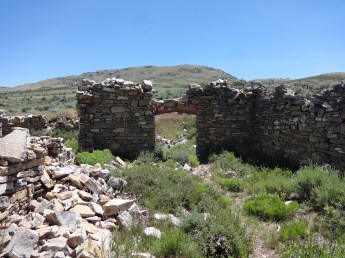 Eventually the hills gave way to a wide valley, and I came upon the ruins of Hamilton. The ruins were largely spread out and very diverse. I parked my car over to the side of the dirt road and I first came upon the remnants of a stone house. Slates of stone had been stacked ontop each other to create a building, but now only two adjacent walls remained.
 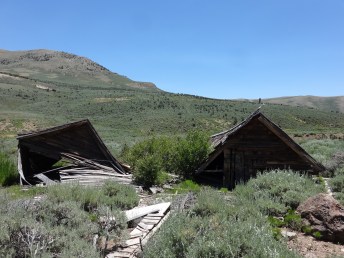 One had an arched doorway still in tact that was held in place by bricks seeming to defy the laws of gravity. In the near vicinity were other ruins of stone houses left barely recognizable, in piles of rock. Further in, I came upon some wooden structures. There were two buildings completely dilapidated except for their roofs just laying on the ground pointing upward.
 building within the building had ominously broken glass windows. I looked up and the roof of the warehouse had holes every so often, evenly distributing light throughout the building. To me the place seemed to be an abandoned repair garage. The concrete floor was dusty and dirty and large empty tanks, tin barrels, and appliances littered the floor. I took a few steps in slowly.
 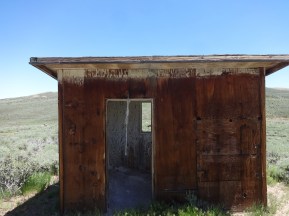 To add to the creepiness of the place, leaving the warehouse, I walked over to a small one room wooden shack, where in the doorframe hung a noose. What is going on? First an ominous warehouse, then a raven giving warning, and now a noose hung from a door frame.
 My last stop in Hamilton was at the Hamilton Cemetery. Tombstones were dated from the 1870s to 1890s. One portion of the cemetery was enclosed in a gothic style short steel fence, something that looked like it had come right out of the backyard of Disney’s Haunted Mansion.
  Josh Hodge blog