Theodore Roosevelt on Divorce: Novelist Sparks Discussion for President

Did Theodore Roosevelt ever consider divorce? Divorce is something rarely associated with Theodore Roosevelt anymore yet something that certainly concerned him. He was a committed husband and loving family man, and so his consideration of divorce was not paired with his own marriage, but rather with its implications on society at large. During the turn of the century Roosevelt noticed the slow-changing cultural views of both marriage and divorce, and he saw it as a threat to society.  

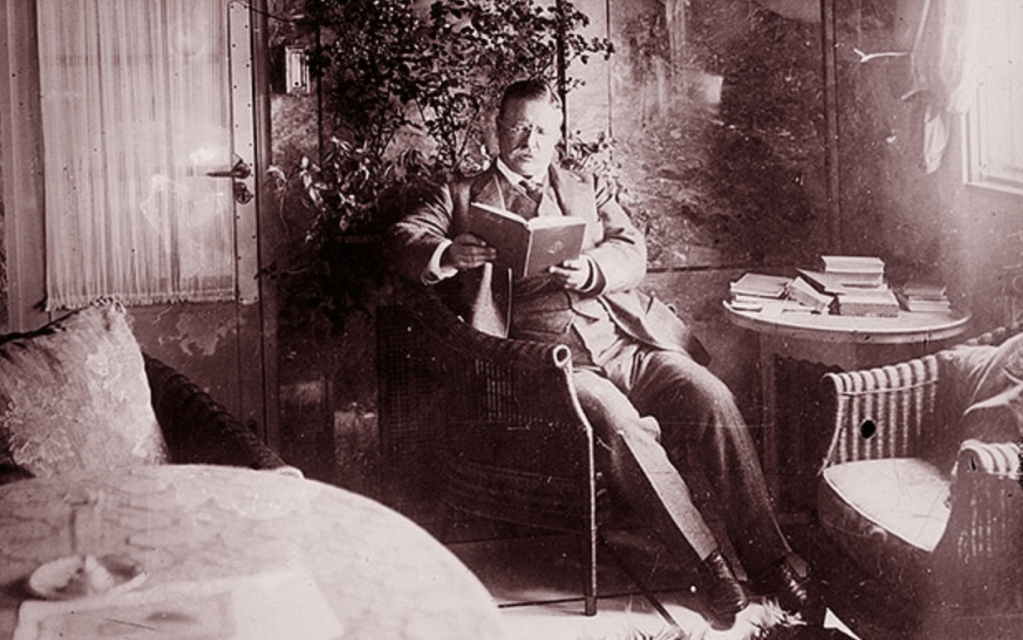
Theodore Roosevelt Engrossed in a Book (Per Usual)

President Theodore Roosevelt was so engrossed in Robert Grant’s novel, the romantic drama, The Undercurrent, that he wrote Grant about its characters saying, “If Constance does not marry Gordon my relationship with you will be seriously strained.” A few months later, after finishing the book, Roosevelt, with great emotional investment, wrote to Grant again: “Constance turned out like a brick and everything ended exactly as it ought to.” This was not the only time Roosevelt was completely entangled in one of Grant’s books. When reading another, Unleavened Bread, Roosevelt said, “I became so absorbed in it that I could not put it down until I finished it.” It wasn’t just the writing style itself or the storytelling that interested Roosevelt, but the themes and questions Grant evoked through his stories about divorce.  
Theodore Roosevelt Reading a book

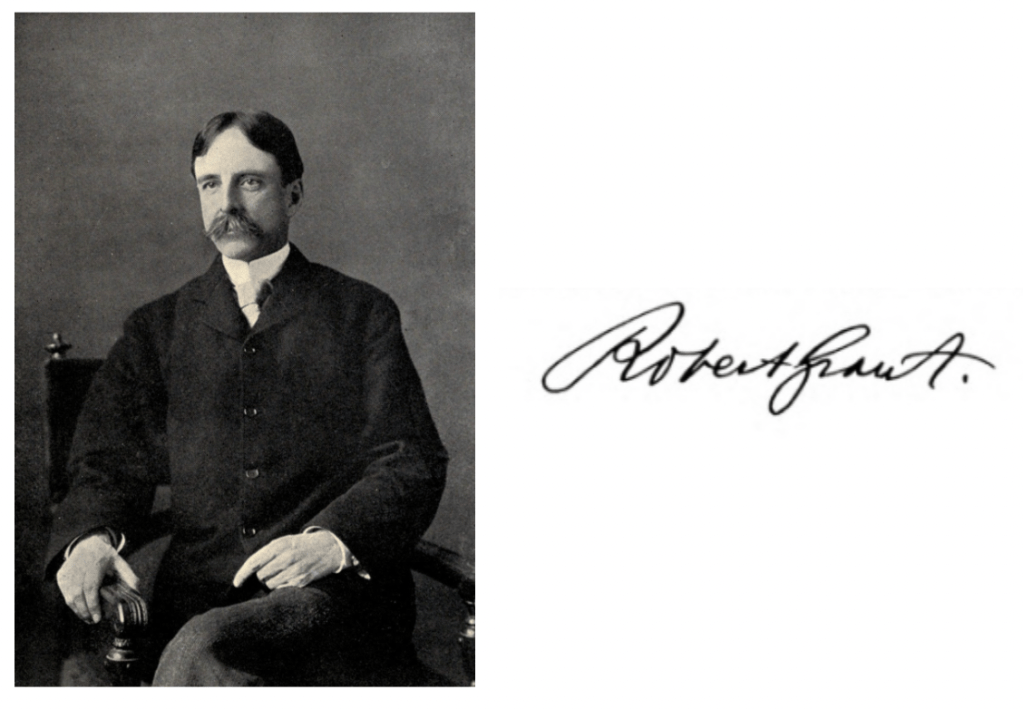
Theodore Roosevelt and Author Robert Grant

Among the many authors and poets with whom Theodore Roosevelt maintained a relationship, this is one who stands apart from the rest for the most extensive paper trail of letters. Robert Grant was born in Boston, Massachusetts in 1852. He was a graduate of Harvard University and lived the rest of his life in Boston as a novelist and probate court judge. He met Theodore Roosevelt briefly when he was at law school, but really got to know him on a ocean voyage from New York to England. The grief-stricken young Roosevelt, who had just recently lost his wife and mother to death, was working on his first book, The Naval War of 1812. During their sea travel the two engaged in conversation and became reacquainted. Grant wrote, “there was fog and a menace of icebergs,” and he wrote that Roosevelt, while looking out the window of the boat at the ominous sea, expressed that “except for a wish to finish his history of our naval war of 1812, he would not care if he was lost at sea.”

These cold days at sea were the beginning of a lasting friendship and Roosevelt’s interest in Grant’s writings, to which he expressed a particular fondness. In one letter Roosevelt praised  Grant’s work, telling him he had “done real good in this country.” He wrote, “The first requisite for a book of any kind, must be that it’s interesting; and the things that are interesting must have the further quality of being useful. It is not every man, however, who can serve the double purpose; who can double arouse interest and give pleasure on the one hand, and on the other can make himself felt as one of the forces that tell for strength and decency in national life. It has been your good fortune to achieve success in both these ways.” 
Author Robert Grant Portrait Photograph

An Invitation to the White House

During the election of 1904 Roosevelt wrote to Grant: “When the election is over I want to have a chance of seeing you, not just for ten or fifteen minutes, but when I can go over at length with you some of the problems you touch upon in The Undercurrent.”  Later, in December of 1904 Roosevelt wrote Grant inviting him and his wife to attend the judiciary dinner at the White House, spend the night, and stay through lunch the next day. On more than one occasion Roosevelt wrote in letters how he wanted to discuss matters in Grant’s books with him. One of the themes most explored by the two was divorce which was the main theme in Grant’s novel, The Undercurrent. Both men were drawn to divorce’s effects on society and the legality and morality behind it. A term both men brought up in their correspondence was “easy divorce.” 

Easy Divorce

In the 19th century marriage was oftentimes a vehicle to gain property rights, move social classes, and establish a family. It was a choice and a commitment but oftentimes seen through a pragmatic lens of what works best for building a family. By the early 1900s, pragmatism in the matter was losing its edge, and a greater emphasis was put on romance as being the main reason to wed and lack of it a reason for divorce. Throughout the 1800s the divorce rate had increased three-fold. By 1880 there was one divorce for every 21 marriages; in 1900 there was one divorce for every twelve marriages. This was becoming a growing societal concern at the time and the subject of many editorials, sermons, and even government investigations. What Roosevelt and Grant referred to as “easy divorce” had a two -fold meaning. In one regard, as Grant explained in his writing, occurred when spouses were simply tired or bored of each other and would approach divorce flippantly. Roosevelt saw this particularly concerning among the wealthiest of Americans. He wrote, “It has been shocking to me to hear young girls about to get married calmly speculating how long it will be before they get a divorce.” 

In another regard, “easy divorce” referred to the ease with which a couple could divorce in certain states. Roosevelt wrote, “‘There is a wide-spread conviction that the divorce laws are dangerously lax and indifferently administered in some of the States, resulting in a diminishing regard for the sanctity of the marriage relation.”  He expressed that the effect of easy divorce had been “very bad” and that he did “unqualifiedly condemn” it. In certain states where divorce was not as “easily” achieved without fault or cause, some of the wealthiest and sly Americans achieved the staging of affairs. A man, or even the agreeing couple, wishing for a divorce, at the cost of his reputation, would hire a mistress and a photographer to provide “evidence” of adultery in a court of law to legalize a divorce. 

The Sanctity of Marriage 

As an upright family man and husband, Roosevelt wrote extensively about family life and the role of man and woman in marriage. His view of marriage was influenced heavily by his Christian faith. He wrote, “A man must think well before he marries. He must be a tender and considerate husband and realize that there is no other human being to whom he owes so much of love and regard and consideration as he does to the woman who with pain bears and with labor rears the children that are his.” 

In an address to the Inter-Church Conference he said, “Questions like the tariff and the currency are of literally no consequence whatsoever compared with the vital question of having the unit of our social life, the home, preserved. It is impossible to overstate the importance of the cause you represent. If the average husband and wife fulfill their duties toward one another and toward their children as Christianity teaches them, then we may rest absolutely assured that the other problems will solve themselves. But if we have solved every other problem in the wisest possible way it shall profit us nothing if we have lost our own national soul, and we will have lost it if we do not have the question of the relations of the family put upon the proper basis.” He called family “the very foundation of our social organization” and saw the threat of “easy divorce” upon it.  In one particular case of divorce, he called it “the worst form of anarchy.” 

The Threat of Socialism

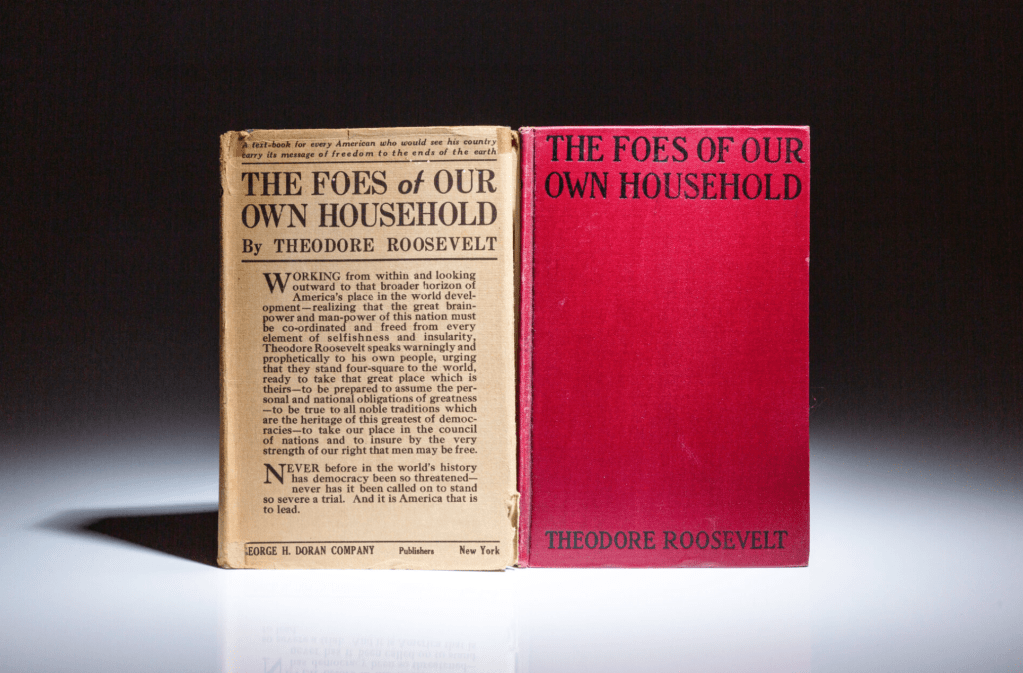
Roosevelt was also ahead of his time, assessing the threat in America of growing socialism and Marxism, which hold as a tenant the deconstruction of the nuclear family. In his critique of socialism in his book, The Foes in Our Own Household, he addressed the socialist vision to abolish the institution of marriage and regulate child bearing at the governmental level, creating a “nation of fatherless children” and simple subjects of the state. Roosevelt warned that the socialist movement was an “attack on marriage and family,” and wrote,  “When home ties are loosened, when men and women cease to regard a worthy family life, with all its duties fully performed, and all its responsibilities lived up as the best life worth living, then evil days for the (nation) are at hand.” Roosevelt saw the sanctity of marriage and family as the building blocks of society and perhaps saw “easy divorce” as one of the first dominos to fall in this chain leading to the degradation of family and the nation at large. This led him to call for the authorization of the Director of the Census to collect and publish data on divorce rates and push for the National Congress on Uniform Divorce Laws in 1906. 
Theodore Roosevelt The Foes of Our Own Household Book

Shaping the Culture

Reading and social change at many times went together for Roosevelt. Although Roosevelt certainly did read for pleasure, Roosevelt’s interest and involvement in the literary world also was a means of facilitating the direction of national culture and identity. Roosevelt lifted up authors and poets who embraced traditional Judeo-Christian values and benefited the morale and moral character of the nation. He sought these writers out and often helped propel their careers through great encouragement, review, and also connecting them with publishers. In the 21st century we see how influential the entertainment media is on the life and culture of the nation. The novelists and poets of the 19th and early 20th century were the closest equivalent to the entertainment media and celebrity influence we have today. If Roosevelt could engage the writers of the time and press his influence on them, he would steer the direction of culture and the nation. 

Roosevelt in his autobiography famously quoted, “Do what you can, with what you have, where you are.” In terms of influencing national culture, he was certainly doing this through his propping up of fellow authors, giving lengthy speeches on moral character, and writing his own books on moral topics: “Realizable Ideals”, “The Strenuous Life”, and “American Ideals.” With the cultural and moral concern at hand, and acknowledging the threat of socialism on the fabric of the nation, it is clear to see how “easy divorce” was a topic of great interest to Roosevelt. How did divorce fit in with American values? To what extent was it permissible? The legal aspects of divorce in Grant’s work were therefore of particular interest to Roosevelt as they brought to the forefront these questions.

The Poetry of Robert Grant 

Robert Grant regularly dealt with divorce as a probate judge, and although he used the theme of divorce in a few of his novels, he had explored other themes as well. He had written sixteen novels, a play, and an autobiography. Though he is not largely recognized as a poet, he did write a number of poems as well which appeared sparingly in different periodicals including Harper’s Weekly, Scribner’s Magazine, Metropolitan Magazine, as well as delivered at Harvard class reunions over a span of many years.

In 1926 he compiled a collection of his previously published and shared poems in a book he had privately printed called, Occasional Verses. He had only three hundred copies of the book printed and gave them as Christmas presents to family and friends. Among the known recipients are Howard Taft’s son, Henry W. Taft and Theodore Roosevelt’s sister, Corinne Roosevelt Robinson. Touched by the gesture and the years of friendship, Corinne Robinson penned a poem in dedication to Grant published in her book Out of Nymph. In it she illustrates the joy and fond memories she had of discussing poetry with Grant and her brother. She inscribed Grant’s copy: “For Judge Robert Grant, my old friend, my brother Theodore Roosevelt’s old friend with happy memories…” She concluded her poem with, “Thank you old friend, for to you I am beholden;— God bless that wakes memories golden!”  

Corinne Roosevelt Robinson
Corrine Roosevelt Robinson

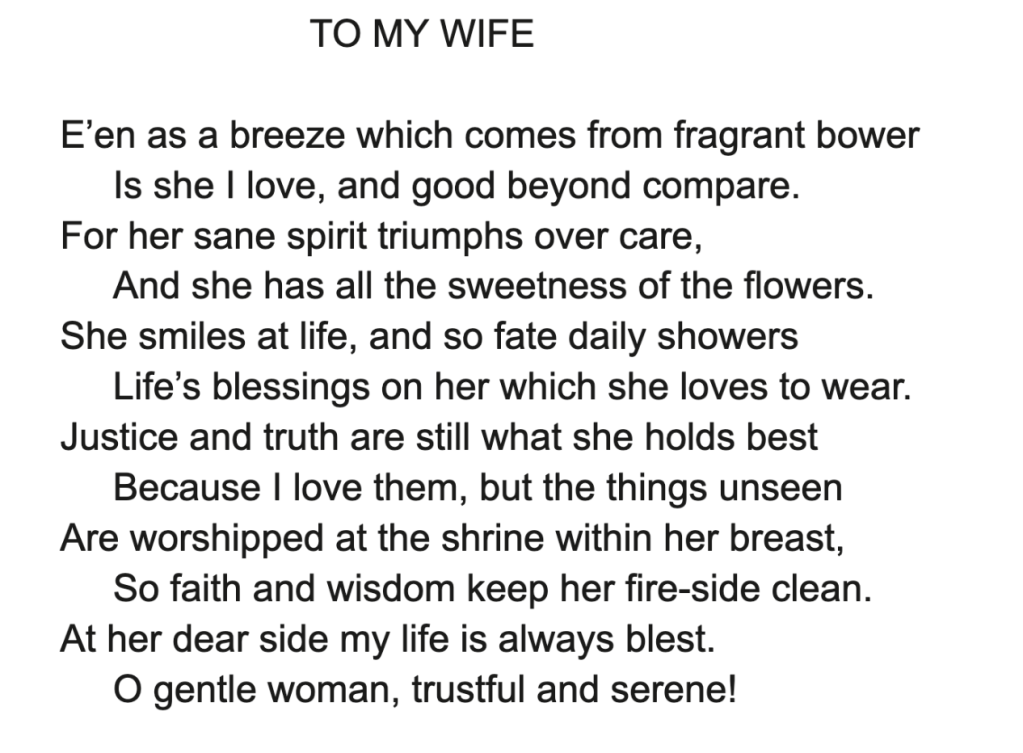
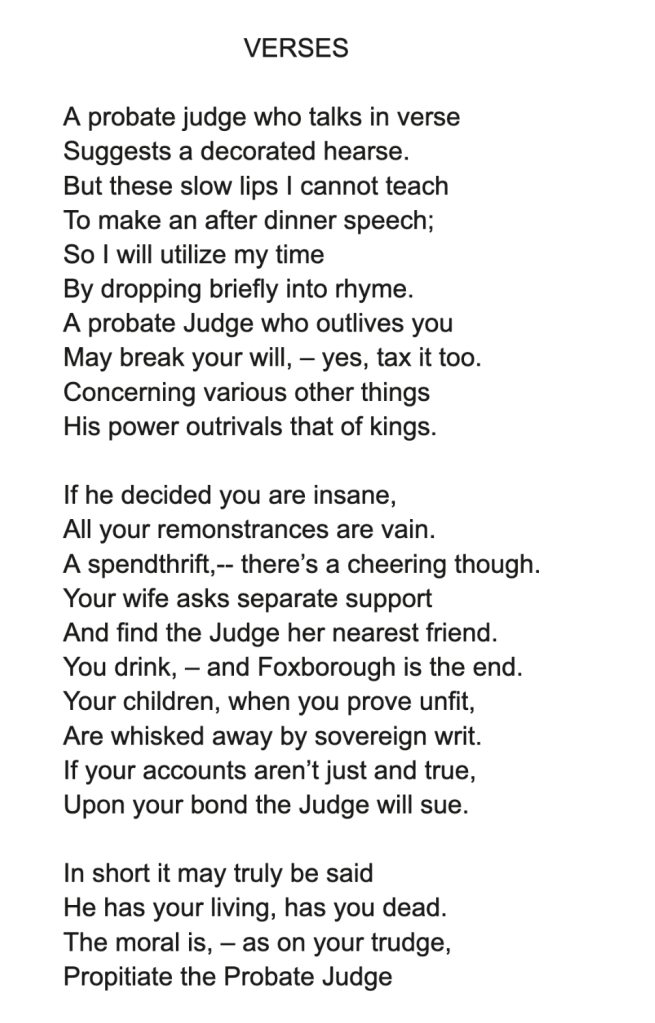
Robert Grant offered a lasting friendship of joy and literary works of good humor but also stories of weightier matters which spurred Roosevelt on in his concerns about “easy divorce” in the nation. Below are two poems from Grant, one concerning the love for his wife, written for her on the occasion of their 25th anniversary in 1908 and another dealing with divorce as a probate judge, delivered at a dinner of the Bar Association of the County of Middlesex, Dec. 4, 1907. These poems are made available through Henry W. Taft’s original copy of Grant’s Book, Occasional Verses, pictured below: 

Taft’s copy of Grant’s Occasional Verses

If you enjoyed this piece you may enjoy reading more about Roosevelt’s values and ideals in his book Realizable Ideals and the Key to Success in Life or my book Theodore Roosevelt for the Holidays: Christmas and Thanksgiving with the Bull Moose.

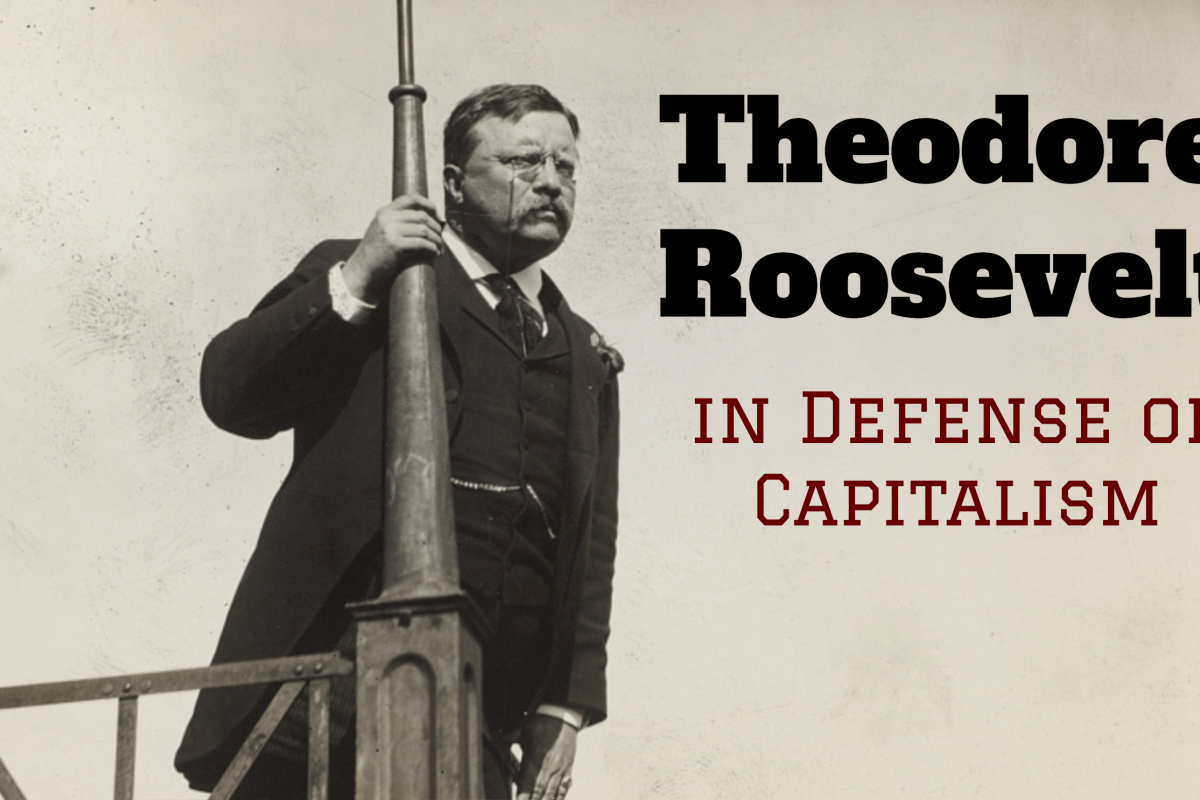
Theodore Roosevelt in Defense of Capitalism

All the extraordinary material development, our wonderful industrial growth will go for nothing unless with that growth goes hand in hand the moral, the spiritual growth that will enable us to use aright the other as an instrument.” – Theodore Roosevelt  

I am reading through Theodore Roosevelt’s “Realizable Ideals,” one of the works of Roosevelt which has been, by and large, lost in the crevices of history. It is a book first published in 1911, which regrettably in the present time is not receiving its due attention. 

I came upon this book by simply observing the bibliography of Roosevelt and being drawn to its title “Realizable Ideals,”- a combination of words that deserves themselves an unpacking, for “realizable ideals” are not the lofty utopian crafted ideals which are nowhere near practical nor possible, but they are achievable ones. Upon commencing this read, I was greeted with, and stopped to muse upon the words which I presented above in quotes. Here we have “material development” and “industrial growth” tied to “moral” and “spiritual growth.”

I paused to closely examine what Roosevelt was saying. I know Roosevelt is not Gospel, but he was a very wise man- an avid thinker and intellectual with strong moral character. His words are supported by much thought and study. So I wanted to examine how what he said relates to our world today and see if the statement above holds truth and relevance. Here he is saying that Material Development and Industrial Growth is useless without Moral and Spiritual Growth. Why? Well, he goes on to say that Material Development and Industrial Growth is merely an instrument used by Moral and Spiritual Growth? Objectively speaking, an instrument is useless if it is not employed. A piano does not produce music without a pianist, or I suppose could make quite the rattle if it was dropped or abused. A hammer has no pounding force without the manpower behind it. Being an instrument in and up itself is subservient to the instrumentalist. Moral and Spiritual Growth is the employer here of the subservient instrument of Material Development and Industrial Growth. This implies that Moral and Spiritual Growth is a more valuable, more commanding force than Material Development and Industrial Growth which ought to be subservient to these higher means of development. 

So in what ways are Material Development and Industrial Growth merely an instrument of Moral and Spiritual Growth? Well let’s examine the products of Material Development and Industrial Growth within a nation. It produces, in its most encompassing form, three things: material products, jobs, and national strength. In examining these more closely, the products are not reserved for the elite, but with industrial growth the products are made for the enjoyment of ordinary people. Jobs of this kind of growth can raise people out of poverty and give a certain sense of purpose within society. It produces wealth which leads to greater charity, funding of a strong military and infrastructure, if employed properly. One might argue that with such growth comes greed and exploitation. Why yes, that would be correct if Material Development and Industrial Growth is divorced from Moral and Spiritual Growth. This is what Roosevelt is saying: Material Development and Industrial Growth “will go for nothing,” separated from the later. 

In discussing Material Development and Industrial Growth of the United States we must examine the concept of capitalism, for it is the root economic model which has led to such growth. The competition it has produced has spurred on enormous and continual growth. Roosevelt believed in capitalism, but yet he also fought capitalists. He believed in the promise and the moral philosophy behind capitalism, that one is free to work as he chooses and keep what he earns; that competition and innovation gives way to growth. But he fought capitalists who did exploit others and destroyed natural wonders in greed. He took on monopolies that got out of hand from losing sight of Moral and Spiritual Growth.

In our nation today, there is a rising appeal of” democratic socialism,” a rebranded term that lies squarely up with Marxist Socialism. “Marxism” at one time in American society may have been seen as a dirty word, but now it is celebrated, particularly among those on the Left and its varying movements. Congresswoman Alexandria-Ocasio Cortez of New York explains the sentiment of many young so-called “progressives”:  “When we toss out these big words, capitalism, socialism, they get … sensationalized, and people translate them into meaning things that perhaps they don’t mean. So to me, capitalism, at its core, what we’re talking about when we talk about that is the absolute pursuit of profit at all human, environmental, and social cost.” I think Cortez, along with many Leftist progressives are taking capitalism and divorcing it from Moral and Spiritual Growth. They are only observing the ugly outcome of the divorce settlement. They aren’t considering that these two things should go together and when they do, they work!

Ken Langone, cofounder of the Home Depot, in his book, “I Love Capitalism” writes “Capitalism works. Let me say it again: It works!  And- I am living proof- it can work for anybody anywhere. Blacks and whites and browns and everyone in between. Absolutely anybody is entitled to dream big, and absolutely everybody should dream big. Show me where the silver spoon was in my mouth.” Unfortunately so many people think capitalism doesn’t work. That it only has corruption in its history. It has even been labeled as “irredeemable.” However, these people that attack the institution, I think, would, in the long run, be much more pleased finding reconciliation between Moral and Spiritual Growth and Material Development and Industrial Growth instead of a crusade to abolish capitalism.  

Ironically, it is many in this same crowd who have worked ardently to demean and deprioritize spirituality, attempting to separate God and religion from nearly all facets in the public eye. It is the same crowd which preaches that morality is subjective, that no moral absolutes exist. When a society cannot agree upon what is right or wrong, then it has no moral foundation on which anything substantial or good can be built. The higher standards for which we reach are unattainable. We are then only left with the opposite of what Roosevelt preaches: unrealizable ideals.

We must, as a people, reprioritize Moral and Spiritual Growth and understand, as Roosevelt did, that capitalism is an instrument of it. Although self-proclaimed a “progressive” in his day, who fought for fair wages, better working conditions, and reasonable regulation, Roosevelt did not bow to socialists nor would agree with the progressives of today. He writes in his autobiography, “These socialist are unalterably opposed to our whole industrial system. They believe that the payment of wages means everywhere and inevitably an exploitation of the laborer by the employer, and that this leads inevitably to a class war between the two groups, or, as they would say between the capitalists and the proletariat. They assert that this class war is already upon us and can only be ended when capitalism is entirely destroyed and all the machines, mills, mines, railroads, and other private property used in production are confiscated, expropriated or taken over by the workers.” Roosevelt was to the point and also writes, “I do disagree most emphatically with both the fundamental philosophy and proposed remedies of the Marxist Socialists.” Roosevelt could say this and stand firm on this position because he knew that capitalism was a good instrument of Moral and Spiritual Growth. No other instrument could be employed to produce such a prosperous and free nation. Historians Alan Greenspan, PhD, economic advisor of President Ford, and Adrian Wooldridge, in their book, “Capitalism in America: A History” brush on the success of the instrument of capitalism:

“American capitalism is also the world’s most democratic. The United States was the birthplace of the engines of popular capitalism, from mass production to franchising to mutual funds. In many countries capitalism has always been associated with a plutocratic elite. In America, it has been associated with openness and opportunity: making it possible for people who were born in obscurity to rise to the top of society and for ordinary people to enjoy goods and services that were once confined to the elites….America’s rise to greatness has been marred by numerous disgraces, prime among them the mistreatment of aboriginal people and the enslavement of millions of African Americas. Yet judged against the broad sweep of history, it has been a huge positive. America has not only provided its own citizens with a prosperous life. It has exported prosperity in the form of innovations and ideas. Without American’s interventions in the Second World War, Adolph Hitler might well have subdued Europe. Without America’s unwavering commitment to the Cold War, Joseph Stalin’s progeny might still be in power in Eastern Europe and perhaps much of Asia. Uncle Sam provided the arsenal of democracy that saved the twentieth century from ruin.” A prosperous economic model produced a strong nation with great lasting influence. 

So, let’s not be quick, as a people, to demonize capitalism. Let’s not look down upon Material Development and Industrial Growth. Instead let us put it in its place. Let us recognize the areas in which it has been corrupted and bring back the remedy which can restore this fine instrument: Moral and Spiritual Growth! We must not let them be separated! And it is among the fruits of such a union I believe Americans, from all walks, can find agreement. 

Get my book Theodore Roosevelt for the Holidays on Amazon!

Reference List

Fuchs, E. (2020, Feb 3) AOC: Capitalism is the absolute pursuit of profit at all costs. Yahoo! Finance.https://news.yahoo.com/aoc-capitalism-is-the-absolute-pursuit-of-profit-at-all-costs-145656395.html

Greenspan, A. Wooldridge, A. (2018) Capitalism in America: A history. Penguin Press

Langone, K. (2018) I Love Capitalism: An American story. Portfolio/Penguin

Roosevelt, T. (1911) Realizable Ideals. Books for Libraries Press

Roosevelt. T. (1913) An Autobiography. C. Scribner’s Sons
Zhao, C. (2019, March 10)  NY Rep Alexandria-Ocasio Cortez Says Capitalism is Irredeemable. Newsweek.https://www.newsweek.com/alexandria-ocasio-cortez-says-capitalism-irredeemable-1357720

http://www.joshhodge.com

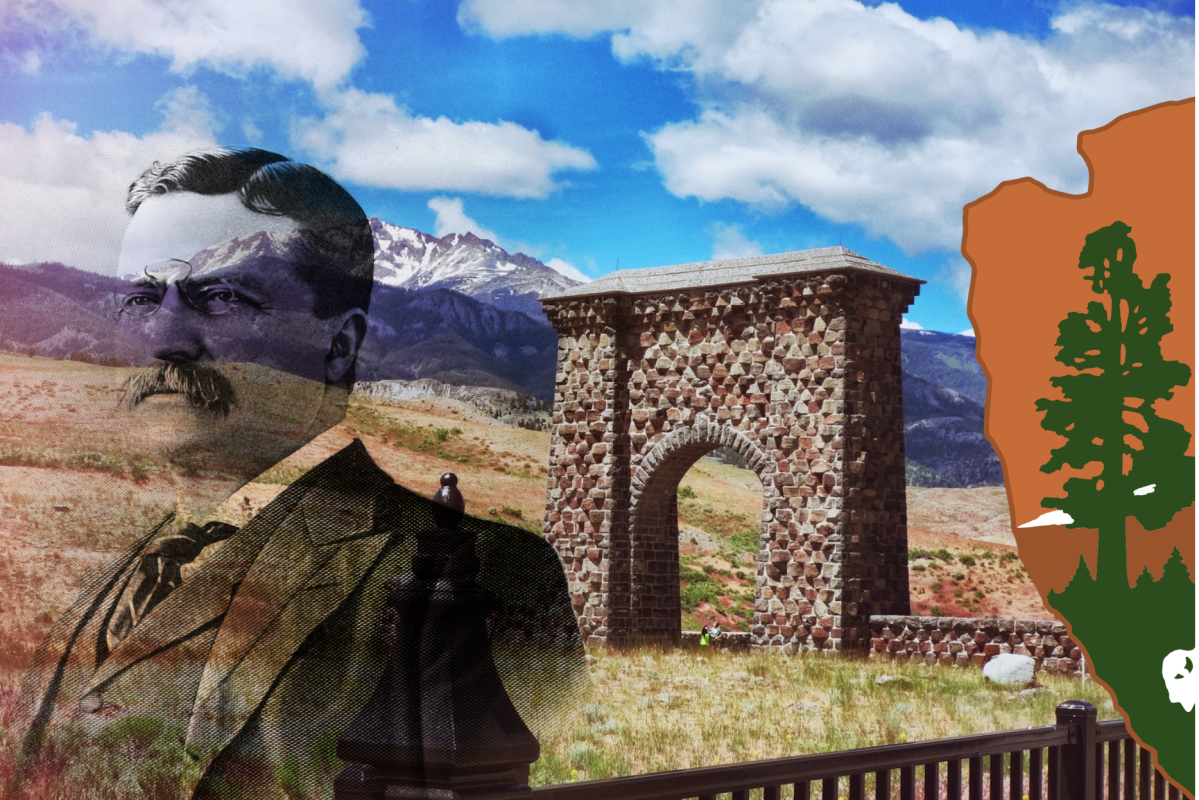
Why I Cried at Roosevelt Arch – What Theodore Roosevelt and the National Parks Mean to Me

When I saw Roosevelt Arch I cried. It churned up an emotional response in me. This gateway to Yellowstone National Park, situated near the Northwest corner of the park, tugged at my heartstrings. To understand why, I must reflect on it and consider myself in the moment, for the emotions brought up were so deeply entrenched. It’s not something to skim off the surface of my being. 

I think to best understand the reason for my emotions I must consider Roosevelt Arch in three aspects. First, I must consider its symbolic meaning, what does Roosevelt Arch mean? Next, I must consider it’s visual appeal, why does this visual provoke this feeling? And thirdly, I must reflect upon the man whose name is inscribed upon it: Theodore Roosevelt. 

It is certainly not without evidence the measure of significance the National Parks means to me. I have visited so many and have written extensively about them. The National Parks are places I go to restore my soul. When life is burdensome, and I’m weighed down by the heaviness it entails, when I lose perspective and get caught in the rush and concerns of the moment, the National Parks with their magnitude, beauty, and remoteness have become places I go to step out of my troubles and find perspective. The immensity of the mountains, the richness of the forest, the profoundness of the canyons humble me and diminish the concerns in my own life as I gain perspective of the bigger canvas of life. 

As I am inspired by the grandiosity of things I also find such beauty in the smaller things- in the wildlife, in the design of plants, the way water flows and sits, and in the beautiful way the sun filters through the trees or paints across the plains. Everything big or small is so near perfectly balanced, beautiful and unique, reminding me of the awesome expansive creativity of God. And here, as I am surrounded by God’s artwork, I am reassured knowing the same wonderful Maker who crafted these lands and natural wonders is the Architect and Orchestrator of my own life. I see that the fingerprints in nature are the same fingerprints in my own design. It is such a humbling yet reassuring feeling to know the awesome Creator and Coordinator of nature has His hands on my life. 

Here in the remoteness and solitude of so many parks I am ushered into a place where I can focus in on this masterful Creator, to pray, to reflect, to enjoy His company in the still, calm, and quiet. Man has constructed temples, churches, and cathedrals, all of which can serve so much good, but God has also gifted us, in his own incredible design, temples in nature that point us back to him in a unique way. Whether it’s the stunning Yosemite Valley, the wide openings of the Rio Grande, the mountain peak in Appalachia, the spread of glaciers in the Rockies, or beneath a giant sequoia, these places of quietude and beauty are here for us to draw us back to the Creator. 

In addition to these spiritual aspects, there are other more broadly understood terms in which the parks have been meaningful to me. They have been places that have put me up to challenges, physically and mentally- taking on long strenuous hikes, pulling my weight up cliff sides, overcoming fear in turbulent water, and problem solving when things have gone awry. The experiences in the parks have strengthened me physically and mentally and in return have been good for my soul. In the same regard they have instilled in myself a greater confidence in my own abilities, and have given me a passion to which I identify. My experiences in the parks have molded me into the outdoorsman I am, have spurred in me the desire and necessity to learn new skills, and have kindled the appreciation and thirst for beauty and adventure. 

So here I was at Roosevelt Arch, this manmade structure was the first and primary entrance to Yellowstone National Park for many years. Montana was the main means of entry into the park as support for the exploration of Yellowstone primarily came out of the Montana Territory through the Washburn Expedition. When the railroad was brought to Yellowstone it came through Gardiner, Montana, and thus a grand entryway to Yellowstone was constructed in 1903 with the inscription above it “For the benefit and enjoyment of the people.” This phrase comes out of the Organic Act which established Yellowstone as a National Park, but it is unofficially a slogan used throughout the National Park Service. Standing here in front of the arch I see how it greatly contrasts the wild remote landscape around it of mountain and field. And this structure is bold and tall, a mighty gateway to Yellowstone. It was evident to me that this was the entrance not simply to Yellowstone but to the first National Park. Thus this arch, this portal, is where it all began. This is the doorway to all the National Parks and a monument to one of America’s best ideas. 

In this moment, before the arch, I was also swept away with patriotism. My country has chosen to preserve such treasures and honor such beauty. The heroes, the fathers of the National Parks- now long gone- made this possible, people such as John Muir, Theodore Roosevelt, Stephen Mather, Nathaniel Langford- all outstanding Americans. Just the fall before, a turbulent election took place. Some people became very vocal about their thoughts on the United States. Some citizens renounced patriotism and attacked the country with boisterous and repetitive rhetoric, and many in higher education proudly slandered our nation. When I was in New York City visiting my brother and sister-in-law, walking down Fifth Avenue, a group of young people chanted and pleaded for the abolishment of the United States. How infuriating that was, but how refreshing and restorative to be here at Roosevelt Arch to celebrate the natural wonders my country has chosen to preserve for the ‘benefit and enjoyment” of all people and recognize the patriots that made this possible. People need to get out of the cities every once and while and enjoy the wonders of nature and the diversity of the country. 

It is without question that my knowledge of Theodore Roosevelt himself is part responsible for this emotional response to seeing this arch. Theodore Roosevelt, more so than any modern historical figure, has had the greatest influence upon my character. It is largely due to the difficulties he endured and the principles by which he stood. This man knew pain, physical and emotional, to great profundities. Some may see him as privileged, and although he was in some regards, he also was a man of great misfortune. Life was not nice to him in many ways. He lost his father as a young man and both his mom and wife died soon after on the same day- a day in which in his journal he’d remark solely: “the light has gone out of my life,” with an X. This was a man who felt like he lost everything. Before, he spent much of his younger youth physically Ill. Severe asthma and intestinal issues plagued him. I have not experienced nearly as much hardship as Roosevelt, but I, like so many people, have faced my own hardships in life. I’ve had my own extensive and grave health issues, have lost dreams, and have been in emotional distress. How inspiring it is to see Roosevelt not allow himself to be beaten down by life, not to wallow in self pity, but rather do the most unexpected thing and learn to embrace the difficulties of life, to accept life for what it is, to find value in challenge and hardships. He grabbed difficulty by the horns and called it for what it is: “the strenuous life,” something he preached about. Although his lot in life initially dealt him misfortune, he did not let that hinder him. Roosevelt loved life. He had a passion for it in all regards, and lived it to the fullest, courageously and vigorously. 

This wimpy, sickly child, not expected to survive past childhood, would go on to occupy the bully pulpit. He’d clean up sin loving New York City as police commissioner and governor, charge up San Juan Hill as a commander, see that the Panama Canal was constructed under his presidency, attack corruption in Washington, author more than forty-five books, raise six children, and work to preserve more federal land than any other president, creating a culture of natural preservation. Although so accomplished as president, being one was not always in his plans. He once said he never wanted to become president, but he became one by destiny. When president Mckinley was assassinated in 1901, Roosevelt had to assume office. Although, expectedly so, he rose to the occasion and preserved the dignity of the office, he made light of the frivolity among the Washington political elite, for Roosevelt, despite his status, was a common man. He may have been born into the New York elite, but this man was relatable to the ordinary American. He’d camped with them, hunted with them, ate with them. He left the comforts of high-class New York City and became a rough and tumble cowboy and rancheman in the Dakota Territory. He did not simply identify with a class of people, he identified as American. 

Along with his firm sense of nationalism, Roosevelt also defined in his own terms what it meant to be a man. Having read many books by and about Roosevelt, this is a motif I’ve found that spans his life and story. Always to some extent he was preoccupied with thoughts of manhood and how to live up to and fulfill his duty as a man. He’d observe characteristics in others, then write about them and speak about them. He would come to define manhood by four principles: courage, hardiness, integrity, and independence. I think presently, our nation, as a whole, lacks strong male role models. Modern attacks on masculinity, and fatherless homes, have left a generation confused and lost in society. Media has watered down or redefined manhood in physical and lustful terms. The youth more than ever need men like Roosevelt to lead them and teach by his legacy. 

I suppose on a more uniquely personal level, I identify so strongly with Roosevelt because of his passions: America, history, reading, recreation, nature, and writing. Although hunting and fatherhood are two huge parts of the Roosevelt experience that I am not yet personally acquainted with, we have such similar interests and worldview, that an overwhelming majority of things Roosevelt said are relatable to me in some regard. Thus he has become quite intriguing to me. 

So with all these characteristics in mind, here I was at Roosevelt Arch. Theodore Roosevelt had laid the cornerstone for this magnificent construction that would be dedicated to him. With all the symbolic meaning, as a gateway to America’s National Parks, bearing the name of Roosevelt and the slogan, “For the benefit and enjoyment of the people,” how could I not get emotional? This place appealed to me on so many levels. This was the door that unlocked all the National Parks which would mean so much to me and to so many.

“Everybody needs beauty as well as bread, places to play in and pray in, where Nature may heal and cheer and give strength to body and soul alike” – John Muir, The Yosemite. 

Read the previous entry “Providence in Yellowstone” here: https://joshthehodge.com/2021/01/15/providence-in-yellowstone/

Check out my book Canyonlands: my adventures in the national parks and the beautiful wild here: https://www.amazon.com/Canyonlands-adventures-National-Parks-beautiful/dp/1711397873

Check out my book Theodore Roosevelt for the Holidays: Christmas and Thanksgiving with the Bull Moose here: https://www.amazon.com/dp/B08M8Y5P29