I was up on the highlands early in the morning, pulling over to take a photo of the hundreds of sheep grazing in the pasture. I had never seen so many before. It reminded me of John Muir’s summer in the Sierra as a shepherd. Maybe this was a familiar view he saw: little fleecy clouds grazing up and down the hillside and the sky a cloudless blue. I was on my way to a ghost town: Bodie State Historic Site. This one had been on the radar for a while. It is the ghost town of all ghost towns. I say this because of it being the largest intact ghost town, boasting over two hundred remaining structures. The citizens once claimed it was the largest city in California with a population of around 10,000, when it peaked in 1880.
Today it is a thirteen mile drive off the highway to this ghosted metropolis in the heights. The last three miles were dirt and rock, and there was a car before me obstructing my view by spinning up clouds of dust. I was doing the same for the car behind me. I certainly wasn’t visiting this place alone like when visiting many of the other ghost towns throughout my travels. The dusty road finally curved around and spilled into a flat sandy parking lot. There were dozens of other cars. I popped my trunk to get my backpack and gear up for exploration. The car that had been trailing me pulled up beside me and a husband and wife stepped out. “That was quite a drive,” the man said.
“It sure was,” I agreed. Was he referring to the scenery of treeless pastures, the rocky road, or the hundreds of sheep? I didn’t know, but I appreciated his friendliness and no apparent resentment for the clouds of dust I sent billowing his way.
I was enthralled when I stepped foot into the dusty streets of Bodie. It was more than I could have imagined, and by “more,” I mean it in the literal sense- so many structures and pathways to explore! The pictures of the place online were quite intriguing, but in reality this place was on the next level, and it was so quintessentially old Wild West. I felt as if I was upon some movie set or propelled back in time. However, the buildings were rightfully weathered by time telling me this was a rare relic of the past.
I was excited to explore it all, but as disciplined as I am in such matters, I first had to watch the park film. What did I learn? This was a place rich in multiple ways. It mined about $34 million in gold and silver in its time, adjusted to about $100 million today. It is also rich in the history and stories it holds. I felt one must spend a lot of time here to really get to know Bodie. I would only get to brush upon the knowledge of its rich history.
I learned that the gold and silver mines in Bodie were once owned by the Standard Mining Company, and atypical of many other mining towns, the Standard Mining Company did not own the town. All the other businesses in town were private. When Bodie was booming, it even had its own town within its town. The influx of Chinese immigrants who worked on the railroad and in lumbering, to support the town, sought to keep their own customs and traditions in their own community within Bodie. Yes, this is a ghost town with a Chinatown that once had its own general store, saloon, and Taoist temple. I would learn many more interesting facts about Bodie later on a tour. But to set the scene, and frame things in context, Bodie went through many fluxes in population in part due to fires, assumed mineral depletion, and eventual unprofitability of the mines. It stayed alive until 1942, when the U.S. government’s War Production Board passed an order which shut down all non-essential gold mines in the country. Bodie’s last remaining mine was closed and mining never resumed. The Cain family, who owned much of the land, was conscious of its historical significance and hired a caretaker to look after the place in the 1940s, until they transferred it over to the state of California in 1962, after it was named a National Historic Landmark.


I looked out. Streets intersected with streets everywhere. There were flat lanes, and hilly neighborhoods. All the buildings were in uniform, composed of dark vertical wooden boards. Out in the distance, forming the Bodie skyline, was the Standard Stamp Mill, which I would get to tour later.
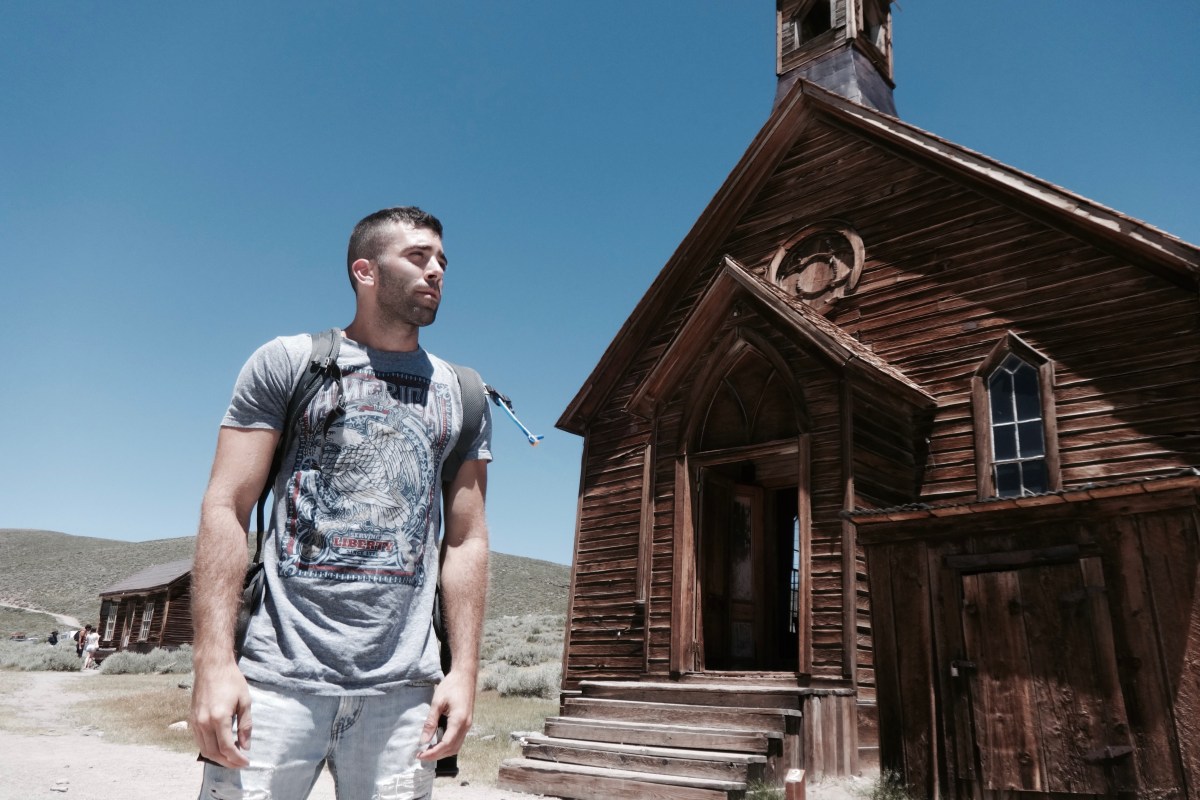
The first structure I saw entering Bodie was the Methodist church. It is perhaps the most iconic feature of the town despite it wearing the uniform dark wooden boards and not doing much to stick out. It was modest. Along with its simple gable roof were its triangular window peaks, short rising steeple, and protruding foyer. I learned that Bodie was booming for over a full year without a church. It was a lawless place. One of its ministers, Reverend F.M. Warrington, described it as “…a sea of sin, lashed by the tempest of lust and passion.” I can’t imagine how difficult it must have been to minister and feel a sense of obligation to a congregation in such a place.
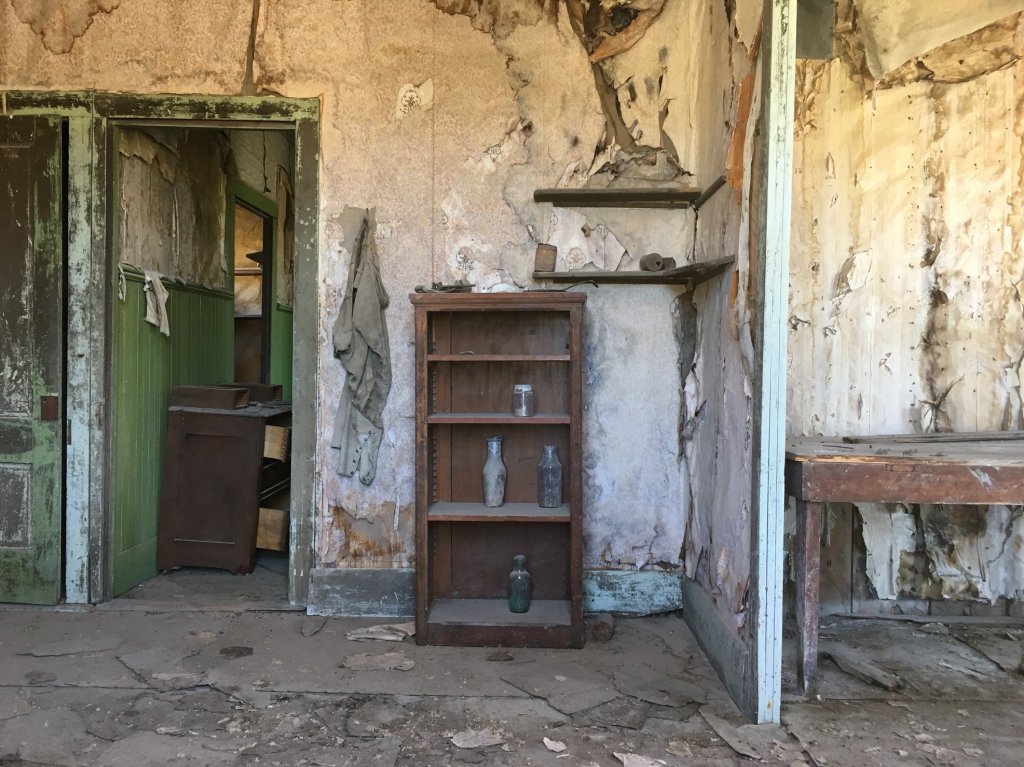
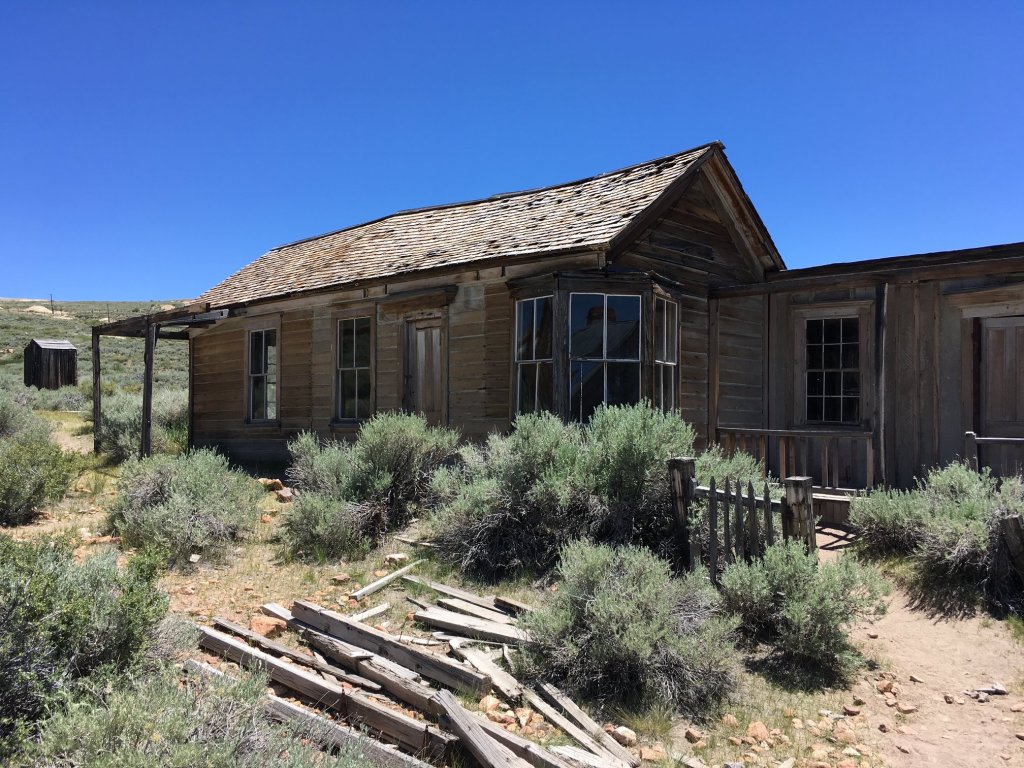
Traveling down the main streets, most of the buildings were closed and locked but I could go up to the windows and cup my hands around my eyes against the glass to peek in. Nearly every building was furnished. In the homes I saw tables and chairs, vanities, sewing machines, beds, rotten mattresses, wallpaper peeling off, canteens, and bottles and hats sitting about. One building was a pool hall, and the pool table still lay next to a furnace and a bar. One of the general stores was well stocked with just about everything you could imagine a general store to have back then, but everything was just about everywhere, in such a state of disarray and decay, that just that disorder and abandonment gave it a haunting sort of feel.
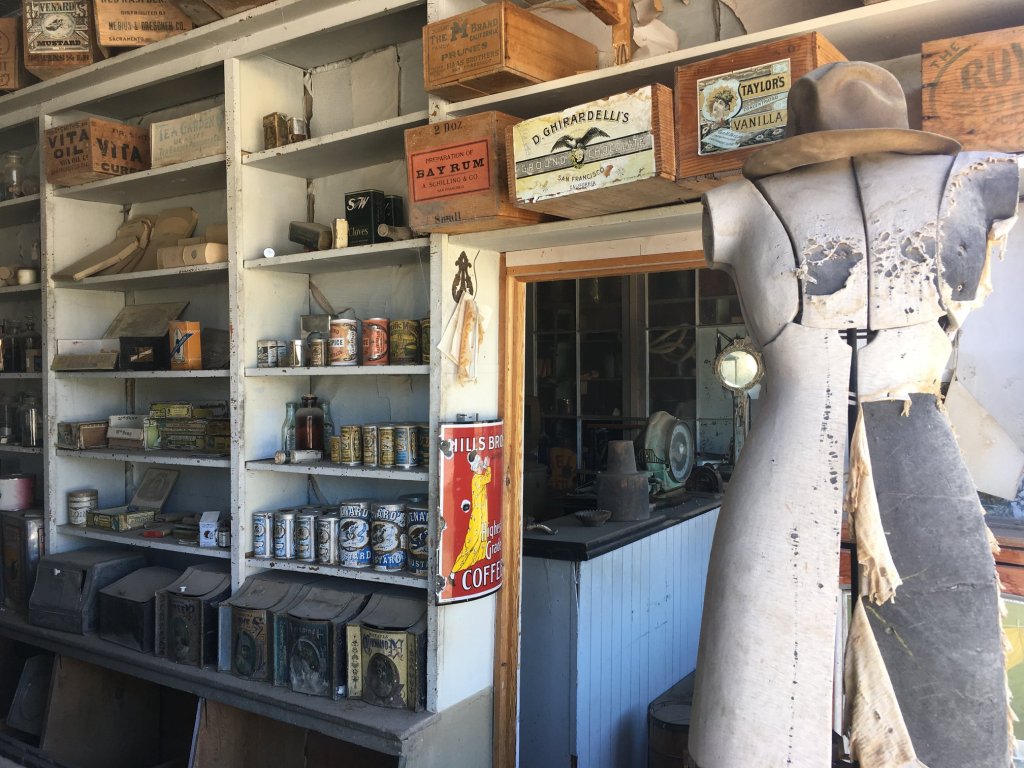

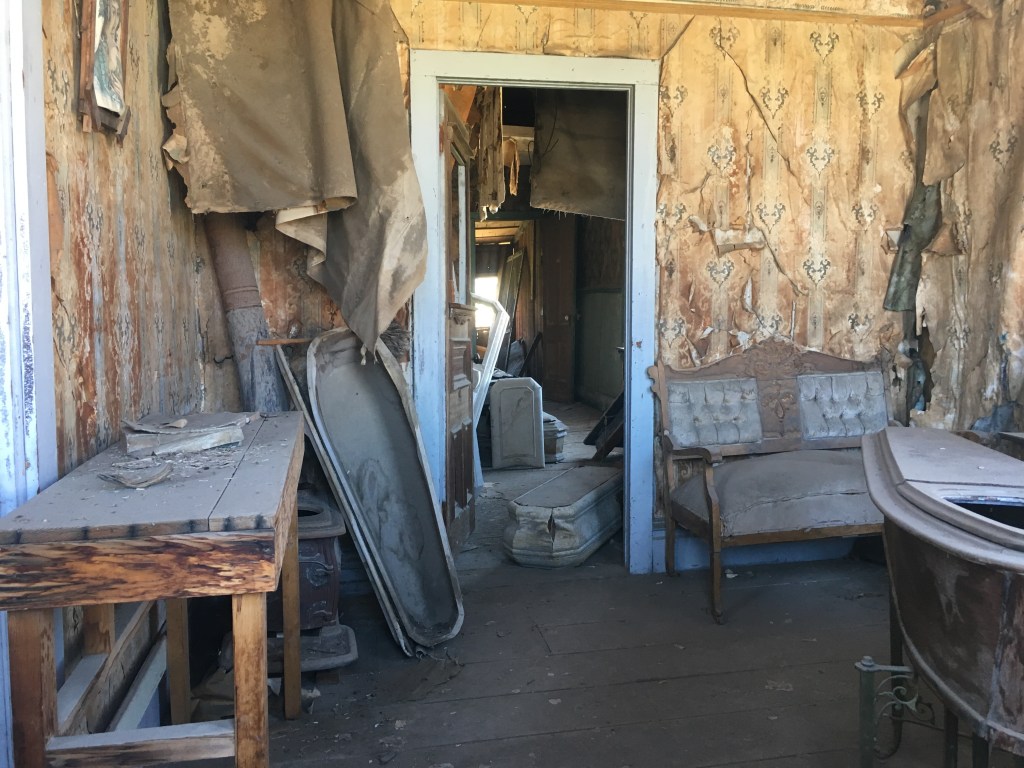
Ghost towns are not named so because of the supernatural, but simply the term refers to a place that has been abandoned. However, seeing so many things so shamelessly abandoned and rotting away certainly gave me a sort of spooked aura. It was especially evident in one building with the way the light filtered in the window, dispersed through a laced curtain, and crept across the warped floorboard, casting natural shadows. If anyplace here was to be truly haunted, though, it would have to be the mortuary. It looked just like one of the many other houses, but I cupped my hands around my eyes and against the window to peek inside. A large coffin lay horizontal in the room, and up against the wall leaned two infant caskets. I felt something distinctly unique about being at a mortuary in a ghost town looking at infant coffins. Perhaps it was just a sure reminder of the fallen state of humanity. Here I was in a place left abandoned, rotting away, where life once lived, fixing eyes upon caskets, a reminder of the finite nature of our existence on this earth, and I was looking at infant caskets, symbolic of lives sadly taken prematurely.

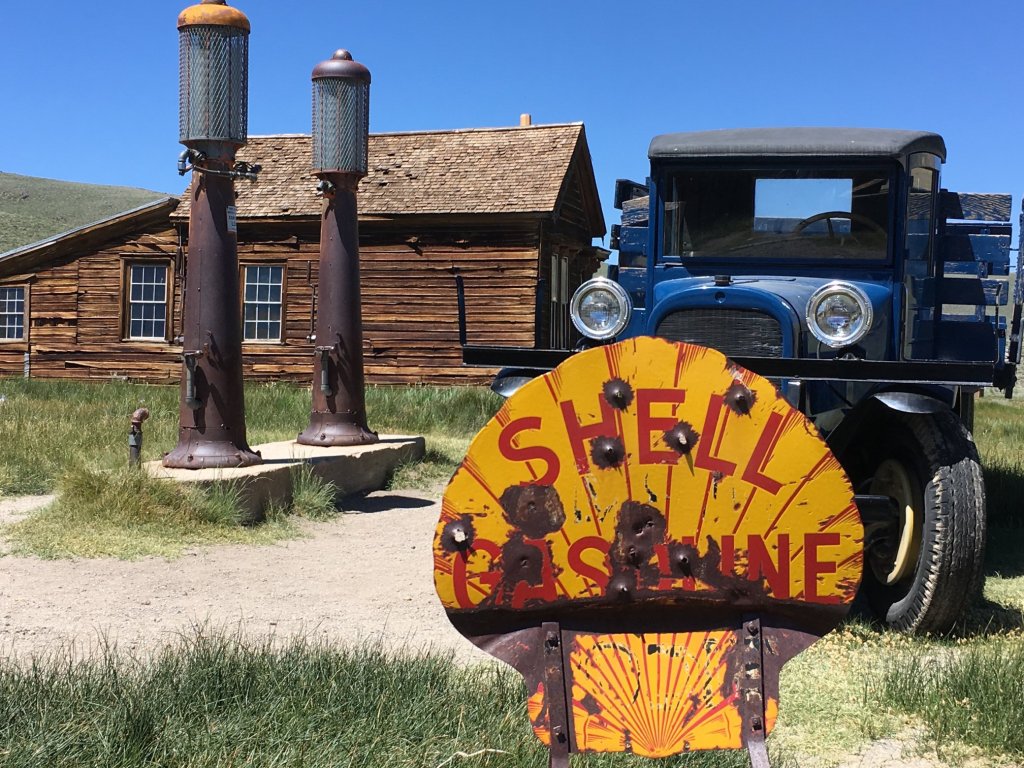
I did a bit more wandering myself, peeking in the windows of the school house, which was in near mint condition, and an old gas station with the oldest shell sign I’ve ever seen. I stopped for a moment at the old two story hotel which had me imagining people coming to this place and checking into a room. Why were they here? Was it for business or just visiting? Would they check into their rooms and then maybe head out on the street to find a place to have dinner or stir up ruckus in a saloon? What sort of men would wander over to “Virgin Alley”? This place once had a lot going on. Now its buildings were void of life and silent.
After a bit of wandering, I went on a guided tour up to the Standard Stamp Mill. The ranger led a group of about fifteen of us up the dusty streets of Bodie. Before coming to the Mill we walked by the once home of Theodore Hoover, older brother of president Herbert Hoover. I was fascinated that this place had a connection with Herbert Hoover through his brother. I visited Herbert Hoover National Historic Site in Iowa the previous fall and learned all about him. It was there in the old quaker meeting house in the Herbert Hoover family’s village that I took time to ponder and reflect upon my last summer’s lesson to “be still, calm and quiet.” I love how in visiting National and State Parks, there are so many connections between people and events across the country. In the earlier days of our Republic, the people of influence had broad sweeping connections across the nation. One thing that happened here had another effect that happened there. These commonly occurring characters and connections help tie everything together and paint one grand story of the United States.
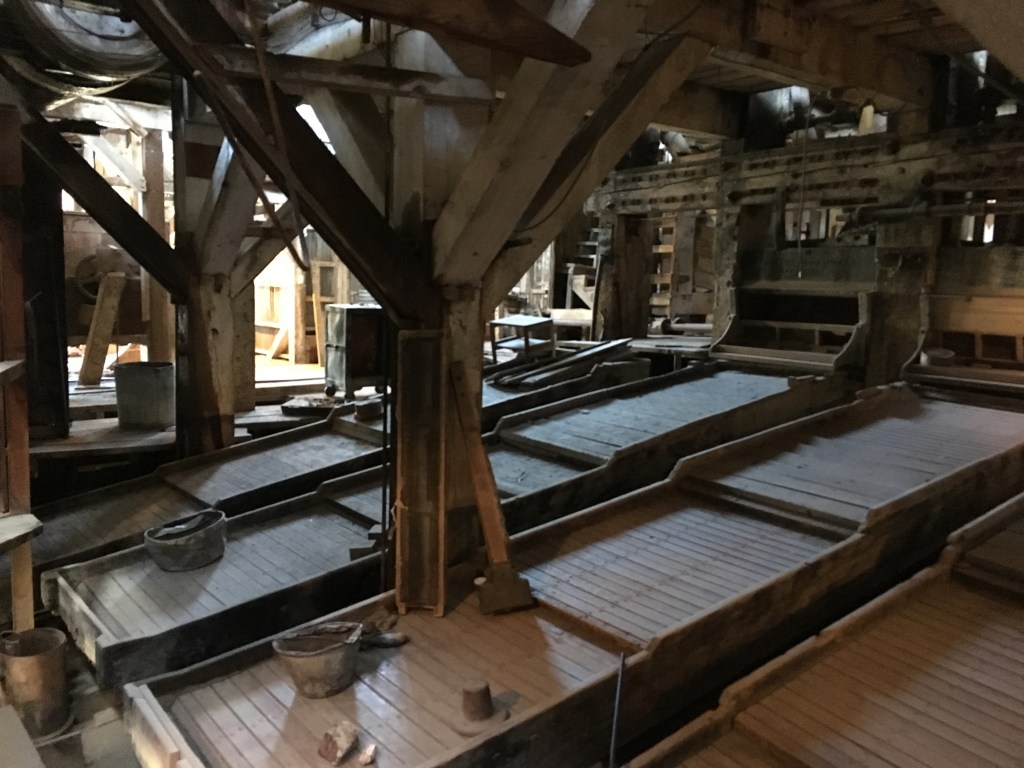
Once inside the Standard Mill we saw all the powerful mechanics, giant gears, and heavy equipment. The ranger explained the stamping process of this mill, how these giant stamps would literally crash down upon rocks and break the mineral deposits. Then a series of magnets and mesh beds would sort out the gold and silver. The most interesting thing the ranger shared with us here was how early employees in this mill were known for trying to steal gold from the mill. They would hide it in their pockets, so Theodore Hoover, who was manager of the mine, established uniform outfits- jumpsuits with no pockets. These thieving employees found other ways to steal, however. In the hot mine a man may stage a wiping of his brow or a hand comb through the hair, leaving behind gold dust to later be collected from his hair, eyebrows, or eye lashes.

Here in the mine, the ranger also gave a super fascinating fact: In recent years, a Canadian mining company surveyed the land, finding about $2 trillion worth of gold still deposited in the hills around Bodie. The U.S. government stripped the mining permit from the Canadian company and now the state of California just sits on 2 trillion dollars of gold beneath its land. At first mention, I thought, California needs to mine that to pay off its debt, but the more I’ve thought about it, I’ve realized it’s better kept reserved, for I don’t think the California government is by any means fiscally responsible to handle such a sum of wealth.
History and gold mining aside, I think there is a lot to learn from ghost towns about life. I’ve written about this before in my book, Canyonlands: My adventures in the National Parks and beautiful wild, but Bodie, I find, taught me something different. You see, the park ranger explained how Bodie was in a state of “arrested decay.” Meaning, the place is in a state of decay, but they are trying to arrest that decay, so nothing is to be changed, restored, revitalized, or repurposed. The place is simply to be arrested in its state of abandonment and decay. The only intervention is to occasionally add a support to a building to keep it standing. So, because of “arrested decay,” in every building dust is collected, walls are rotting, items are unprotected and weathered by age. Many of the buildings are even left messy inside. Old cans, cartridges, bottles, hats, and books lay about, left abandoned, in the same location, untouched for ages. This had me thinking about life.
As we age, we are prone to find our own lives in a state of arrested decay. I look at all these physical objects left abandoned in Bodie and I see them as metaphors for the non-physical, but rather spiritual, things we have accumulated in life. We each have an array of experiences, stories, lessons learned, and passions which we have collected over the years. These are all valuable things, gained for many purposes. But I think, as we age, apathy has a way of arresting some of these things and causing us to abandon them despite their value. We no longer put them to use. We get old and we move past these things, and instead of seeking action and influence, we make excuses. But did you not have these experiences for a purpose, and did you not learn these lessons in life to share them? Did you not develop passion to let it stay dormant, collecting dust? Many have places in their lives that are in arrested decay, and it truly is a great loss. We need to exercise the abilities we’ve been given, nourish the passions that have been instilled, and share what we have learned in life to build up others.
Dennis Rainey in his book Stepping Up: A call to courageous manhood, explains how, as we get older, we are fed a series of lies which rob us of the perception of our own value and worth. We rely on excuses which deem us irrelevant and rob us of our dignity. He talks about the final years of life as some of the most influential. It is here one has accumulated the most experience, wisdom, and lessons learned. All of these things are great riches to be passed on, but many men keep them to themselves. Rainey writes, “What an opportunity we have as we enter into the final years of life to use the wisdom and influence we’ve accumulated and reach out to the next generation.” He also goes on to say, “God created men not to rust out but to wear out as they stretch toward the finish line.” We are to be utilitarian with all we have been given, and, with age, our toolbelt is much more hardy than when we were younger. As written in Job 12:12, “Wisdom belongs to the aged, and understanding to the old.”
I’d regret for anyone to cup their hands around your life and peek into your soul finding all the valuable spiritual things of life collected, laying abandoned. It’s not an easy question to ask but it is one Bodie beckons: Is your life but a ghost town in arrested decay? It doesn’t have to be. Take a look inside. What do you have there in your spiritual storeroom? What can you share? Think about it like this: You are not a state park but a city full of spiritual investments. There are no ghost towns in the kingdom of God, so dust yourself off and get on with life!
And also, maybe like in Bodie, there’s so much more treasure still to be mined from life. Don’t just sit on it. Fire up the stamp mill!
Read the previous “episode” Manzanar and the Questions it Raises for Today
Check out my book Canyonland: My adventures in the National Parks and the beautiful wild
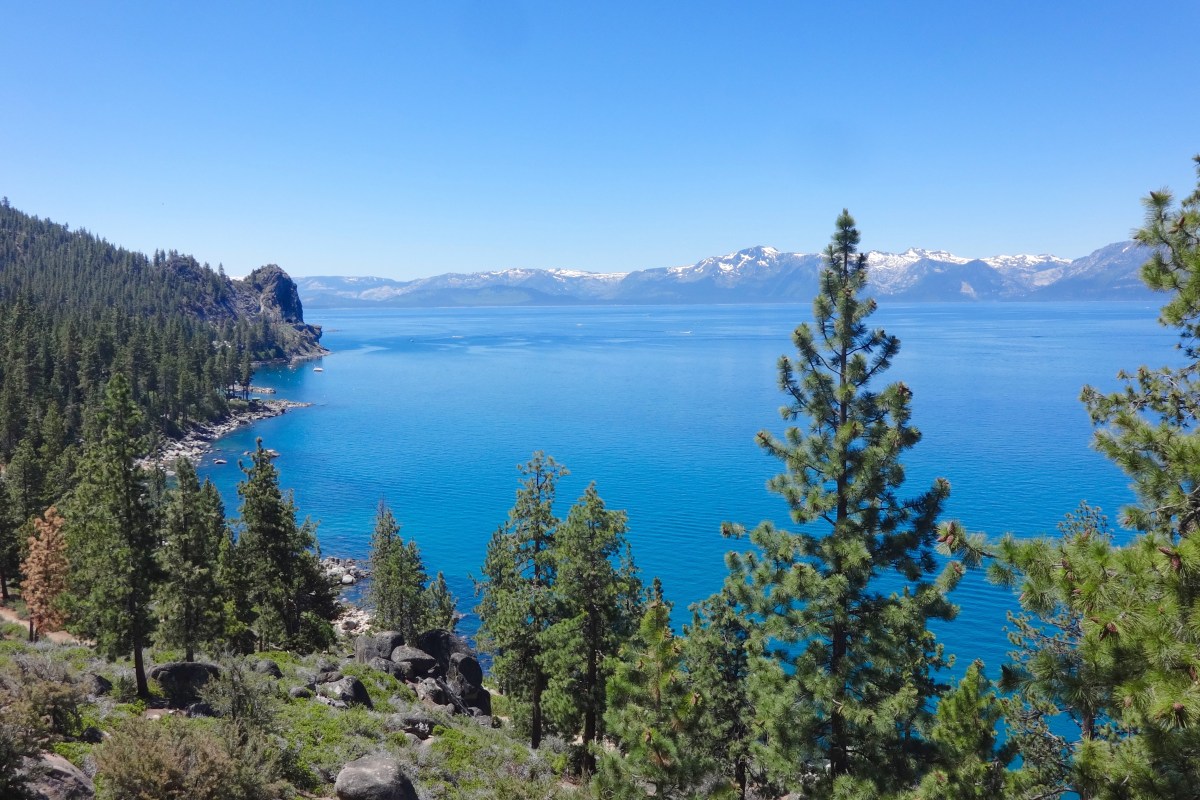
 I knew I wouldn’t be in contact with rodents. It’s not in my liking to approach them, unless we are talking about an adorable golden-mantled ground squirrel posing for a picture in Bryce Canyon. Apart from that I didn’t foresee rodents being a concern. But fleas, on the other hand, well, I didn’t know a lot about flees except that they were insects and insects get around. So I stepped out of my car and drenched myself in deet, and then I soon forgot that the Plague was even an issue. I set up my tent in the company of tall pines. In the distance between the pines I could see the snow capped mountains of the Sierra Nevada. When camp was set up, I walked across the smooth paved campground road to a general store on the grounds. I wanted to inquire about the coin showers. I exchanged my dollars for coins, enough for me to have two complete shower cycles.
 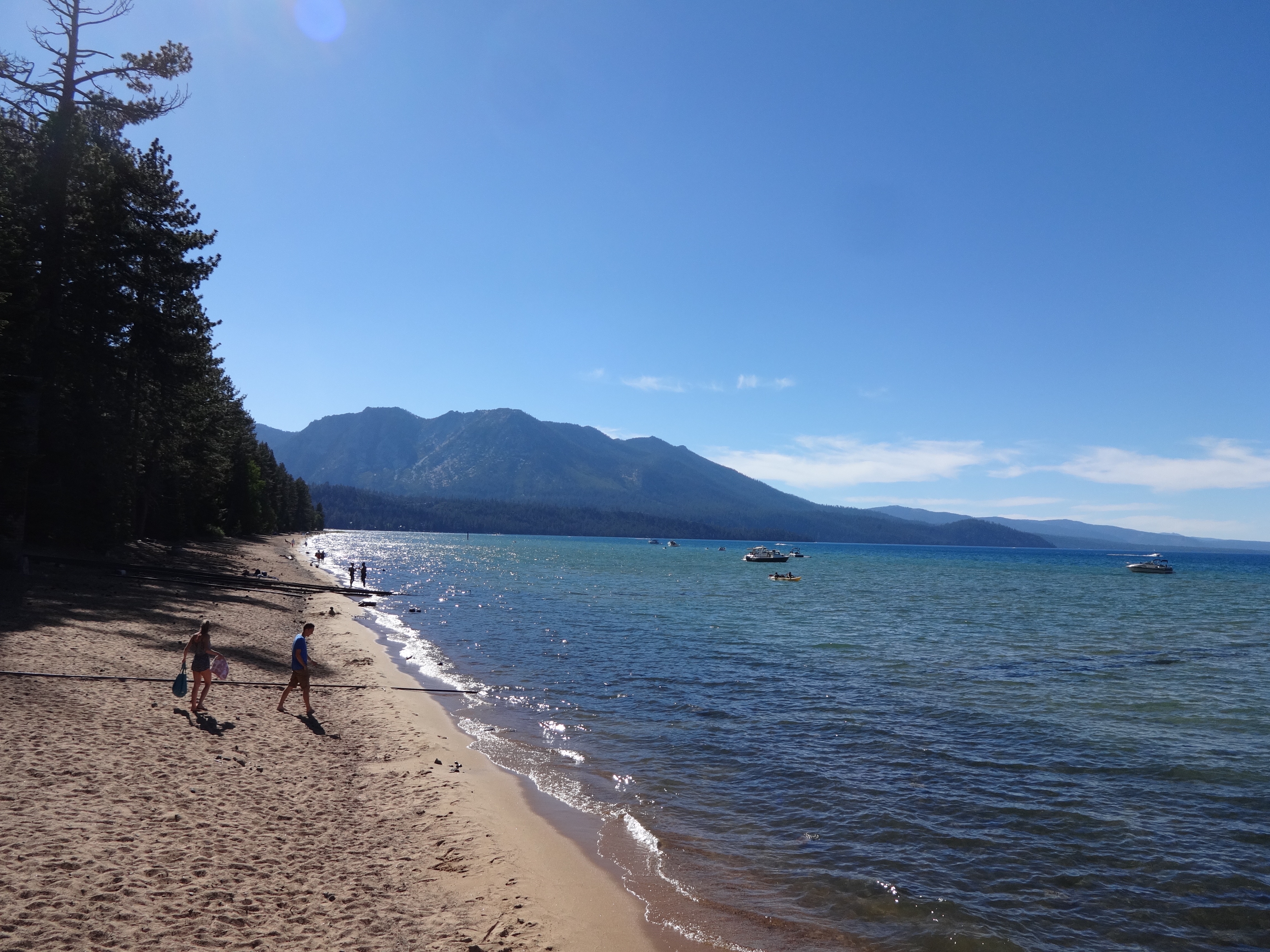 Another way to enjoy Lake Tahoe is what I was doing that evening from the sand of one of its many beaches, feeling like I’d made to the ocean and had become a beach bum while at the same time looking up at the snow capped mountains feeling like a northern mountaineer.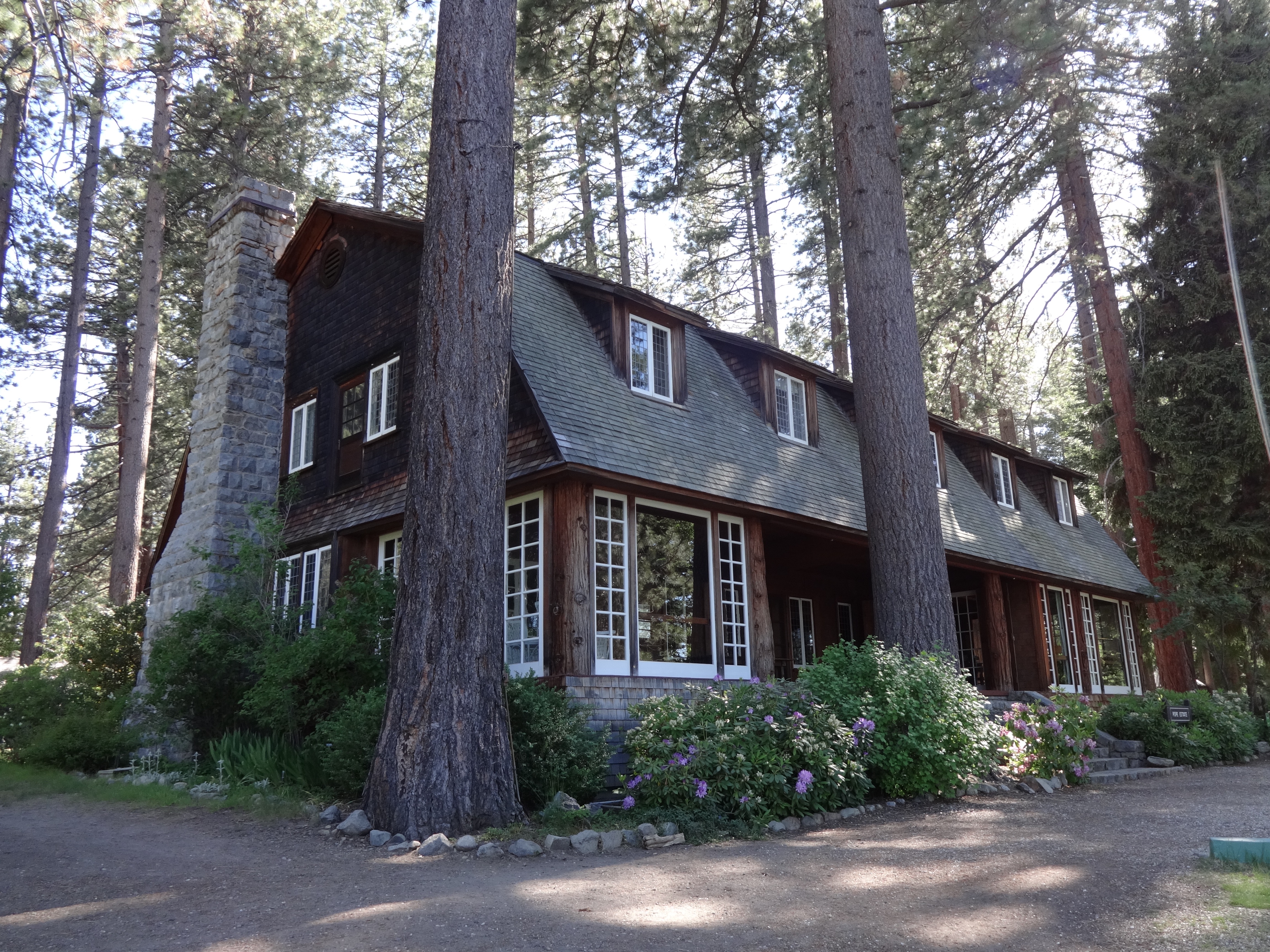
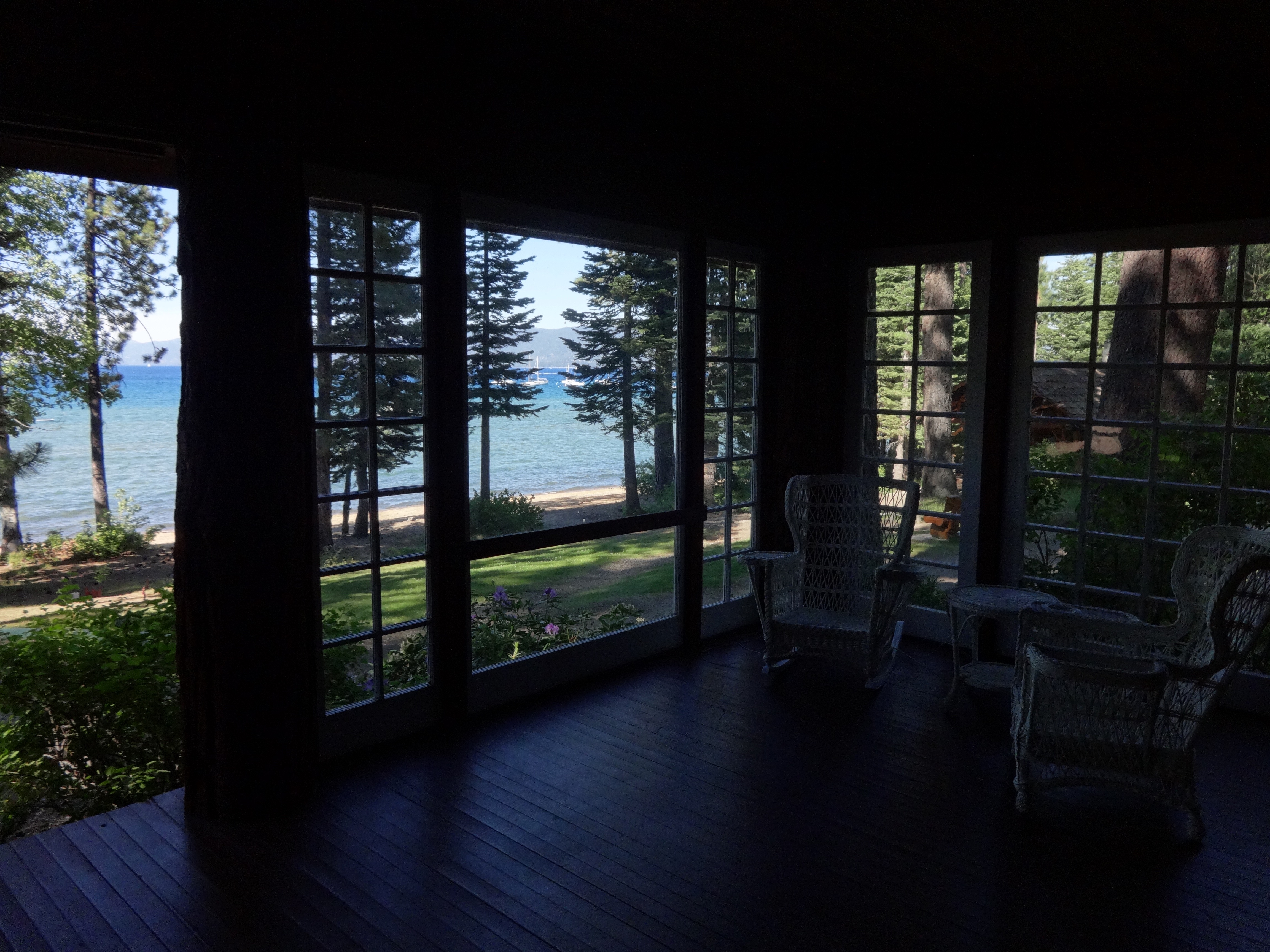 A final way I enjoyed Lake Tahoe was from one of the porches of the Baldwin and Pope Estates. There, just next to the trail I arrived on, and set up behind the beach, were these two estates, preserved as the Tallac Historic Site, managed by the U.S. Forest Service. The estates contained a collection of houses built in the late 1800s and early 1900s that were the private resorts for three social elite families of the San Francisco Bay Area. All of these buildings were composed of wood fashioned in one way or another, blending this rustic north woods style with tudor elements. The estates included the large summer cottages, accompanied with dark wooden shingles, and numerous guest houses and small log cabins for the tutor, groundskeepers, and servants. They were all tied together by well kept pathways and gardens. During the day, the buildings were open for tours, but I was there in the evening. They were all closed, but people were free to explore the grounds.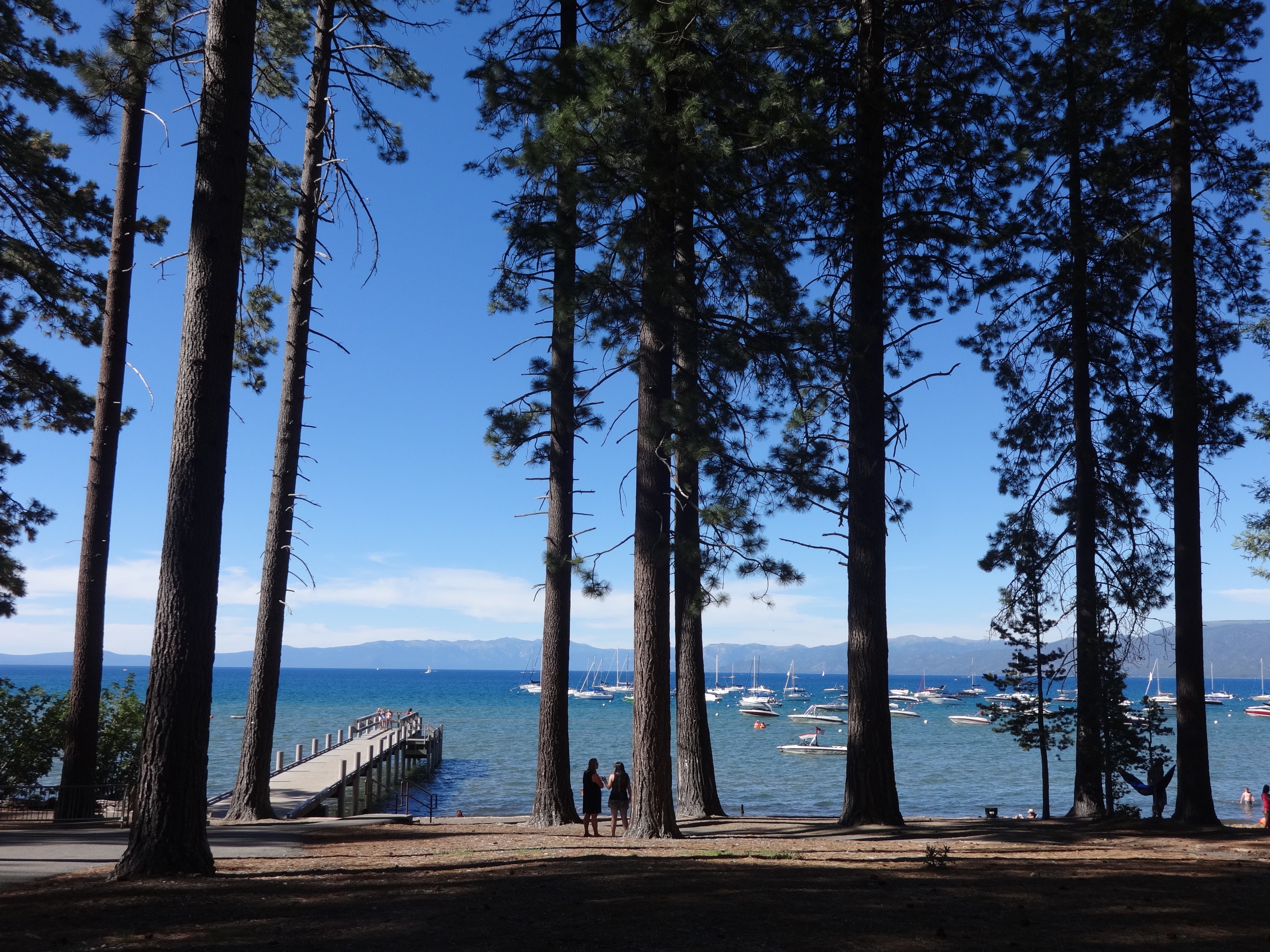
 Josh Hodge blog