This book chronicles a month-long adventure of camping and hiking in the U.S. National Parks in the summer of 2018, primarily in the Pacific Northwest. There are tales of adventure, humorous accounts, and captivating descriptions. Also nearly every chapter engages in a spiritual or philosophical discussion relating to the influence of one’s life upon another, the meaning of suffering, and the power of faith.
Why did you write this book?
I wasn’t going to write this book, because this particular summer was, in some ways, very difficult and shed light on some faults of my own character, at the time, and my struggle with illness. I didn’t want to write about it. I was done. But I have a goal of visiting every U.S. National Park and writing about the adventures in a series of books. Two of my summer adventures are chronicled in my books Canyonlands: My adventures in the National Park and beautiful wild and Still, Calm, and Quiet: More adventures in the National Parks and beautiful wild. With time and maturity, I realized this was perhaps my most meaningful summer- a time of great personal growth, and it was a part of my story that needed to be shared. I am so pleased to share it now, and hope everyone can learn and grow from my own experiences and insights.
Should I read your other two National Park adventure books first?
I would love it if you read Canyonlands and Still, Calm, and Quiet, but it’s not necessary. Each book gets progressively deep and philosophical. If you are ready for the most meaty book, this is the one.
Who published this book?
I am my own independent publisher and own all rights to my work. I design and format my publications. By meeting publishing standards, I am able to work with Amazon for printing and distribution.
How long did it take to write this book?
I began writing this book on Jan 7. 2022. It has taken me about three years. A great deal of time has elapsed since my last installment due in part to being wrapped up in other writing projects as they concern Dollywood and Theodore Roosevelt. In recollecting my advetures, I relied heavily on journal entries, photographs, itineraries, and maps.
What makes this book unique?
Each chapter is sort of its own episode and can stand alone, but, when read together, they paint a greater picture and produce more meaning. It is not a travel guide but rather describes my travels in the physical and spiritual sense. The reader will enter my mind and thoughts as I’m out exploring largely alone. The book also features 200 black and white photographs and 45 vintage illustrations. Among the many stories in the book, you’ll read about my struggle for survival in Death Valley, the time I jumped into Crater Lake, my first grizzly bear encounter, and my first ever days in Montana.
Are the photos and illustrations your own?
198 of the 200 photos I took myself. A photo of the a grizzly bear I did not take. I also did not take the cover photo. The illustrations are not my own, but are from vintage publications in the public domain that are no longer in print. They are recycled here for your enjoyment .
Where was the picture on the cover taken?
That is Emerald Bay on Lake Tahoe in California.
Where can I buy this book?
Currently this book is only available on Amazon and is eligible for regular and Prime 1-2 day shipping. In a few months it should be available from walmart.com and other online retailers. Buying direct from Amazon is the greatest way to support me as the author. Buy here: https://www.amazon.com/dp/B0DZVRCQRY
Will you be releasing an ebook?
I am a traditionalist. I like my books in a good ol’ hard copy format, and so that is how I am choosing to share my book. I spend a great deal of time on the physical design of my books I have no plans to create an ebook at this time.
Is this book the same collection of stories found on your blog?
Some of the stories are the same, but a number of them are not and are only found in the context of this book. As one of my blog readers, you will find this new and fresh.
What are the parks featured in this book?
Mojave National Preserve
Death Valley National Park
Emerald Bay State Park
Manzanar National Historic Site
Bodie State Historic Site
Redwood National and State Parks
Oregon Caves National Monument and Preserve
Crater Lake National Park
Mount Saint Helens National Volcanic Monument
Columbia River Gorge National Scenic Area
Olympic National Park
Mount Rainier National Park
North Cascades National Park
Lake Chelan National Recreation Area
Lake Roosevelt National Recreation Area
Glacier National Park
Lone Pine State Park
Is this book content appropriate for all readers?
Yes
What other books have you written?
Check out my full bibliography on my website here.
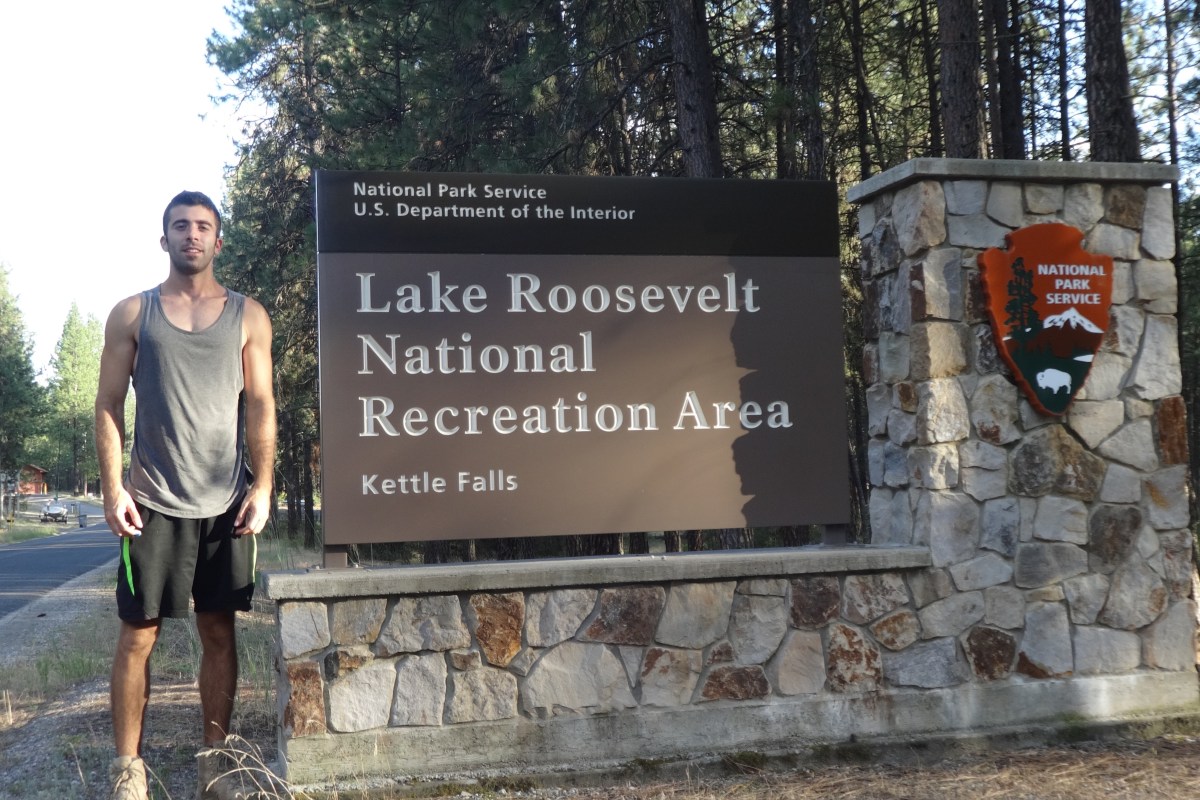
“Okay, I look alright.” I said to myself while looking at my picture by the sign to Lake Roosevelt National Recreation Area. It was a relief. I was not feeling well at all. I thought my relaxing time in Stehekin would be good for the body. It was certainly good for the soul, those two nights up in the forest in the most remote community in Washington surrounded by nature. Yet inside my intestines and my immune system were still angry. I felt as if I was entering that stage where my body was starting to reject food altogether. Anything I would eat would make me feel unwell, and I felt weak and withering. This was devastating to me at the time for a number of reasons, but especially because in recent years I had really focused on my health and building my body up. I was so disciplined and persistent with my daily workouts. I was very strict on my diet. My body was my most valuable thing in life. We should all treat our bodies as the valuable things they are, but I believe I had become over preoccupied with it.
I could see the natural process that played its course for me to arrive at such a place. I had spent much of my teens and young twenties very ill. Then my body healed. I regained strength and began to feel healthy after a long period of sickness. As my body began to once again absorb nutrients from food, it was exciting, and I held such an appreciation and gratefulness for my health. Slowly that evolved into being over-concerned and over-consumed with it. It was more about health too. It was also about building muscle and maintaining a certain physique. It was building an image and maintaining it. That doesn’t have to be a bad thing, but did I let that consume me, so as to lose my health now was unnecessarily devastating? This is what I was thinking.
Now I felt like everything I had built was crumbling down. I was living to build my body. I had put so much value in that and now I did not have it. My muscle was withering away and I was feeling weak and ill. It was a punch to the gut that was already wounded…. But in the photo I just took I thought I looked good. I still looked healthy. I still looked strong. I certainly was feeling worse on the inside than I looked on the outside. Sometimes with ulcerative colitis, it is apparent when someone is ill, but it is also a silent illness, in that one can be very sick and feel utterly miserable but on the outside everything may look fine.
The photo I took gave me a little pick-me-up, for I was low in spirit. After the welcomed distractions of Stehekin and the excitement of exploring that little pocket in the woods the past few days, I had a three hour drive in which I felt miserable. My gut was restless and my body was fighting itself. I was pestered with the thoughts Why is this happening to me? And then No, this can’t be happening, but then I repeatedly was confronted with the reality that, Yes, this is happening. My thoughts would at times be distracted, especially by sights along the way- but then I’d feel the abnormal churning of the gut, an urgency to pull over, and I‘d have to repeatedly confront reality: I’m ill.
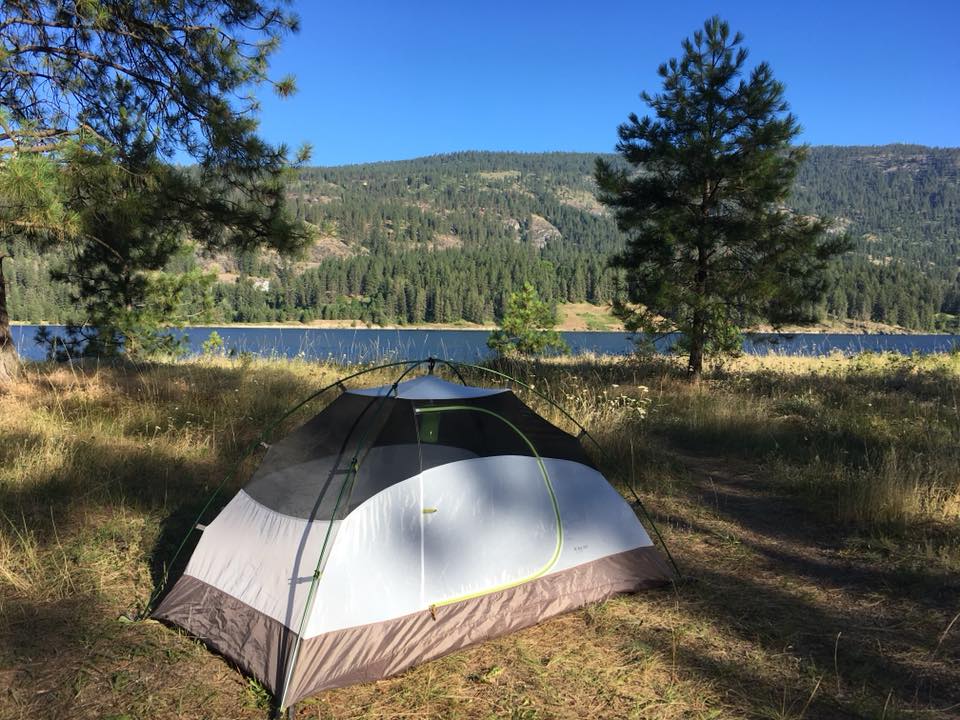
Eventually I arrived at Lake Roosevelt National Recreation Area. I had pulled over at one of the entrances to take my picture by the sign, something I try to do at every National Park Until. Feeling slightly better about my current state after seeing my photo, I pulled into Kettle Falls Campground. It was a very open arid campground. There were a few pine trees here and there, but mostly dry grass and dusty ground. I was atop a bluff beside the lake and on a rounded island very close to the mainland. As much as I love the deep forest, there is always something very comforting to me about wide open spaces. I think it’s the midwestern Illinois blood flowing through me. It’s calming for me to see the big sky and gaze over long distances, and there I could see that sky, and could look across the land over the lake.
Conservationists vs. Preservationists
Lake Roosevelt really is a part of the Columbia River formed by the Grand Coulee Dam created by president Franklin D. Roosevelt in 1941. I love natural places, and there is something extra remarkable about a beautiful lake naturally occurring in the wild, but there is something mildly disappointing about a dammed lake. I am not against dams. I think dams are fascinating in how much renewable energy they can provide and all the outdoor recreation they can afford. However I am well aware that there are people who are completely against dams altogether and any human influence upon the land. When I consider these people, I know I differ with them in the type of naturalist I am. I believe I am a conservationist, which I would define as one who calls for responsible use of the land to maintain its benefit for further generations. This is certainly different from exploiting the land, for I have great reverence for the land. If we were to exploit it, we would rid it of all its benefits, rendering it useless and defacing its natural beauty. Rather I believe we conserve it, so we can have it for its benefits for generations.
In some instances the best step we should take as conservationists is leave some things alone, preserve them. However my worldview is that the earth is designed for man’s benefit, and therefore we should use the earth for its intended purposes, and sometimes that benefit is simply in its beauty. An example is the Yosemite Valley. Don’t touch it. Let it be. It holds remarkable beauty. Other times the best purpose is for recreation or energy, perhaps that the assessment here for Lake Roosevelt. Sometimes the best purpose is agriculture, mining, cattle raising, farming, housing. Historically, the National Forest service has been a conservationist department, their motto: “land off many uses.” The National Park service is different in that its “to preserve and protect,” a largely preservationist mentality.
The preservationist as an individual doesn’t believe in any human involvement with the land. They believe in leaving it completely untouched. They want preservation as is. A conservationist believes in preservation as well, but the preservationists doesn’t share the same view of land use as the conservationist. Historically speaking, I have great respect for both types of people. Theodore Roosevelt was a great conservationist and John Muir was a great preservationist. Together they accomplished a lot. I think the input of both, the challenging view of one upon the other is good to find a balance and approach situations reasonably. The conservationist unchecked could be corrupted into an exploiter of land, but the preservationist helps bring the conservationist back to his roots of mighty respect for the land. Also the preservationist unchecked can become an extremist, viewing the human as merely a hindrance to the planet, restricting his due duty to the earth. As a consequence the planet actually suffers. Unfortunately I think many have arrived at this harmful viewpoint today, or at least those with loud voices and showy influence have.
Let’s take the example of forestry. It was once common practice for those working in forestry to attend to the forest. Fallen trees would be cleared from the forest and used for timber. This would benefit the man, but also benefit the forest as a whole. When lightning would strike and forest fires began, there would not be all the dry dead wood on the forest floor as ripe kindling, and therefore forest fires wouldn’t be as large and destructive. I know forest fires are natural and can be good things too, for the aftermath of a forest fire regenerates new growth and provides nutrients to the soil, but forest fires have grown bigger and more deadly, causing much damage, killing habitats, and disrupting air quality. People today want to blame out-of-control forest fires on “climate change,” but really the main factor is that in many parts, because of preservationists’ no intervention policies, forest floors are not cleared out of fallen timber. I see this as man not attending to his duty. Man in my view was created to attend to and take care of the land. He benefits from it, but he also takes care of it.
Many preservationists of today are treating humans like an invasive species. Not only do we have man not attending to his duty to care for the land, but we also prohibit and restrict him in so many instances, which may not be necessary or good. I am so glad the infrastructure of our National Park system and the creation of all our beautiful National and State Park lodges and roads occurred at a time of the healthy pull of both sound thinking conservationists and preservationists. Today the preservationist would prohibit humans from all of what we have and enjoy in terms of parks. We wouldn’t have the richness of our access to these beautiful places. We have to be responsible but we cannot throw out reason. After all, this is ours too!
Each Animal Has a Job
Take a look around the animal kingdom. All animals manipulate the earth. I think the strongest example is the beaver. They gnaw down trees, create dams as well, creating whole ponds and waterways that otherwise may not exist. They use their creations for their homes, their habitats, and cultivating their food sources. We don’t see huge movements and people taking to the streets to protest beaver dams now, do we?
What about bees? They build these hives, enormous in comparison to their size, then they go around stealing pollen from all these flowers. Should they just let these flowers be? Should we regulate bees and restrict them from tampering with all these flowers? Should we place zoning restrictions on their hives? What would happen then? Well, there would be no pollination of our flowers. They would cease to reproduce. We’d have no flowers and would lose many vegetables and fruits to extinction. Also, bears feed off of beehives.
Let’s talk bears. They have a responsibility to the forest too. They clean up dead carcasses and their waste spreads as fertilizer and spreads seeds to propagate growth of many plant species. Should we regulate bears and not let them roam free and confine them, for they are tampering with the forest by moving all those carcasses and spreading all their waste?
Man’s Role in Nature
Just like the bear and the bee God has given every creature its role. Birds build nests, bees build hives, beavers build dams, prairie dogs build entire underground towns, can’t the human build for himself a home or build his own dam? Every animal has a role with the environment. The human has a role too. The discussion should not be, how do we remove humanity from nature, but rather what is man’s responsible role in nature? Ignoring his role, the earth suffers. As written in the book of Genesis, God put man in the “Garden” to attend to it, and not to ignore it. We should especially not ignore our forest and water ways in this great garden. We need to attend to them.
This is not to say I am careless, but man is not an invasive species. I believe the earth is created for man. The bigger issue is that man doesn’t know who he is. The further we get away from God as a society, the less we know who we are; and the less we know about who we are, the less we know about our role and responsibility to the earth.
Here I stood at Lake Roosevelt. What do I make of this dammed lake? When it was constructed at the time of the U.S. coming out of the Great Depression and into World War II it provided much needed energy for the economy and today it provides great recreation. I acknowledge and have an appreciation for these things, but I also was a bit saddened learning more about it. Kettle Falls, the water falls which were a great and prominent gathering place for many Native American tribes of the Pacific Northwest to trade and fish along the Columbia River, was now flooded because of the dam. I was saddened that such beautiful things as waterfalls were eliminated by man, and I was sad considering tribes lost such an important location for them. When the dam was built and the falls were being flooded over, a number of tribes got together for a “ceremony of tears.”
This site was also so important to their salmon economy. At one time the Columbia River was home to the world’s largest salmon runs with over thirty million salmon taking the route. The dam changed that. Oh, what should I make of Roosevelt Dam? Some things we just have to accept. There’s no changing. Things won’t go back. Kettle Falls are gone. The salmon run is not what it once was. Lake Roosevelt is here to stay, and so I have to approach it, not by the past, but in the present. Lake Roosevelt is unarguably beautiful. I chose to appreciate it and enjoy it.
Mission Point
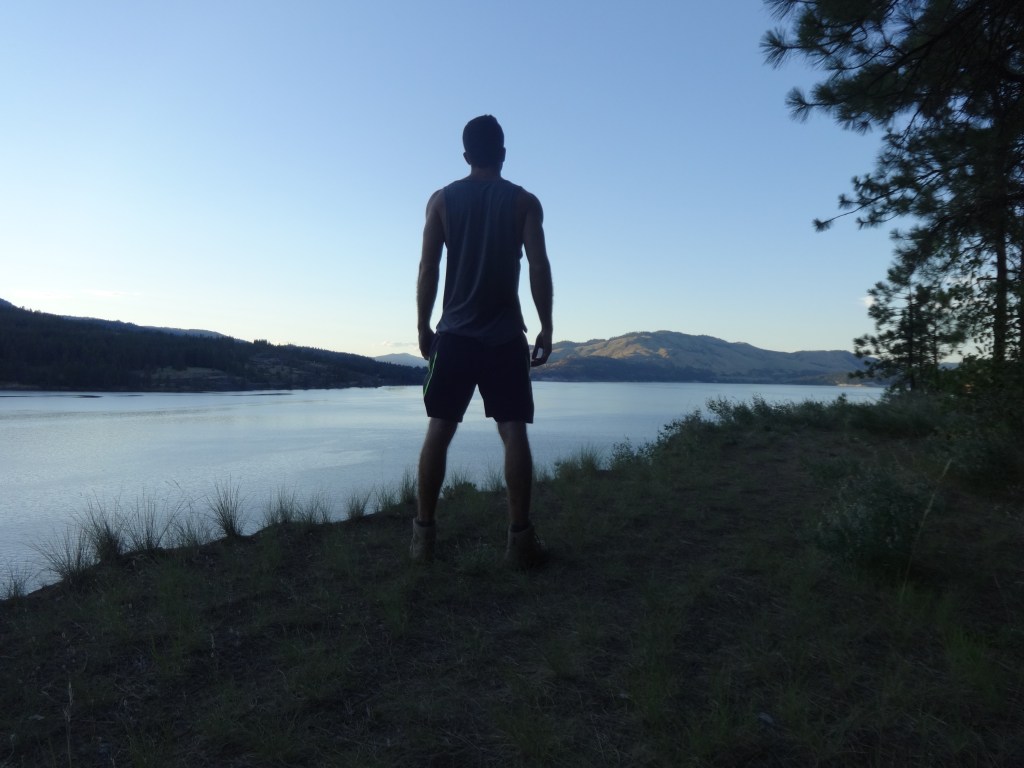
I drove just a few miles up the road to Mission Point, a little peninsula on the lake where the Jesuits had formed a mission, beginning with the visit of two Canadian-French Catholic missionaries, Francois Norbert Blanchet and Modeste Demer in 1838. They witnessed to the Colville Indians and the fur trappers and traders of the Hudson Bay Company visiting the nearby Fort Colville. The following year they held the first recorded mass between the Rockies and the Cascades and baptized nineteen Native Americans. This was my first time learning of Catholic missions in the U.S.. I would go on to learn of many more on my travels through Montana. There at Mission Point was the old mission meeting hall. It looked like nothing more than a cabin. I walked around and read the interpretive signs. There was a small path that led out to the tip of the peninsula. I walked out there and sat down for a moment. Everything was still, calm, and quiet. The sun was setting behind the hills in the distance on the other side of the lake.
On my walk back down the path to my car I spotted a deer. It was watching me through a window of pine trees in the forest. I paused and locked eyes with it, then I moved slowly and quietly towards it before it trampled off.
Back in my tent I looked through the pictures I had taken on my phone and reviewed my itinerary. Tomorrow I’d arrive at perhaps the climax of the summer adventure, at what I was considering the National Park of all National Parks, Glacier National Park!
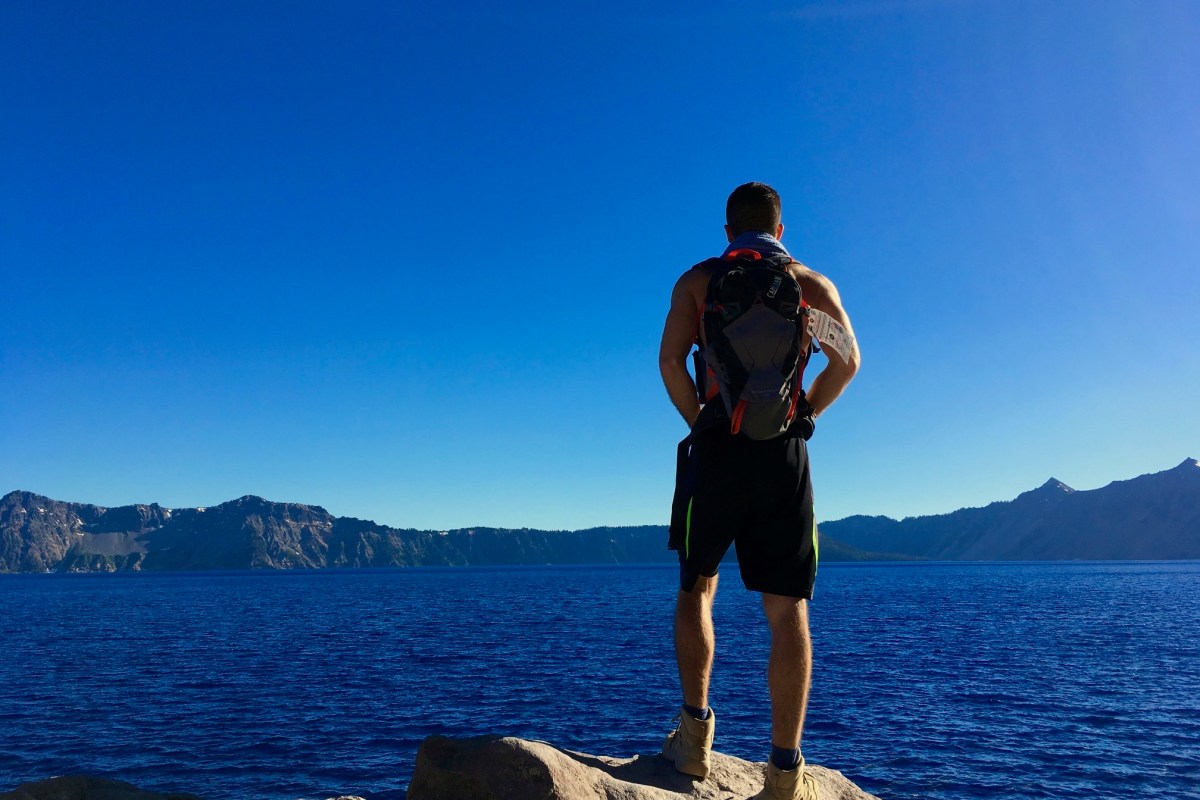
I have to do this, I thought. I felt I just had to jump into Crater Lake. I had come this far, but I was full of so much fear. I was staring down off a cliff into Crater Lake, into a seemingly endless abyss. Crater Lake has some of the clearest and purest water in the world. It’s a massive lake at about five miles in diameter. With a casual glance the lake is a vibrant bright royal blue, but at the right angle, looking straight down into it, I could see the blue gradually grow deeper in transparency reaching an eternal darkness. The truth is it reaches about two thousand feet in depth. From up here, that seemed like an eternity. My eyes could follow little bubbles that traveled up from the depth, growing bigger as they wobbled and floated up to the surface. I have never in my life been able to see so deep into water. These little bubbles helped show the profundity of what I was looking into. It was unsettling.
I was certainly not alone on jumping into Crater Lake. This was the thing to do. There were dozens of other young people who were doing it, each one taking his or her own turn, and just about everyone reached the rim with hesitation. It wasn’t a terribly high cliff, only thirty five feet. That’s a little over two stories, but it was the shock of looking into it and seeing an endless depth that caused just about everyone to rethink matters.
What if I don’t come back up? I questioned. The thought was irrational, I know, but it is what seeing such deep waters provoked. If I couldn’t see into the water, if it was just murky, like most of the water out east, I would just have trusted the water to propel me back up. There never would have been a question, but here, something about seeing the depth of the water, conjured up this incredible fear.
This one irrational thought wasn’t the only fear. There were also two more aspects. Secondly, the temperature of the water was very cold. At the visitor center I learned it was about forty degrees today. That’s very cold for water. Also, I had lost trust in myself as a swimmer. The summer prior, while visiting my brother Nathan in New York City, I visited Rockaway Beach at Gateway National Recreation Area on Long Island. I had seen some people jumping around on a sandbar out in the ocean. It didn’t look far. I could swim out there too. I did and just barely made it. That was strenuous. When I lived in Houston, Texas, I went swimming everyday for exercise, and I had really built up my confidence as a swimmer, but it had been a while. My lungs were no longer in quite the swimming shape.
After a fun time of jumping around on the sand bar, it came time to swim back to the mainland, and that’s when things got hairy. I felt as if my efforts were fruitless. I kept swimming but wasn’t going anywhere. I didn’t seem to be making progress. The ocean was just pulling me backward, and I began to panic. In my panic my limbs grew stiff. I didn’t think I was going to make it. It was quite an intense moment. At one point I decided to just give in and see how far it was to the ocean floor. I sank, and I hit rock bottom. It was not far off. So my strategy was to sink, hit the bottom, jump up for air, and gradually progress my way to the mainland. This seemed to be more effective and require less energy than trying to rotate my panic stricken limbs. When I made it to the shore, I collapsed on the sand in relief. This experience was traumatic. When I’d go swimming shortly thereafter in subsequent months, I’d find my heart racing as my mind took me back to that moment.
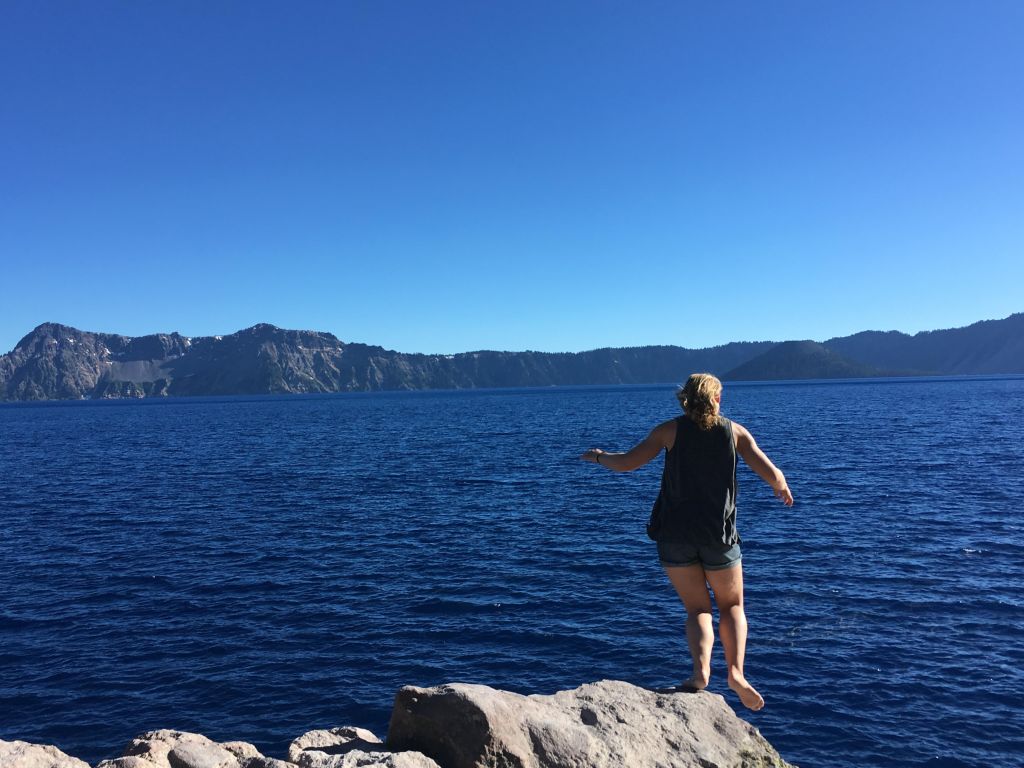
Now at Crater Lake National Park in Oregon, I knew this jump wouldn’t involve much swimming afterward, maybe only fifteen feet back to the rocky shore line aside the cliff, but I was still traumatized by my incident in New York. What if I freeze up in shock of hitting such cold water? I’m sure I wasn’t the only one with such questions. There was one teenage girl, who stood there for a good fifteen minutes. She’d inch her way closer to the rim, peer off it slowly, and cower back, taking a deep breath. Very few people approached the jump with boldness. A number of people, all young guys and girls, regularly offered for each other to cut in front of themselves and go first. I was one of them. “Oh, are you ready? Go ahead….You can go first…please.” When someone did cut to the front, that person would often look off the cliff edge and motion for the next person to go ahead. It was a bit of a pile up. When someone finally mustered up enough confidence to jump in, the rest of us cheered in great applause, for we understood it was a big deal and just what it took to do it. It was a great emotional feat of conquering a fear. We all felt it. We knew how strong that fear could be. It was encouraging, fun, and genuinely so pleasing to cheer each other on. There seemed to grow an instant camaraderie among the people here on this cliff on this June evening.
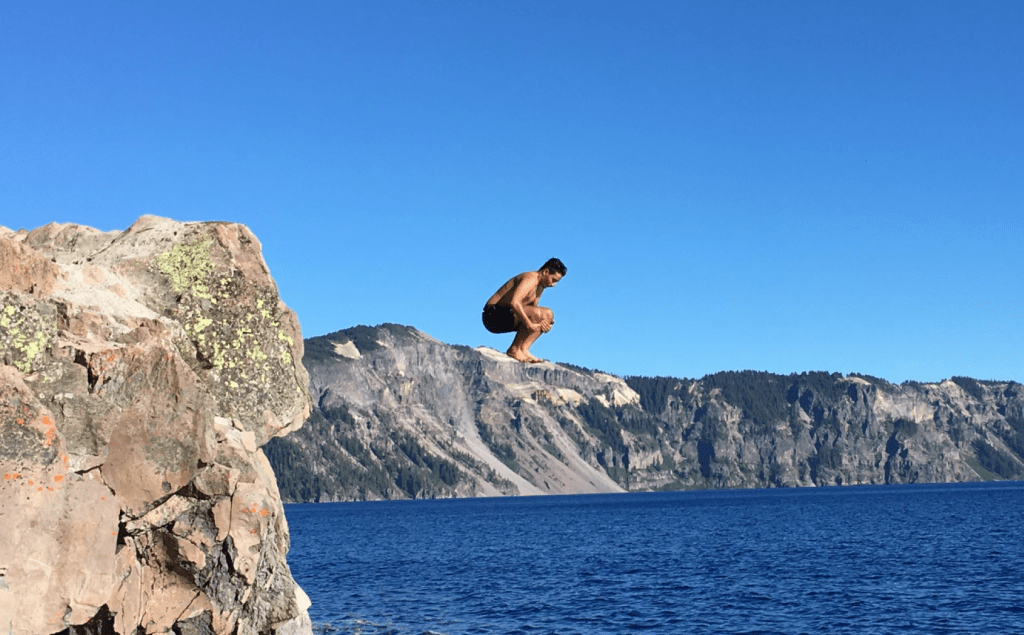
At one point I decided to just get out of the way. My nerves were only growing. I climbed down alongside the cliff to the water’s edge and captured pictures of others jumping in. I captured Zach’s jump on video, and there was another young man whose picture I caught mid-air. His feet looked like they were resting on the mountains across the otherside of the lake in the photo. I showed him the photo when he got out of the water. He really liked it and wanted a copy. He introduced me to AirDrop, which is something I never knew was possible before.
I just had to jump in the lake too. There were a few reasons. First, I knew this was a rare opportunity to overcome a fear, and every fear I overcome will make me a stronger person. There is nothing inherently dangerous about this. In all rational observation, deep down I knew I’d be fine. It was my own human instincts and irrational fear getting in the way. I was fully aware of this. Secondly, I admit, I wanted bragging rights to say I jumped into Crater Lake. Thirdly, how could I ever live with myself knowing I was up there on the cliff’s edge set out to jump into the lake but chickened out? I had to do this. I climbed back up there. I gave myself just a brief moment of hesitation, in which a man said to me, “If you start to drown I’ll come rescue you, I promise.” I guess that little bit of assurance was enough to greenlight this endeavor, and I jumped.
Crater Lake seemed so wide and huge from my freefall into it. It was too big, too intimidating. What am I doing?! I closed my eyes and hid behind the darkness of my eyelids. The cold mountain air ripped between my feet. I felt so exposed, my little half-bare body exposed to the elements, engulfed in the air. I felt the strange sensation of having lost control. There was nothing I could do to stop that which was before me. There was absolutely no way to stop the fall, no turning back. I was at the mercy of gravity and the forces of nature, exposed and vulnerable. I thought by this point I should have reached the water, but I was still falling. It was taking a while…but I was doing it! I was already proud of myself for facing my fear and already felt accomplished. I had launched myself off that cliff despite the most paralyzing of fears. If there ever is a chance to face a fear, do it. It’s what we all must do to keep growing. Theodore Roosevelt when talking about being a fearful child once said, “There were all kinds of things I was afraid of at first, ranging from grizzly bears to ‘mean’ horses and gun-fighters, but by acting as if I was not afraid I gradually ceased to be afraid.” He also added, “The worst of all fears is the fear of living.” I was living, jumping into Crater Lake!
Okay, where is the water?Surely I should have hit the water by now, I thought. I guess I’m still falling. I wondered just how cold this water was going to feel, and how deep I would fall into it. What is it going to feel like?Will Zach get a good picture of this? I’m glad I could share that one guy’s photo with AirDrop. After this we will finish our drive and go check out the lodge. It’ll be nice to rest there a bit, before we go back to camp. Should we make a fire tonight, or just go to sleep? Tomorrow we’ll make our way to Mount Saint Helen and stay at a KOA. There are so many cool places left to visit on this trip. I’m hungry. I wonder what kind of food we can find around here. I wonder what kind of fish and creatures live in this lake. I wonder what lurks in its deepest depths.Is there something like the Loch Ness Monster in these waters? One day this will all be…
KAPLUNK!
I was in Crater Lake.
Water was gurgling, bubbling, and ripping around my ears. I felt gravity suck me downward, pressure pound at my skull, and then I began to rise. Surface, come quickly, I begged. Don’t take as long as that fall.
Gasp! I made it. I opened my eyes and….
I panicked.
My knees locked up.
It was so cold. Too cold. I was numb.
I instantly knew I was not going to make it back to the shoreline. My presupposition was correct. Time for plan B. I didn’t have one, but I was going to make one. I was not going to make a scene as to call over the man who promised to rescue me. How embarrassing that would be. Instead I flailed my way over to the craggy cliffside just below the jump-off. There was no real rock ledge or anything to provide footing, but somehow, with the greatest of Spiderman-like moves, I fasted my grasp and curled my toes onto that rock’s face. I will wait here until I catch my breath, and so I did, and I survived. I was white, blue, shivering cold, slightly traumatized, exhausted, yet adrenaline racing, and I was a heck of a warrior, I guess you could say. I’m glad I did it. It’s a story to tell, but…never again!
It was a cool wet morning. This land was moist, damp, dark, and dripping. Beneath my feet the decaying wood on the forest floor was almost sponge-like. This sure wasn’t Southern California anymore, where I had just been the day before, where the ground is perpetually thirsty. This was a new place for me- The Redwood Forest of northern California.
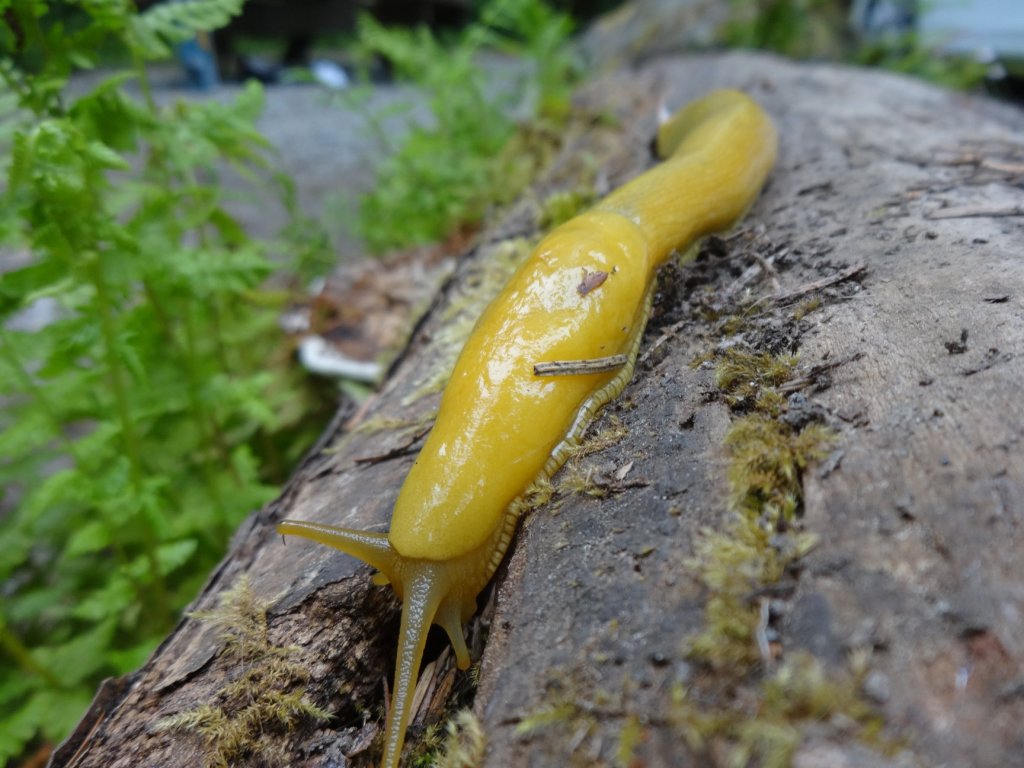
“Wow!” I exclaimed. “You have to come see this. This snail is huge!” I was impressed and also wanted to wake my travel companion, Zach. I stood outside my tent taking in the misty wet wonderland. We had arrived in the dark the night before, and I wasn’t sure of what all comprised the surroundings when we were setting up camp. So I gingerly stepped out of my tent with curiosity. What is out there? I thought. The creature I found crawling up my tent was the biggest insect I had ever seen. It was crawling very slowly, easing its way, putting its whole body into it. I had my terminology confused. It was not a snail at all. It was a banana slug. This creature had a dismal sort of earthy yellow, with a rubberlike appearance. It was rightly named, for not only do these slugs have a yellow appearance, but they also are just about the size of a small banana. I’d come to find that Zach is not an easy one to wake up and get moving in the morning, but my exclamation about a bug got him right out of his tent. He is one fascinated by critters and crawling things of all kinds.
“That’s not a snail. That’s a slug,” he corrected, observing it and soon gently poking it with a twig, inspecting its response. I was a little bit embarrassed by my error. He went on to spy two more crawling around our camp. They are commonly associated with the Redwood Forest, but I had not read up enough about this park to know, and thus these slugs were quite a surprise for me. We had camped in Elk Prairie campground, just a short walk from one of the park’s visitor centers. After I had got the ball rolling to get the day started with my bug exclamation, I made breakfast. I fixed my campfire apple crisp in which I baked apples in a tin cup over a campfire and melted an oatly chocolate chip Clif Bar over them. After breakfast, we quickly packed up our camp, then prepared our backpacks for an overnight adventure.
Redwoods vs. Sequoias
Before embarking on our day’s big trek, we drove over to the visitor center where, next to it, we went on a stroll through the Redwood forest on an entanglement of a series of short trails with interpretive signs. We had seen some Redwoods, driving between them the evening before. It was spectacular to see the evening sun finding its golden glow between their branches on the pine floor. But now it was a distinctly different experience to be outside and in their habitat. These trees are massive, surely impressive, but they don’t quite provide the same wow factor and sense of awe as the Sequoia’s of southern California. People often assume the Redwoods are the world’s largest trees. They are the world’s tallest trees, but the mighty Sequoias are the largest in volume, having girthier trunks and therefore invoking a greater sense of awe and boldness.
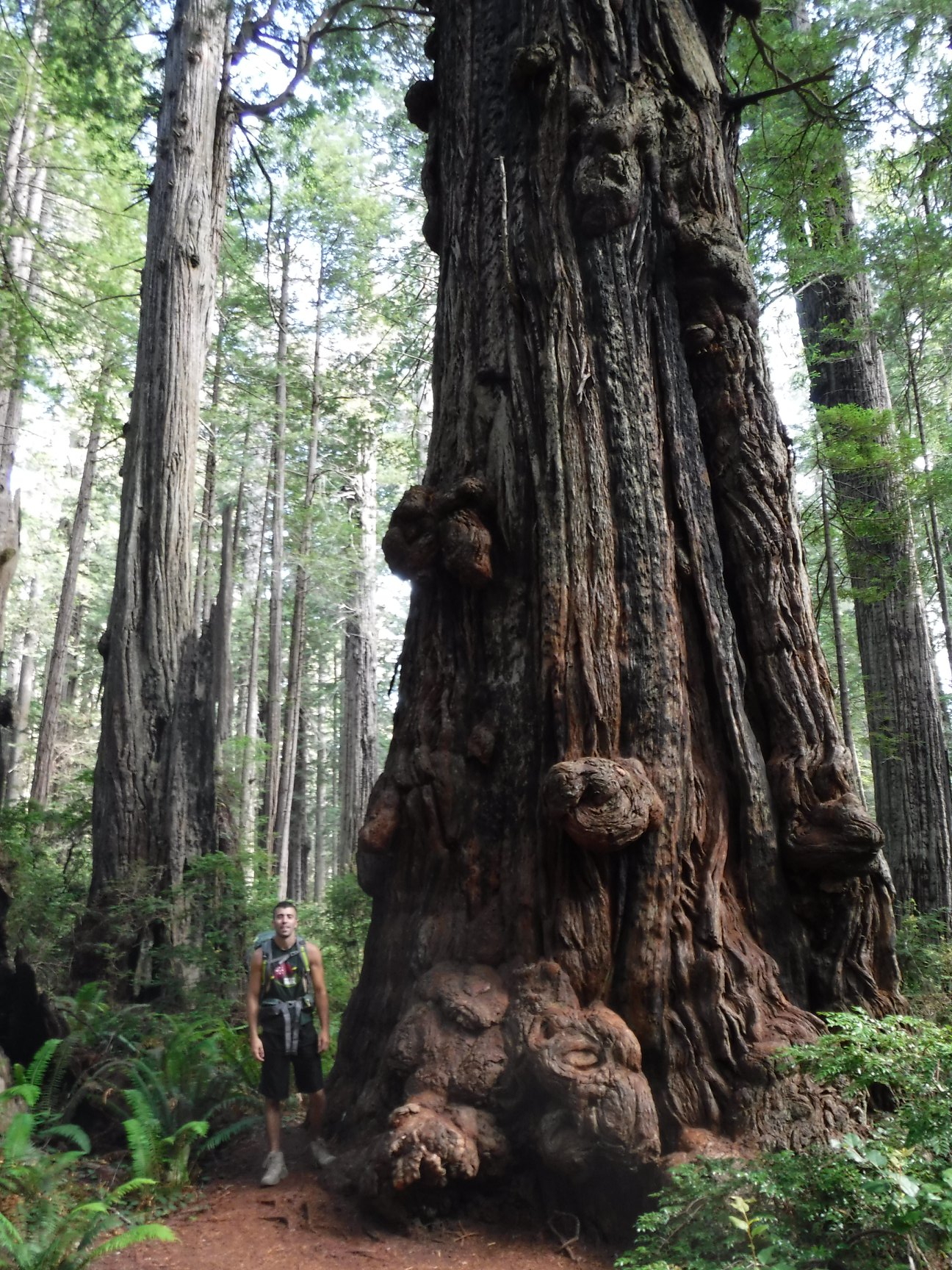
The forest flood was a bed of pine needles and moist wood decay. As we trod on top of the forest’s soft bed, we looked up at the high reaches of the Redwoods disappearing as their branches covered one another. They for sure created a canopy. We were under it. The term “inside the forest,” really is quite appropriate. We were not quite fully outside. We were inside, but a different sort of inside. We could not see the sky except for small slivers peeking in, and thus the forest was dark, dismal in appearance. Vibrance was dampened. Looking down from the forest’s tall reaches we encountered our company, enormous ferns crowding in what otherwise would be empty space, from the trunks of the trees to the edge of the paths. I couldn’t help but make more comparisons between the Redwoods and the Sequoia. The Sequoia has a cleaner, more refined look about it. It has straight edges and is more dignified. The Redwoods are a little more wild, sloppy, unrefined, if you will. They have many knots and lumpy growths which especially congregate around their bases. They give a feebler appearance as some are split and splintering. In a couple instances we climbed up into some trees which had split, and we took our pictures in the tree cavities
Nurse Logs
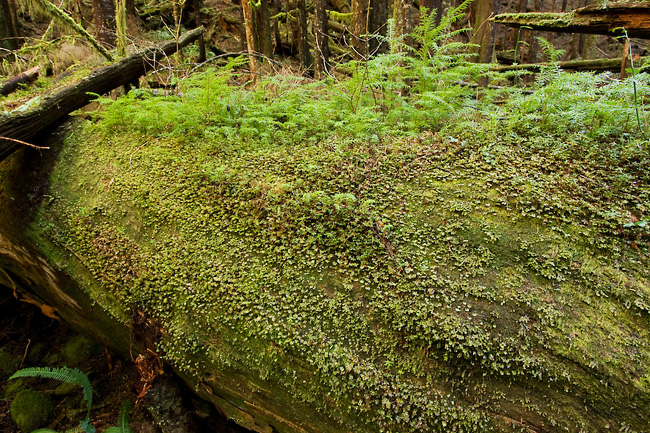
As we wandered around the interpretive paths, I could see Zach’s head just barely visibly among the ferns which grew nearly as tall as him. At one point, with him ahead, I stopped and read an interpretive sign. It had really provoked some pondering. It was next to a fallen tree. On top that fallen Redwood, or from within it rather, other saplings were growing, and moss and greenery were laden. I had also seen, along the day’s hike, other instances in which a nearly full grown tree had grown out of the fallen trunk of another. The placard beside this tree read, “Nurse Logs.” I read that these fallen trees provide just the right nutrients to foster growth of the next generation of plant life. They are a phenomenon of the forest. I observed this particular fallen tree in front of me. It was as if it was its own world, its own little island or little planet in the universe of the forest. This decaying tree provided so much life and created its own miniature forest. It had its own visible microbiome.
This was very captivating to me. I knew immediately something so spectacular and peculiar is not without a deeper meaning. What is the message God has through us through “Nurse Logs.”? I truly believe no marvel of nature goes without a message. All of nature is designed to reveal spiritual truths to mankind and point us back to God.
I began to think about people in relation to trees. To help you follow my train of thought, or perhaps my “tree of thought,” as it branches out in many ways, let’s take this to my most rudimentary observation. A Nurse Log is dead yet it provides life. There are people who are dead, but yet provide life. Not in the sense of bodies decaying and providing nutrients for the soil or tree growth. Don’t get me wrong. Rather, I mean in the sense that those who have gone on before us enrich our lives through their past lives fully lived. Their legacies, their teachings, their love and efforts are life-giving. We often live off of or find our life-fuel through the inspiration and efforts of those who have come before us… and if we don’t, we should. There are great people of the past who are true gifts from God, whom he placed in the exact right moments of time to enrich our lives.
Nurse Logs in Scripture
I thought about the lives of those in Scripture, whose examples provide such enrichment to our own lives. I think of the faith and commitment of Paul in the face of persecution and suffering; the openness and raw relationship between Job and God in the midst of extreme suffering; the trust of Moses despite feelings of inadequacy; and the courage of Joshua to lead a new generation in battle after their people had gone astray. As I’ve posed this question to others, there are many females in particular who find strength in Mary for her obedience to and trust in God to be the mother of His only Son. There are so many Biblical figures who enrich our lives. However, there is really only One who can truly give life, and that is God through Christ Jesus. For the sake of this Nurse Log analogy, when I say “life-giving,” I refer to one who can greatly and profoundly enrich our lives, not literally give life. There are so many life-giving people in Scripture it’s overwhelming. God has given us a record of their lives with intention to help bring about the robustness of our own lives and ultimately lead us to Him.
Nurse Logs in History
With these thoughts, I was overwhelmed in the best sense of the word. My wheels were spinning. I decided to consider other areas of our lives or other categories of “Nurse Logs.” I thought about more recent historical figures- the Abraham Lincolns, the George Washingtons, the countless heroes of time, and the men and women who have served in the military whose sacrifices have cleared the forest for our lives to flourish, especially all the lives sacrificed in the Revolutionary War and Civil War that allow for the freedoms we have today in our country. I also considered the theologians and philosophers whose great explorations of Truth have informed my own life and enriched it, even those who more tactically have built things and made advancements in medicine. Then I took this down to a more personal level. I asked myself, Who are the specifically identifiable Nurse Logs in my life– deceased people who truly enrich my life? Whose legacy continues to feed me and provide the nutrients for my own growth?
Grandparents as Nurse Logs
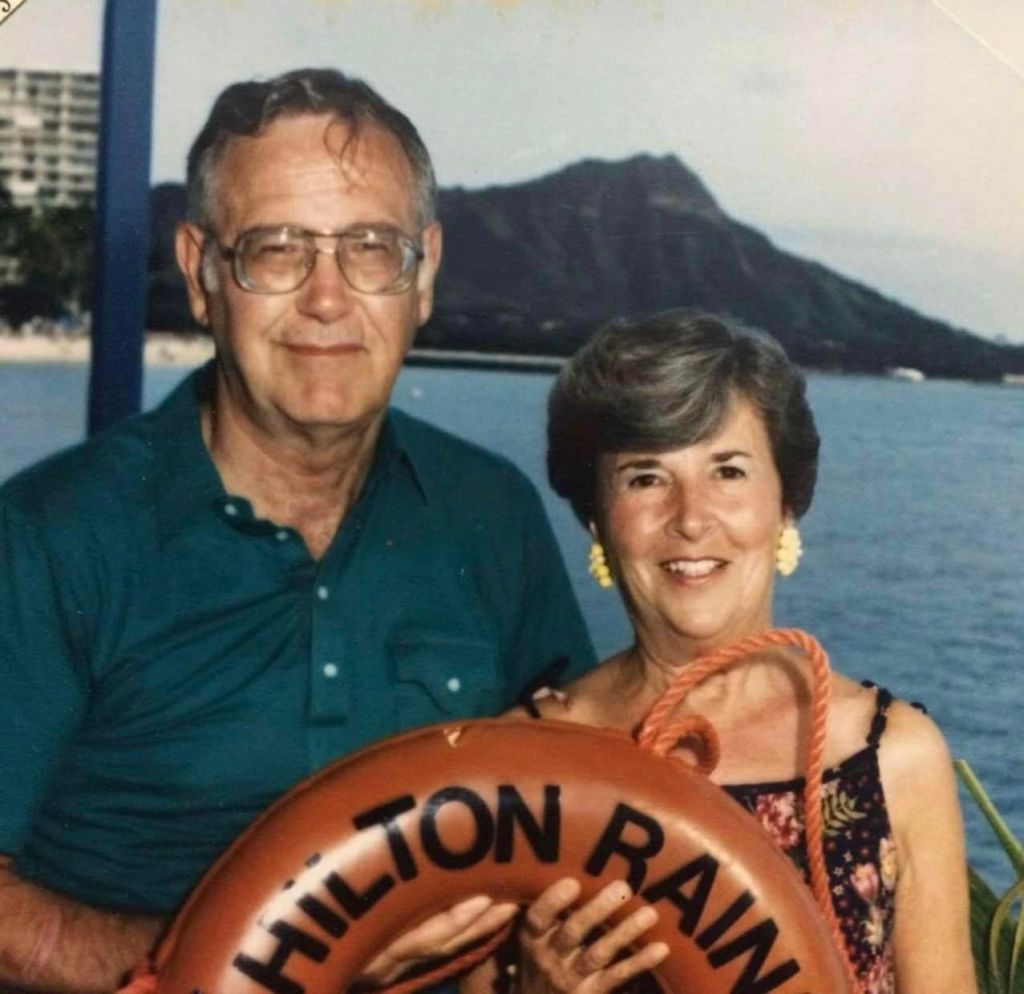
First and foremost, one answer is clear: It’s my grandparents, who are all deceased. It’s their efforts, their values, their consistency which influenced the character and values of my own parents. Consequently my parents have passed on those same values to me. There are so many aspects to consider, including ones of which I will never be aware. I can, however, examine some of the obvious ones: faith, creativity, persistence, family, love… Those are some of the nutrients I grow out from, left by their lives. I would surely not be who I am without my grandparents, and as a matter of fact, not for my grandparents parents, and the lineage for generations. My grandparents are surely the most nutrient dense Nurse Logs in my life. Their influence, though most times not direct, is the most profound and interwoven in my life.
Walt Disney: a Nurse Log of creativity and work ethic
I began to think of others, deceased people apart from family, who have enriched my life. When I think about my sense of creativity and work ethic I think of Walt Disney. He influences me as a writer and teacher. The broad gamut of his stories and creative work spur me on in my own creations. He adopted a principle his father gave him: “Any job worth doing is worth doing well.” I believe that. It guides me in my own creative endeavors. Walt put a great influence on the quality of my work, and his example speaks to me and influences my work. He also saw the quality and potential in others. He was a master at bringing talent together. That has influenced me to bring on outside talent into my own creative projects. I also am inspired by the value he placed in storytelling, family, and innocence. Even my patriotism is inspired by Walt Disney’s love for his country. How sad Walt would be to see how far the company he started has strayed from his values.
Something often overlooked about Walt Disney is that he placed a great importance on reading too. He hoped his storytelling would inspire children to read more, something I am also so passionate about. I’ve spent a few years writing for Dolly Parton’s Dollywood theme park, and in that getting to know more about Dolly Parton than I ever expected or could have imagined to in my life. I see how Walt Disney is surely a nurse log to Dolly as well, inspiring her in her theme park, resorts, and storytelling. In her book Dream More: Celebrate the Dreamer in You, she really summed up the value in reading that perhaps the three of us share. She writes, “I tend to find that people who read more are generally more engaged and therefore care more.”
To top it all off, I am inspired that Walt made the largest entertainment company in the world out of nothing. His story is that of a poor farm boy in middle America, who moved to Kansas City with virtually nothing and was homeless. He started off on his own taking showers in a train station and sleeping in his office, but in those moments he had fierce determination, which for me is life-giving inspiration. When I feel like I make no progress in my own efforts I think back to Walt’s story and find the gumption to keep going.
John Muir: a Nurse Log of viewing nature
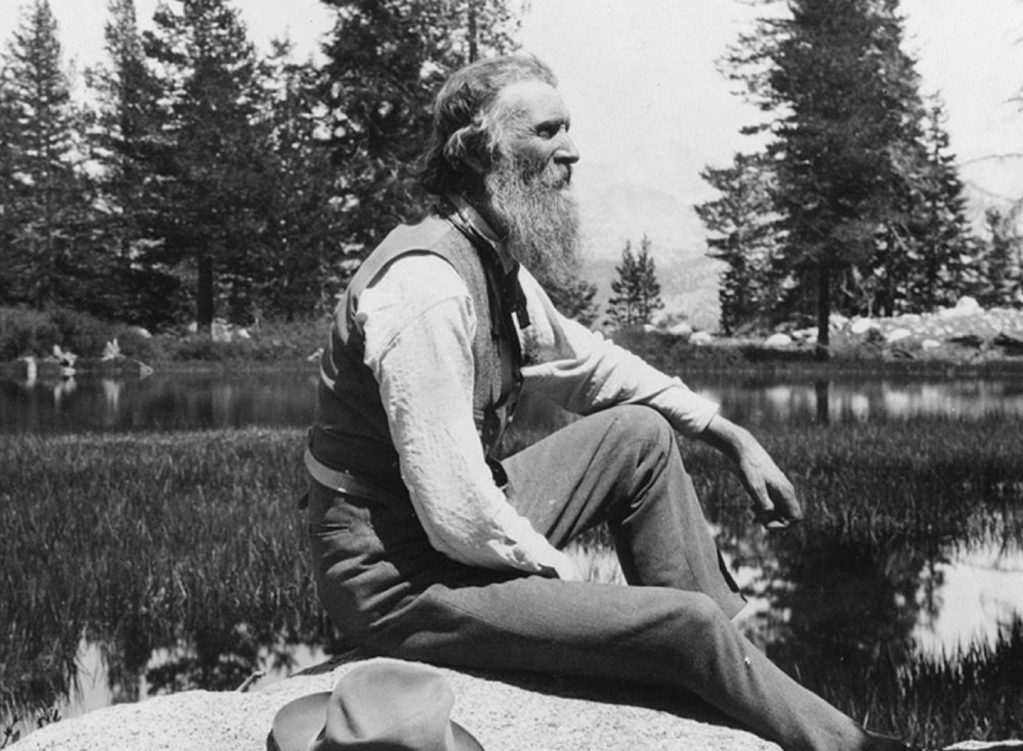
Another man who inspires me, who feeds my life, is the preservationist, writer, and adventurer John Muir. I wrote about him in my book, Still Calm and Quiet: More adventures in the National Parks and the beautiful wild, when I visited his family home in Martinez, California. Through reading his work, he has shaped how I view nature- how all of creation is intricately designed with common properties reflective of a common Creator. John Muir cherished all the fine details of nature and that has helped me find delight in the most common, intricate, and most unusual things of nature. Muir has taught me to view all things in nature with awesome wonder, truly privileged to be able to look into the fantastical, artistic mind of God. This has also helped me find the great meaning in all things in nature. If it wasn’t for Muir, a number of my books would not have been written, or at least not the way they have been. I may not even have stopped to ponder the Nurse Logs and really consider what message they hold, and therefore I wouldn’t be writing any of this now.
Muir also helped me toughen up. When I brave the elements and my uncomfortability grows strong, I think about all Muir endured on his adventures, sleeping exposed on a lump of moss or in the bitter colds of Alaska, or even walking a thousand miles across the country.
Theodore Roosevelt: a Nurse Log of characterand strength
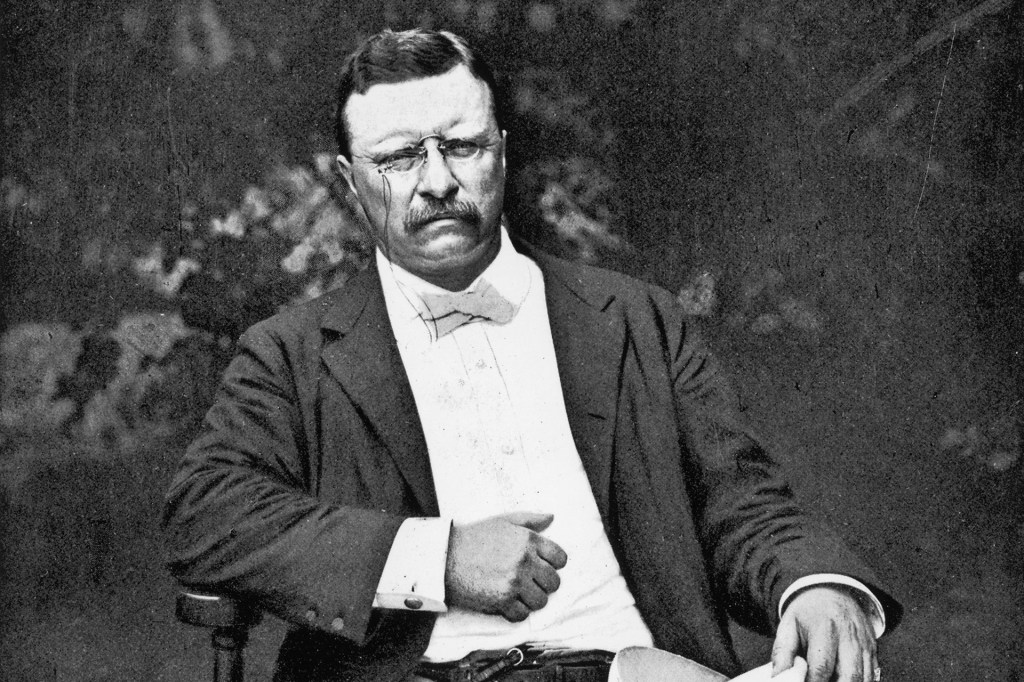
Lastly, one who should not come as a surprise to anyone who knows me and my writing is Theodore Roosevelt. He inspires me most in terms of his character which was so solid, His commitment to principles, right and wrong, and what is just and righteous was so strong. He did not shrink from hardship but endured it to great extents, compelled by his own moral duty.
I was initially drawn to Roosevelt learning of his childhood illnesses and the immense grief he had as a young man through tragic loss. How can someone go through such pain and suffering, yet become such a powerful and effective leader, living such a rich life, and become president? I had to study this man and learn of that which guided and sustained him. Roosevelt without a doubt would have said his own father, who passed away when he was a young man, was his greatest Nurse Log, and to me Theodore Roosevelt is certainly one of my greats. I pull great strength from his many hardships and resolve.
In 2022 when I spoke at A Badlands Chautauqua: Gathering of the Teddy Roosevelt’s in North Dakota, I began my talk with this very topic of Roosevelt as a Nurse Log. To my humbling honor, the oldest living Theodore Roosevelt repriser, the dignified Marty Jonason, told me afterward, “The part about the Nurse Logs really gave me chills.” Though I was surprised and felt so honored to receive such words, I thought of it as a challenge. Shouldn’t we all feel that sense of chill when we consider how greatly we can impact the lives of others, even when we are gone?
Roosevelt’s Joy
Back to my study of Roosevelt, I’m most recently interested in Roosevelt’s joy. He was a man of many outward emotions, but a very prominent one was joy. A quote that often comes to mind is, “The joy of living is his who has the heart to demand it.” One could take this to great philosophical lengths, to some interpretations that I may even disagree with. However, for me, and what I believe Roosevelt was saying, was quite simple. There is great joy in this life we are given, but it must be pursued. He follows this with his line “Life is an adventure, accept it in such a spirit,” implying that joy comes from fully embracing the adventures of life. We must remember that God wants us to be joyful, and we can find great joy in Him and his many blessings in life, but as Roosevelt says, we must pursue joy and fully live our lives. Oh, there is so much to unpack when it comes to Roosevelt. I could write a book about him… well, actually, I have, a few times.
A very important aspect of living life is also the truth that we cannot fully live our lives apart from God’s Spirit gifted through the redeeming power of Jesus. To Roosevelt’s point, we cannot fully enjoy our redeemed life without embracing all that lies in our paths and pursuing the opportunities afforded us. As he would say, this is the “adventure.” It’s so easy to fall into gloom in an aging world that does not seem to be maturing but rather degrading. With so much going on in the world, one may think pursuing joy is but a frivolous and selfish pursuit. It’s easy to dismiss it in all our trouble, but joy is so important that God commands us at least twenty-five times in Scripture to rejoice, and joy is mentioned over two hundred times in the Bible. In Philippians 4:4 it is written, “Rejoice in the Lord always, again I say rejoice!”
With all the mention of God, amidst my discussion on Nurse Logs, one might ask, Are you going to mention Jesus as your Nurse Log? Surely Jesus is the most influential force in my life. He influences and permeates every corner of my life, and I want His influence to be even greater. If at times that’s not true, it’s yet a deeper desire to want my heart to long and let God have more control. The reason why I don’t call Jesus a Nurse Log, is because He is alive! He is not dead. This I know. Jesus was a human, but he was also divine, God in the flesh. Here I discuss the deceased purely human Nurse Logs, who nevertheless I give God all due credit for. All Nurse Logs are gifts from God.
Authors as Nurse Logs
As I’ve thought all of this over to great depths and have considered my Nurse Logs, I must also credit the countless authors through the ages whose words inspire and give us life. How fortunate we are to live in a time when we have the wisdom of the ages passed down to us in text, and so many books in print which can provide so much enrichment. It can be natural for some young people, myself at one time included, to dismiss the writings of the deceased as irreverent and outdated…but pause. I now unfold such old books with great reverence and an expectancy to learn. Some of the writers of the past were much more thoughtful than the average man today, much more conscious of God and their place in the universe. They may be gone, but the words they have left behind, may be nutrient dense. We must have sacred reverence for the past. The past too is a gift. It is all a part of God’s story. Let us cherish the wisdom of the ages and the library filled with countless examples of lives past lived.
The whole phenomenon of Nurse Logs, though fun to ponder, and an instigator of reverence and gratefulness, is also a challenge to us. Will we live lives that count for the next generations? Will they feed off of what we have done with our lives? I’ll admit I don’t know what that means for my life. I don’t know what it looks like. I have to have faith. It’s like trying to see the sky through the limbs of the Redwoods. I know it’s there, I just can’t see it. God has a plan for your life, even though you may not know the specifics. Maybe just like Marty, that should give us goosebumps. I pray that in God’s plan we may be those life-giving Nurse Logs of the forest.
Who Are Your Nurse Logs?
As you venture forward in the wilderness of the unknowns of life, take a moment to consider, Who are your Nurse Logs? and may you draw inspiration from them.










 Josh Hodge blog