My vision faded to a nauseous blue and the voices around me turned into muffled echoes drowned out by anxious buzzing. My eyes were open yet soon I couldn’t see. The control of my faculties was fading. The beating of my heart was spinning out of control in a desperation. I was slipping into unconsciousness. To date, this is the one and only time I’ve fainted in a National Park.
Despite what might seem most unpleasant, don’t get me wrong. This day was a great one. It just ended with a flopping crescendo. I was in Big Bend National Park in West Texas where one of the nations most magnificent National Parks hugs the Rio Grande River bordering Mexico. This wonderland in the heart of the Chihuahuan Desert ranks on the lower end of visitation when it comes to National Parks but it’s towards the top of my list of most impressive National Parks.
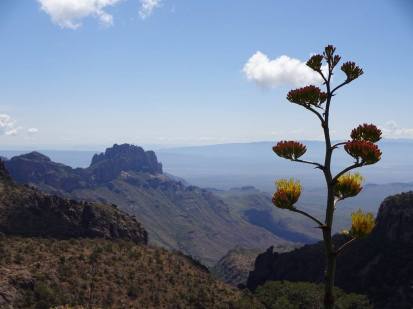
I would venture to say that for anyone not from this area this place would seem otherworldly, like a completely different planet. Plant life is so unique with giant agave plants of all varieties and orange twisted naked indian trees. Reading up about this park afterward, I learned one of the reasons why the plant life is so unique in this are of the Chihuahuan desert is because it is the biome developed from what is believed to have once been rainforest before land masses separated, the gulf of Mexico was formed, and the sea that covered much of the park dried out. This was also the land where dinosaurs roamed and swam. Deinosuchus, an enormous genus of crocodile swam in the shallow sea that covered the lower levels of this park where now tarantulas scurry. Looking around, the age of dinosaurs doesn’t seem so distant. The peculiarity of the landscape, the enormous rock pinnacles busting up from grasslands, and the oversized plants, like the aloe vera growing stalks up to forty feet high with giant insects feasting and pollinating, make it seem like a flashback to the jurassic or cretaceous.
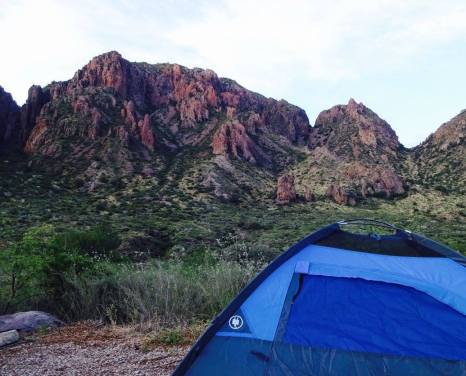
The previous night I had camped in the Chisos Basin Campground located in one of the four villages in the park. Yes, Big Bend is quite big indeed. Some of the other hubs close down for the summer but this one remains the most popular one in this season. The campground was tight and crowded. Many people were packed in, but it was situated in a beautiful basin surrounded nearly completely by rock pinnacles except for a gap looking down upon the desert. Up here at the higher elevation the landscape is greener, more trees are able to grow, and the temperature usually remains about twenty degrees cooler than in the lower reaches of the park.
Today I had a significant hike planned up in the Chisos Mountains. The trailhead was conveniently accessible from a footpath leading from the campground. The footpath climbs stairs and turns left to a visitor center, general store, and the lodge but proceeds forward to join the Chisos Basin trailhead climbing upward and gaining two thousand feet into the mountains.
The sun had risen, but I was still getting a pretty early start. As I hiked around the campground I came upon a very friendly and pleasant young couple bidding me “good morning.” It looked like they were getting set up for something. Then I remember reading a sign by the bathroom about a campground worship service on Sunday mornings. I put two and two together. This had to be the “campground chaplain,” if such a term exists. I would assume they were the campground host, whom also led a worship service. I thought about stopping and joining them, but I also considered the many miles ahead of me. Regretfully, I did not stop. But the prospect of coming together with other Christians in the beauty of nature in a National Park seemed purely wonderful. John Muir himself often referred to beautiful spots in nature as “temples.”
Before I reached the trailhead, along the path was a sign titled “Lion Warning.” It went on to explain what to do in a lion encounter. It did not once mention the term “mountain lion” but simply “lion,” making it all the more intimidating. “A lion has been frequenting the area and could be aggressive towards humans,” it read. Mountain lions are a concerning creature, because unlike a bear which will make its presence known, a mountain lion stalks, unseen, unheard, and then pounces. It can break a neck instantly. Mountain lion attacks are rare, and it would be especially rare to encounter one during the day, but I had read that a mountain lion is less likely to attack a human if the human looks unnatural. So a good deterrent is to wear bright neon colors that make yourself look artificial and not like a tasty treat of nature.
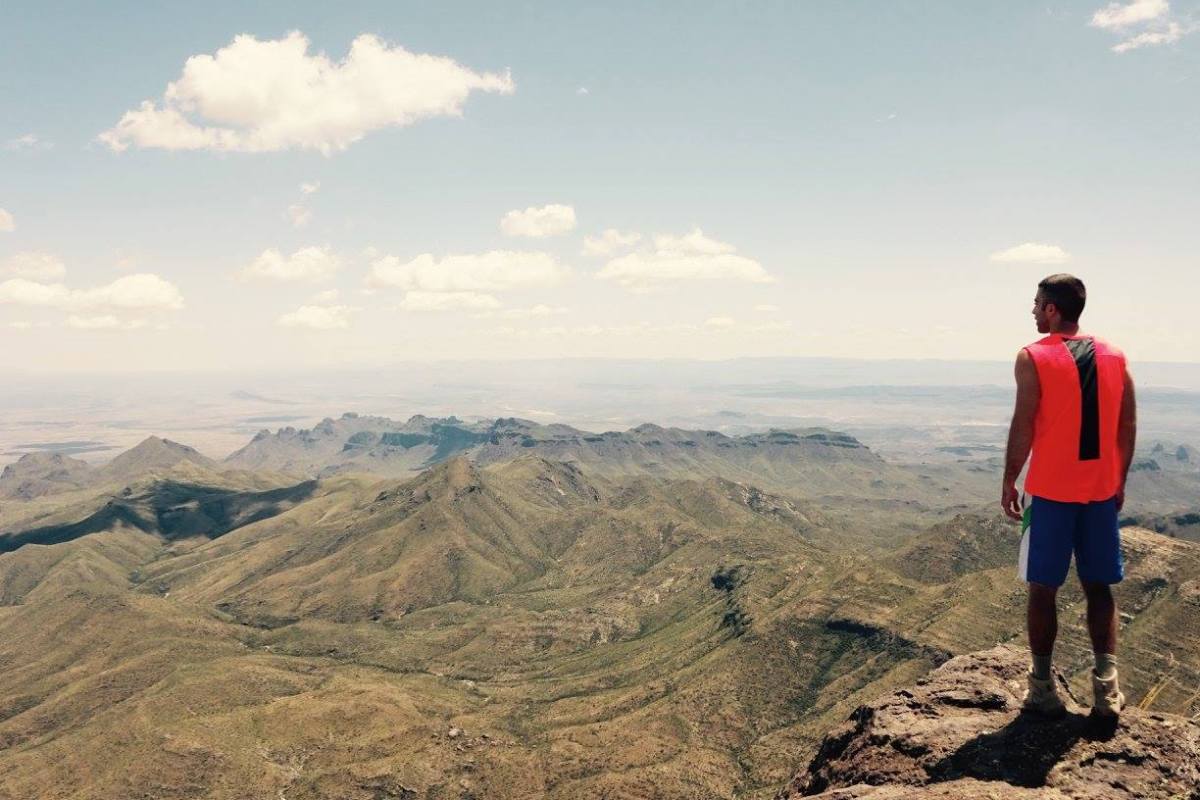
The Chisos Basin trailhead was rather steep, quickly gaining elevation, passing by shrubbery, agave, and more naked indian trees. The first point of interest was Boulder Meadow where the land leveled and displayed a hidden meadow surrounded by boulder peaks. I had almost camped here, but I hadn’t arrived in the park the evening before with enough time to pack and get to this area before dark. Setting up camp alone, in an unfamiliar place, with the presence of mountain lions, just didn’t seem appealing. But seeing it in the daytime, I certainly acknowledge it would have been a great place to camp. This trail I was on led to a network of trails up in the Chisos Mountains to various areas, remote campsites, and natural features. I wasn’t exactly sure all I was going to hike. I did know I wanted to get to the South Rim. I had seen a brochure advertising the area with a man sitting on the edge of the South Rim. I wanted to be in that exact spot, but apart from that, I had an open mind, which ended with me hiking around sixteen miles.

I enjoyed the hike greatly. Nothing compares to the landscape of desert, grasslands, and forest all converging together, but at times remaining distinct, separated in patches up in the mountains.
For most of my hike I was alone, and I felt very alone too, always conscious of it, slightly concerned for my own safety. No one would be out here to aid me in the event of an emergency. The climate was very hot and very dry, and the sun was very powerful. I knew, not properly equipped, the climate could dehydrate me and claim my life. So i was very diligent to stay hydrated and calorie equipped. The one place where I saw others was at by Emory Peak. It was a mile and a half deviance from the main trail. Emory peak is the highest reach in Big Bend National Park at 7,825 ft. The trail to Emory Peak slowly dissipated, to the point where any resemblance of a trail was gone. There were two peaks of ragged rock spires, like two towers sticking up on the mountain. One of these two had to be the peak. Other hikers were there. questioning which was Emory Peak. The two peaks looked to be about the same height and there were only a mere thirty feet or so apart. In urban terms they were maybe four stories high. I chose the one that looked the most manageable to climb. There was clearly no established route, but I found places for my feet and natural steps to grab hold of and pull myself upward. At the top I sat on a small plateau viewing out upon the rock pinnacles below me and all the valleys and crevices of the landscape. I enjoyed it, and it was great no doubt, but perhaps it wasn’t the most memorable of summits, because I remember more about the climb up than the view itself. From up here I was able to look over at the other rock peak where a few climbers maneuvered their way down. Just the sight made me on edge because between these two spires was a cavity, a long and dramatic fall to any solid ground.
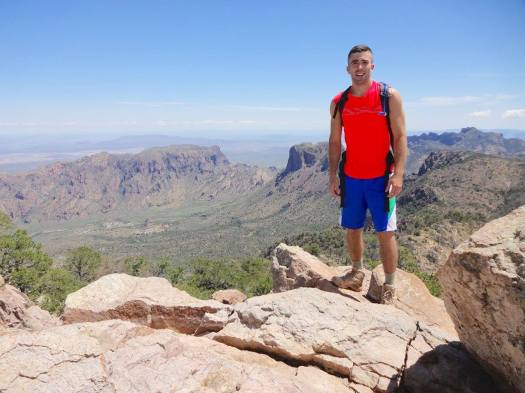
Back on the main trail I continued past the Pinnacles area to Boot Canyon- a very arid forest, which at one point the trail passed by a cabin which I assumed was a ranger residence. At one point the forest gave way to grassland where tall whispy brittle golden grass closed in upon the trail. Miles later I reached the East Rim, which traveled around to the South Rim. I had arrived! I found the place on the brochure and it was well worth it. I sat there by a prickly pear cactus looking down upon the sharp triangular mountains I was well above. They were all dark pale green or brown, reflective of the arid feel of the terrain. Far below I spotted a dried up river bed meandering among the hills, and nearing the horizon the plains of even dryer desert. While I was observing the landscape, I begin to hear a terrible buzz. It grew louder. The sound was approaching rapidly. From up above I began to see a cloud wisping through the air below growing bigger with every fraction of a second. I was very confused and did not know what this was, but it scared me. It caused me to crawl back from the canyon rim and stand up. I realized it was a swarm of insects. It seemed like it was heading right for me, and its sharp atrocious sound was piercing to my ears. I was prepared to drop to the ground and shield my head with my arms, when the swarm swopped to the right and zoomed off into the distance.
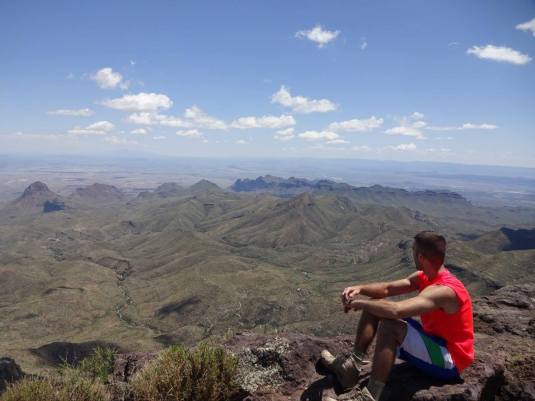
What exactly was that? I questioned. I have never in my life experienced a swarm of insects like this before. The sound of it made me think they were a type of fly or bee. The only thing in my life experience to relate it to is the Winnie the Pooh cartoons when the silly old bear is chased by bees after disturbing their hive. It might have been terrifying in the moment, but soon after I couldn’t help but revel in the unique experience it was, and the rather stunning visual display of thousands of insects flying in a coordinated manner with such rage. I wanted to ask a ranger about this, but the visitor center was closed by the time I got back.
This South Rim was the highlight of the hike with its stunning view. From here I looped back down to the Chisos Basin passing by the Laguna Meadows and Blue Creek which was largely dried up. Everything in my hike looked so desperately thirsty that it was strangely eerie. A bountiful forest is comforting boasting so much life, even a forest in the winter with it barren trees has its own charm, but a forested area so painfully thirsty comes across as hostile and desperate. But I wasn’t. I could certainly sense the dryness, but I wasn’t short on water. At one point I could even afford to poor some of my water supply on my head for a brief cool off.
During the last few miles of nearing my accomplishment of sixteen miles my feet became very heavy. I thought maybe I had bitten off more than I could chew. The final steps down to the Chisos Basin village were some of the most heavy steps I have ever taken. I felt like my feet could just pop right of, or my legs would fall off from the pelvis. It was evening now. Around 7pm, I had hiked at least over 10 hours continuously up, around, and down a mountain range with only a couple of brief stops. I was more than ready to sit down.I wanted to stop by the general store in the Chisos Basin village first and then relax for a bit at the lodge.
As I was in line at the store to buy a sandwich and a Gatorade, there was a family in front of me, foreign, seemingly from India. With broken English they were trying to ask questions about purchasing a camping tent. I was so desperate to sit down that I wanted to make my purchase and be done with it. With my legs extremely sore, I began to feel a bit agitated when there was a problem reading their credit card. When I realized this might not be a quick in-and-out a is when I began to lose my senses. I began to faint. Then, it was my turn. I set the Gateorade and sandwich on the counter, but my vision left me. I felt myself falling towards the group, so I tried with all the control I had left to squat down in front of the counter. Consciousness left me, but a moment later I stood back up.
“Sign this,” I heard. I must have given him my credit card too, but I scarcely remember.
“I’m sorry. I just feel like I’m gonna faint,” I said. I still couldn’t see.
“Please don’t,” said the young man behind the counter. I already had for a moment.
I intensely tried to regain vision. It was faint and disrupted but I could see just enough to sign my name on the receipt.
The young man behind the counter seemed to have no idea how to react. He didn’t offer to help or provide any advice. I’m sure by this point I probably looked like a ghost. In the aftermath, I felt sorry for him. He was probably just a college student with a summer job, inexperienced with the outdoors and first aid, just trying to earn some money. The sight of me fainting probably scared him. As we would say in the South, “bless his heart,” and bless mine too after what I’d been through.
Right outside the store was a bench, where I collapsed. I unscrewed the Gatorade and drowned myself in its cold electrolyte bliss.
A young man- the hiker junky, hippy-free spirited type came beside me. “Are you alright?”
“I just came back from a 16 mile hike, but I have gatorade and food. I should be all right.” I informed.
“A similar thing happened to me earlier. I drank some whisky. It really helped. I have some. Would you like it.”
“No, but thank you,” I replied.
He left, and I doubted for a second if I really would be okay. I still felt very weak. I was concerned to stand up and move with the prospect of passing out again. It might not have hurt to ask him to stay for a moment. But whisky? Really? Drinking whisky when dehydrated did not seem like a good idea to me.
I hadn’t considered it before, but then it dawned on me. I wasn’t dehydrated. I had plenty to drink, and I actually had plenty to eat. I had nuts, dried fruits, and cliff bars, amongst other dehydrated snacks, but then it dawned on me: I had little to no salt. I was salt deprived. This is why I fainted.
I carefully went back to my car, self monitoring for all signs of faintness. I had a can of chicken noodle soup cooking in the heat of the car all day. I took it with me to the patio at the back of the lodge. I enjoyed it along with an orange.
And there in perfect view from the patio the sunset was framed between the rock pinnacles of the Chisos Basin. A bright and warm orange spread across the sky. It was beautiful and a wondrous work of artistry, but as sunsets often do, it caused me to reflect inwardly. I wasn’t as invincible and strong of a hiker as I thought I was. This was very humbling. My body was not adequately equipped for today’s hike, and I hadn’t considered salt intake. What else might I be missing? My confidence with the wild had been slashed. I couldn’t trust myself as much as I thought I could.
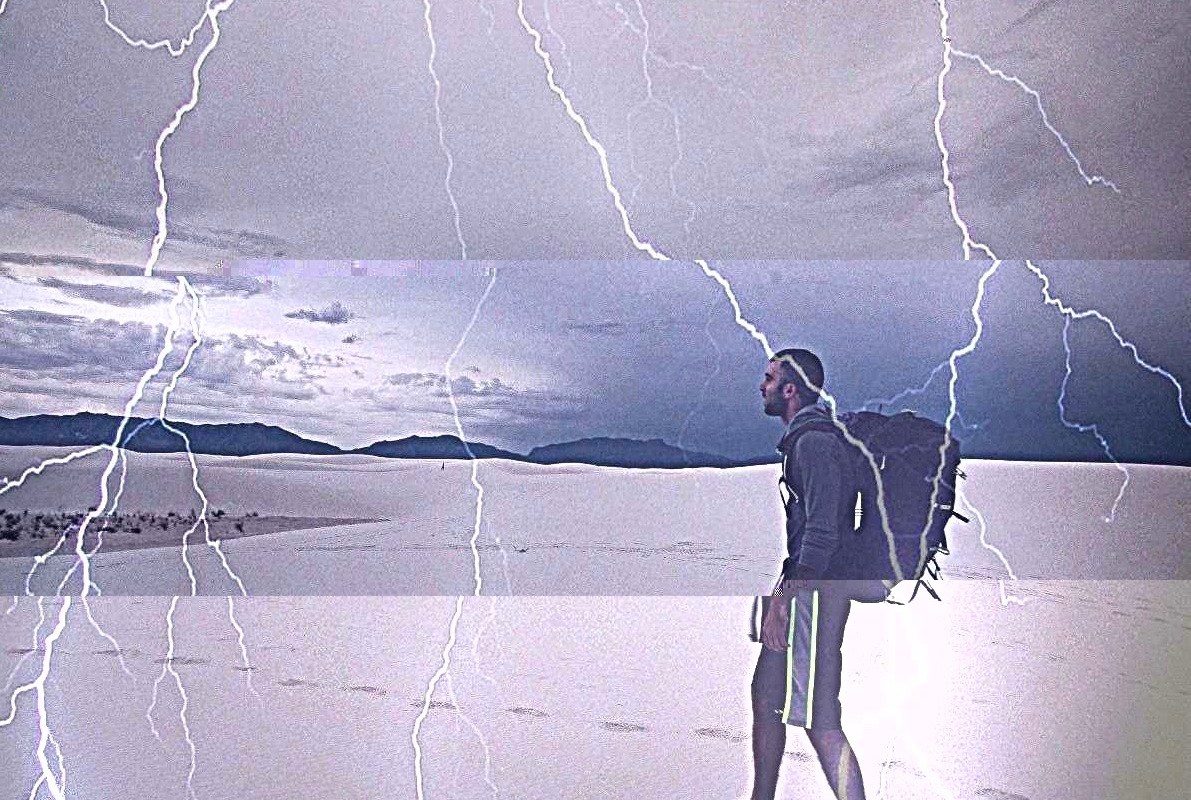
I locked my keys in the car days before, been stuck out in the lighting in White Sands, got reprimanded by a park ranger, and passed out in Big Bend. I was keeping track of misfortunes. What was wrong? Was it me?
Read my previous episode “Treasures of the Chihuahuan,” here: https://joshthehodge.wordpress.com/2019/04/11/treasures-of-the-chihuahuan/
Check out my new book “Canyonlands: My Adventures in the National Parks and the Beautiful Wild,” here:
https://www.amazon.com/dp/1711397873/ref=cm_sw_em_r_mt_dp_U_UjGjEbYBGF4PR

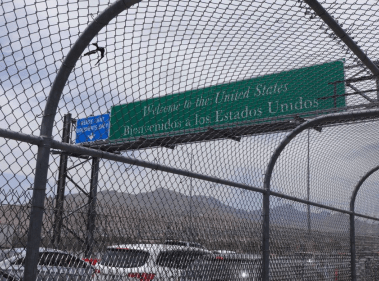 It was a new, peculiar, and patriot moment for me to read the sign above the highway stating “Welcome to the United States.” My visit to Ciudad Juárez is a tale to be further unpacked at another time. I was glad I went, but I was so grateful to be back home and ready to continue on with my U.S. National Park adventure.
 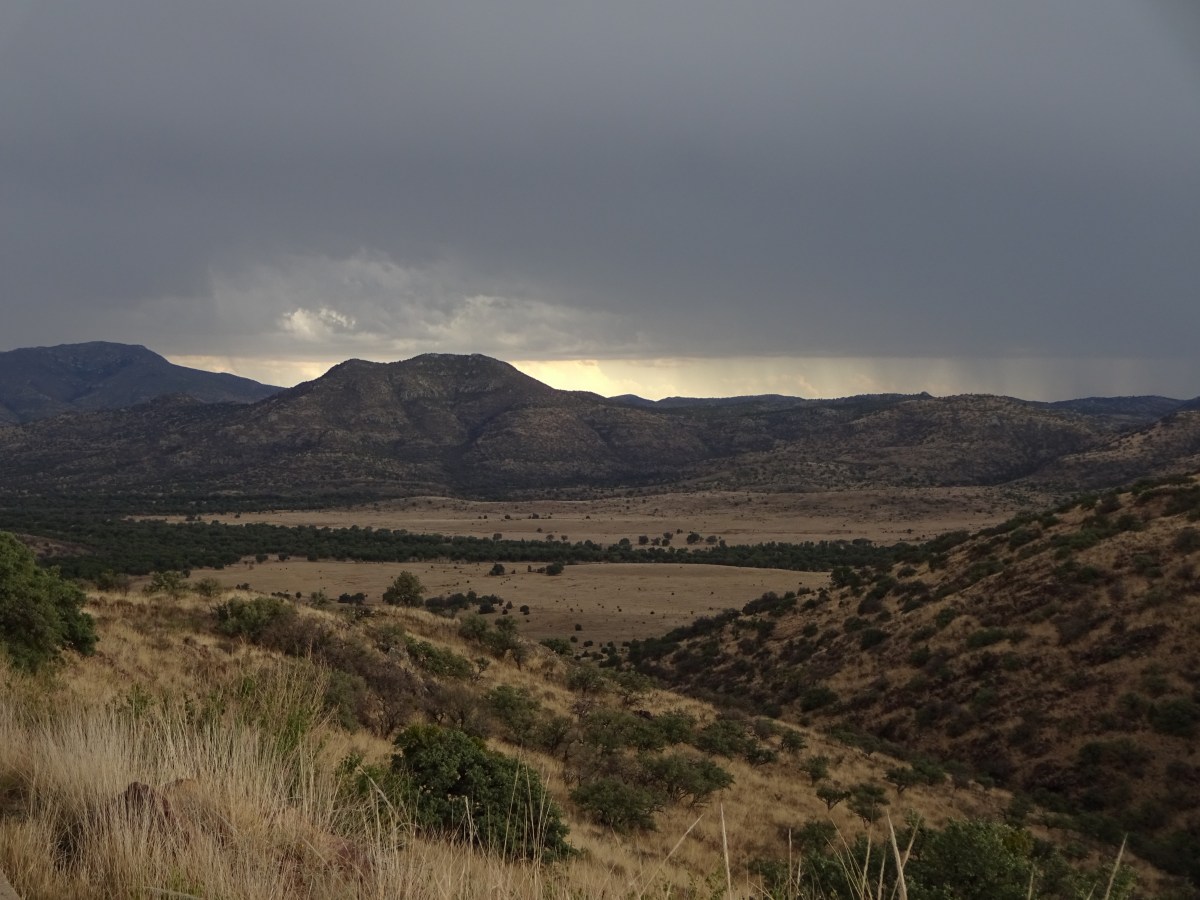 The road wound through countryside and slithered among mountains. At one point I came to a overlook where I looked down across the grasslands and the mountains. In the distance, over the mountains, it was storming. I could see the dark clouds and rain contrasting with a golden sun that was peeking out from the corner of the sky. The contrast in the sky, brought about contrast in the land between the deep greens of the scattered trees to the accents of golden grass.
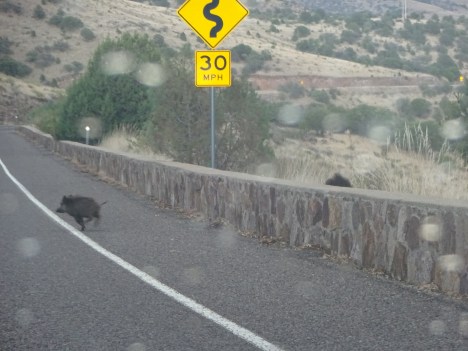 I could sense the arid land giving off a sigh of relief for the rain that would soon arrive. A could feel the tension released in the air. As I continued on my drive, a parade of javelinas jumped a stone wall, scurried across the road, and leaped into the wild grass and brush. These creatures look like wild boar, and although javelina is the same name given to a wild boar in Spanish, these javelinas are peccaries, and unlike boars are native to the Americas. But combine the savanna with a javelina, and the fact I hadn’t seen a business for hundreds of miles, and you could have fooled me to thinking I was out and about somewhere in the African savanna and I’d be prone to see a zebra, or a lion.
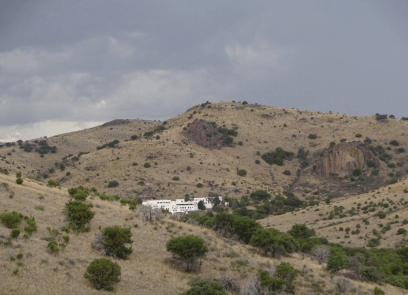 Except for the one elderly couple who asked me for directions at the drop box, whom I couldn’t assist with any knowledge, I didn’t see any other people on my way to the lodge. This place was very quiet.
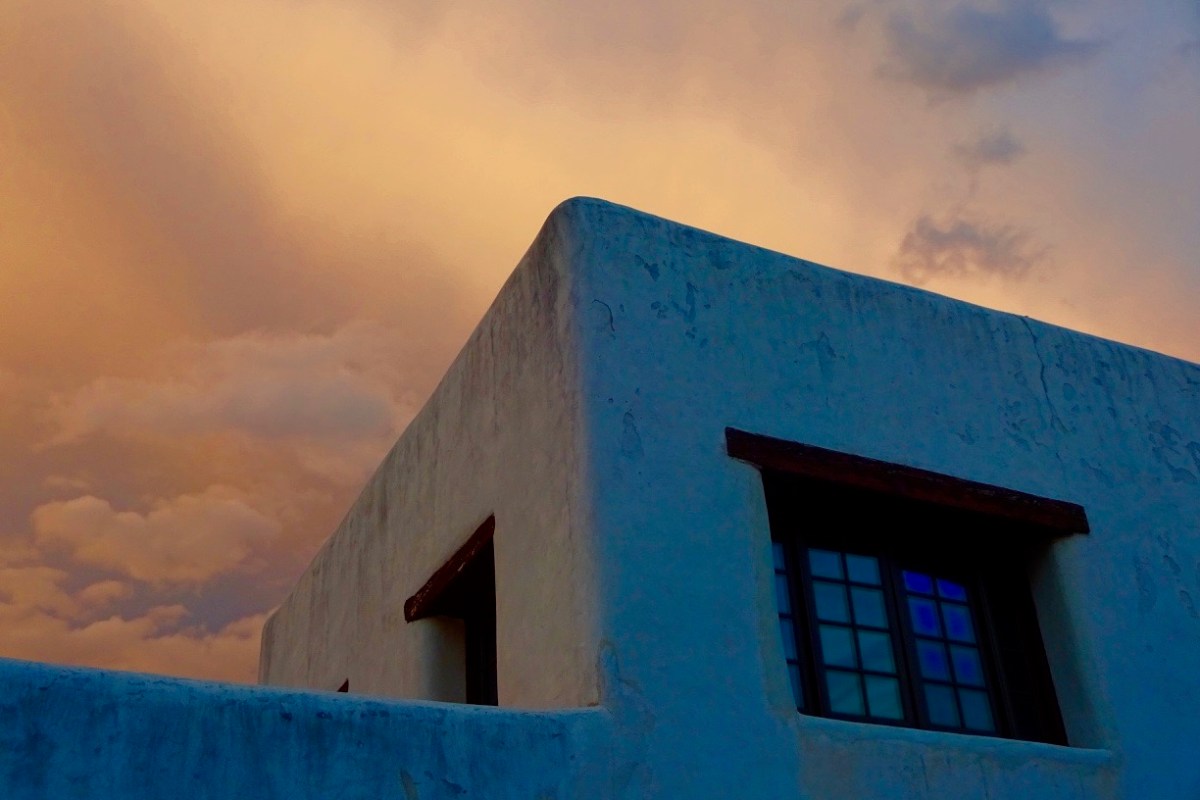
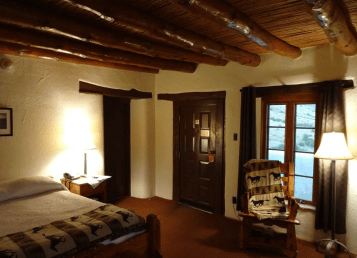 Rustic, beautiful, charming. An old stone fireplace stood with an extending stone hearth. The walls were white abode, the ceiling wooden logs, the furniture hand made of cedar, some original historic pieces from the 1930s. The lamps here and there gave off a warm and homey glow. A rocking chair stood next to the fireplace and in front of the wood framed window with the bright orange sunset. The window on the opposite side was tucked into its own nook where a desk and chair stood, as if looking out intrigued by the view of a tree reaching out its branches. And the bed in the middle was adorned with a beautiful lacework comforter and a blanket depicting running horses and geometric designs, looking like a true piece of native craftsmanship of the area.
 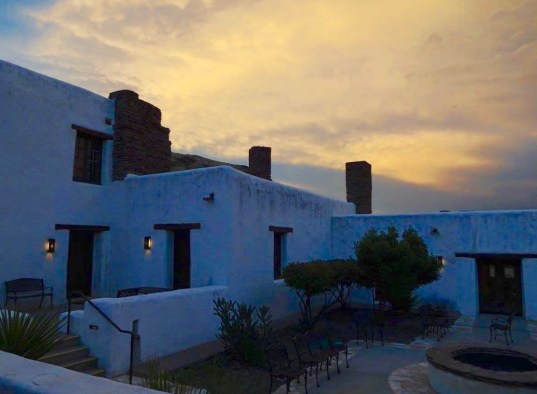 Also pertaining this this vibe was this true lodge feel. Back in the early days of park lodges, arriving at a lodge was sometimes an accomplishment in and of itself. Long horseback rides or wagon trips through challenging terrains would finally lead one to a lodge of comfort and peace. Same situation today. A long and isolated journey through very remote roads to the middle of nowhere, brought me to the Indian Lodge, and the lodge was the only thing here. There was nowhere else to go this evening. This was it. The lodge was its own oasis. Everyone staying at the lodge had nowhere to be but at the lodge. We all had to make comfort and do with our own limited amenities and food. And without distraction, we all shared the sunset together, the maze of the abode structure, and each other’s own company. Although this place was isolated, and it was quiet, I was not the only one here. I believe there was a wedding party staying at the lodge. Clues of confetti, signs, and gatherings of multi-aged people, led me to this assumption.
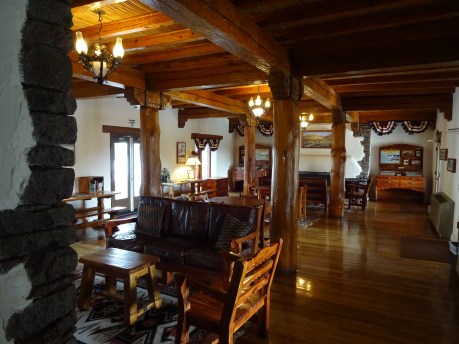 After dropping off my bags in my room, I peacefully explored this village of a structure. The clouds had melted away and the sky above was a calm darkening blue. Going from one adobe island to another from and one terrace and courtyard to another, I sat and enjoyed the remainder of the sunset and listened to the water trickling at a courtyard fountain. I also explored inside. The common indoor area was constructed with beautiful woodwork, old western chandeliers, nooks and crannies to sit and relax, and a small statue and area honoring the work on the Civilian Conservation Corps. I. Loved. This. Place.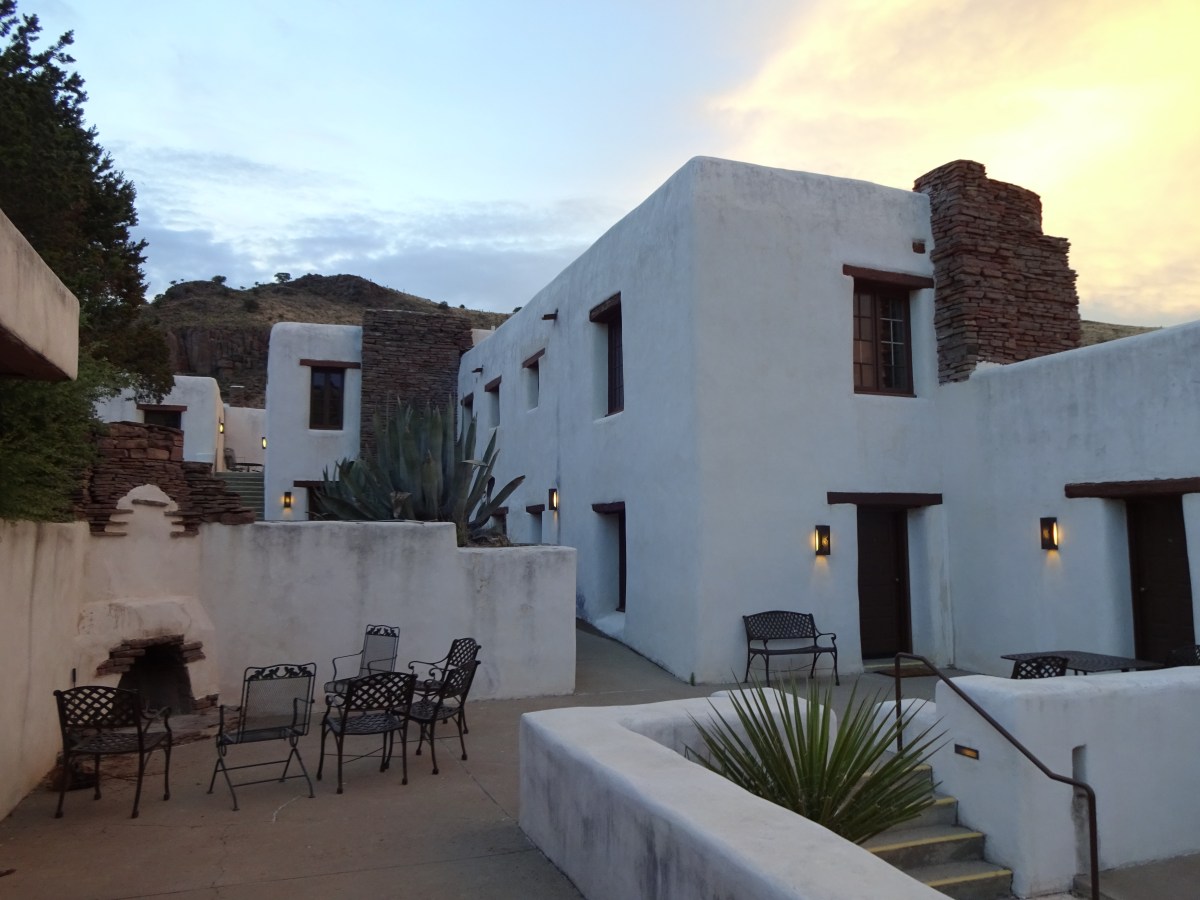


 around the peak. There was one part with a narrow tunnel carved or blasted out by the Civilian Conservation Corps and another section where the rock and trail became smooth and bright white, app
 going uphill the entire length of the trail, but it wouldn’t be long. I was pushing myself, taking on my machine mentality in which I concentrate on keeping mechanical movements and consistent speed, imagining I am nothing but a machine operating in a programmable mode. I was finally picking up speed and getting past my mechanical groove into a free-spirited free run until…..
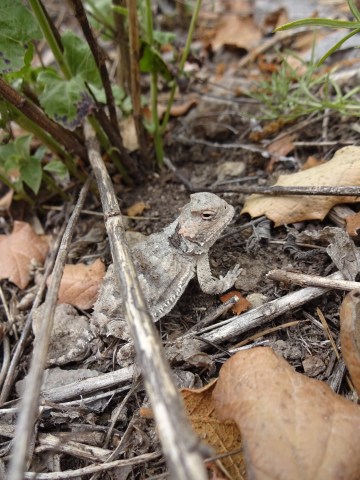 Despite all our snake encounters on the way up, there wasn’t a single encounter on the way down, but I did see a short-horned lizard. As we descended, my hiking pal and I continued talking all about our National Park adventures. I might have shared with him a story or two of some of my wild happenings.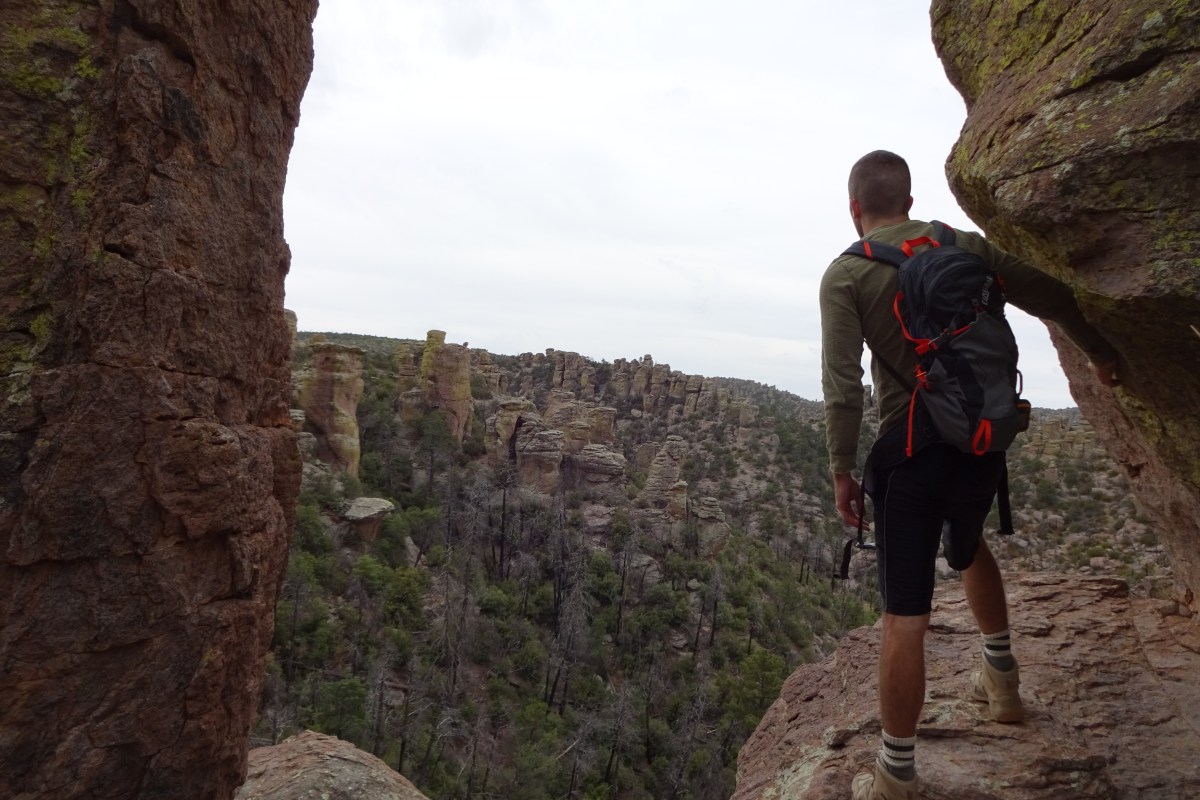
 As intended I hiked Ed Riggs Trail to Mushroom Rock Trail to Inspiration Point Trail to Inspiration Point itself. The first trail began by descending into a valley of trees and shrubbery. All around me stood tall dark hoodoos, clustered together at various heights. They looked alive, almost as if they were in the process of growing. In some aspects the view was reminiscent of Bryce Canyon, but here the hoodoos took on a more stalky, weightier form, and their color was a sandy grey. Here these geological features were the result of an ancient volcanic eruption. Also, though arid, lichen adorned the rocks, and greenery was draped over the landscape. At one point I came to a window in the rocks, and could look out into the valley.
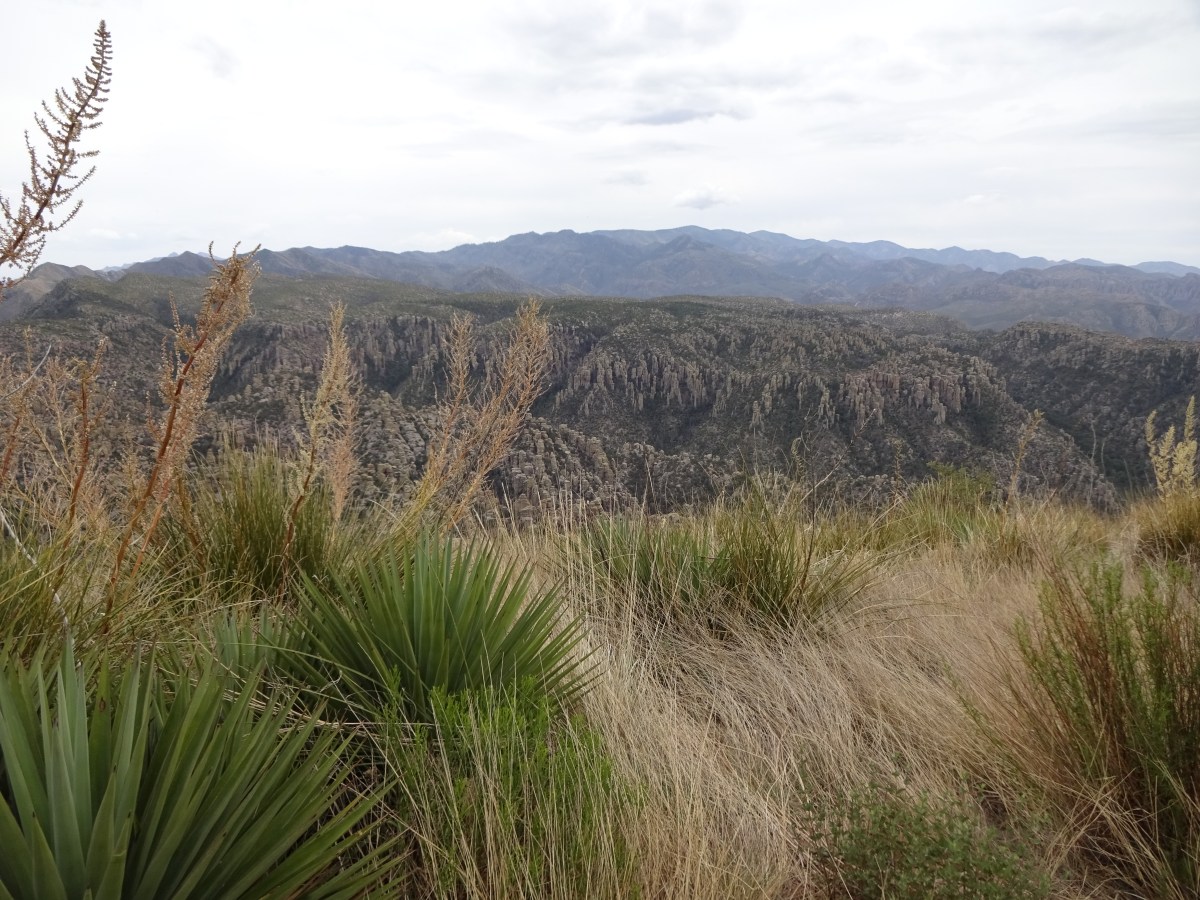
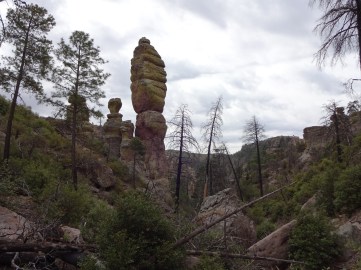 I had never beheld a landscape like this before. To me, it looked like what I might imagine one of China’s stone forests to look like. I’ve never been to China, so this is purely out of speculation and comparison to photographs. Nowhere in the United States have I been in any environment quite like this. There was such a combination of environments that it became confusing to identify and best to consider Chiricahua its own entity.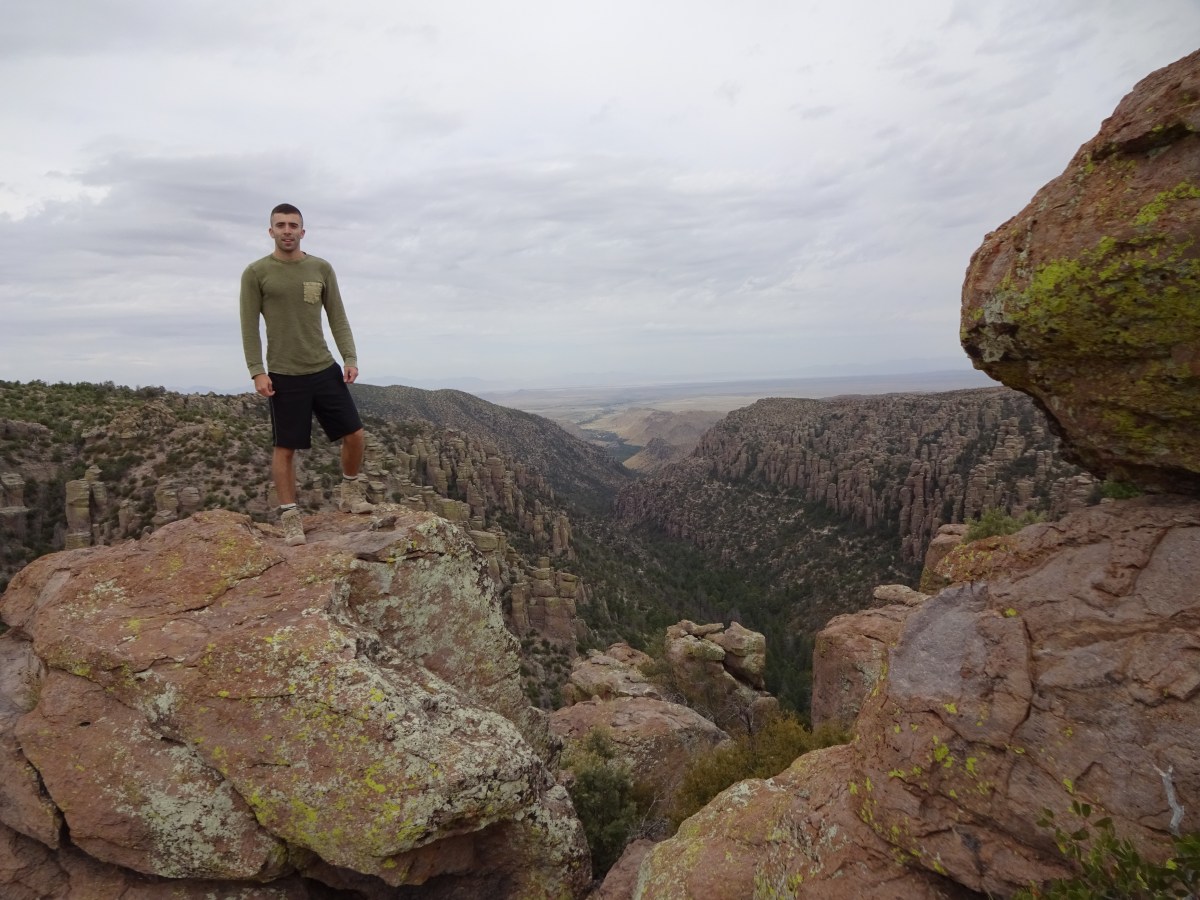
 Josh Hodge blog